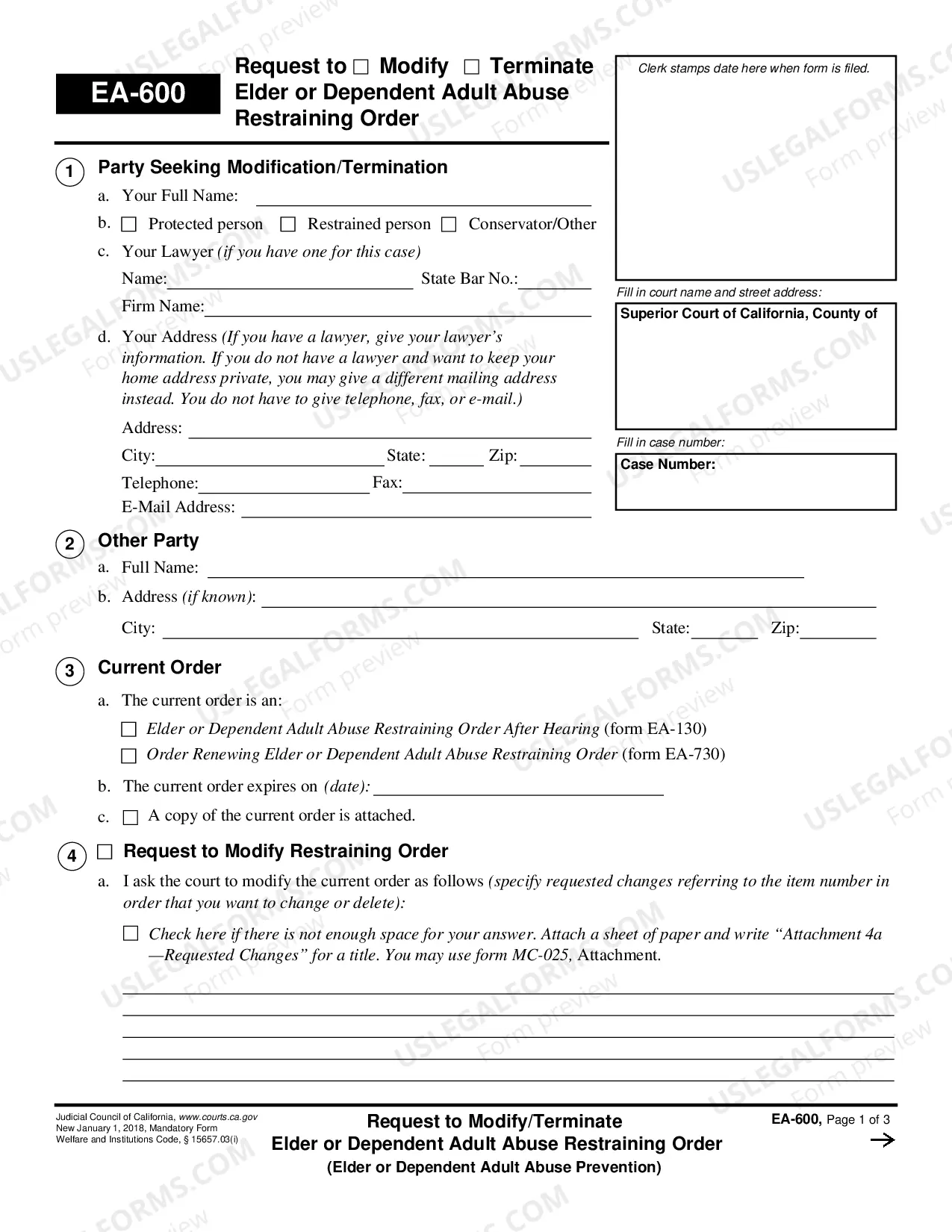
Sample Restraining Order Form For T Shirts In Clark
Description


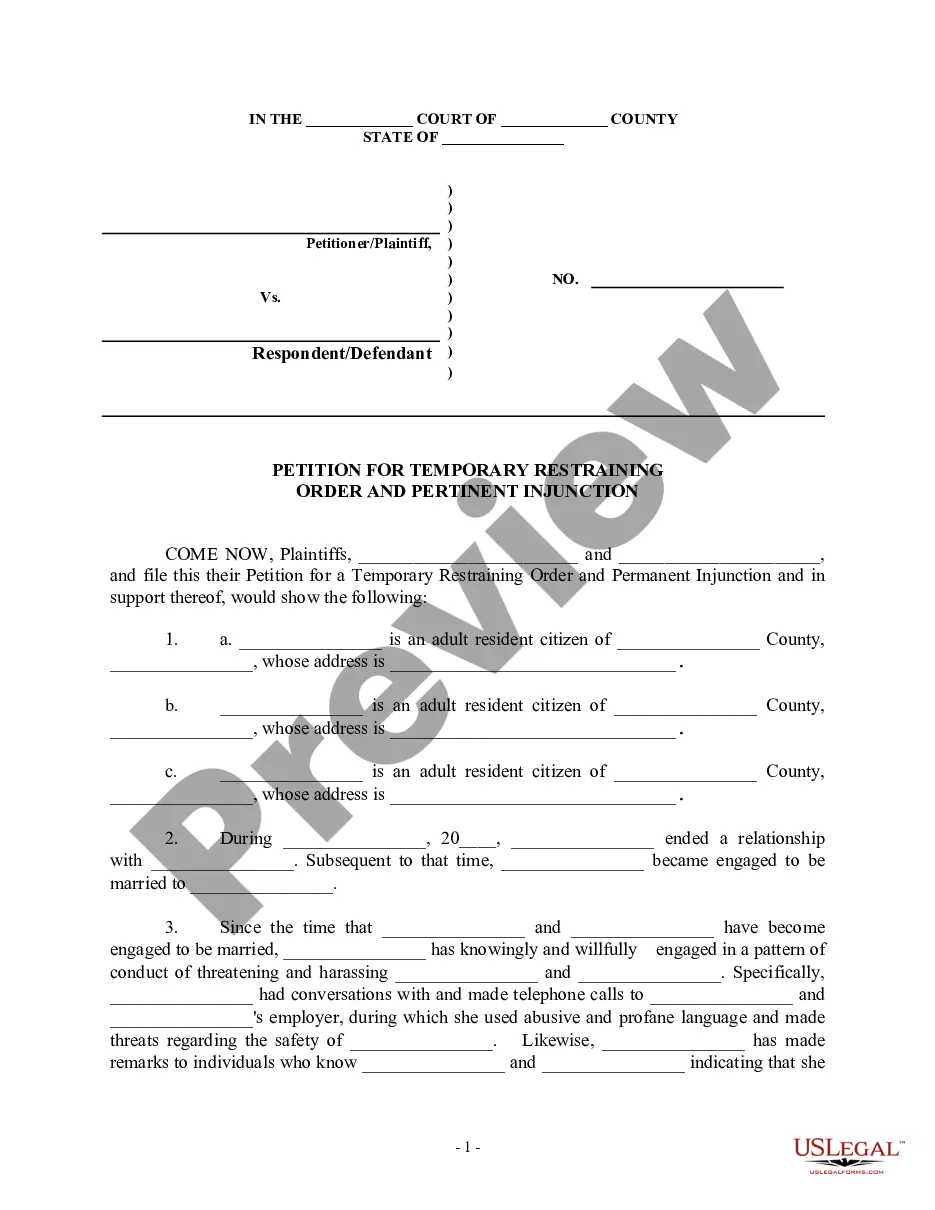

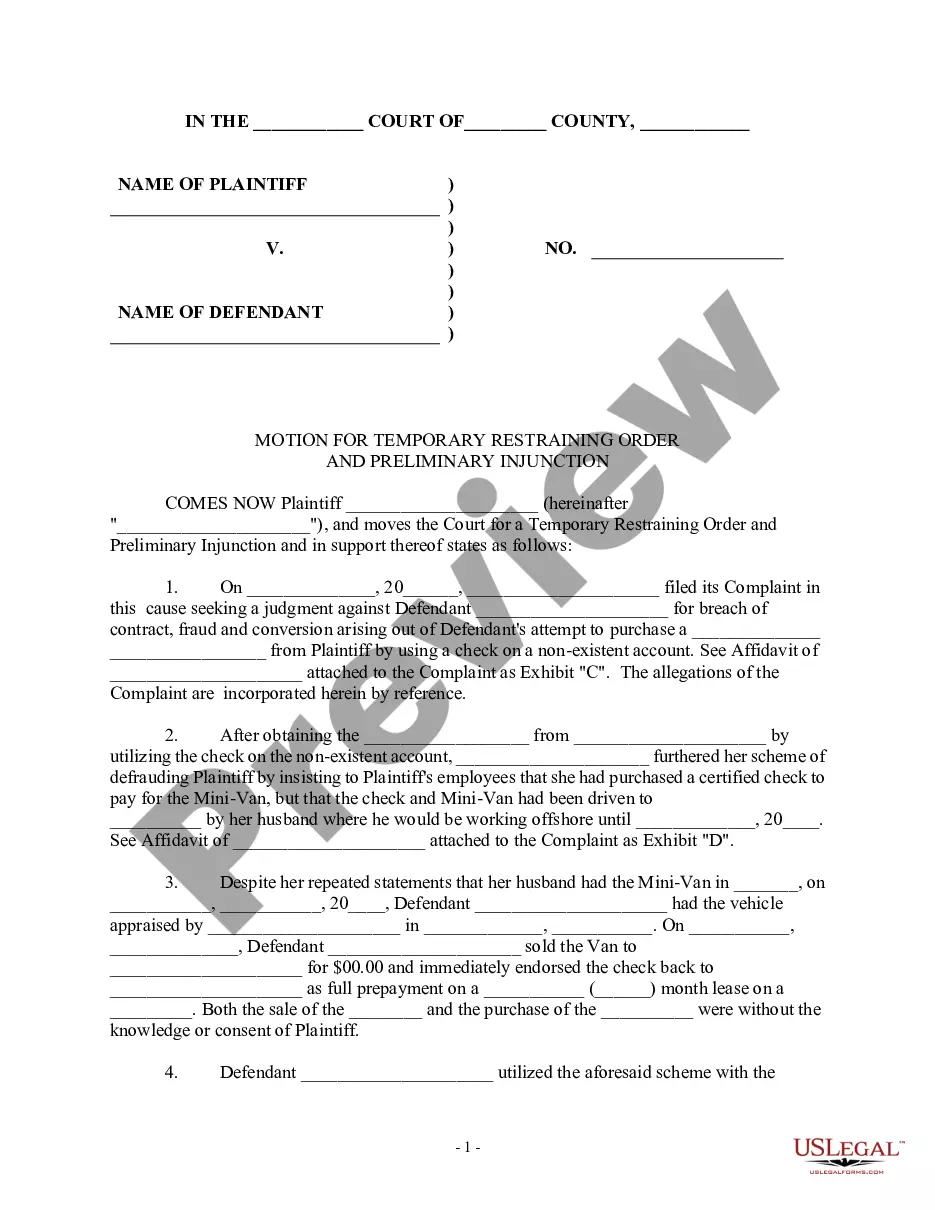
Get your form ready online
Our built-in tools help you complete, sign, share, and store your documents in one place.
Make edits, fill in missing information, and update formatting in US Legal Forms—just like you would in MS Word.
Download a copy, print it, send it by email, or mail it via USPS—whatever works best for your next step.
Sign and collect signatures with our SignNow integration. Send to multiple recipients, set reminders, and more. Go Premium to unlock E-Sign.
If this form requires notarization, complete it online through a secure video call—no need to meet a notary in person or wait for an appointment.
We protect your documents and personal data by following strict security and privacy standards.

Make edits, fill in missing information, and update formatting in US Legal Forms—just like you would in MS Word.

Download a copy, print it, send it by email, or mail it via USPS—whatever works best for your next step.

Sign and collect signatures with our SignNow integration. Send to multiple recipients, set reminders, and more. Go Premium to unlock E-Sign.

If this form requires notarization, complete it online through a secure video call—no need to meet a notary in person or wait for an appointment.

We protect your documents and personal data by following strict security and privacy standards.
Looking for another form?




Form popularity
FAQ
Although there are federal laws that make restraining orders inaccessible on public websites, these orders are public record once you are inside a courthouse. Anyone can ask the clerk to look up a file with your name and read the restraining order.
Using the facts of the incident only, keep your statement brief and to the point. Briefly describe the most recent incident of abuse and/or threats of abuse or other behaviors. Focus on the actual behavior. Do not include prior incidents, (that will be the next paragraph).
In a civil lawsuit, the burden of proof rests on the plaintiff or the person filing the suit. The plaintiff should prove that the allegations are true and that the defendant, or the other party, caused damages. When it comes to establishing a civil case, the plaintiff must usually do so by a preponderance of evidence.
So can you fight these Connecticut restraining orders? Absolutely. But you need to act quickly and competently.
A significant change in circumstances, such as improved behavior, completion of anger management or counseling programs, or evidence that the risk of violence has diminished, may provide grounds for seeking the dismissal of a restraining order.
The burden of proof is on the protected party to prove to the court by a preponderance of the evidence that there is a reasonable apprehension of future abuse.
The applicant has the burden of proving by a preponderance of the evidence that they qualify and need a protective order and the respondent (the person whom you are seeking protection against) has the opportunity to be heard as to why the restraining order shouldn't enter.
If there isn't any current harassment, the judge won't grant the person's request. Unfortunately, courts have to be picky in their screening process because of too many people taking advantage of the court system by getting restraining orders because of personal vendettas.
Lack of Jurisdiction The respondent can argue that the court does not have jurisdiction to issue a restraining order. This defense can be raised, for instance, if the alleged incidents of domestic violence or harassment did not occur within the jurisdiction of the court.