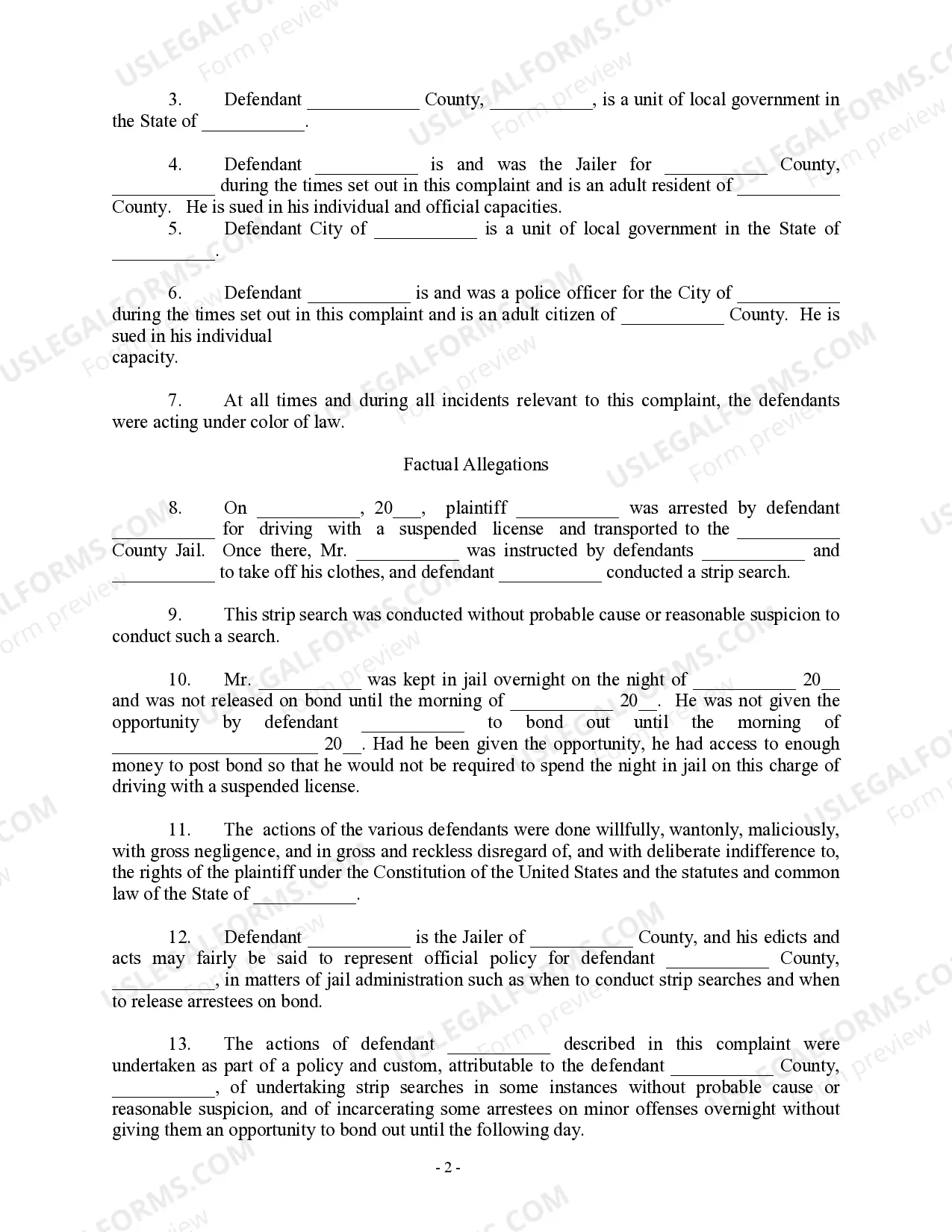
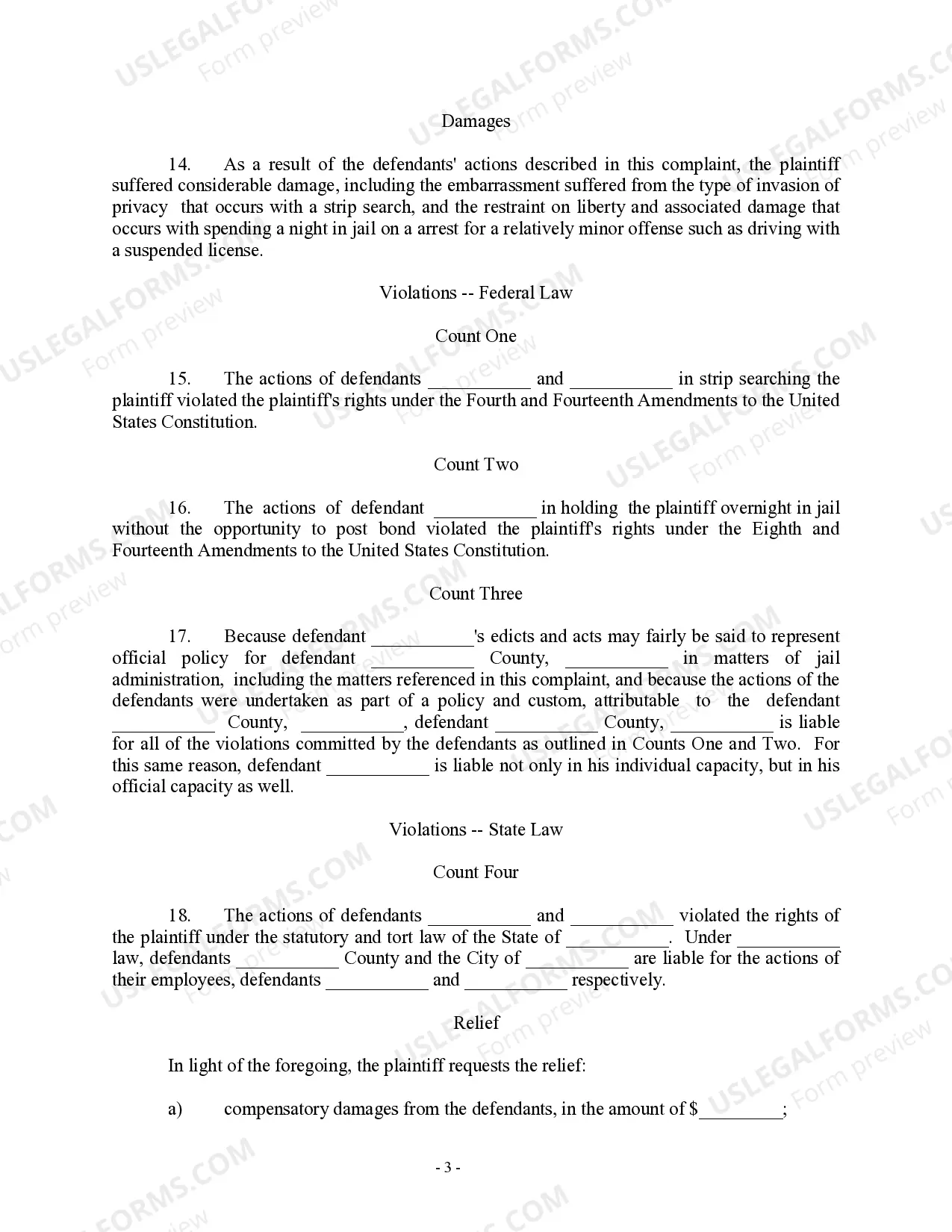
This form is a Complaint. This action was filed by the plaintiff due to a strip search which was conducted upon his/her person after an arrest. The plaintiff requests that he/she be awarded compensatory damages and punitive damages for the alleged violation of his/her constitutional rights.
Body Search For In Cook
State:
Multi-State
Category:
County:
Cook
Control #:
US-000282
Format:
Word;
Rich Text
81 downloads
Description
Free preview




Get your form ready online
Our built-in tools help you complete, sign, share, and store your documents in one place.
Built-in online Word editor
Make edits, fill in missing information, and update formatting in US Legal Forms—just like you would in MS Word.
Export easily
Download a copy, print it, send it by email, or mail it via USPS—whatever works best for your next step.
E-sign your document
Sign and collect signatures with our SignNow integration. Send to multiple recipients, set reminders, and more. Go Premium to unlock E-Sign.
Notarize online 24/7
If this form requires notarization, complete it online through a secure video call—no need to meet a notary in person or wait for an appointment.
Store your document securely
We protect your documents and personal data by following strict security and privacy standards.

Make edits, fill in missing information, and update formatting in US Legal Forms—just like you would in MS Word.

Download a copy, print it, send it by email, or mail it via USPS—whatever works best for your next step.

Sign and collect signatures with our SignNow integration. Send to multiple recipients, set reminders, and more. Go Premium to unlock E-Sign.

If this form requires notarization, complete it online through a secure video call—no need to meet a notary in person or wait for an appointment.

We protect your documents and personal data by following strict security and privacy standards.
Looking for another form?
Form popularity
FAQ
All travelers crossing the United States border are subject to CBP inspection. On rare occasions, CBP officers may search a traveler's mobile phone, computer, camera, or other electronic devices during the inspection process.
Agents may search any person, the inside of any vehicle, and all passenger belongings. Agents do not need a warrant, any suspicion of wrongdoing, or consent to do any of these things. CBP's own policy requires that searches be “conducted in a manner that is safe, secure, humane, dignified and professional.”
162.6, which states that, "All persons, baggage and merchandise arriving in the Customs territory of the United States from places outside thereof are liable to inspection by a CBP officer." Unless exempt by diplomatic status, all persons entering the United States, including U.S. citizens, are subject to examination ...
Customs officers do not carry out internal body searches.
Our responsibility is quite immense, but we have broad legal authority and many tools at our disposal, which include personal searches. Personal searches are significantly intrusive searches of a person to determine whether they are carrying contraband close to or inside their body.
Medical examiners frequently visit crime scenes to gather evidence and assist in investigations. When human remains are present at a crime scene, the medical examiner may receive a call to come to the scene. Here, they may investigate the body, collect bodily fluids and interview witnesses.
As noted above, it depends on the specific position a forensic scientist holds. For example, a forensic investigator may be called onto a crime scene to conduct a comprehensive collection and examination of the physical evidence left behind, such as: Tire tracks. Blood (and blood spatter)
Typical job functions include: Perform autopsies and external examinations. Order or complete needed lab tests and review results. Determine cause and manner of death. Complete death certificate and compile all findings into a report.
Medical examiners frequently visit crime scenes to gather evidence and assist in investigations. When human remains are present at a crime scene, the medical examiner may receive a call to come to the scene. Here, they may investigate the body, collect bodily fluids and interview witnesses.
The forensic pathologist autopsies the body and determines the cause of death and all other factors that relate to the body directly. They may attend crime scenes and frequently testify in court.