Constitution Amendment For Gst
Description






Get your form ready online
Our built-in tools help you complete, sign, share, and store your documents in one place.
Make edits, fill in missing information, and update formatting in US Legal Forms—just like you would in MS Word.
Download a copy, print it, send it by email, or mail it via USPS—whatever works best for your next step.
Sign and collect signatures with our SignNow integration. Send to multiple recipients, set reminders, and more. Go Premium to unlock E-Sign.
If this form requires notarization, complete it online through a secure video call—no need to meet a notary in person or wait for an appointment.
We protect your documents and personal data by following strict security and privacy standards.

Make edits, fill in missing information, and update formatting in US Legal Forms—just like you would in MS Word.

Download a copy, print it, send it by email, or mail it via USPS—whatever works best for your next step.

Sign and collect signatures with our SignNow integration. Send to multiple recipients, set reminders, and more. Go Premium to unlock E-Sign.

If this form requires notarization, complete it online through a secure video call—no need to meet a notary in person or wait for an appointment.

We protect your documents and personal data by following strict security and privacy standards.
Looking for another form?
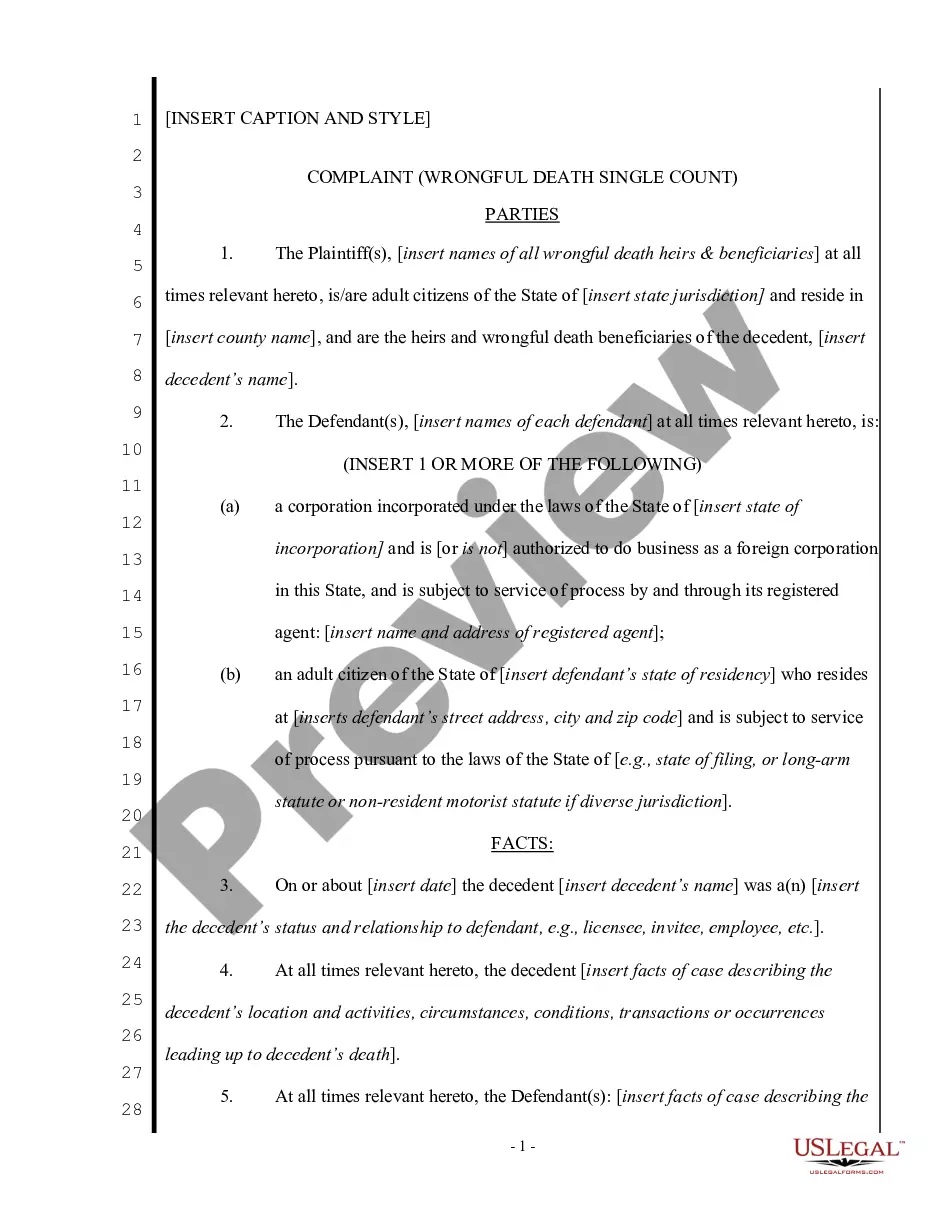
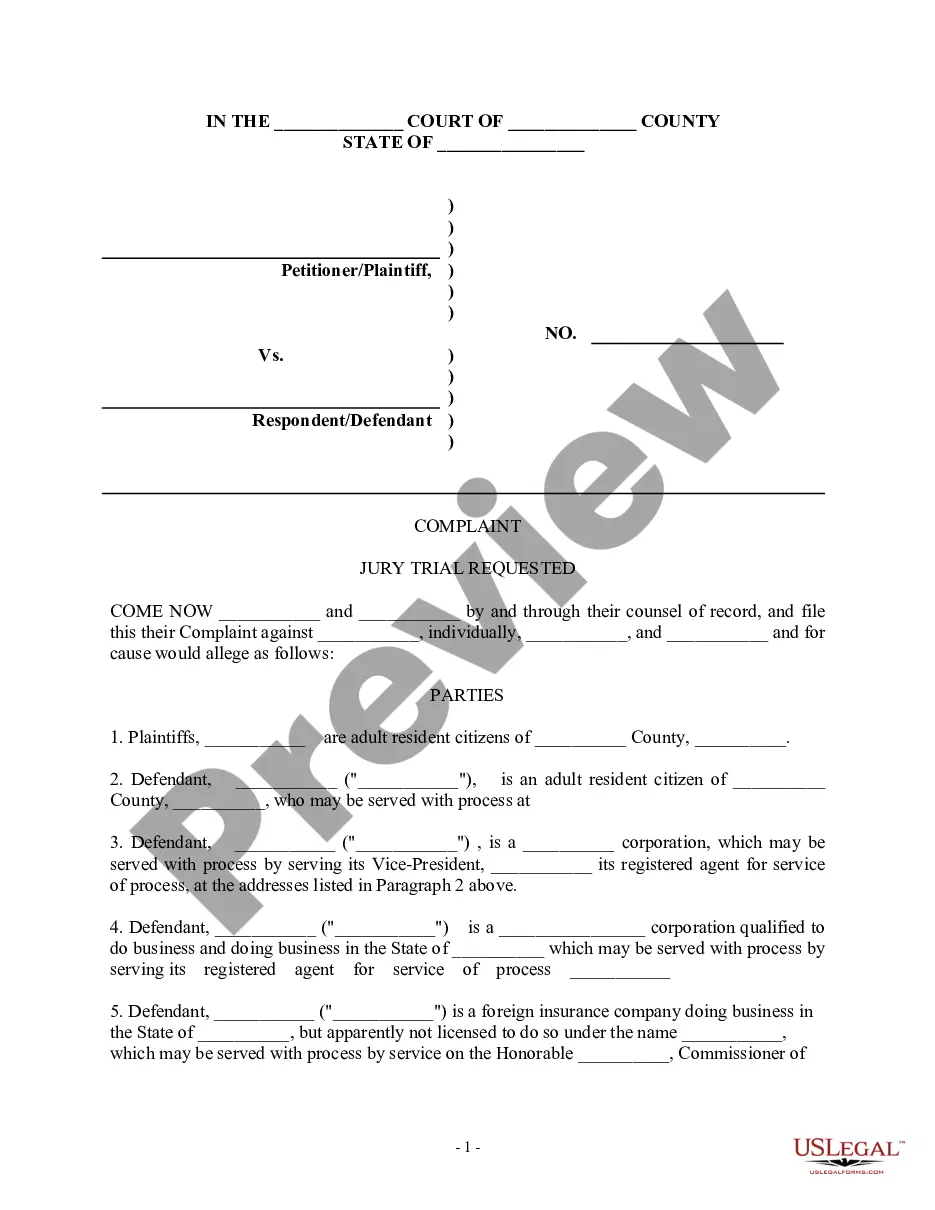
How to fill out Complaint For False Arrest And Imprisonment - 4th And 14th Amendment, US Constitution - Jury Trial Demand?
Whether for commercial reasons or for personal matters, everyone must confront legal circumstances at some point in their life.
Filling out legal paperwork demands meticulous attention, starting from selecting the proper form template.
Once it is saved, you can either complete the form using editing software or print it out and finish it manually. With a comprehensive US Legal Forms catalog available, there’s no need to waste time searching for the appropriate template online. Utilize the library’s straightforward navigation to find the right template for any event.
- Locate the template you require by using the search bar or browsing through the catalog.
- Review the form's details to confirm it aligns with your case, state, and locality.
- Click on the form's preview to take a look at it.
- If it is not the correct form, return to the search option to find the Constitution Amendment For Gst example you need.
- Obtain the template when it fits your requirements.
- If you already possess a US Legal Forms account, simply click Log in to access previously stored documents in My documents.
- If you do not have an account yet, you may acquire the form by clicking Buy now.
- Select the suitable pricing option.
- Fill out the account registration form.
- Choose your payment method: either a bank card or PayPal account.
- Pick the document format you prefer and download the Constitution Amendment For Gst.
Form popularity
FAQ
Amending a GST bill involves several straightforward steps. First, you need to gather the original bill and identify the specific changes required. Then, you can draft an amendment in accordance with the guidelines of the Constitution amendment for GST. Using platforms like USLegalForms can simplify this process by providing readily available templates and instructions to ensure compliance with legal standards.
Submitting a constitutional amendment requires a clear understanding of the procedures outlined in the Constitution itself. Generally, amendments can be proposed either by a two-thirds vote in both congressional houses or by a national convention. Once proposed, it must be ratified by three-fourths of state legislatures or conventions. If your aim involves a Constitution amendment for GST, staying informed about judicial interpretations and legislative changes is essential.
To amend a bill in GST, you must follow a structured process that involves revising the original bill details and resubmitting it for approval. Start by gathering all relevant transaction information and ensure it aligns with your business records. After that, use the GST portal to enter the revised details and submit your amendment. Utilizing USLegalForms can provide you with additional guidance and resources to help navigate this complex process easily.
A constitutional tax amendment is a proposed change to the US Constitution that affects taxation laws. This amendment can alter how taxes are levied, impacting both individuals and businesses across the nation. The goal of such an amendment often focuses on ensuring fairness or addressing specific tax issues. Understanding a Constitution amendment for GST is crucial as it could shape how GST is implemented and collected.
To file a GST amendment, you need to complete the appropriate forms relating to your previous GST submission. Typically, this involves accessing the GST portal and selecting the option for amendment. Ensure you have all supporting documents prepared, as these will help validate your request. By using USLegalForms, you can find easy-to-follow templates to streamline this process and ensure accuracy in your amendment.
Amending the Constitution involves a specific procedure outlined in Article V. Generally, this requires a proposal by two-thirds of both houses of Congress or a national convention called by two-thirds of state legislatures. After that, three-fourths of states must ratify the proposed amendment. Understanding the Constitution amendment for GST can help you navigate legal changes effectively, and US Legal Forms offers templates to simplify the process.
To check your GST amendment, visit the official GST portal and log in to your account. Once logged in, navigate to the 'Amendments' section where you can view your recent changes. By keeping track of your Constitution amendment for GST, you ensure compliance and updated records. If you need assistance, US Legal Forms can provide resources to guide you through the process.
The 102nd Amendment of the Constitution is a significant legal change that pertains to the implementation of the Goods and Services Tax. This Constitution amendment for GST created a legal framework to support the new tax regime across India. It empowers the central and state governments to levy and collect taxes on goods and services, ensuring a more streamlined process. Familiarizing yourself with this amendment is important for navigating the complexities of the GST landscape.
The GST amendment refers to changes made to the Goods and Services Tax framework through a Constitution amendment for GST. This modification aims to simplify tax collection and administration across states. By updating the Constitution, the amendment provides a uniform tax structure that benefits both businesses and consumers. Understanding this change is crucial for anyone engaging with the GST system.