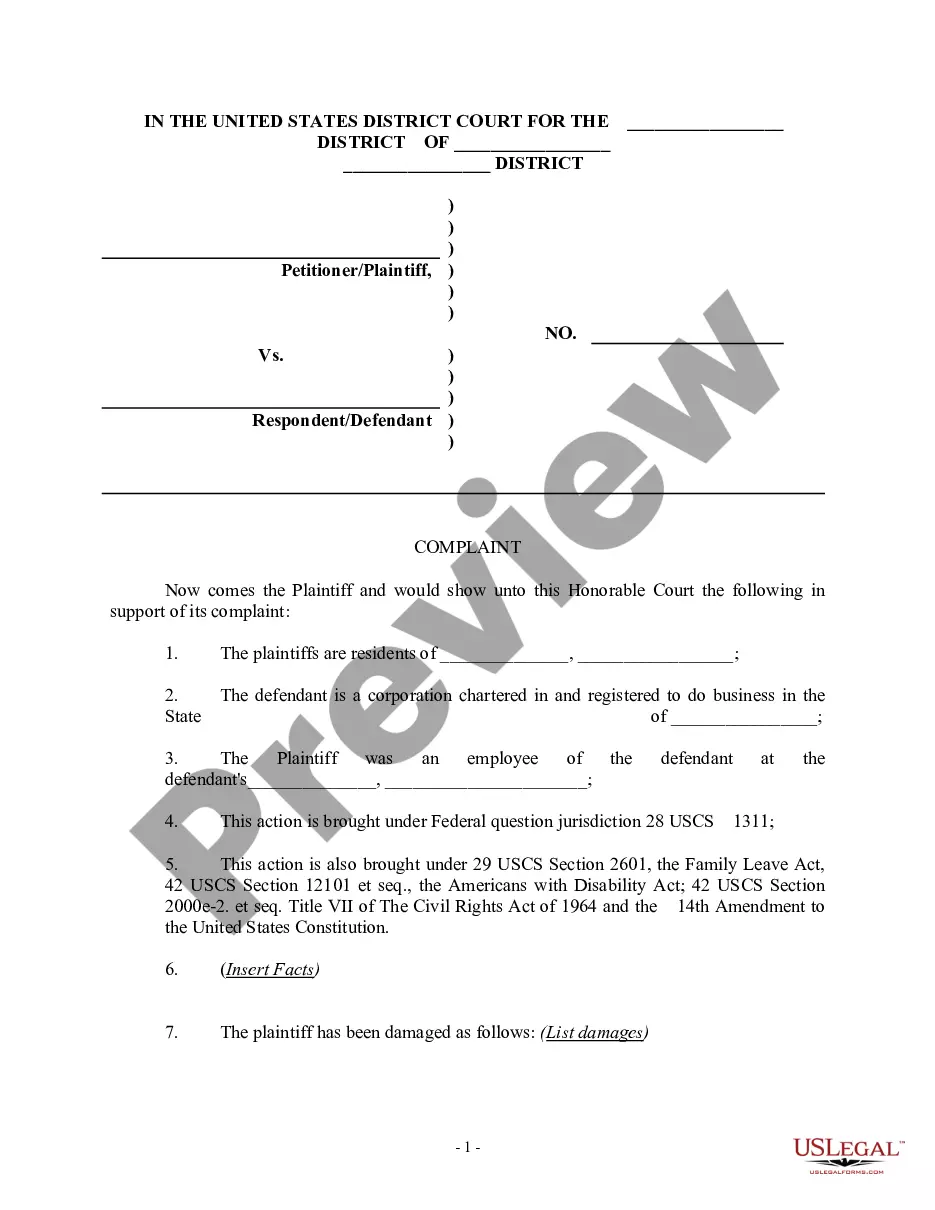
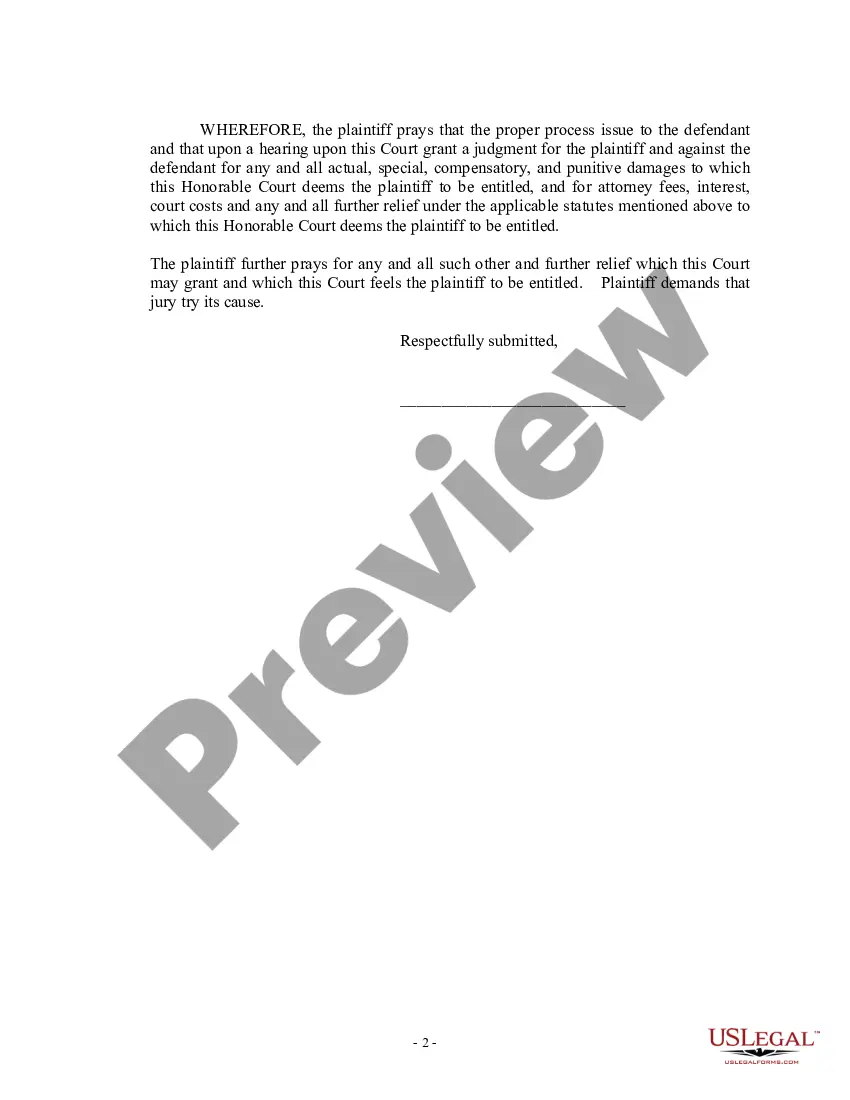
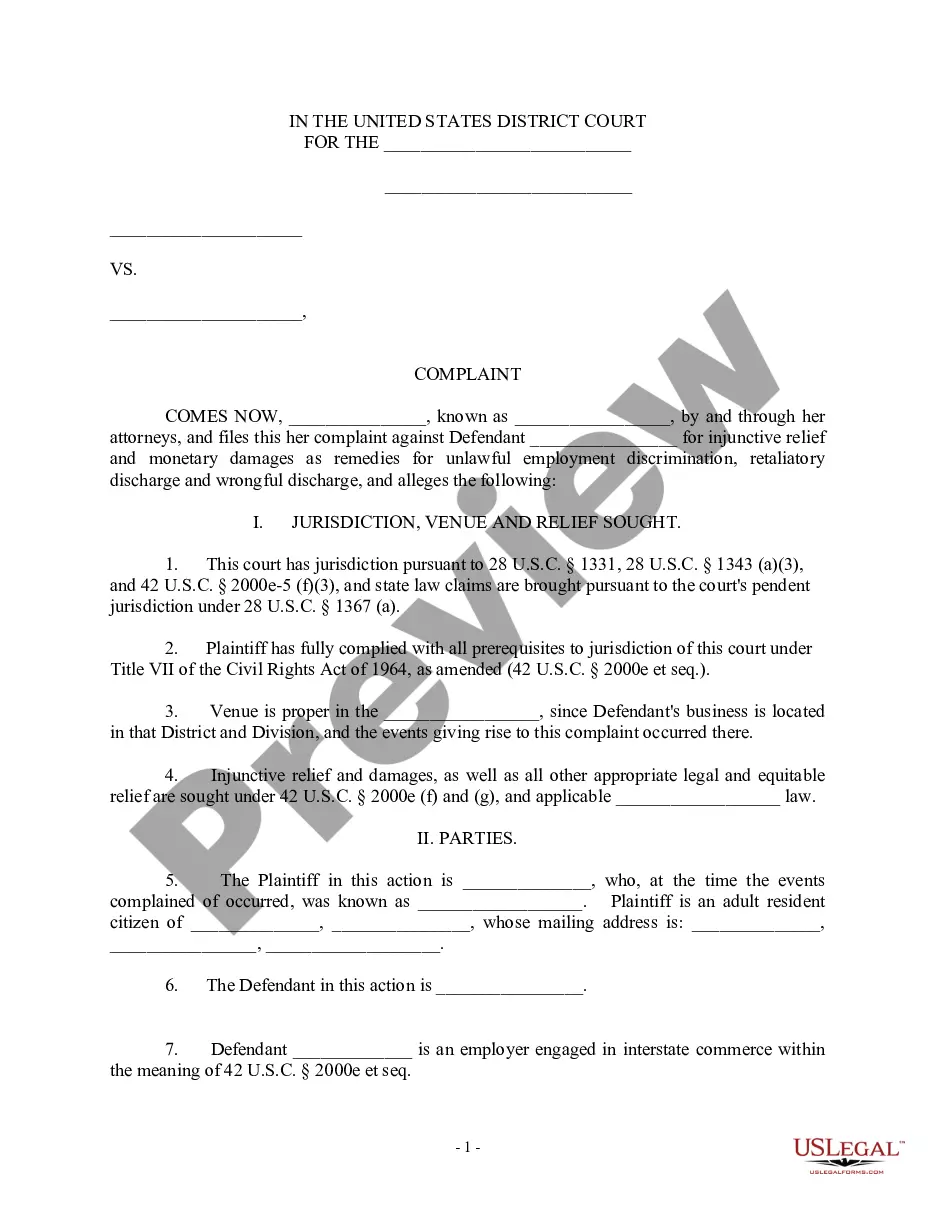
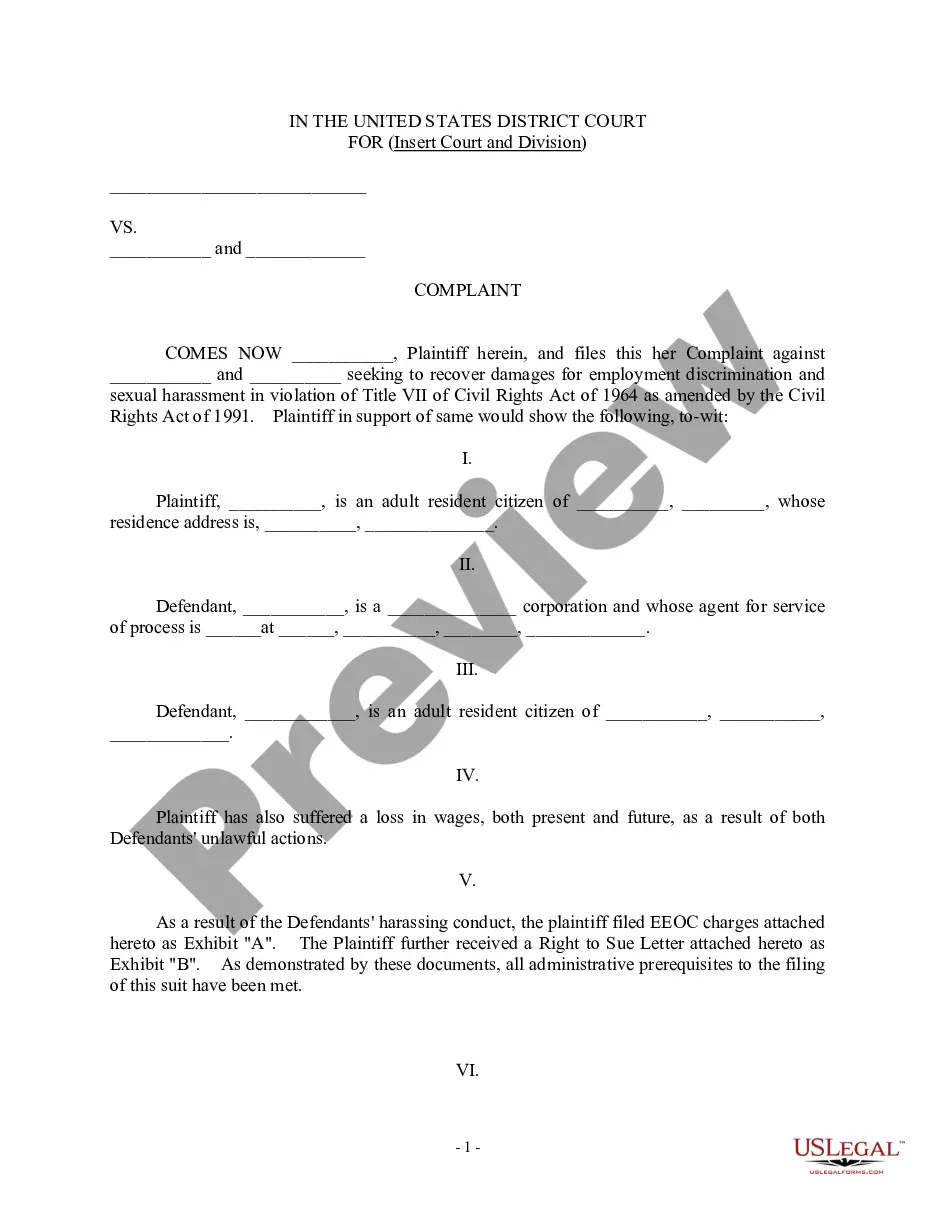
Employment Discrimination Rights Within The United States In Massachusetts
Description
Get your form ready online
Our built-in tools help you complete, sign, share, and store your documents in one place.
Make edits, fill in missing information, and update formatting in US Legal Forms—just like you would in MS Word.
Download a copy, print it, send it by email, or mail it via USPS—whatever works best for your next step.
Sign and collect signatures with our SignNow integration. Send to multiple recipients, set reminders, and more. Go Premium to unlock E-Sign.
If this form requires notarization, complete it online through a secure video call—no need to meet a notary in person or wait for an appointment.
We protect your documents and personal data by following strict security and privacy standards.

Make edits, fill in missing information, and update formatting in US Legal Forms—just like you would in MS Word.

Download a copy, print it, send it by email, or mail it via USPS—whatever works best for your next step.

Sign and collect signatures with our SignNow integration. Send to multiple recipients, set reminders, and more. Go Premium to unlock E-Sign.

If this form requires notarization, complete it online through a secure video call—no need to meet a notary in person or wait for an appointment.

We protect your documents and personal data by following strict security and privacy standards.
Looking for another form?
Form popularity
FAQ
The easiest way to prove unlawful discrimination is through the use of direct evidence. Direct evidence is the kind that, if believed, requires a conclusion that unlawful discrimination motivated the employer's decision. Direct evidence requires no inference or presumption.
Evidence in a discrimination case in California typically includes: emails, text messages, recordings, disciplinary forms, termination documents, or a copy of your employment contract if one exists. If you're like most Californians, you spend an inordinate amount of time at work.
When you make a discrimination claim, you need to provide the court with evidence from which it could decide that the discrimination took place. The obligation on you to provide this evidence is called the burden of proof.
It is the purpose of this Act to: 1. Recognize and protect the right to dignity and other human rights in the workplace and to prevent any abusive or negative behaviors that infringe upon these rights in the workplace.
If you are being treated unfairly in the workplace, there are a number of steps you can take in order to protect your rights: Document The Unfair Treatment. Report The Unfair Treatment. Stay Away From Social Media. Take Care Of Yourself. Contact An Experienced Lawyer.
Wronged employees have three ways of proving their employers intended to discriminate: circumstantial evidence, direct evidence, and pattern and practice. Circumstantial evidence is evidence that proves a fact by inference, as opposed to direct evidence which directly proves a fact.
Yes. Workplace discrimination is only illegal if it's because of race, gender, religion, sexual orientation, national origin, age (over 40), disability, pregnancy, genetic information, or military status.
Complaint Process Gather Information. Gather information you will need to file your complaint. How to File. Call 1-866-487-9243, or for general questions reach out to us online. We Work with You. We will work with you to answer your questions and determine whether an investigation is the best course of action.
You need to explain to the court and the defendant why you're taking court action. You do this by filling in the details of your claim. These are called particulars of claim. The particulars of your claim is where you say what happened to you and how you think this is unlawful under the Equality Act.
A job discrimination complaint may be filed by mail or in person at the nearest EEOC office. You can find the closest EEOC office by calling the EEOC at 1-800-669-4000, or by going to the EEOC's Field Office List and Jurisdiction Map and selecting the office closest to you.