Tort Form Meaning In San Diego
Description




Get your form ready online
Our built-in tools help you complete, sign, share, and store your documents in one place.
Make edits, fill in missing information, and update formatting in US Legal Forms—just like you would in MS Word.
Download a copy, print it, send it by email, or mail it via USPS—whatever works best for your next step.
Sign and collect signatures with our SignNow integration. Send to multiple recipients, set reminders, and more. Go Premium to unlock E-Sign.
If this form requires notarization, complete it online through a secure video call—no need to meet a notary in person or wait for an appointment.
We protect your documents and personal data by following strict security and privacy standards.

Make edits, fill in missing information, and update formatting in US Legal Forms—just like you would in MS Word.

Download a copy, print it, send it by email, or mail it via USPS—whatever works best for your next step.

Sign and collect signatures with our SignNow integration. Send to multiple recipients, set reminders, and more. Go Premium to unlock E-Sign.

If this form requires notarization, complete it online through a secure video call—no need to meet a notary in person or wait for an appointment.

We protect your documents and personal data by following strict security and privacy standards.
Looking for another form?
Form popularity
FAQ
California Tort Claims Act Filing a claim gives the agency the opportunity to settle the claim before a lawsuit is filed and to investigate the claim so that it can properly defend itself, or to correct the conditions or practices that led to the claim.
Tort Law is a subset of California laws that handles civil breaches by a party against another, which entitles the victim to compensation. California Tort Claims Act is uniques in some ways: It allows persons to file written claims against state establishments within six months of the alleged damage.
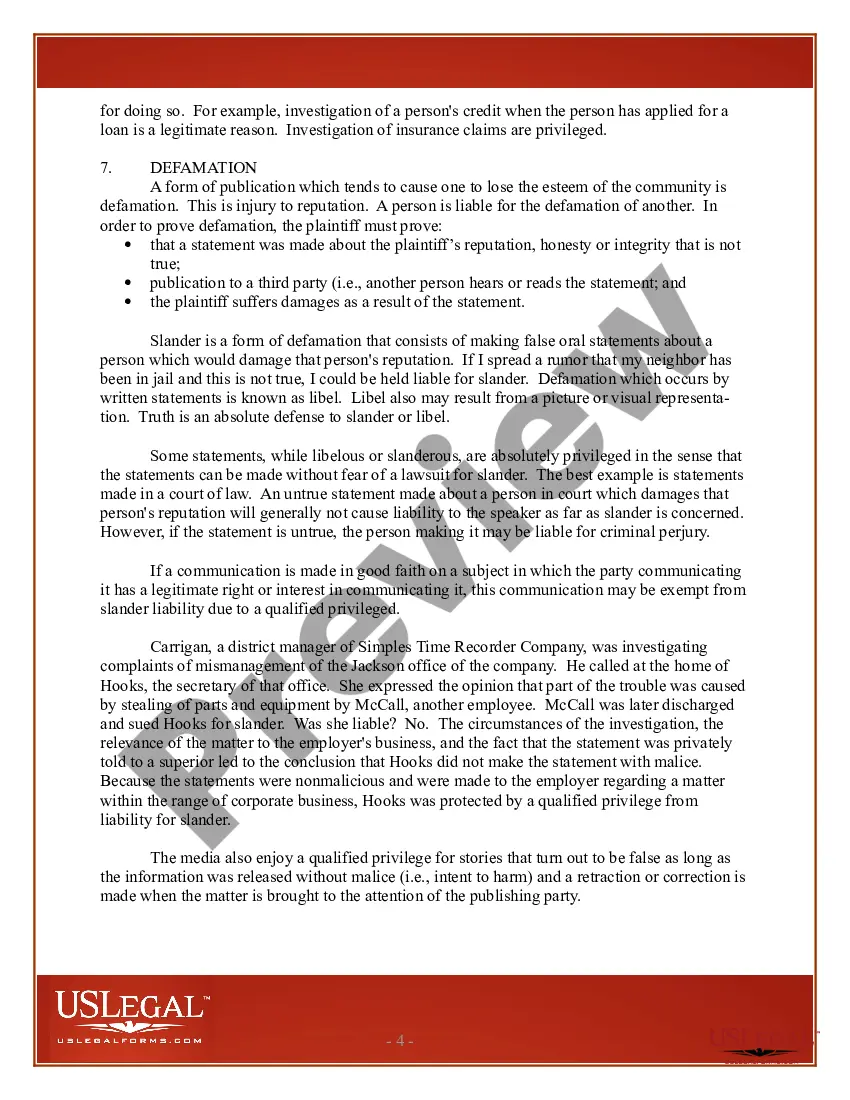
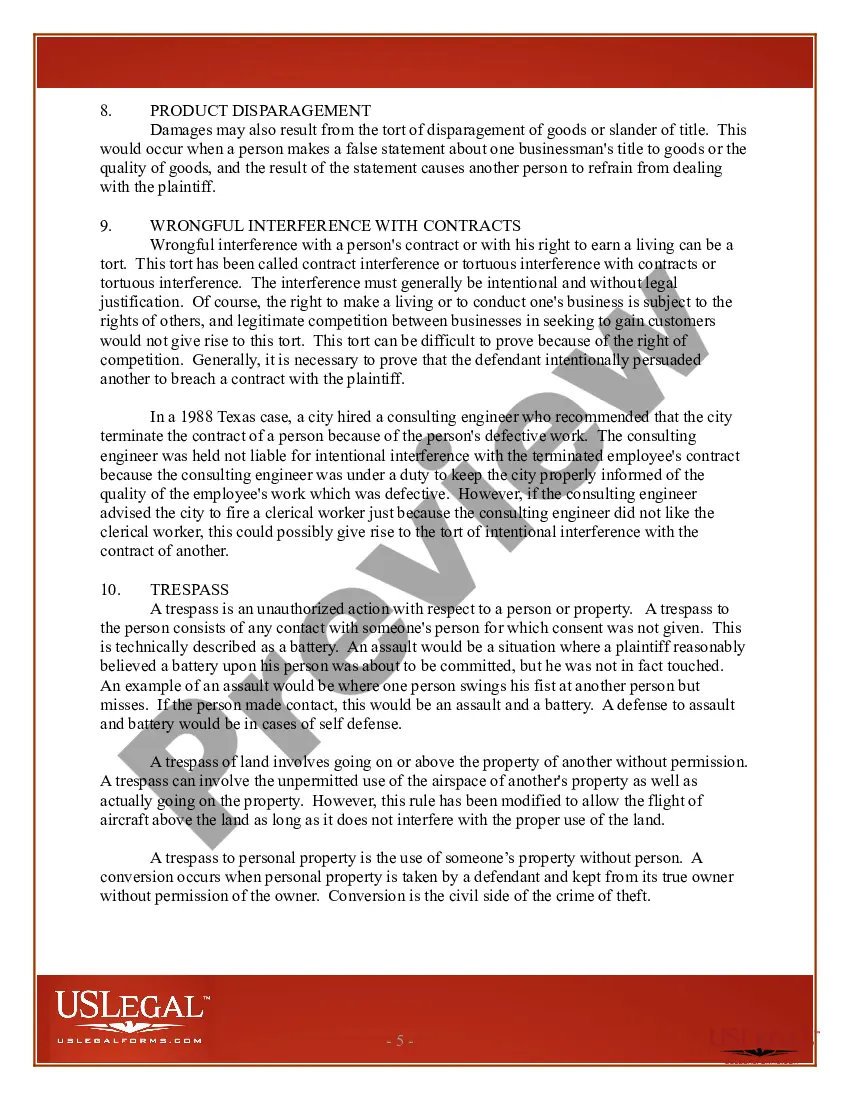
Four of them are personal: assault, battery, intentional infliction of emotional distress, and false imprisonment. The other three are trespass to chattels, trespass to property, and conversion.
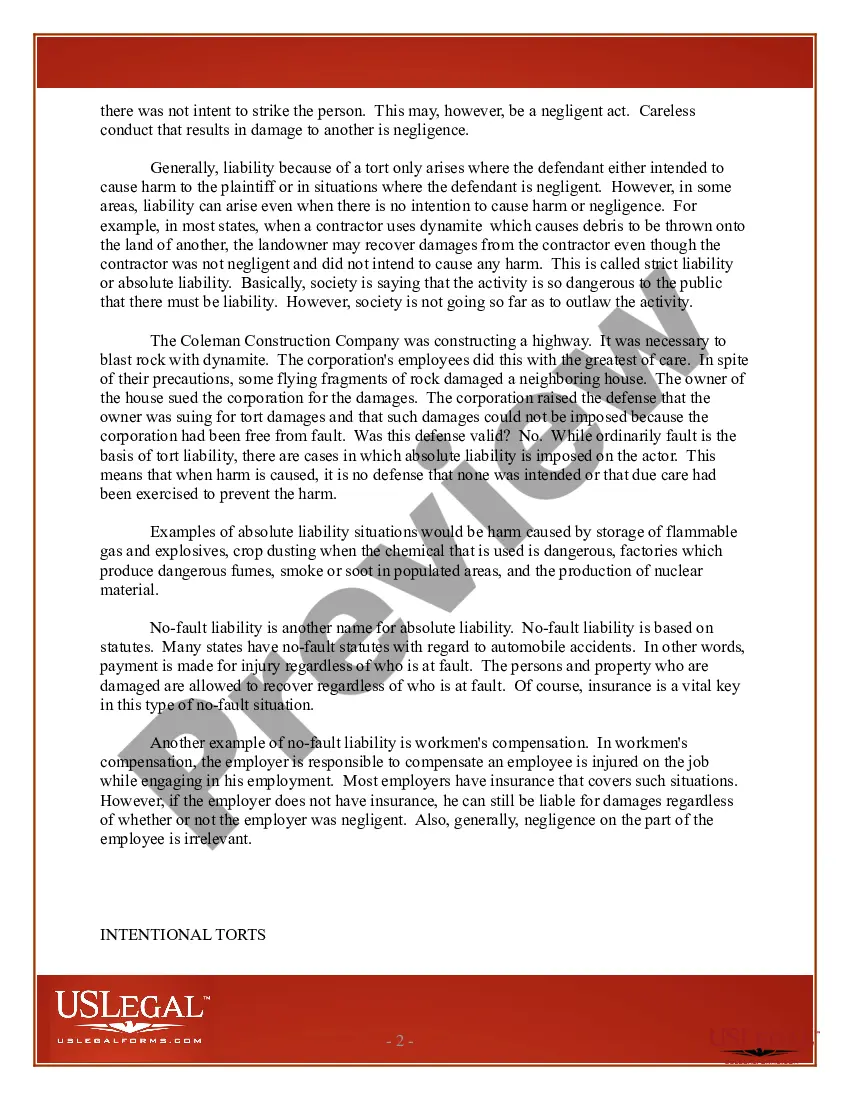
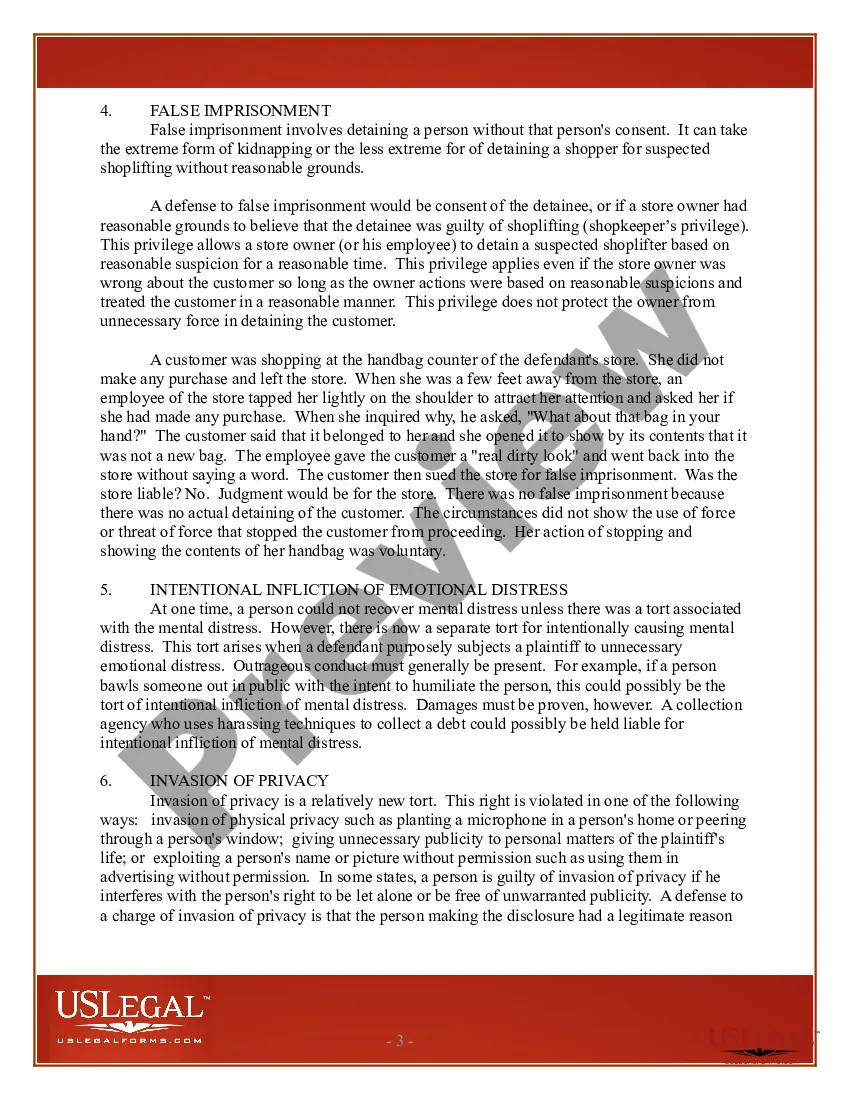
Torts fall into three general categories: Intentional torts (e.g., intentionally hitting a person); Negligent torts (e.g., causing an accident by failing to obey traffic rules); and. Strict liability torts (e.g., liability for making and selling defective products - see Products Liability).
Tort law is considered to be a form of restorative justice since it seeks to remedy losses or injury by providing monetary compensation. There are three main categories of tort law, including suits alleging negligence, intentional harm, and strict liability.
The Tort Claims Act generally requires the filing of an administrative claim for damages as a prerequisite to filing a civil action. Twelve classes of damage claims are exempted from the claim-presentation requirements under Government Code section 905.
Overview. The Federal Tort Claims Act (FTCA) sets forth procedures for presenting and resolving administrative monetary claims for personal injury, property damage, or death arising from the alleged negligence of officers and employees of the Office of Personnel Management acting in the scope of their official duties.
California Tort Claims Act Filing a claim gives the agency the opportunity to settle the claim before a lawsuit is filed and to investigate the claim so that it can properly defend itself, or to correct the conditions or practices that led to the claim.
The Tort Claims Act generally requires the filing of an administrative claim for damages as a prerequisite to filing a civil action. Twelve classes of damage claims are exempted from the claim-presentation requirements under Government Code section 905.
Provide as much detail as possible. Provide all related supportive documentation: Include all receipts, two appraisals or repair estimates, proof of ownership (if property damage is claimed), photographs, and medical documents or records, as well as police, incident or witness reports (if applicable).