Types Of Torts With Examples In Ohio
Description





Get your form ready online
Our built-in tools help you complete, sign, share, and store your documents in one place.
Make edits, fill in missing information, and update formatting in US Legal Forms—just like you would in MS Word.
Download a copy, print it, send it by email, or mail it via USPS—whatever works best for your next step.
Sign and collect signatures with our SignNow integration. Send to multiple recipients, set reminders, and more. Go Premium to unlock E-Sign.
If this form requires notarization, complete it online through a secure video call—no need to meet a notary in person or wait for an appointment.
We protect your documents and personal data by following strict security and privacy standards.

Make edits, fill in missing information, and update formatting in US Legal Forms—just like you would in MS Word.

Download a copy, print it, send it by email, or mail it via USPS—whatever works best for your next step.

Sign and collect signatures with our SignNow integration. Send to multiple recipients, set reminders, and more. Go Premium to unlock E-Sign.

If this form requires notarization, complete it online through a secure video call—no need to meet a notary in person or wait for an appointment.

We protect your documents and personal data by following strict security and privacy standards.
Looking for another form?
Form popularity
FAQ
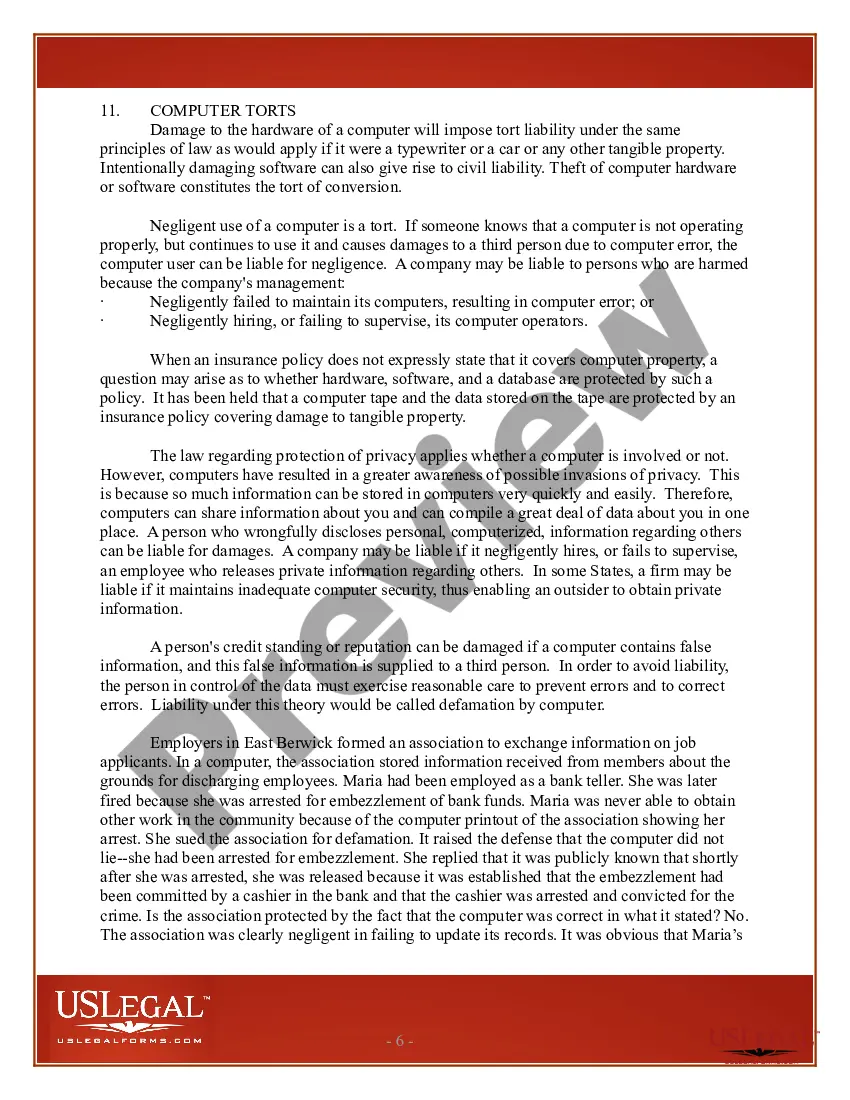
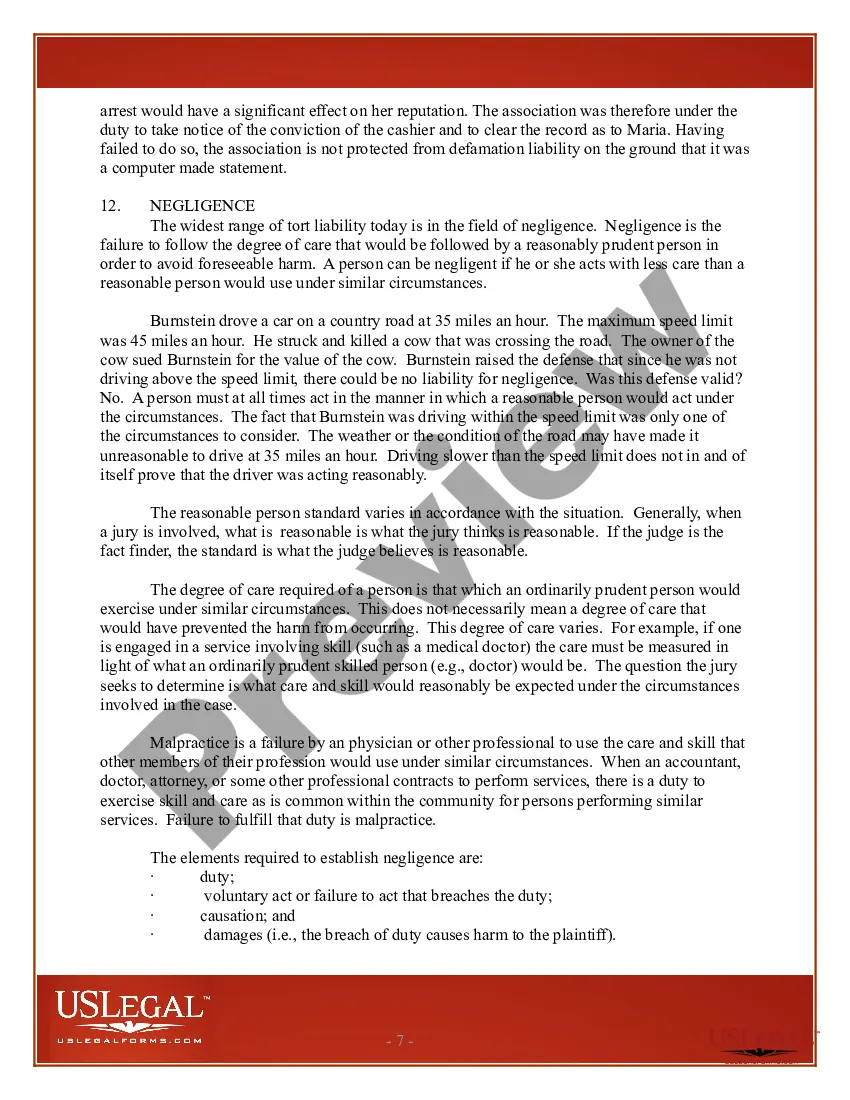
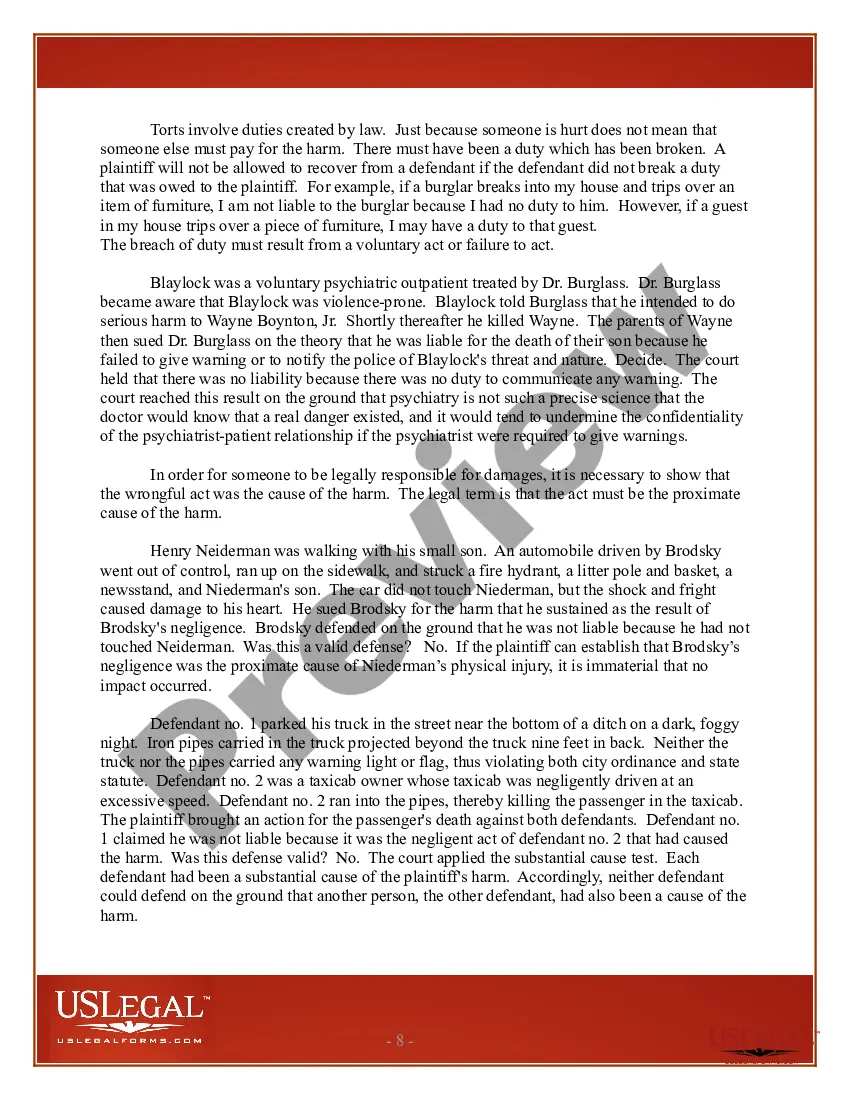
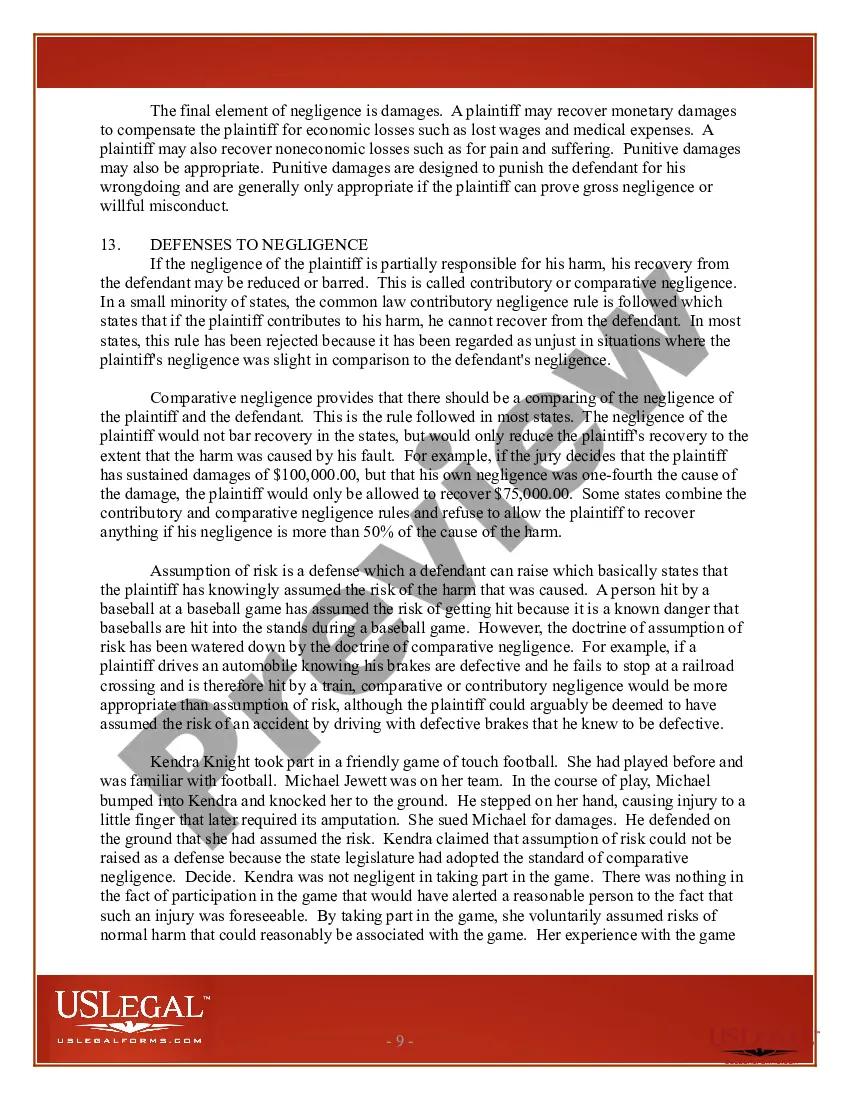
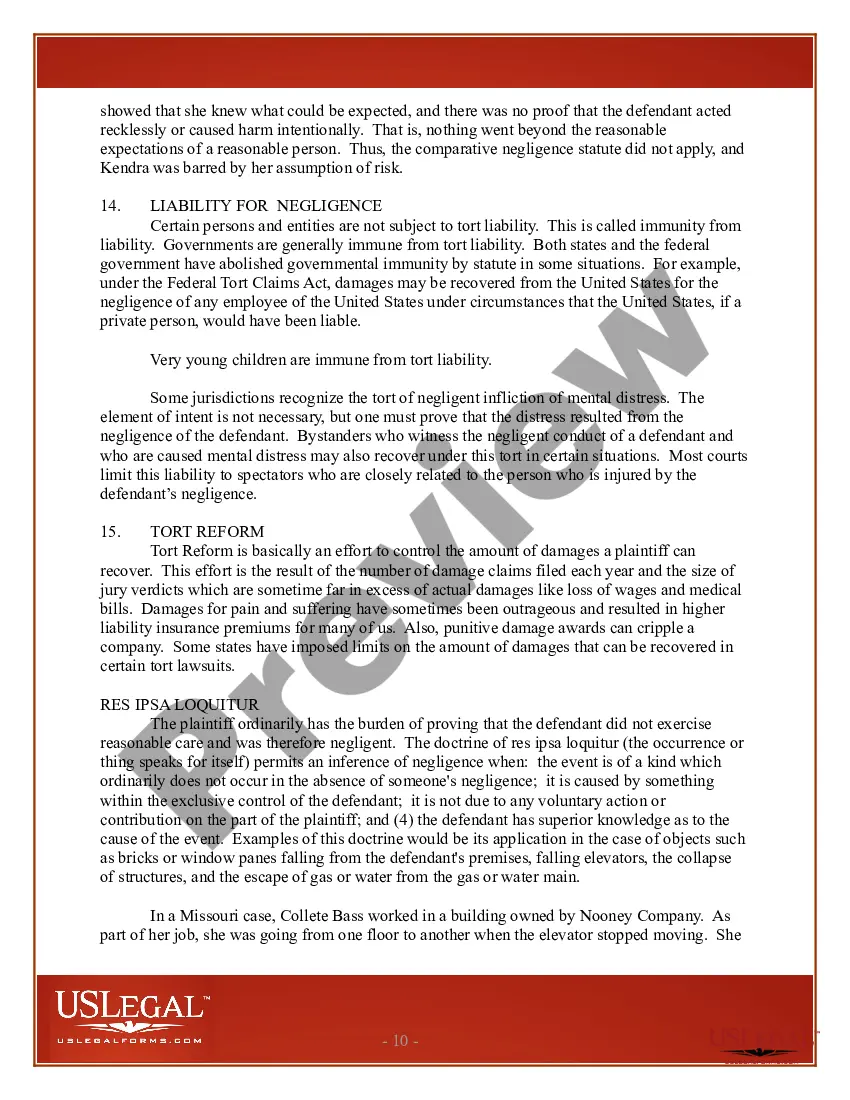
There are numerous specific torts including trespass, assault, battery, negligence, products liability, and intentional infliction of emotional distress. There are also separate areas of tort law including nuisance, defamation, invasion of privacy, and a category of economic torts.
Types of Intentional Torts Assault and battery. Assault and battery are often used interchangeably, but they are actually separate wrongful acts. False imprisonment. False imprisonment is the unlawful restraint of another person without their consent. Defamation. Trespass to land and chattels.
Understanding Tort Types Torts represent key legal principles involving many types of wrongful actions that result in damage. They are mainly divided into three primary categories: intentional, negligence, and strict liability torts.
To file a claim, complete these steps: Complete Standard Form 95. Explain in detail what happened, using additional pages if necessary. Attach all documents that support your claim, which may include the following. Submit the completed Standard Form 95 and supporting documents to the OPM Office of the General Counsel.
Under tort law, seven intentional torts exist. Four of them are personal: assault, battery, intentional infliction of emotional distress, and false imprisonment. The other three are trespass to chattels, trespass to property, and conversion.
What's the Difference Between Negligence and an Intentional Tort? The primary difference in tort law between an intentional tort and negligence is that an intentional tort occurs when someone acts on purpose, while negligence happens when someone isn't careful enough to fulfill the necessary standard of care.
The Four Elements of a Tort The accused had a duty, in most personal injury cases, to act in a way that did not cause you to become injured. The accused committed a breach of that duty. An injury occurred to you. The breach of duty was the proximate cause of your injury.
There are three basic types of torts: Intentional torts, where someone intentionally committed a wrong and caused an injury to someone else. Negligent torts, where someone violated a duty they owed to the person harmed, such as running a red light and causing an accident.
To file a claim, complete these steps: Complete Standard Form 95. Explain in detail what happened, using additional pages if necessary. Attach all documents that support your claim, which may include the following. Submit the completed Standard Form 95 and supporting documents to the OPM Office of the General Counsel.
