Tort Negligence Liability For Principals And Agents In Nevada
Description

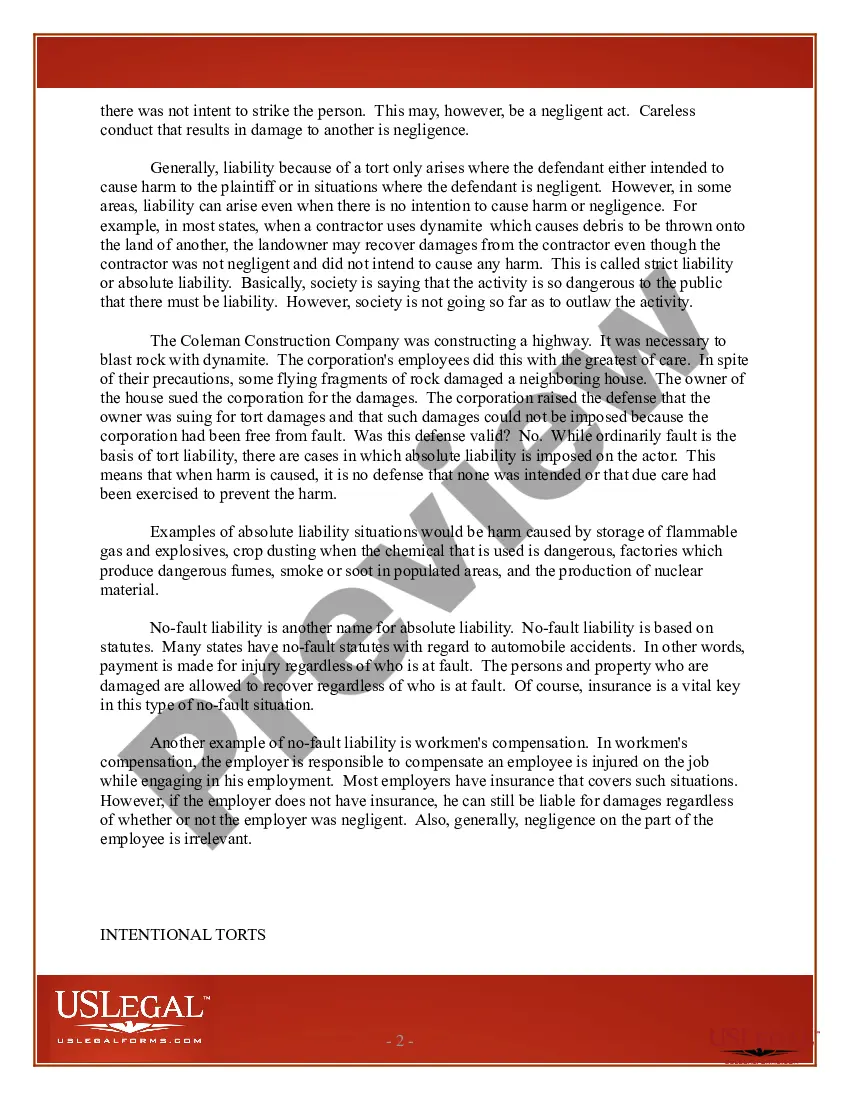
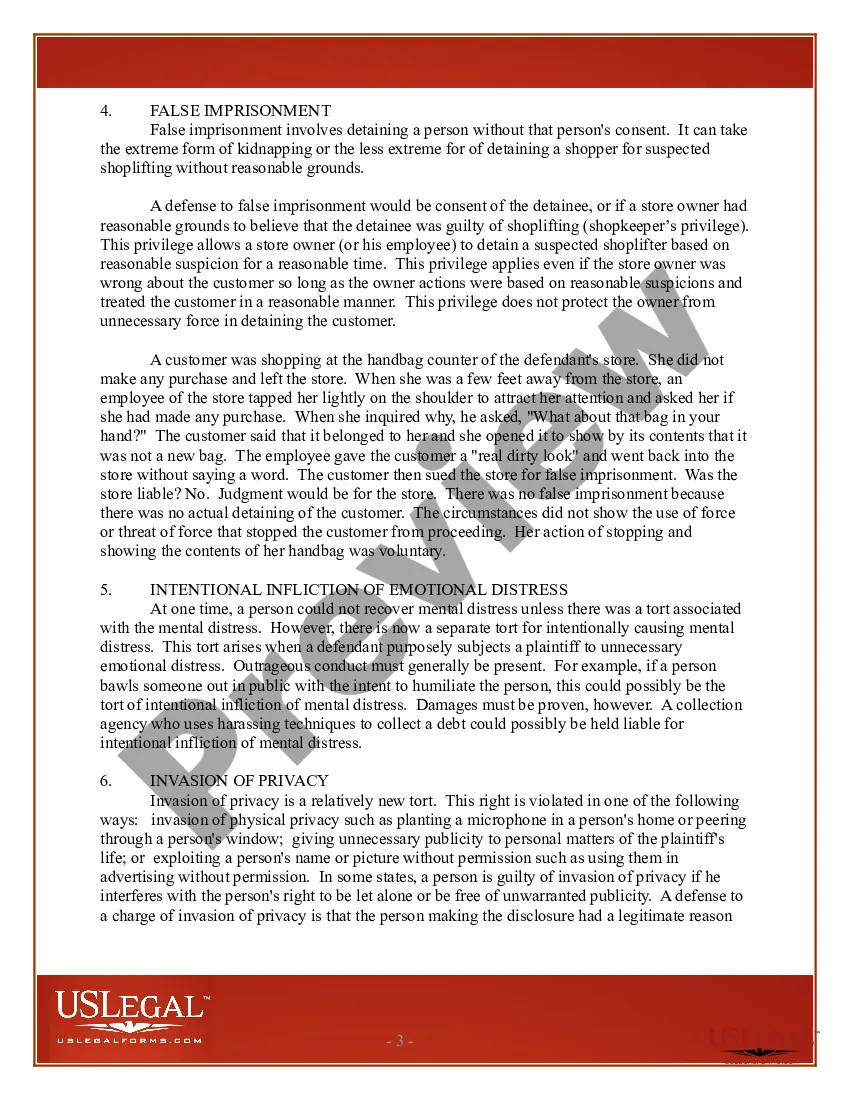
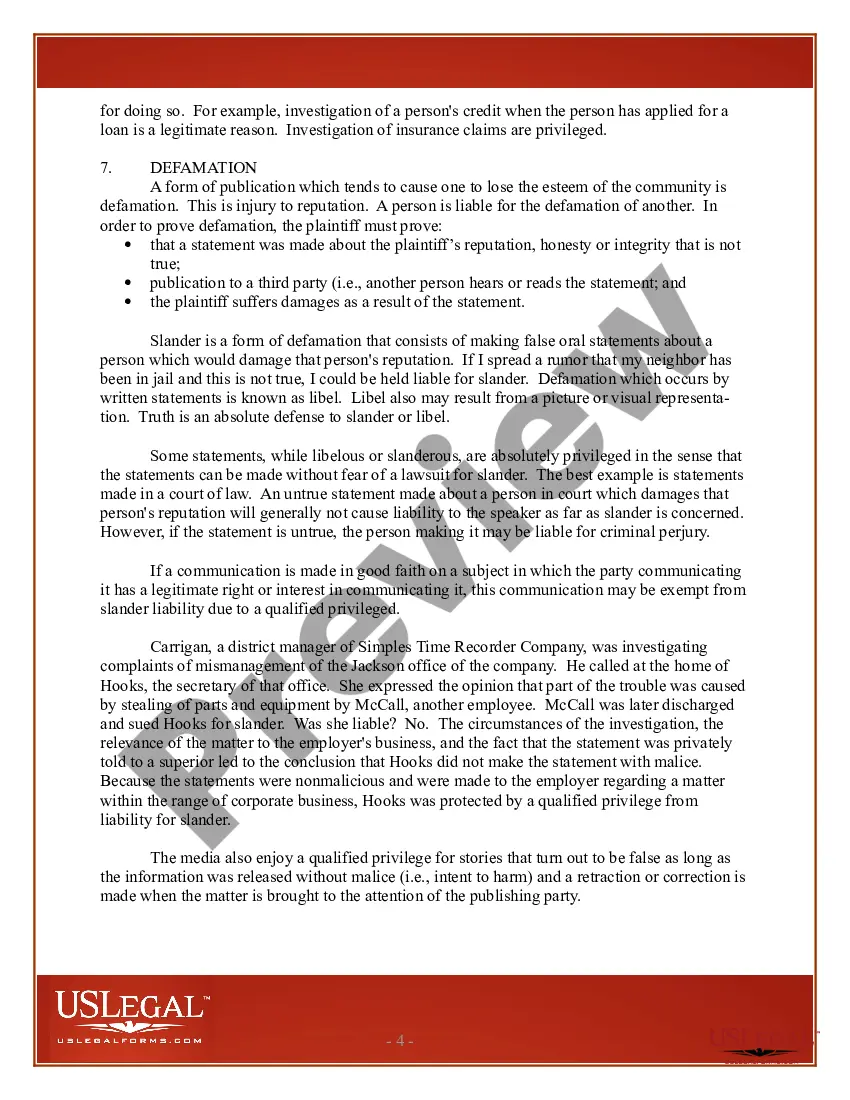
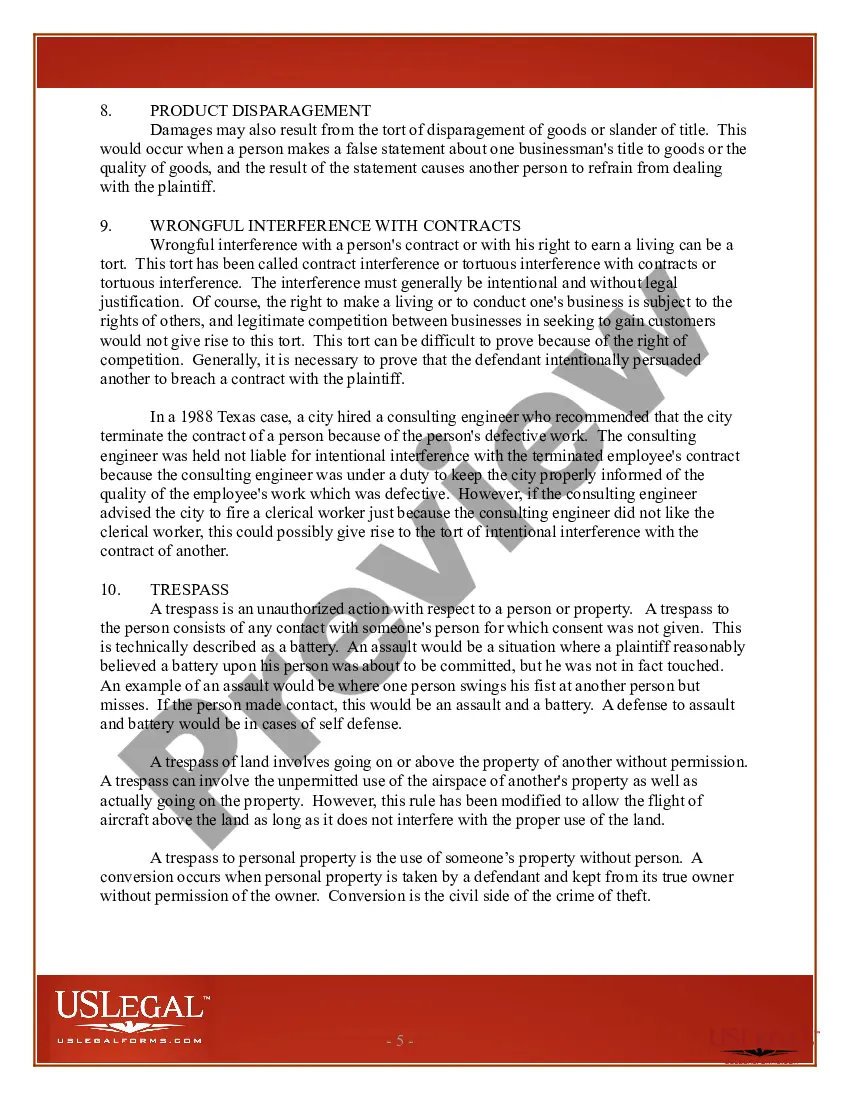





Get your form ready online
Our built-in tools help you complete, sign, share, and store your documents in one place.
Make edits, fill in missing information, and update formatting in US Legal Forms—just like you would in MS Word.
Download a copy, print it, send it by email, or mail it via USPS—whatever works best for your next step.
Sign and collect signatures with our SignNow integration. Send to multiple recipients, set reminders, and more. Go Premium to unlock E-Sign.
If this form requires notarization, complete it online through a secure video call—no need to meet a notary in person or wait for an appointment.
We protect your documents and personal data by following strict security and privacy standards.

Make edits, fill in missing information, and update formatting in US Legal Forms—just like you would in MS Word.

Download a copy, print it, send it by email, or mail it via USPS—whatever works best for your next step.

Sign and collect signatures with our SignNow integration. Send to multiple recipients, set reminders, and more. Go Premium to unlock E-Sign.

If this form requires notarization, complete it online through a secure video call—no need to meet a notary in person or wait for an appointment.

We protect your documents and personal data by following strict security and privacy standards.
Looking for another form?



Form popularity
FAQ
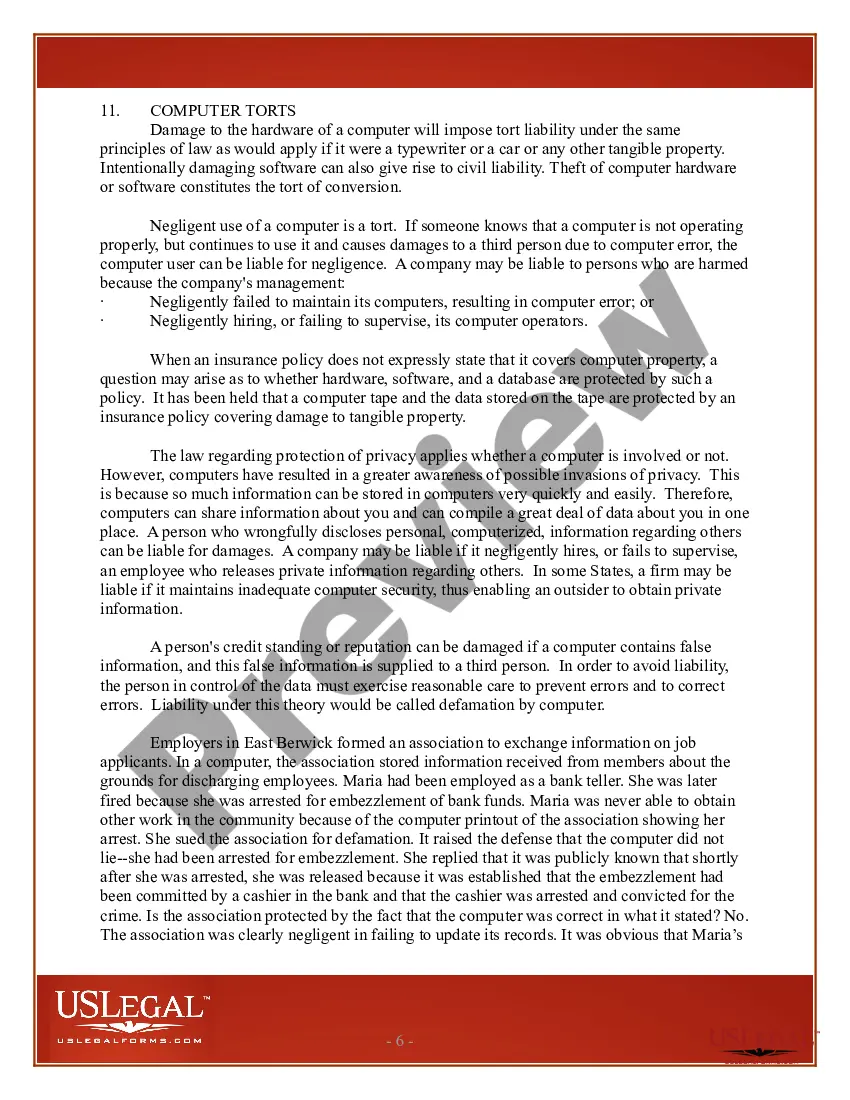
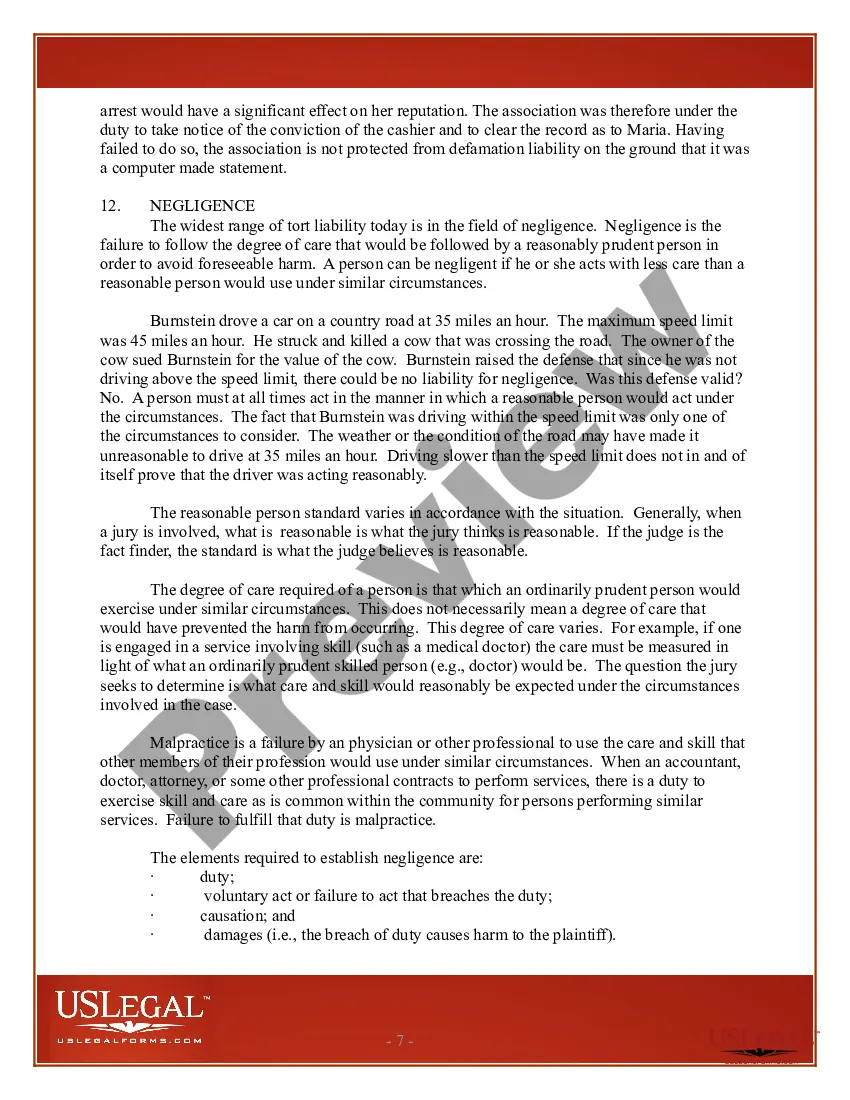
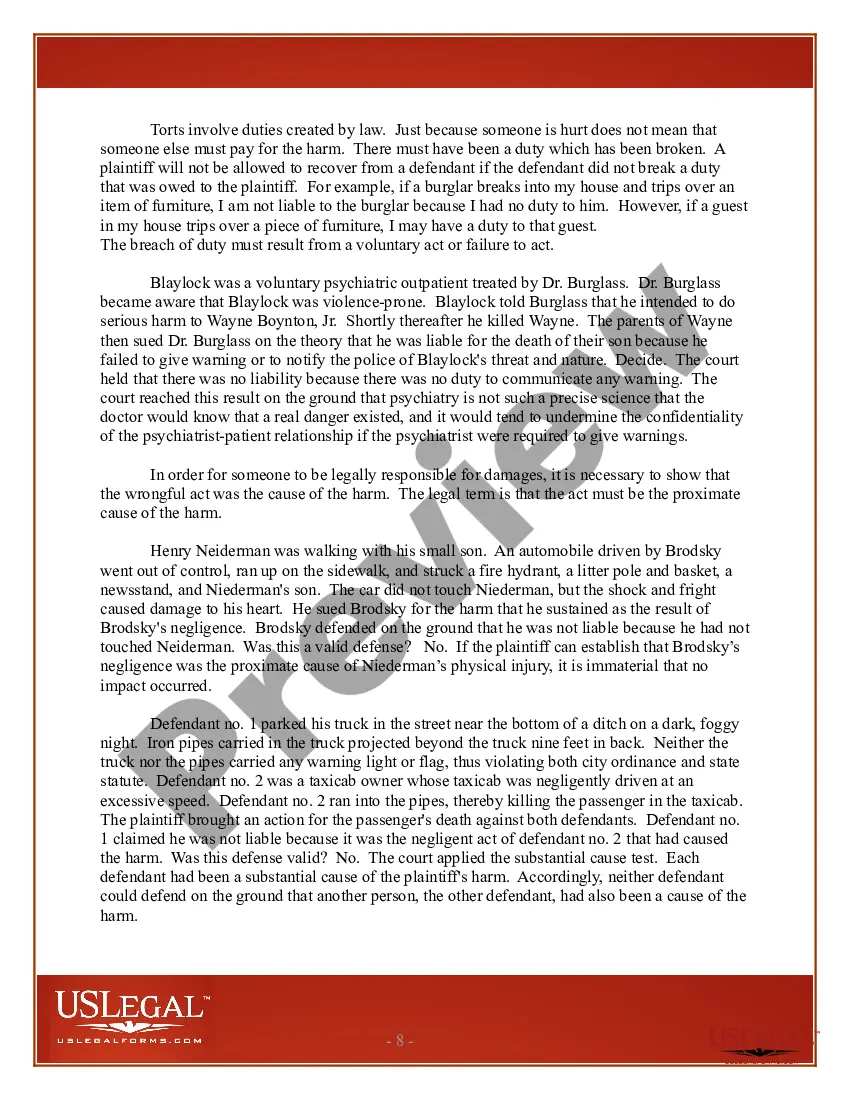
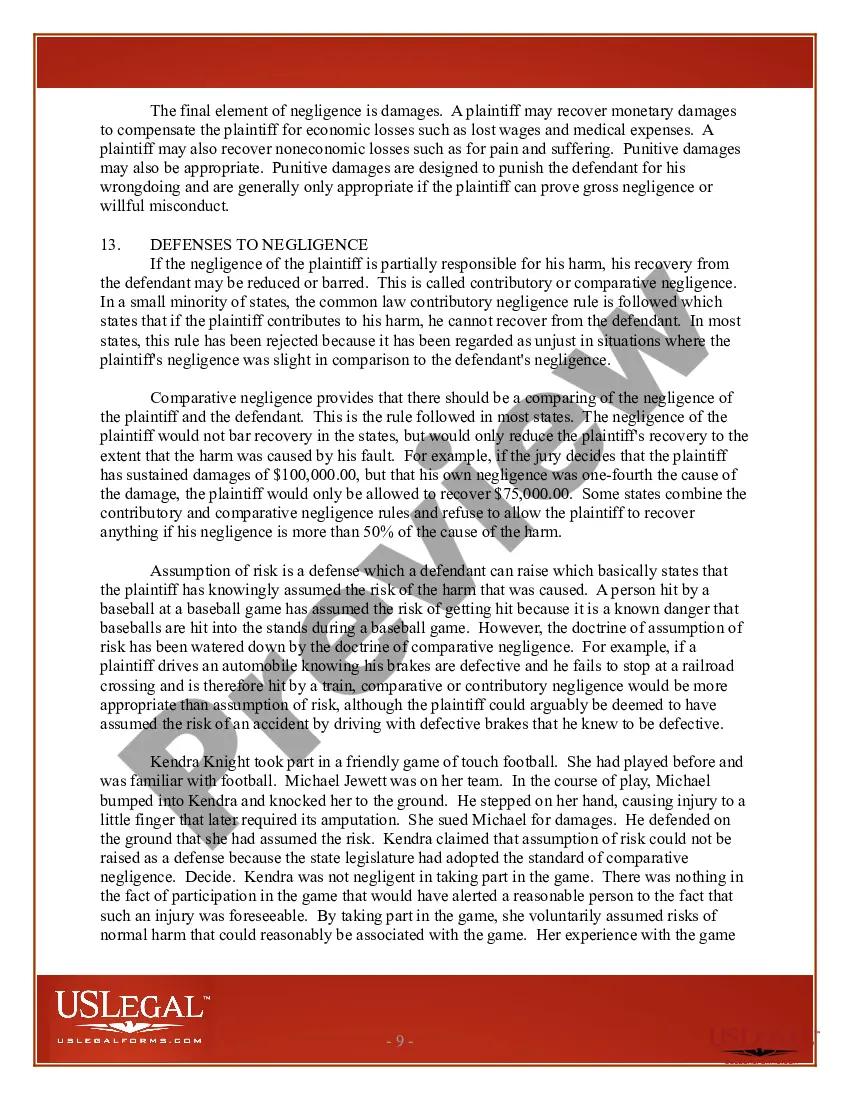
A negligence claim requires that the person bringing the claim (the plaintiff) establish four distinct elements: duty of care, breach, causation, and damages.
Some common negligence case examples under this category include, but are not limited to, the following scenarios: A driver runs a stop sign and slams into another car. A driver operates illegally in the bicycle lane and hits a bicyclist. A driver runs a red light and hits a pedestrian in a crosswalk.
Identifying the Four Tort Elements The accused had a duty, in most personal injury cases, to act in a way that did not cause you to become injured. The accused committed a breach of that duty. An injury occurred to you. The breach of duty was the proximate cause of your injury.
This is especially true if the third party is made aware of the agent's authority limitations. In this situation, the third party may still attempt to sue the principal for any damages caused. However, the principal can then turn around and sue the agent to recover any damages caused.
In order to win your negligence claim, and obtain one or more of the types of damages available to you as an injured victim, your personal injury lawyer will have to prove four things: (1) duty; (2) breach; (3) causation; and (4) damages. More specifically, your attorney will have to prove the following: Duty.
Most civil lawsuits for injuries allege the wrongdoer was negligent. To win in a negligence lawsuit, the victim must establish 4 elements: (1) the wrongdoer owed a duty to the victim, (2) the wrongdoer breached the duty, (3) the breach caused the injury (4) the victim suffered damages.
Legally speaking, negligence is a failure to use reasonable care under the circumstances. In order to establish negligence, you must be able to prove four “elements”: a duty, a breach of that duty, causation and damages.
A principal can be held directly liable for an agent's torts when: The principal gave faulty instructions to the agent. The principal negligently hired the agent. The principal failed to properly supervise the agent.
Tort liability is predicated on the existence of proximate cause, which consists of both: (1) causation in fact, and (2) foreseeability. A plaintiff must prove that his or her injuries were the actual or factual result of the defendant's actions.
To file a claim, complete these steps: Complete Standard Form 95. Explain in detail what happened, using additional pages if necessary. Attach all documents that support your claim, which may include the following. Submit the completed Standard Form 95 and supporting documents to the OPM Office of the General Counsel.
