Tort Negligence Liability Without Fault In Minnesota
Description




Get your form ready online
Our built-in tools help you complete, sign, share, and store your documents in one place.
Make edits, fill in missing information, and update formatting in US Legal Forms—just like you would in MS Word.
Download a copy, print it, send it by email, or mail it via USPS—whatever works best for your next step.
Sign and collect signatures with our SignNow integration. Send to multiple recipients, set reminders, and more. Go Premium to unlock E-Sign.
If this form requires notarization, complete it online through a secure video call—no need to meet a notary in person or wait for an appointment.
We protect your documents and personal data by following strict security and privacy standards.

Make edits, fill in missing information, and update formatting in US Legal Forms—just like you would in MS Word.

Download a copy, print it, send it by email, or mail it via USPS—whatever works best for your next step.

Sign and collect signatures with our SignNow integration. Send to multiple recipients, set reminders, and more. Go Premium to unlock E-Sign.

If this form requires notarization, complete it online through a secure video call—no need to meet a notary in person or wait for an appointment.

We protect your documents and personal data by following strict security and privacy standards.
Looking for another form?





Form popularity
FAQ
None. California is a pure comparative negligence state.
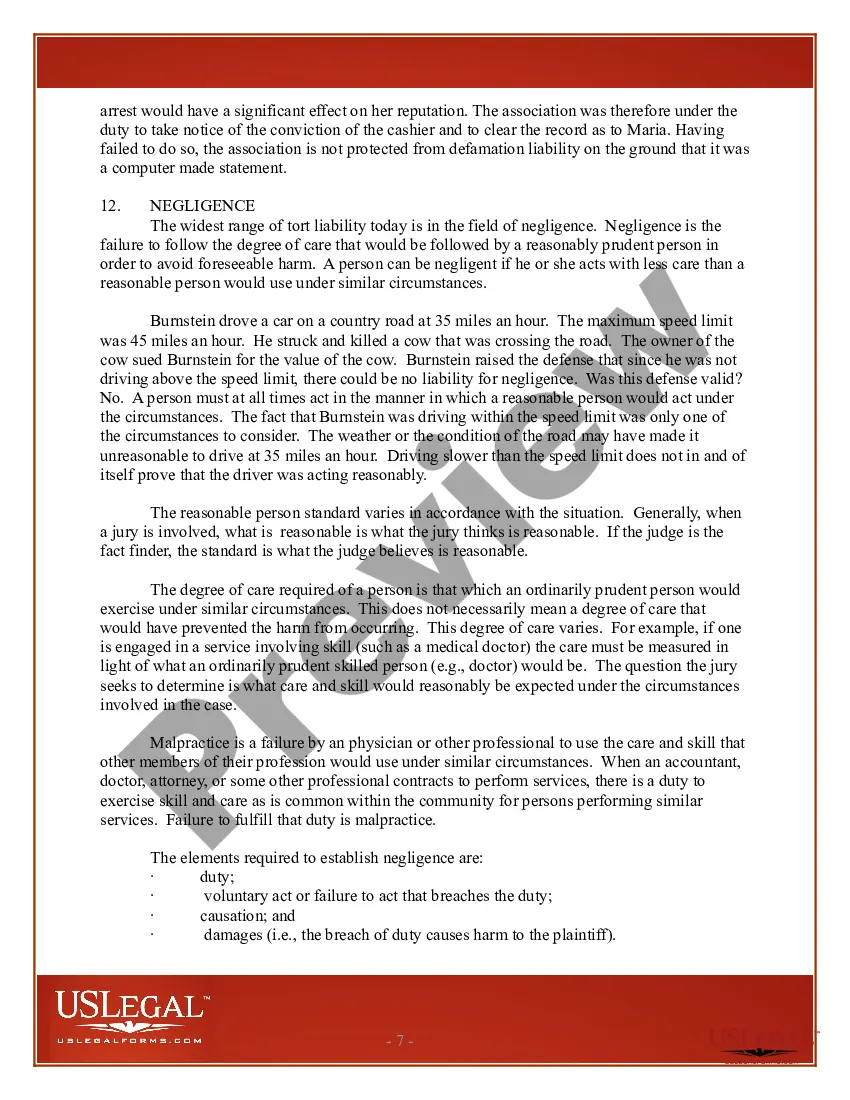
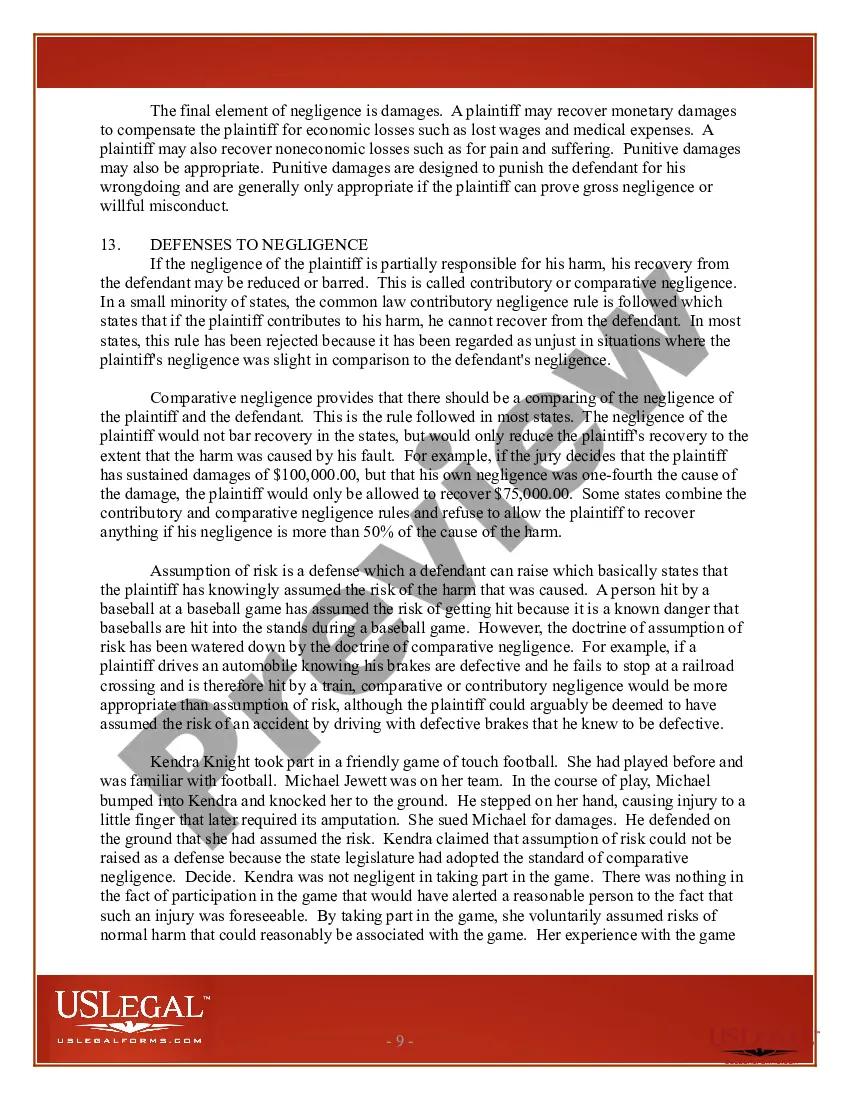
This means that Minnesota does not bar your negligence claim so long as a judge or jury does not determine that you were more than 50% at fault for the accident/injuries. If you are found less than 50% responsible, you may recover damages but your claim will be reduced in proportion to your percentage of fault.
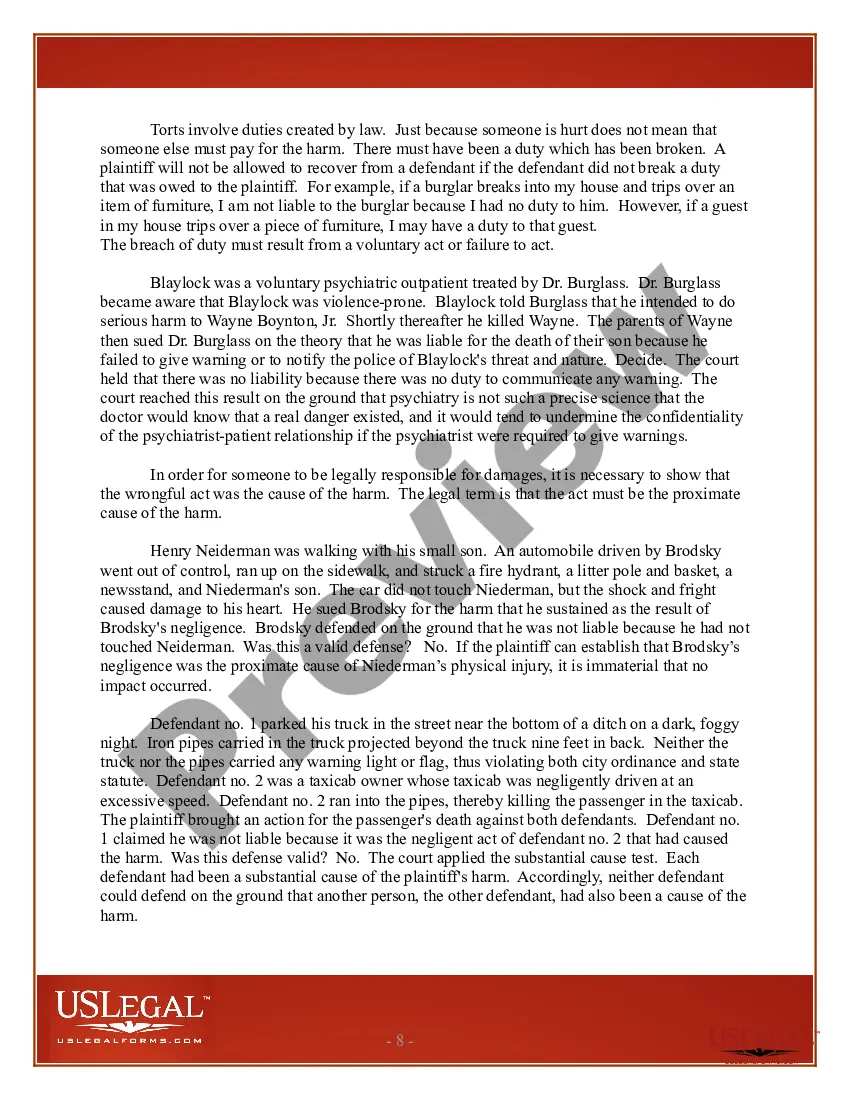
(1) No fault liability means liability of a person even without any negligent act on his part and even if he has taken due care and caution. (2) If a person brings and keeps any dangerous thing on his land, then he is liable for any damage caused if the thing escapes.
An important consequence of the fact that negligence necessarily involves wrong in the doing, but not in the doer, is that in some of its applications liability for negligence may be strict in the sense that it is imposed on defendants who should not be blamed for failing to have exercised reasonable care.
The generally recognised forms of fault are intent, which is divided into direct and indirect intent, and neg- ligence, which is divided into carelessness and gross negligence. ing to LOA § 104 (2), the forms of fault are carelessness, gross negligence, and intent.
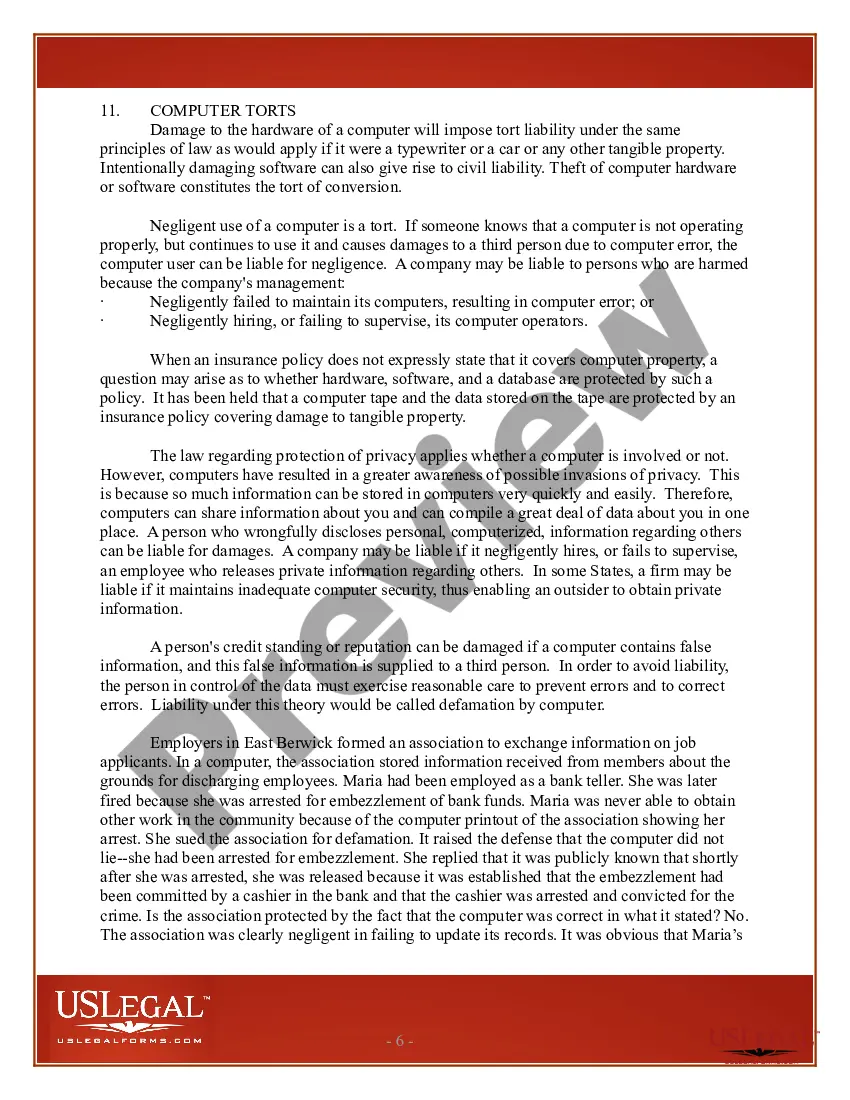
Most civil lawsuits for injuries allege the wrongdoer was negligent. To win in a negligence lawsuit, the victim must establish 4 elements: (1) the wrongdoer owed a duty to the victim, (2) the wrongdoer breached the duty, (3) the breach caused the injury (4) the victim suffered damages.
These legal elements include a professional duty owed to a patient, breach of duty, proximate cause or causal con- nection elicited by a breach of duty, and resulting in- juries or damages suffered. 1 These 4 elements apply to all cases of negligence regardless of specialty or clin- ician level.
In tort law, strict liability is the imposition of liability on a party without a finding of fault (such as negligence or tortious intent).
Submit a Tort Claim to MnDOT Step One: Verify that your damage, loss, or injury occurred on a state highway or in MnDOT's right-of-way. Step Two: Complete and submit the tort claim form and supporting materials. Step Three: MnDOT will investigate and respond to your claim.
