Tort Negligence Liability For Teachers In Michigan
Description





Get your form ready online
Our built-in tools help you complete, sign, share, and store your documents in one place.
Make edits, fill in missing information, and update formatting in US Legal Forms—just like you would in MS Word.
Download a copy, print it, send it by email, or mail it via USPS—whatever works best for your next step.
Sign and collect signatures with our SignNow integration. Send to multiple recipients, set reminders, and more. Go Premium to unlock E-Sign.
If this form requires notarization, complete it online through a secure video call—no need to meet a notary in person or wait for an appointment.
We protect your documents and personal data by following strict security and privacy standards.

Make edits, fill in missing information, and update formatting in US Legal Forms—just like you would in MS Word.

Download a copy, print it, send it by email, or mail it via USPS—whatever works best for your next step.

Sign and collect signatures with our SignNow integration. Send to multiple recipients, set reminders, and more. Go Premium to unlock E-Sign.

If this form requires notarization, complete it online through a secure video call—no need to meet a notary in person or wait for an appointment.

We protect your documents and personal data by following strict security and privacy standards.
Looking for another form?







Form popularity
FAQ
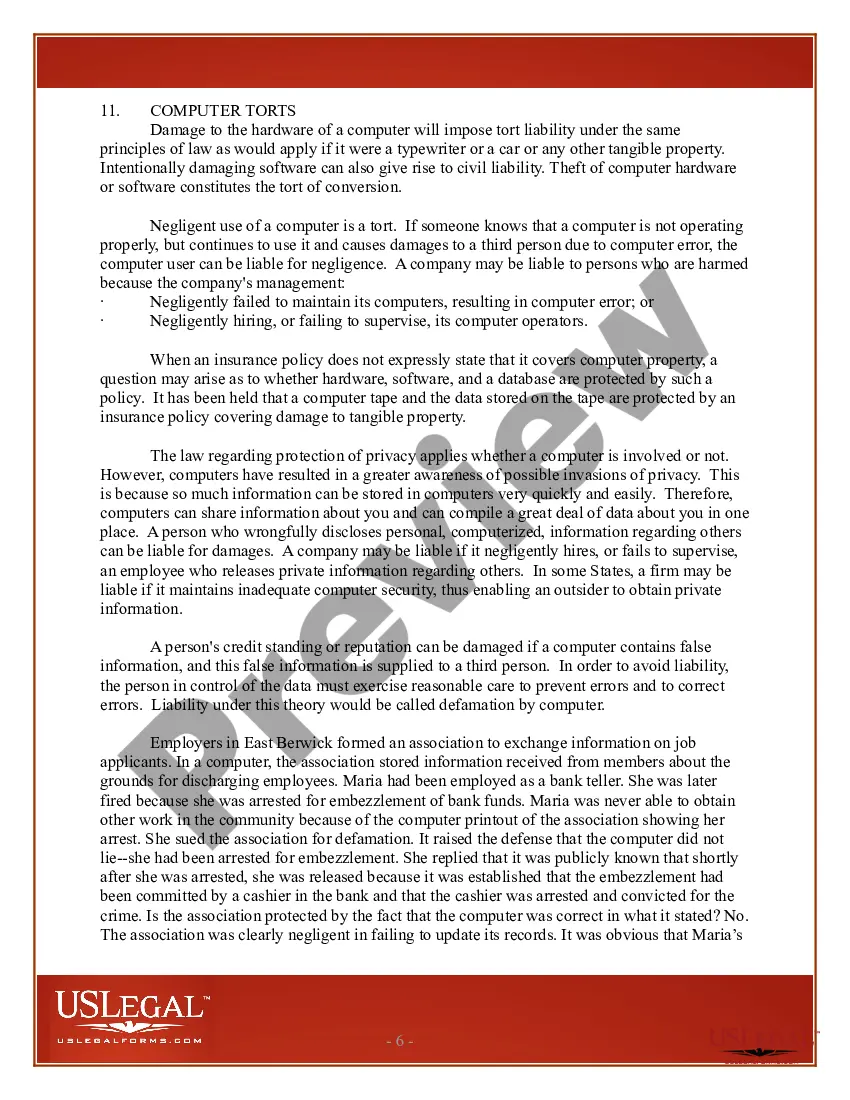
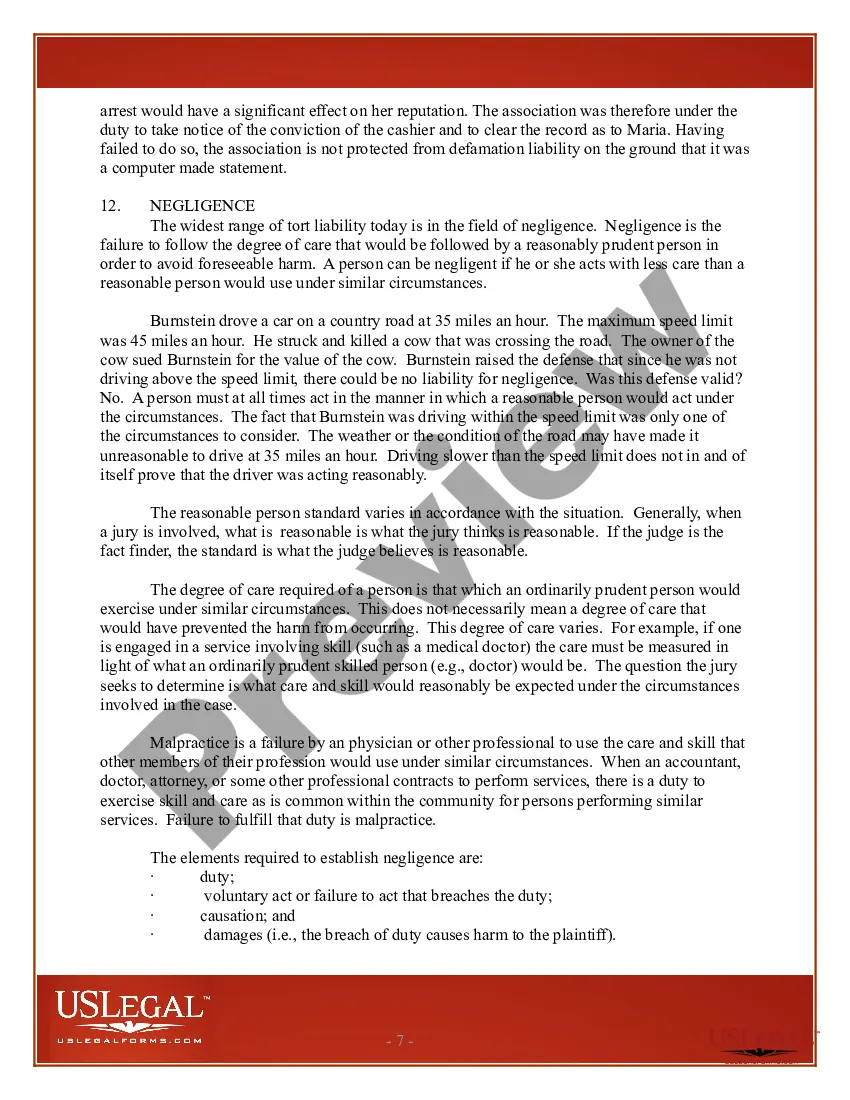
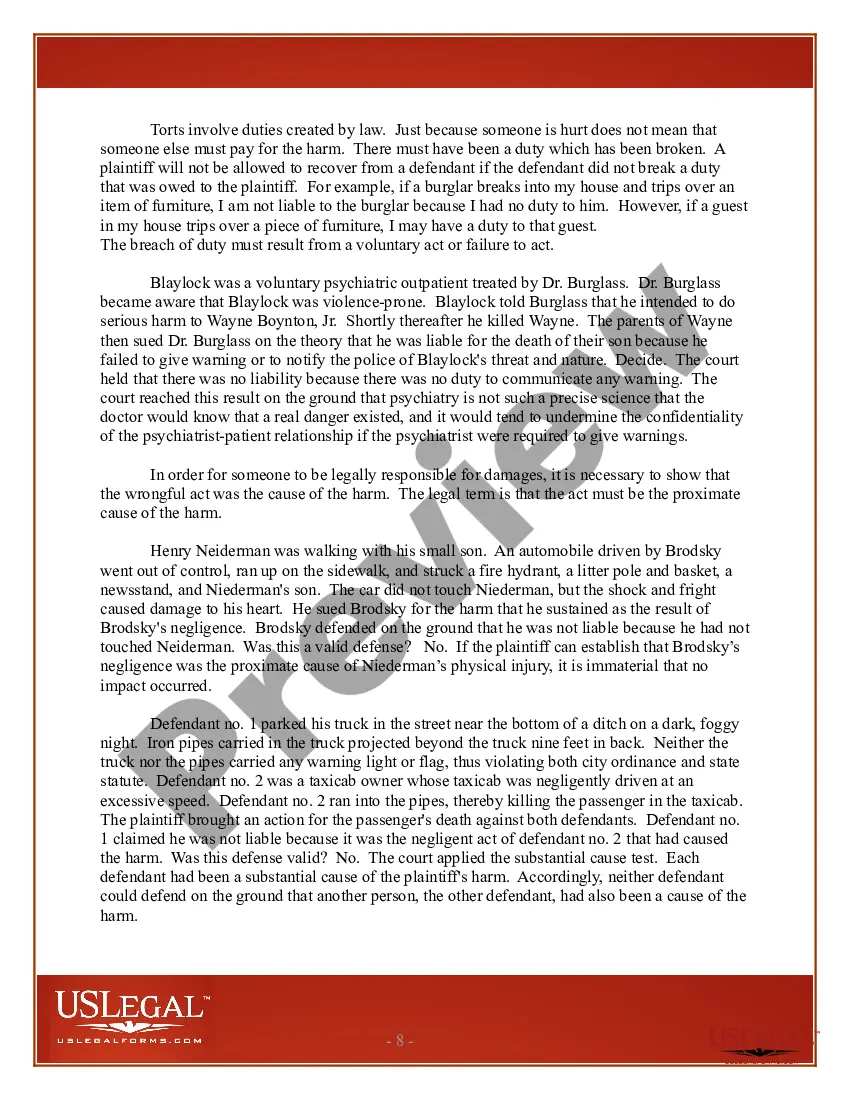
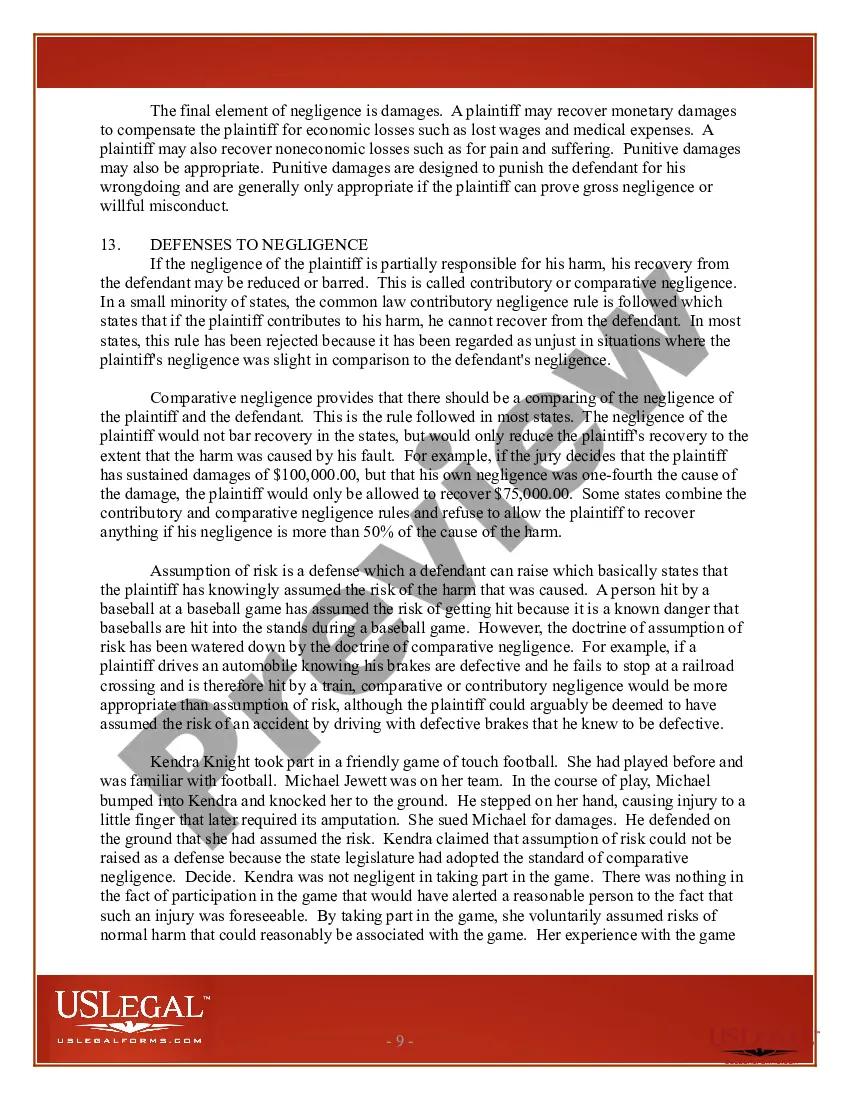
Under California law, there are four legal principles of negligence required for a claim include duty of care, breach of duty of care, causation, and damages.
Thankfully, in order to prove negligence and claim damages, a claimant has to prove a number of elements to the court. These are: the defendant owed them a duty of care. the defendant breached that duty of care, and.
The tort liability of teacher qua teacher encompasses a rather narrow ambit and is largely restricted to cases in which it is alleged that the right of the teacher to enforce discipline has been abused and that the teacher is therefore liable in damages for the commission of an intentional tort.
A negligence claim requires that the person bringing the claim (the plaintiff) establish four distinct elements: duty of care, breach, causation, and damages.
Legally speaking, negligence is a failure to use reasonable care under the circumstances. In order to establish negligence, you must be able to prove four “elements”: a duty, a breach of that duty, causation and damages.
In order to win your negligence claim, and obtain one or more of the types of damages available to you as an injured victim, your personal injury lawyer will have to prove four things: (1) duty; (2) breach; (3) causation; and (4) damages. More specifically, your attorney will have to prove the following: Duty.
So you should say something like: “In order to sue B in negligence for compensation for injury to his leg, A will have to show that: (1) B owed him a duty of care; (2) B breached that duty of care; (3) B's breach caused A to suffer the leg injury for which he wants compensation; and (4) that loss is actionable (that is ...
To show that negligence occurred, you have to prove four elements: duty, breach, causation, and damages. In order to prove that the teacher was negligent, all four elements of negligence must be shown. Failure to prove even one element is fatal to a personal injury lawsuit.
A tort claim is any act that can harm the well-being of a person, by that means violating their rights and making the guilty party liable for their damages and sufferings.
