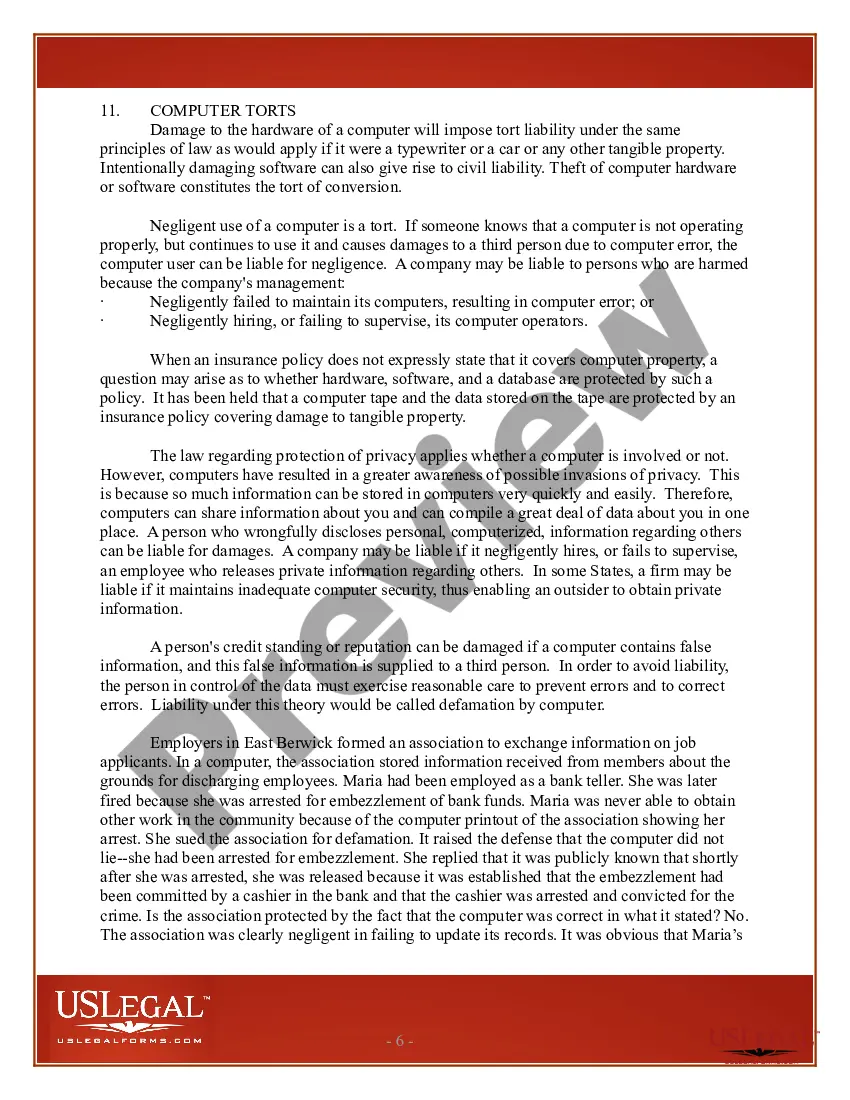
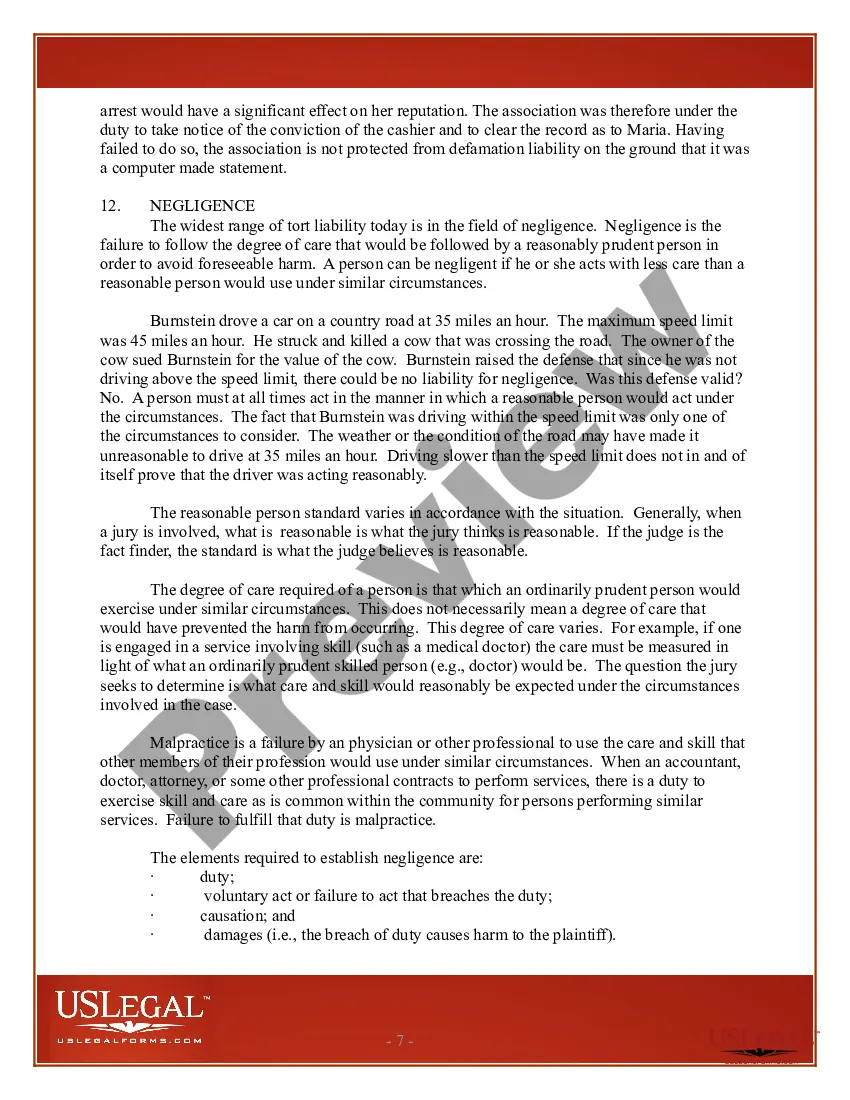
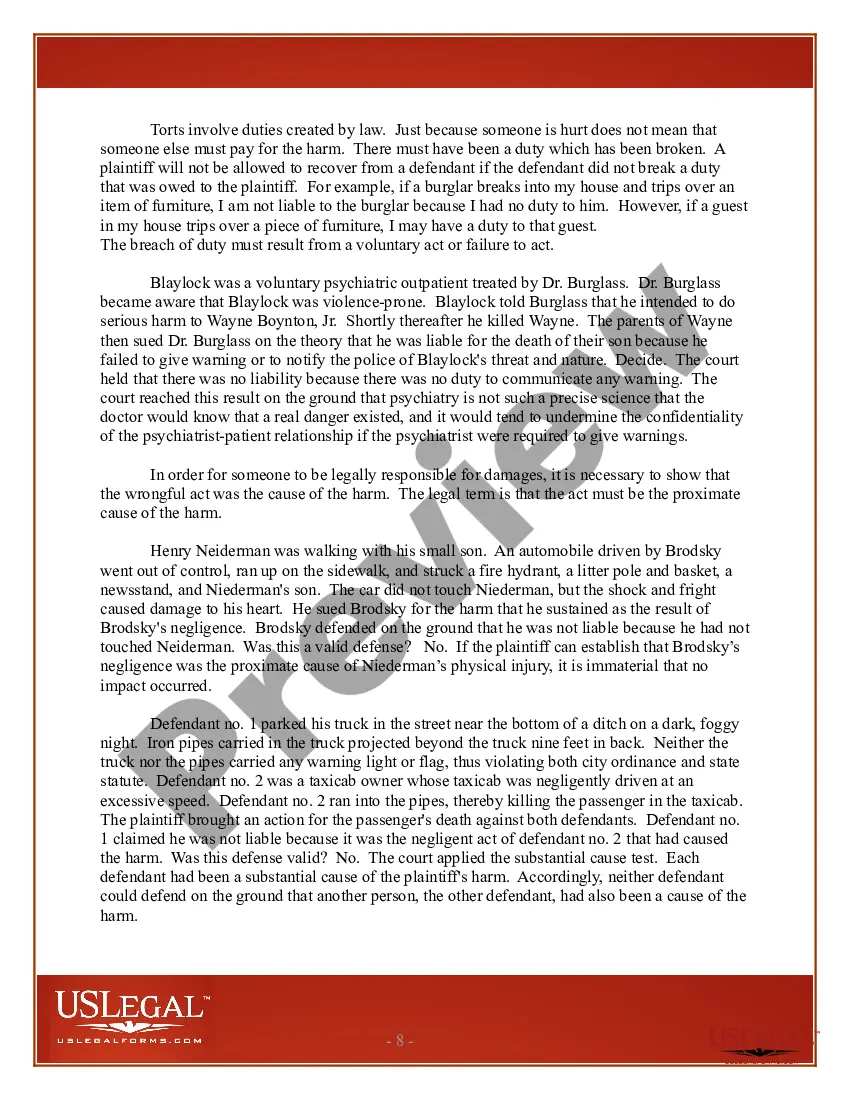
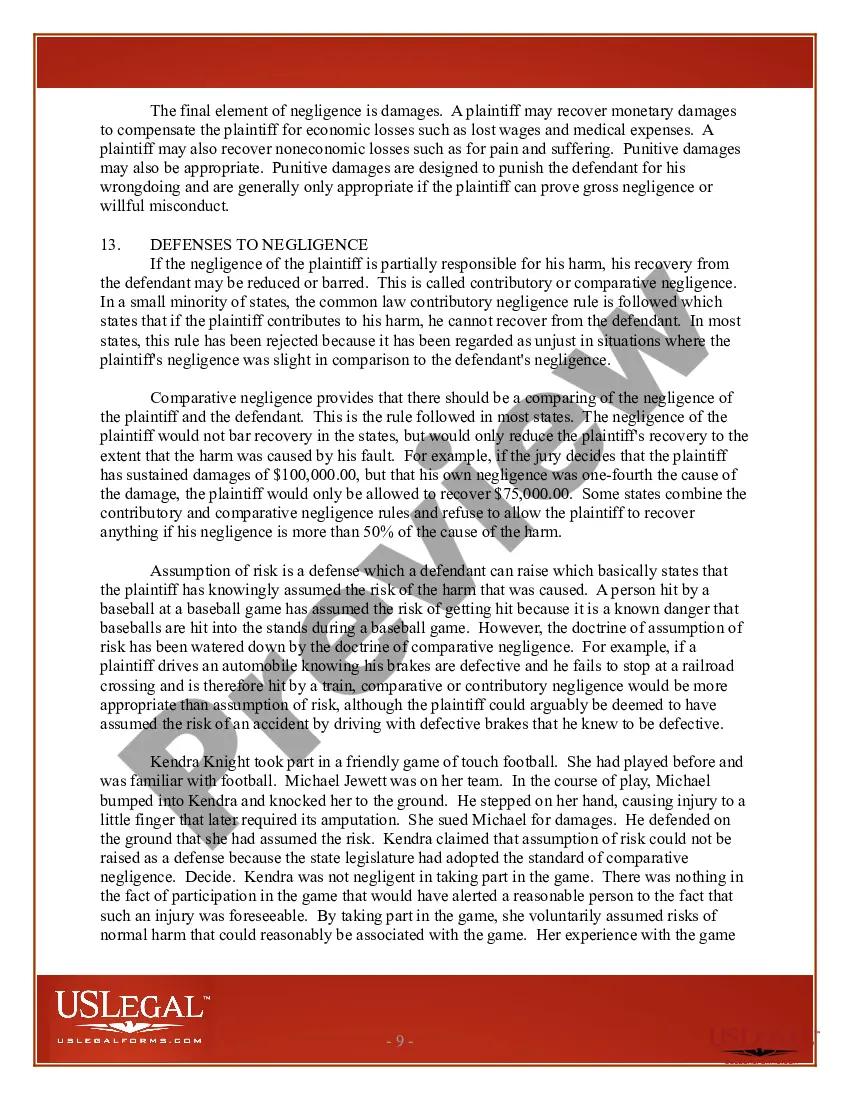
Tort Negligence Liability For Dummies In Maryland
Description





Get your form ready online
Our built-in tools help you complete, sign, share, and store your documents in one place.
Make edits, fill in missing information, and update formatting in US Legal Forms—just like you would in MS Word.
Download a copy, print it, send it by email, or mail it via USPS—whatever works best for your next step.
Sign and collect signatures with our SignNow integration. Send to multiple recipients, set reminders, and more. Go Premium to unlock E-Sign.
If this form requires notarization, complete it online through a secure video call—no need to meet a notary in person or wait for an appointment.
We protect your documents and personal data by following strict security and privacy standards.

Make edits, fill in missing information, and update formatting in US Legal Forms—just like you would in MS Word.

Download a copy, print it, send it by email, or mail it via USPS—whatever works best for your next step.

Sign and collect signatures with our SignNow integration. Send to multiple recipients, set reminders, and more. Go Premium to unlock E-Sign.

If this form requires notarization, complete it online through a secure video call—no need to meet a notary in person or wait for an appointment.

We protect your documents and personal data by following strict security and privacy standards.
Looking for another form?






Form popularity
FAQ
To bring a claim in court, Maryland Slip and Fall Laws say you (the “plaintiff”) must prove the property owner knew about a dangerous condition and didn't fix it. It's not enough that a condition was simply unsafe. You must prove the property owner had actual or constructive knowledge of the hazard.
Typically, compensation for pain and suffering in slip and fall cases ranges from $2,000 to $100,000 or more. The average payout for a slip and fall injury (including cases without pain & suffering) often ranges between $10K and $50K.
The Elements Of Negligence Duty. The plaintiff must show that the defendant owed her a legal duty of care under the circumstances. Breach. This describes the situation when the defendant failed to meet their duty of care by acting or failing to act in the required way. Causation. Damages.
To file a claim, complete these steps: Complete Standard Form 95. Explain in detail what happened, using additional pages if necessary. Attach all documents that support your claim, which may include the following. Submit the completed Standard Form 95 and supporting documents to the OPM Office of the General Counsel.
In order to establish negligence, you must be able to prove four “elements”: a duty, a breach of that duty, causation and damages.
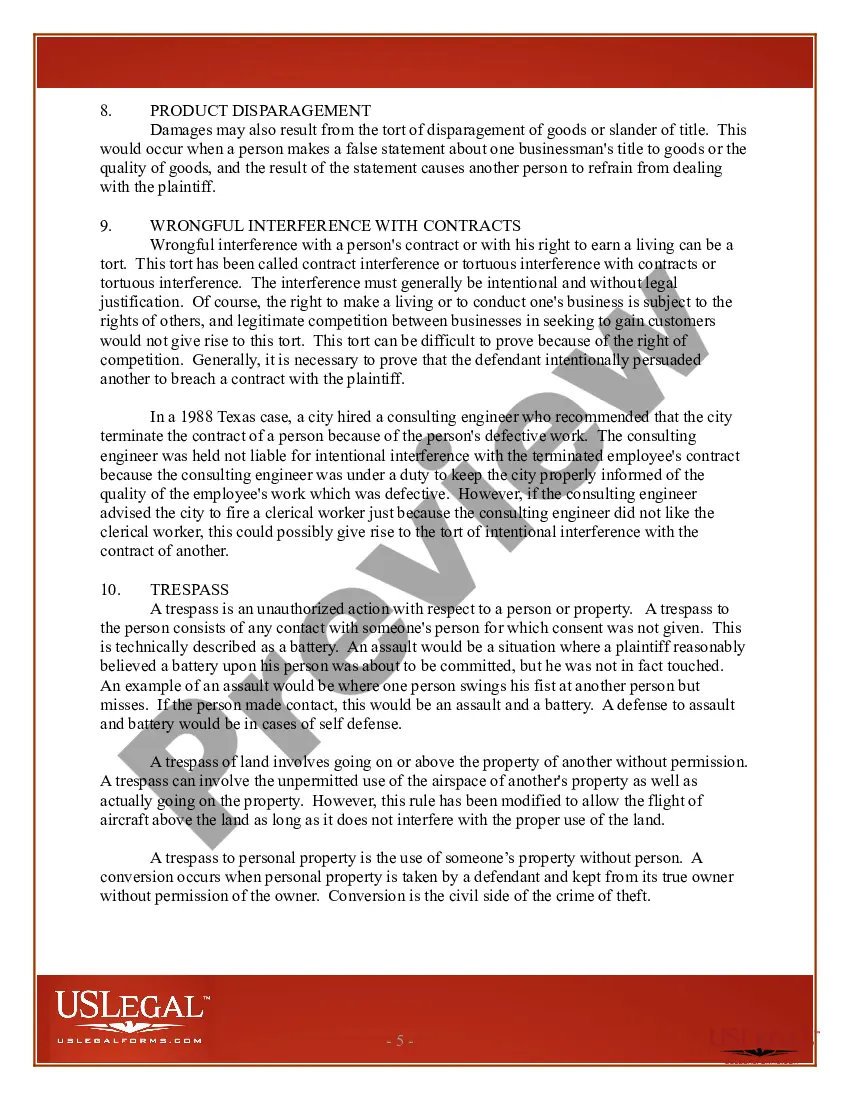
To prove negligence in Maryland, there are four crucial elements that must be established: duty, breach of duty, causation, and damages. Together, these four elements form the basis for proving negligence in Maryland.
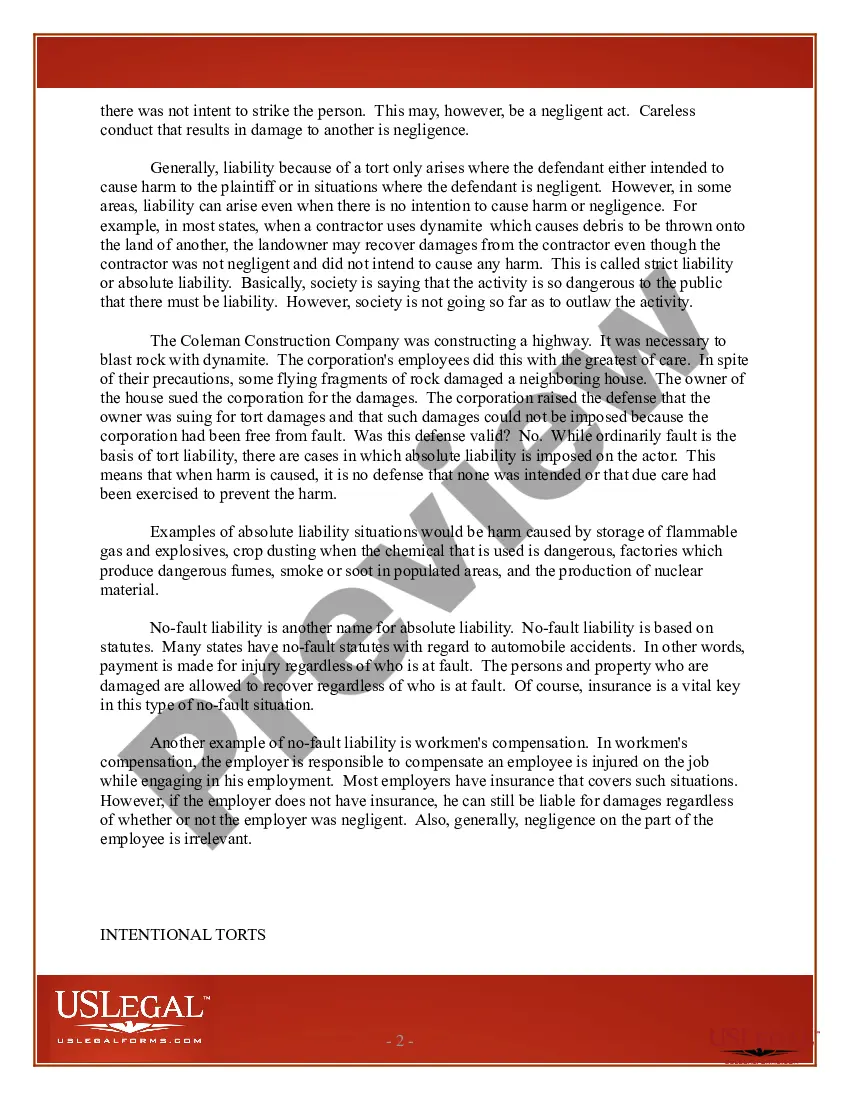
Tort liability is predicated on the existence of proximate cause, which consists of both: (1) causation in fact, and (2) foreseeability. A plaintiff must prove that his or her injuries were the actual or factual result of the defendant's actions.
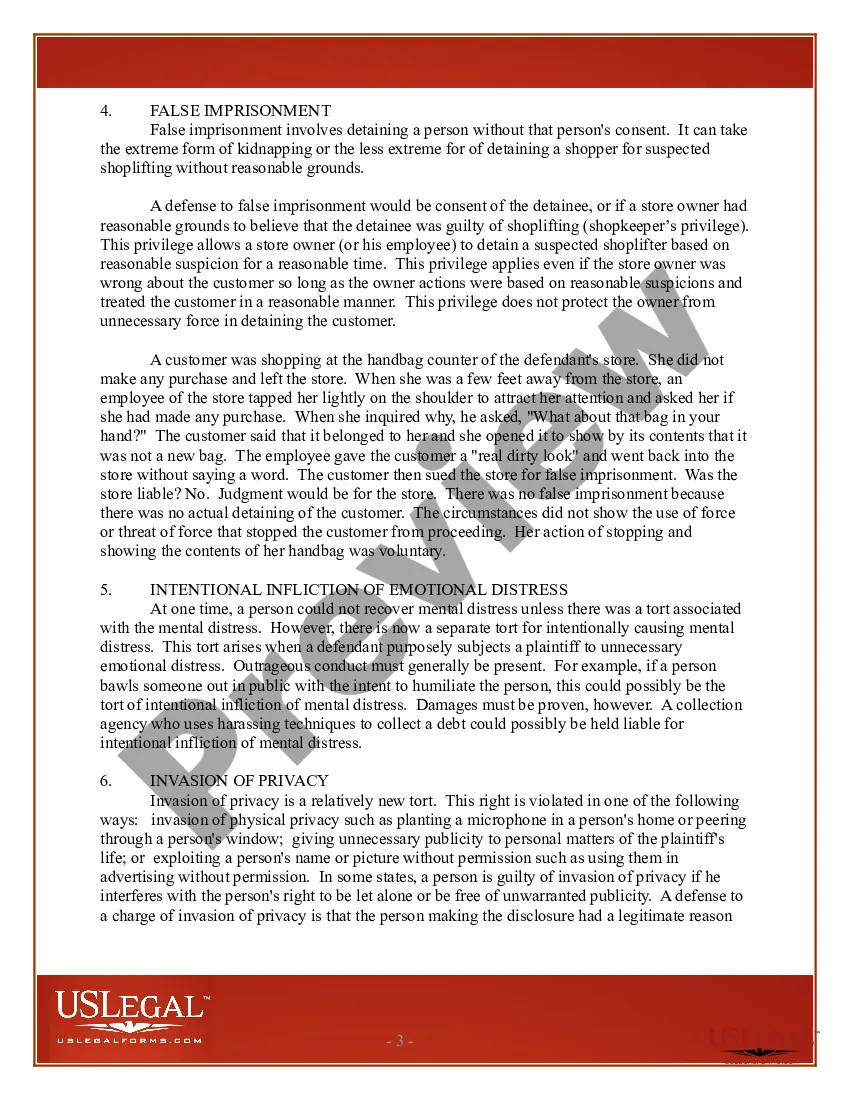
Medical data, eyewitness testimony, accident reports, photographs, expert opinions, and security footage are crucial to proving negligence. This evidence builds a compelling case that someone's carelessness caused your misery. California personal injury claims are difficult, but Haffner Law can help.
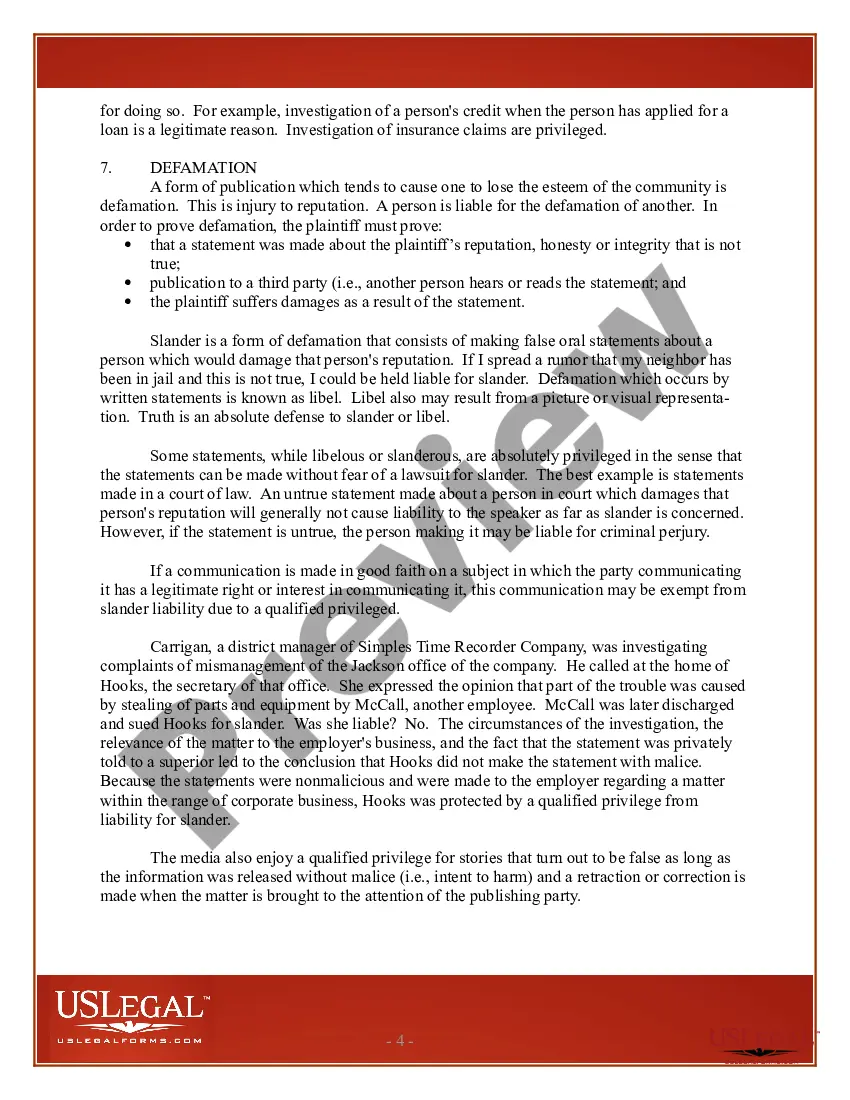
"Tortious liability arises from the breach of a duty primarily fixed by law which results in an infringement of private legal right of another and for which, civil action for unliquidated damages, injunction, specific restitution of property or even self-help, as the case may be, can be maintained."
In absolute liability, a person is made liable even if he is neither negligent nor wilfully commits a tort. Absolute liability is an exception in the law of tort where the liability of a person arises even if he has not committed any tort. Justice Blackburn in 1868, in the case of Rylands v.
