Types Of Torts In Canada In Illinois
Description

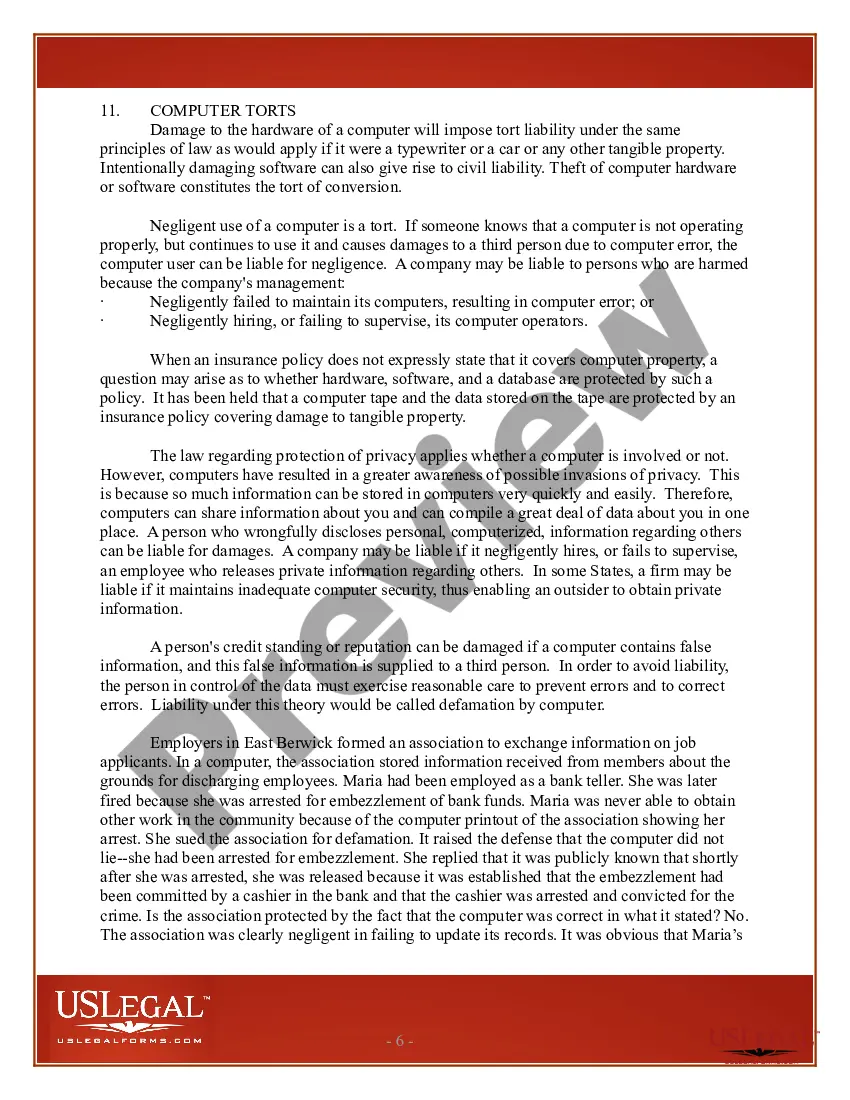
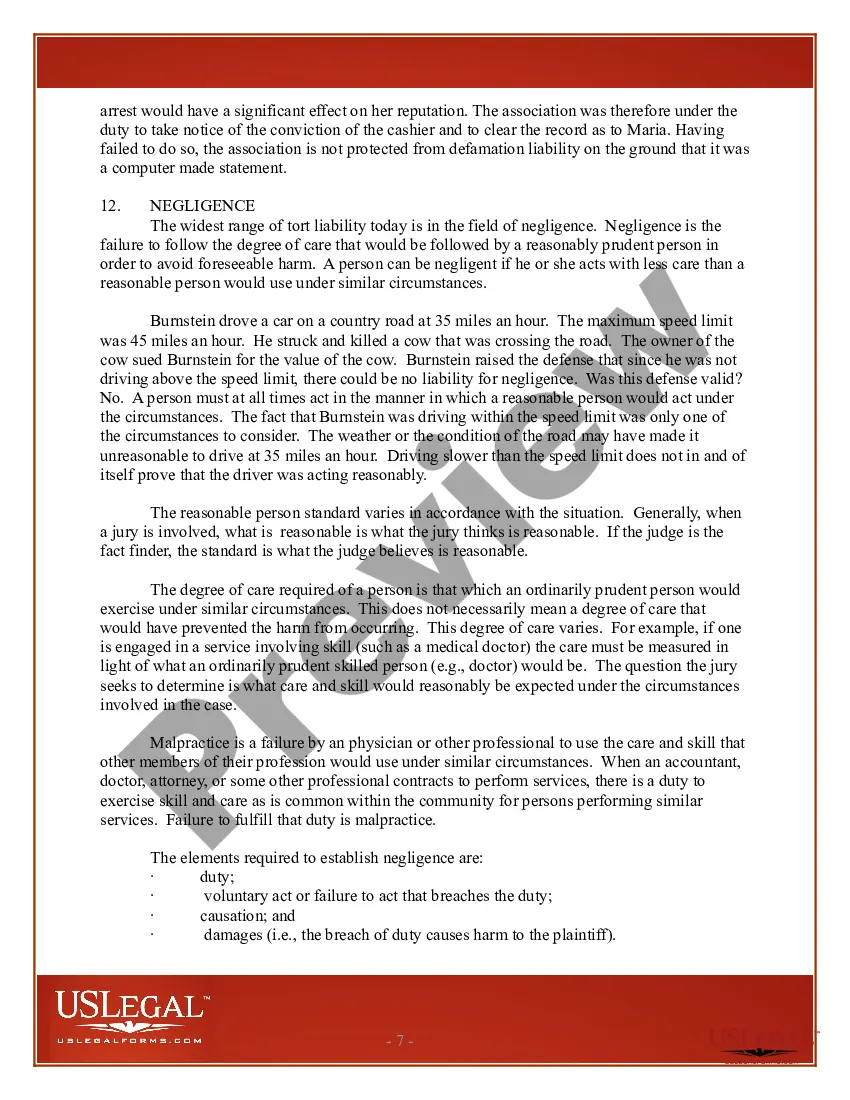
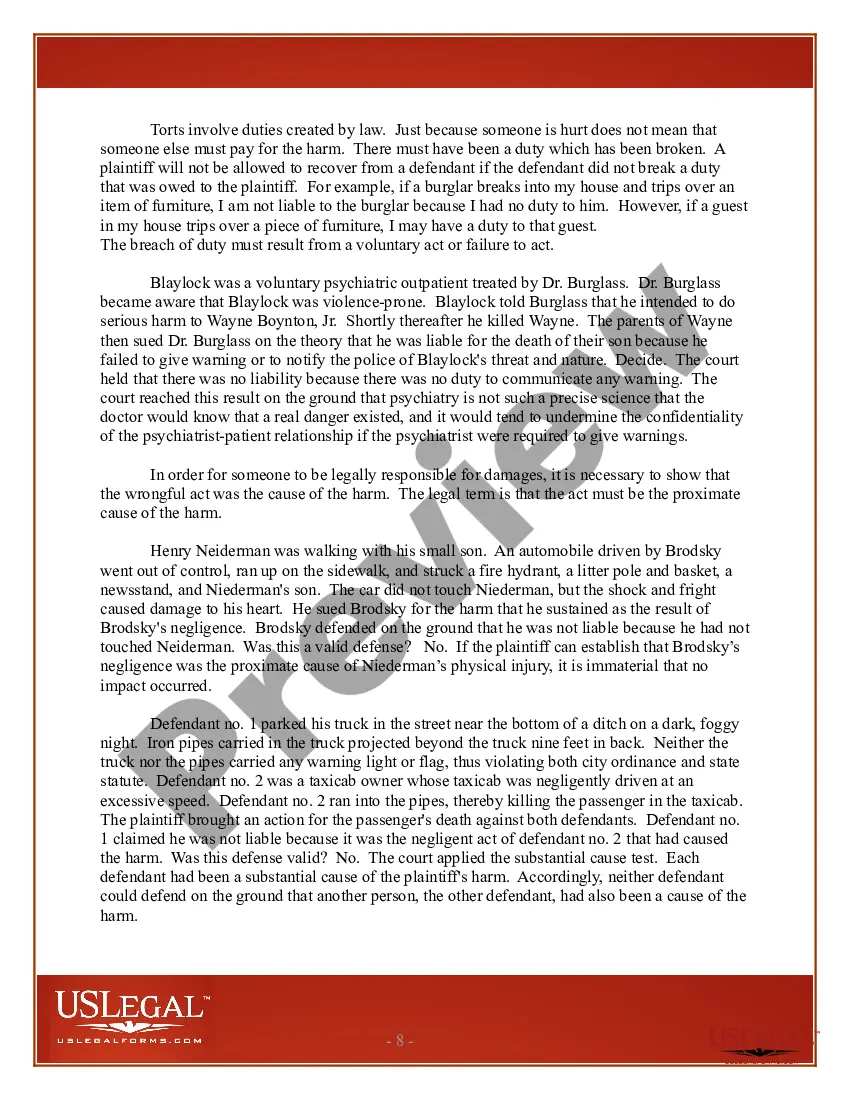
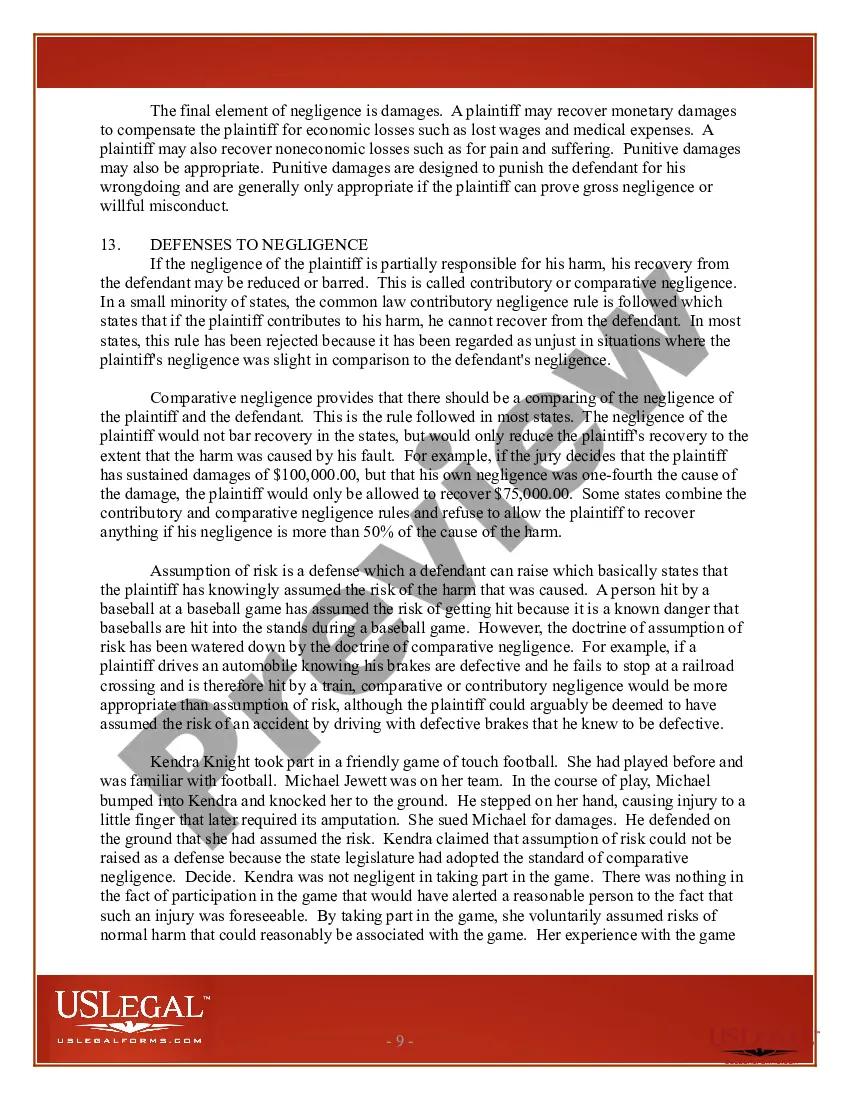



Get your form ready online
Our built-in tools help you complete, sign, share, and store your documents in one place.
Make edits, fill in missing information, and update formatting in US Legal Forms—just like you would in MS Word.
Download a copy, print it, send it by email, or mail it via USPS—whatever works best for your next step.
Sign and collect signatures with our SignNow integration. Send to multiple recipients, set reminders, and more. Go Premium to unlock E-Sign.
If this form requires notarization, complete it online through a secure video call—no need to meet a notary in person or wait for an appointment.
We protect your documents and personal data by following strict security and privacy standards.

Make edits, fill in missing information, and update formatting in US Legal Forms—just like you would in MS Word.

Download a copy, print it, send it by email, or mail it via USPS—whatever works best for your next step.

Sign and collect signatures with our SignNow integration. Send to multiple recipients, set reminders, and more. Go Premium to unlock E-Sign.

If this form requires notarization, complete it online through a secure video call—no need to meet a notary in person or wait for an appointment.

We protect your documents and personal data by following strict security and privacy standards.
Looking for another form?



Form popularity
FAQ
A tort is an act or omission that causes legally cognizable harm to persons or property. Tort law, in turn, is the body of rules concerned with remedying harms caused by a person's wrongful or injurious actions.
However, the content of each step may differ for each tort. For example, in civil law, you are accustomed to analyzing civil liability in terms of three elements: fault, harm, and causation. In common law, for certain torts, the plaintiff does not need to prove any harm.
A tort claim is any act that can harm the well-being of a person, by that means violating their rights and making the guilty party liable for their damages and sufferings.
Illinois Tort law is an area of civil law that allows an individual take legal action against another individual, business, organization for any injury or harm suffered from their actions. It is a broad area of the state's civil law that governs wrongdoings committed against another person.
A tort claim in Illinois is a legal assertion for damages by the victim of civil wrongdoing. This legal action enables victims to seek remedy from the liable party for physical, emotional, psychological or financial injury.
Generally, intentional torts are harder to prove than negligence, since a plaintiff must show that the defendant did something on purpose.
Canadian tort law is composed of two parallel systems: a common law framework outside Québec and a civil law framework within Québec, making the law system is bijural, as it is used throughout Canadian provinces except for Québec, which uses private law.
Four of them are personal: assault, battery, intentional infliction of emotional distress, and false imprisonment. The other three are trespass to chattels, trespass to property, and conversion.
Types of Intentional Torts Assault and battery. Assault and battery are often used interchangeably, but they are actually separate wrongful acts. False imprisonment. False imprisonment is the unlawful restraint of another person without their consent. Defamation. Trespass to land and chattels.
Torts fall into three general categories: Intentional torts (e.g., intentionally hitting a person); Negligent torts (e.g., causing an accident by failing to obey traffic rules); and. Strict liability torts (e.g., liability for making and selling defective products - see Products Liability).
