Tort Negligence Liability Without Injury In Illinois
Description





Get your form ready online
Our built-in tools help you complete, sign, share, and store your documents in one place.
Make edits, fill in missing information, and update formatting in US Legal Forms—just like you would in MS Word.
Download a copy, print it, send it by email, or mail it via USPS—whatever works best for your next step.
Sign and collect signatures with our SignNow integration. Send to multiple recipients, set reminders, and more. Go Premium to unlock E-Sign.
If this form requires notarization, complete it online through a secure video call—no need to meet a notary in person or wait for an appointment.
We protect your documents and personal data by following strict security and privacy standards.

Make edits, fill in missing information, and update formatting in US Legal Forms—just like you would in MS Word.

Download a copy, print it, send it by email, or mail it via USPS—whatever works best for your next step.

Sign and collect signatures with our SignNow integration. Send to multiple recipients, set reminders, and more. Go Premium to unlock E-Sign.

If this form requires notarization, complete it online through a secure video call—no need to meet a notary in person or wait for an appointment.

We protect your documents and personal data by following strict security and privacy standards.
Looking for another form?








Form popularity
FAQ
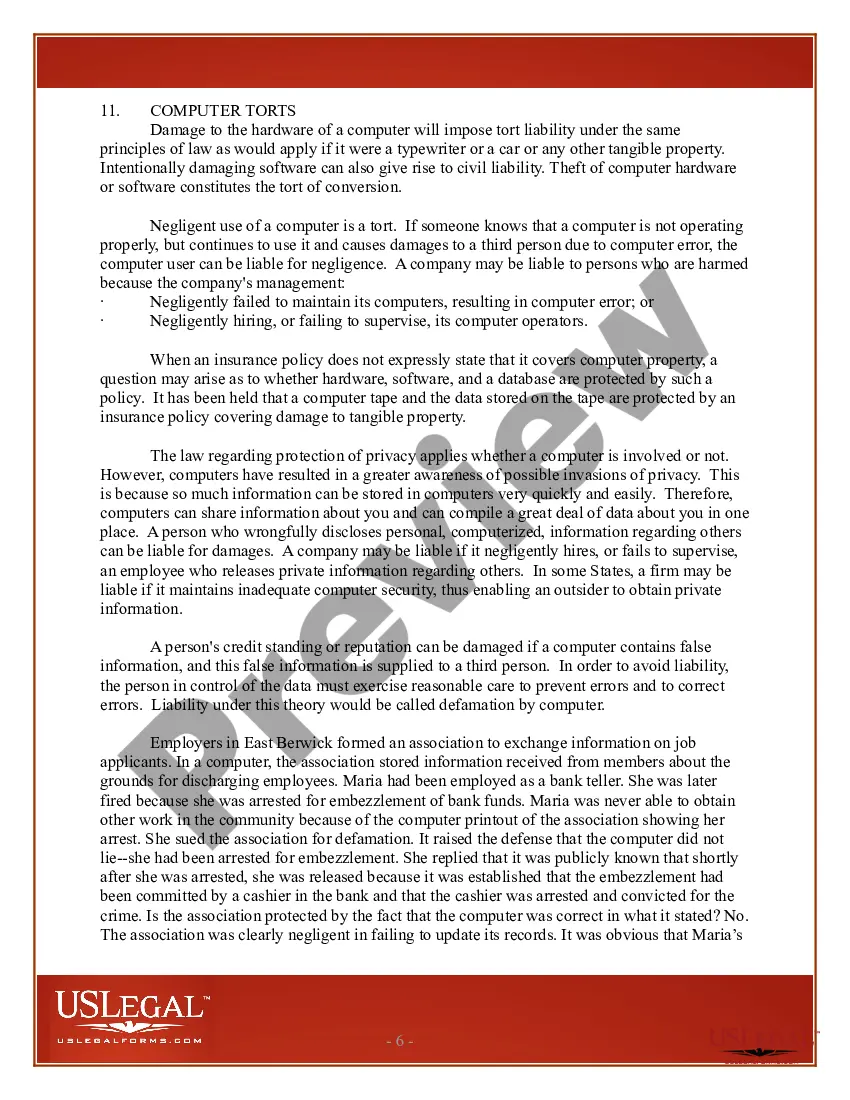
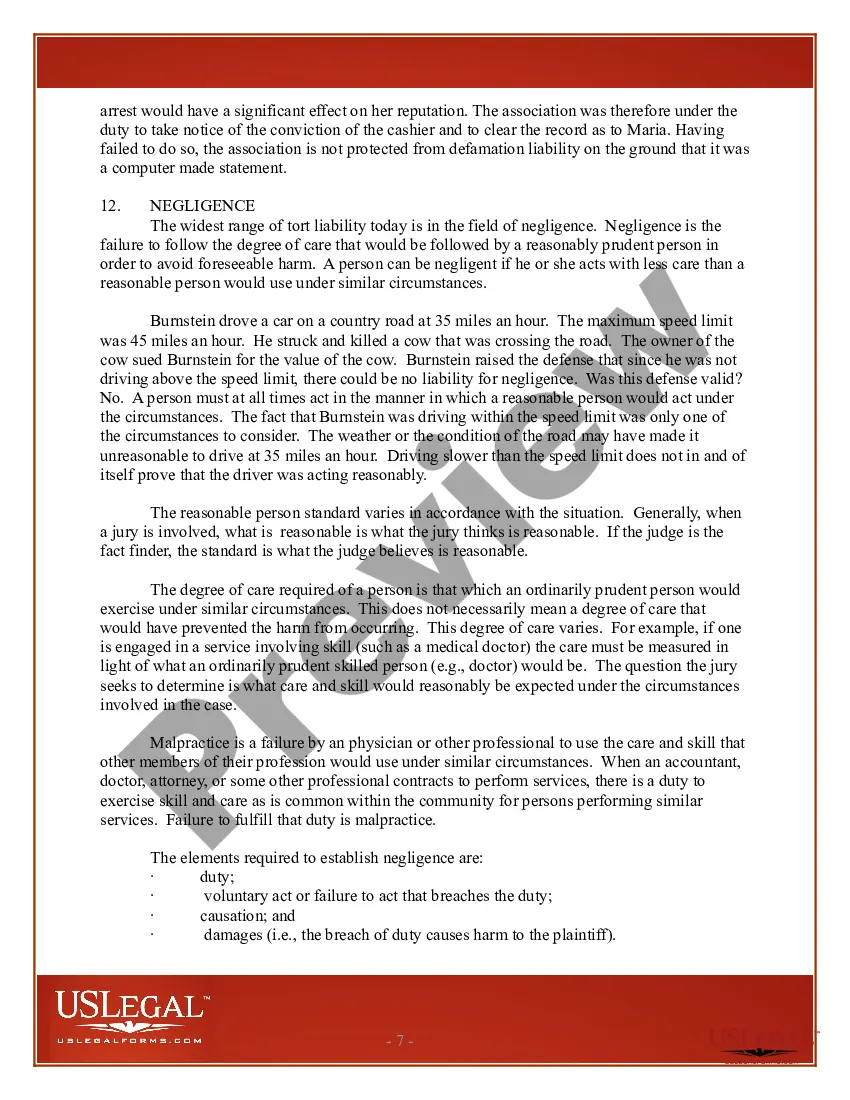
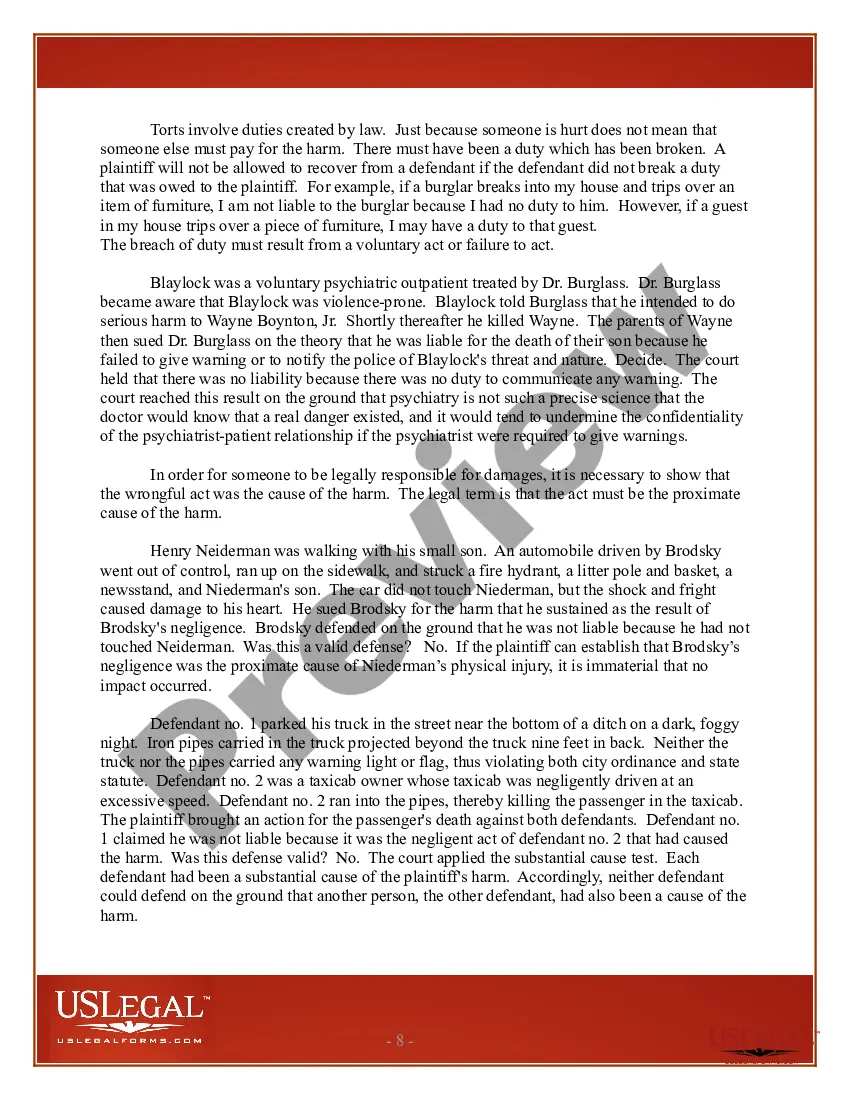
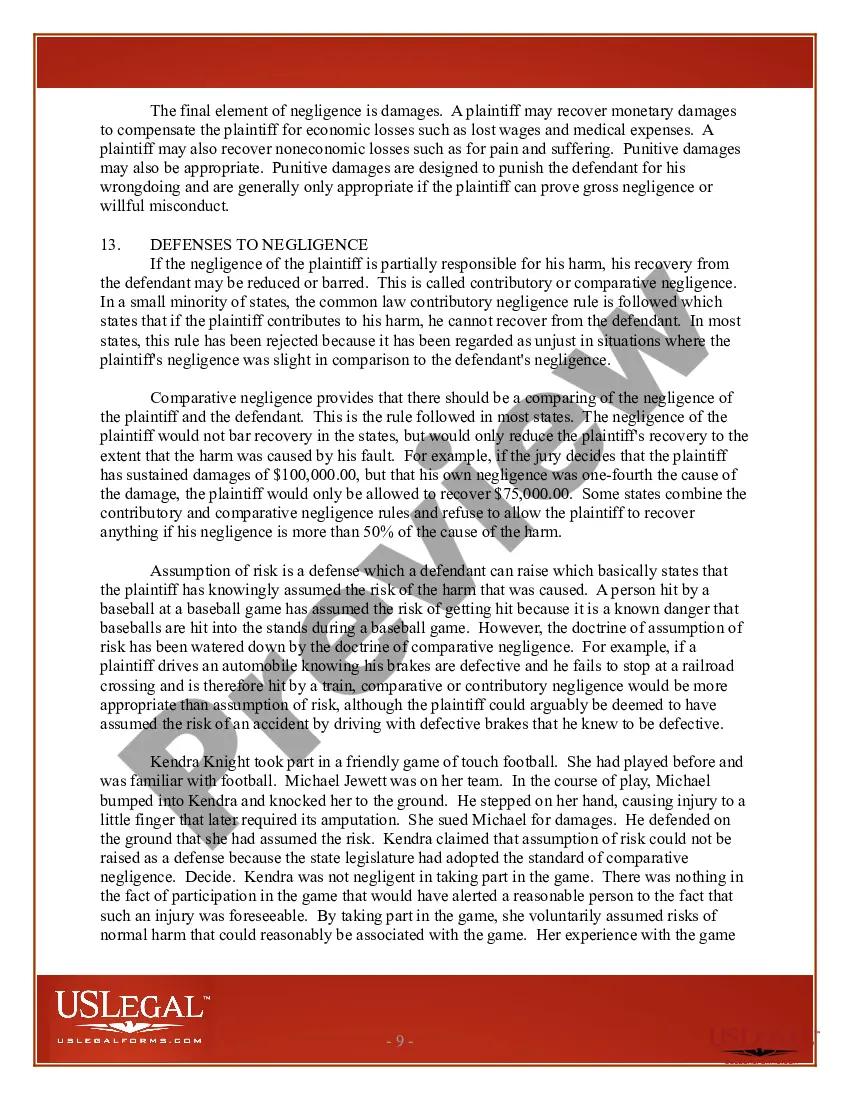
These legal elements include a professional duty owed to a patient, breach of duty, proximate cause or causal con- nection elicited by a breach of duty, and resulting in- juries or damages suffered. 1 These 4 elements apply to all cases of negligence regardless of specialty or clin- ician level.
The following must be in a tort claim filed in Illinois: The plaintiff's name and address. Defendant's name, and address where the summons will be sent. The date, place, and circumstances surrounding the event of the injury. A description of the injury. The name of the individual that caused the injury.
From this perspective, to make a claim in tort a claimant must show that they have (or had) a right, exercisable against the defendant, that has been infringed. However, the claimant's right is not a right exercisable against the defendant as it is not a property right (which is exercisable against the world).
To file a claim, complete these steps: Complete Standard Form 95. Explain in detail what happened, using additional pages if necessary. Attach all documents that support your claim, which may include the following. Submit the completed Standard Form 95 and supporting documents to the OPM Office of the General Counsel.
The following must be in a tort claim filed in Illinois: The plaintiff's name and address. Defendant's name, and address where the summons will be sent. The date, place, and circumstances surrounding the event of the injury. A description of the injury. The name of the individual that caused the injury.
A tort claim is any act that can harm the well-being of a person, by that means violating their rights and making the guilty party liable for their damages and sufferings.
Legally speaking, negligence is a failure to use reasonable care under the circumstances. In order to establish negligence, you must be able to prove four “elements”: a duty, a breach of that duty, causation and damages.
Can You Sue for Negligence Without Injury in California? Yes, you can sue for negligence without injury. If someone totaled your car after the accident, you can file a lawsuit to obtain coverage for property damage expenses.
Can You Sue for Negligence Without Injury in California? Yes, you can sue for negligence without injury. If someone totaled your car after the accident, you can file a lawsuit to obtain coverage for property damage expenses.
