Types Of Torts In Kenya In Florida
Description





Get your form ready online
Our built-in tools help you complete, sign, share, and store your documents in one place.
Make edits, fill in missing information, and update formatting in US Legal Forms—just like you would in MS Word.
Download a copy, print it, send it by email, or mail it via USPS—whatever works best for your next step.
Sign and collect signatures with our SignNow integration. Send to multiple recipients, set reminders, and more. Go Premium to unlock E-Sign.
If this form requires notarization, complete it online through a secure video call—no need to meet a notary in person or wait for an appointment.
We protect your documents and personal data by following strict security and privacy standards.

Make edits, fill in missing information, and update formatting in US Legal Forms—just like you would in MS Word.

Download a copy, print it, send it by email, or mail it via USPS—whatever works best for your next step.

Sign and collect signatures with our SignNow integration. Send to multiple recipients, set reminders, and more. Go Premium to unlock E-Sign.

If this form requires notarization, complete it online through a secure video call—no need to meet a notary in person or wait for an appointment.

We protect your documents and personal data by following strict security and privacy standards.
Looking for another form?

Form popularity
FAQ
The passage of the Florida Tort Reform Act brings significant changes to personal injury cases in Florida. Even if your accident occurred a year or two ago, if it is filed after March 2023, these rules will apply to your case.
Florida's 51% bar rule is a legal principle that falls under the broader concept of comparative negligence. This rule states that a person can recover damages in a personal injury case as long as they are not more than 51% at fault for the incident.
The tort threshold in Florida is a law stating that victims of personal injury accidents must sustain one of four types of injuries in order to recover non-economic damages, such as pain and suffering or mental anguish. The four injury types in Florida's tort threshold are: Permanent injury.
The state's tort claims act says that the government can be liable for harm caused by a government employee (who's acting within the scope of their duty at the time), in any situation where the state, agency, or subdivision, if it were a private person, would be liable to the claimant.
You must include the following information and meet the following standards: Claim is filed within two years of incident with appropriate agency. List specific facts and exact amount of damages you are seeking. Allow the agency six months to respond. If your claim is rejected, you only have six months to file a lawsuit.
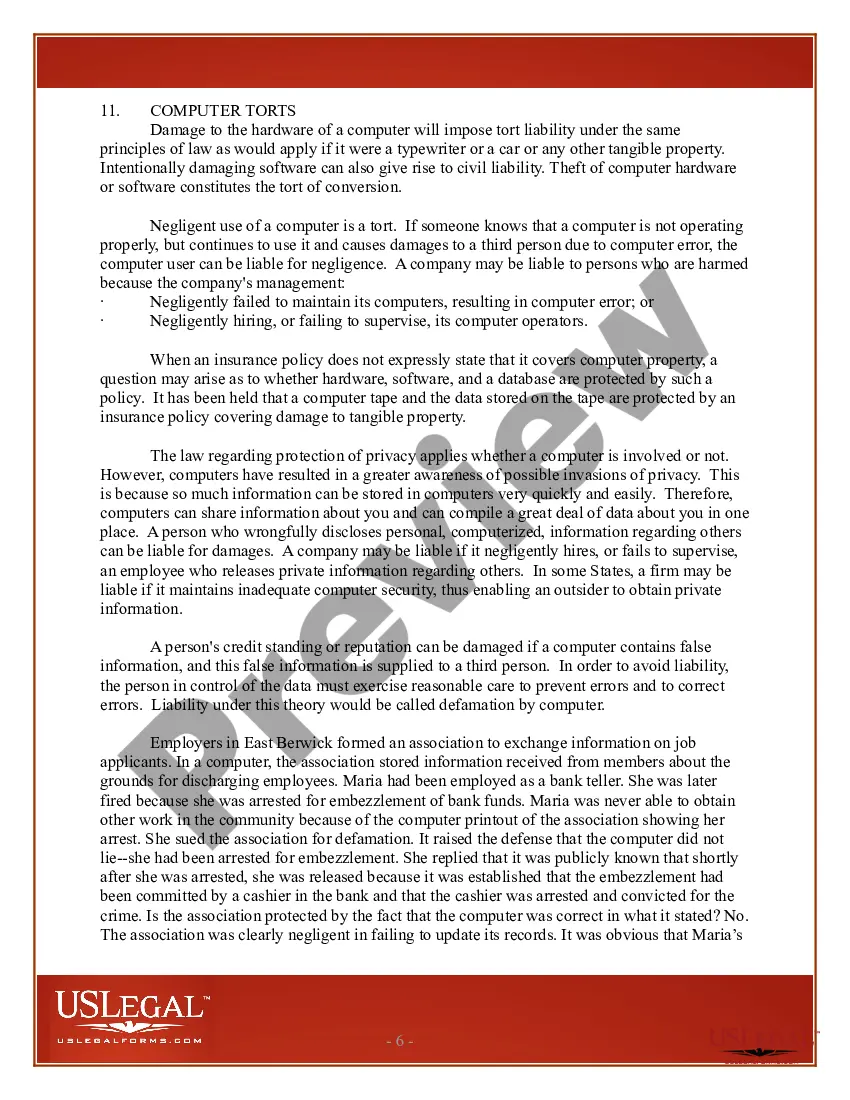
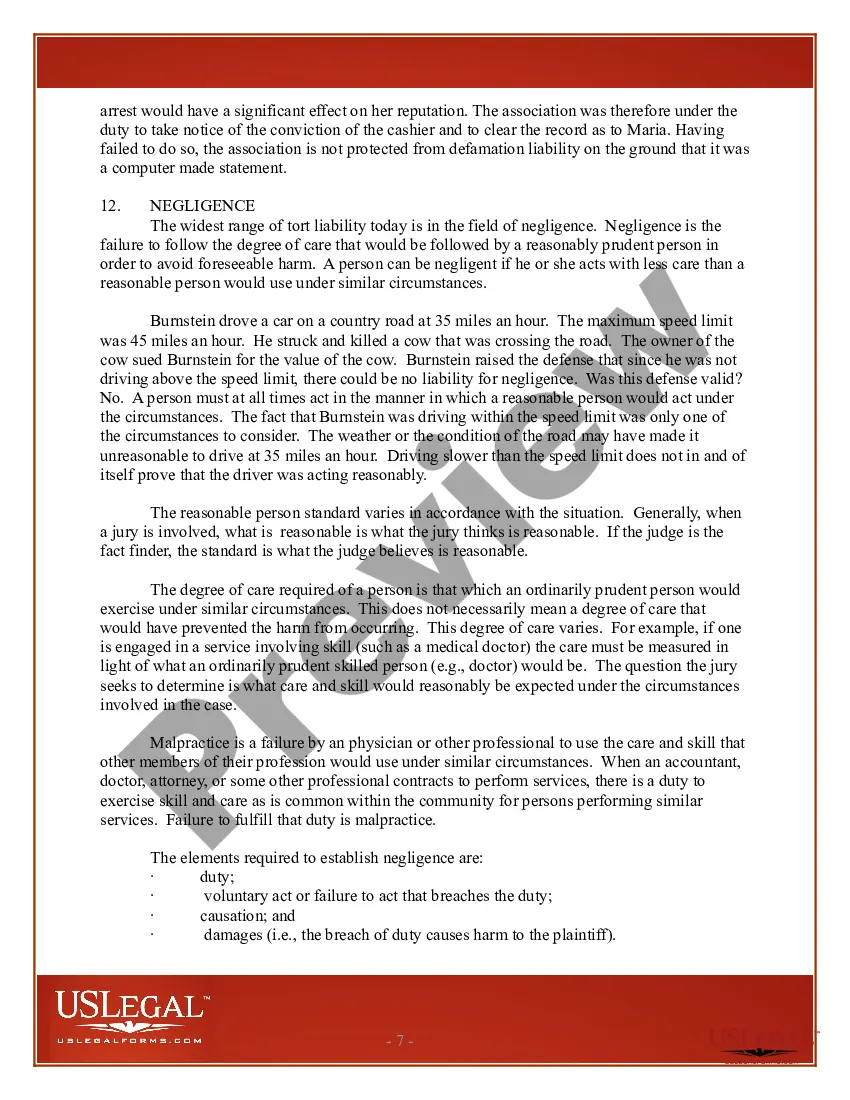
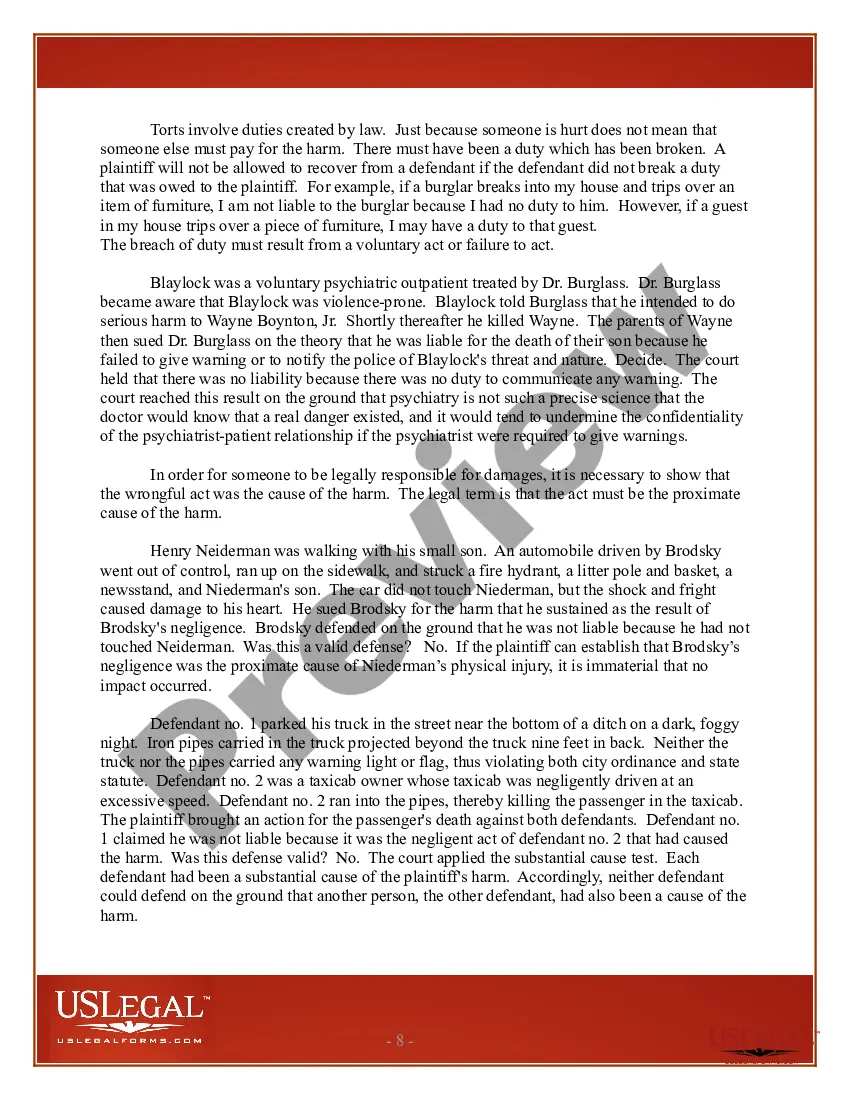
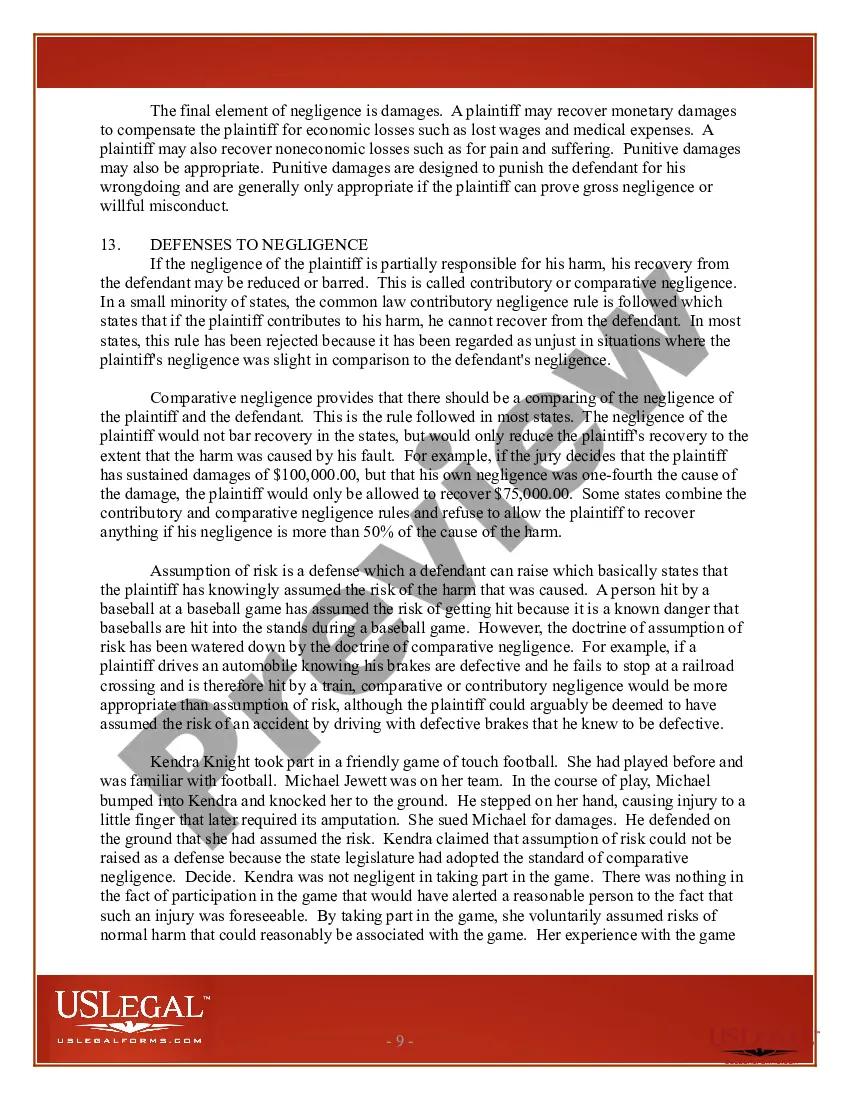
Torts fall into three general categories: Intentional torts (e.g., intentionally hitting a person); Negligent torts (e.g., causing an accident by failing to obey traffic rules); and. Strict liability torts (e.g., liability for making and selling defective products - see Products Liability).
To file a claim, complete these steps: Complete Standard Form 95. Explain in detail what happened, using additional pages if necessary. Attach all documents that support your claim, which may include the following. Submit the completed Standard Form 95 and supporting documents to the OPM Office of the General Counsel.
In Florida, injured parties must file a Notice of Claim with the Department of Financial Services to preserve their right to file a lawsuit against a government entity. The notice of claim must be filed in writing within three years of the injury date (two years for wrongful death).
To file a claim, complete these steps: Complete Standard Form 95. Explain in detail what happened, using additional pages if necessary. Attach all documents that support your claim, which may include the following. Submit the completed Standard Form 95 and supporting documents to the OPM Office of the General Counsel.