Tort Negligence Liability For Injury In Fairfax
Description

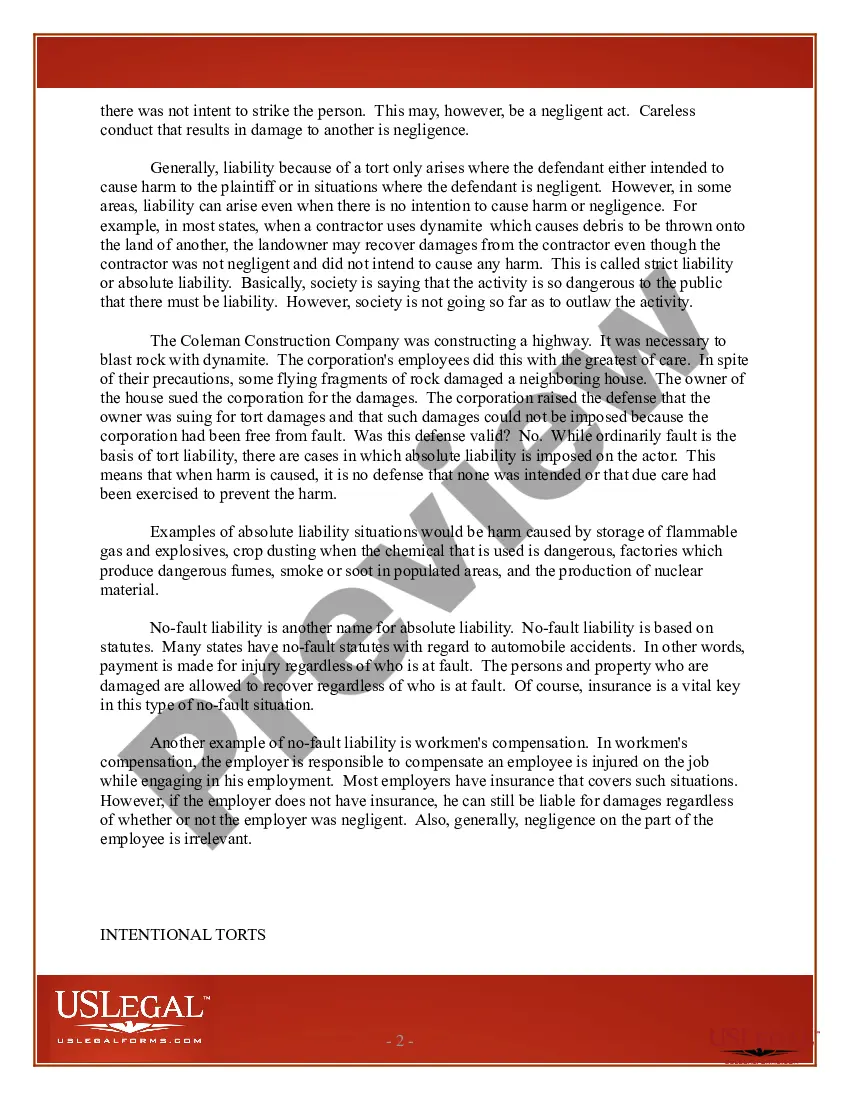
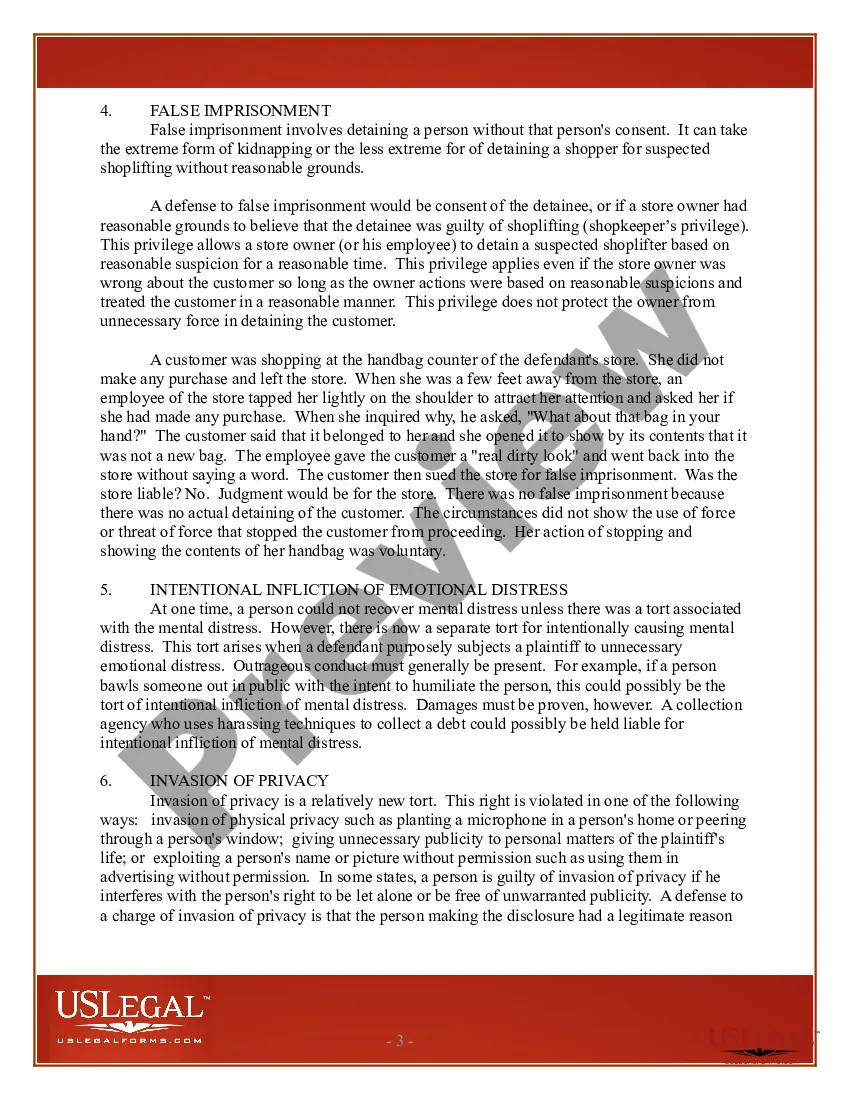
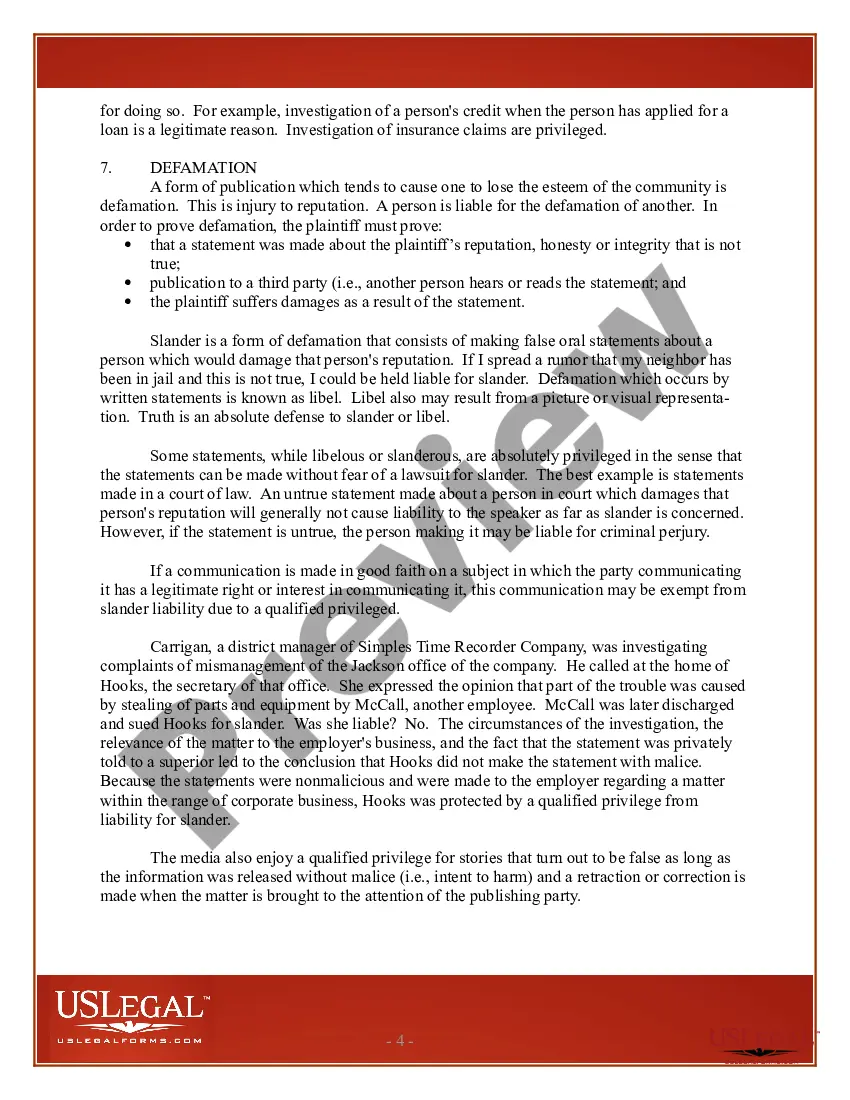
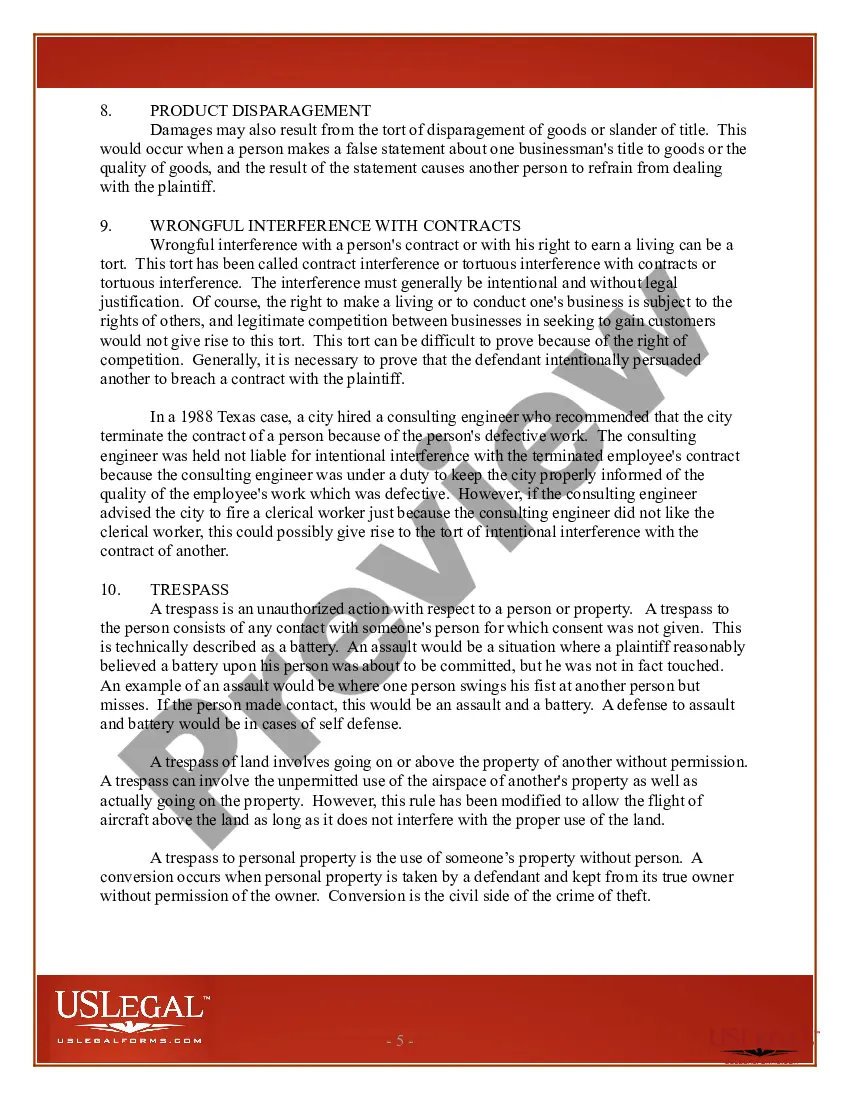



Get your form ready online
Our built-in tools help you complete, sign, share, and store your documents in one place.
Make edits, fill in missing information, and update formatting in US Legal Forms—just like you would in MS Word.
Download a copy, print it, send it by email, or mail it via USPS—whatever works best for your next step.
Sign and collect signatures with our SignNow integration. Send to multiple recipients, set reminders, and more. Go Premium to unlock E-Sign.
If this form requires notarization, complete it online through a secure video call—no need to meet a notary in person or wait for an appointment.
We protect your documents and personal data by following strict security and privacy standards.

Make edits, fill in missing information, and update formatting in US Legal Forms—just like you would in MS Word.

Download a copy, print it, send it by email, or mail it via USPS—whatever works best for your next step.

Sign and collect signatures with our SignNow integration. Send to multiple recipients, set reminders, and more. Go Premium to unlock E-Sign.

If this form requires notarization, complete it online through a secure video call—no need to meet a notary in person or wait for an appointment.

We protect your documents and personal data by following strict security and privacy standards.
Looking for another form?
Form popularity
FAQ
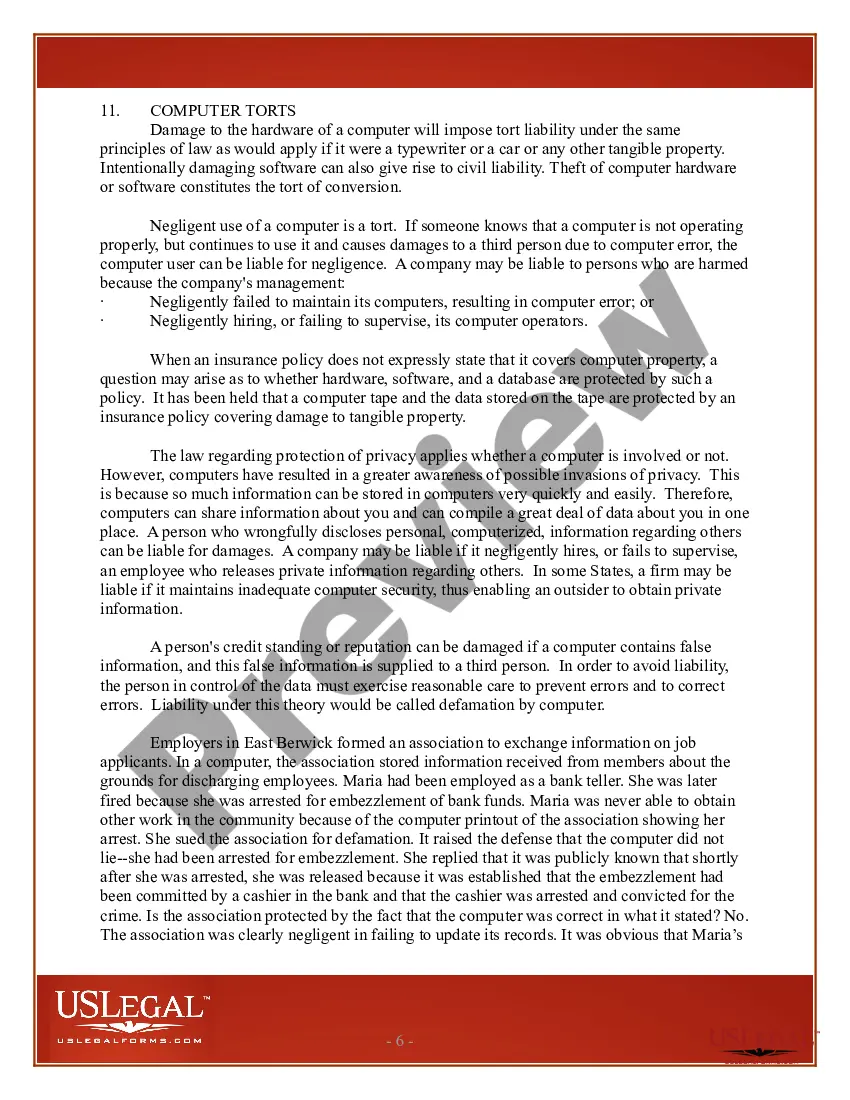
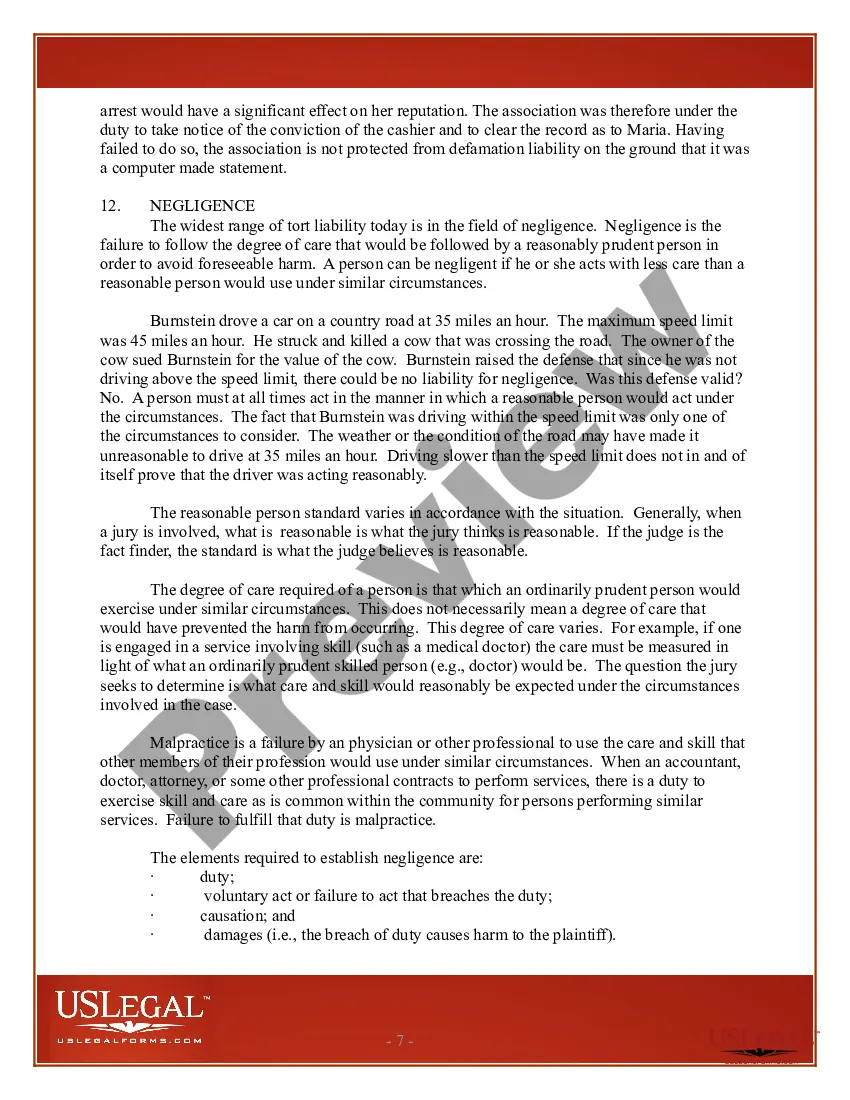
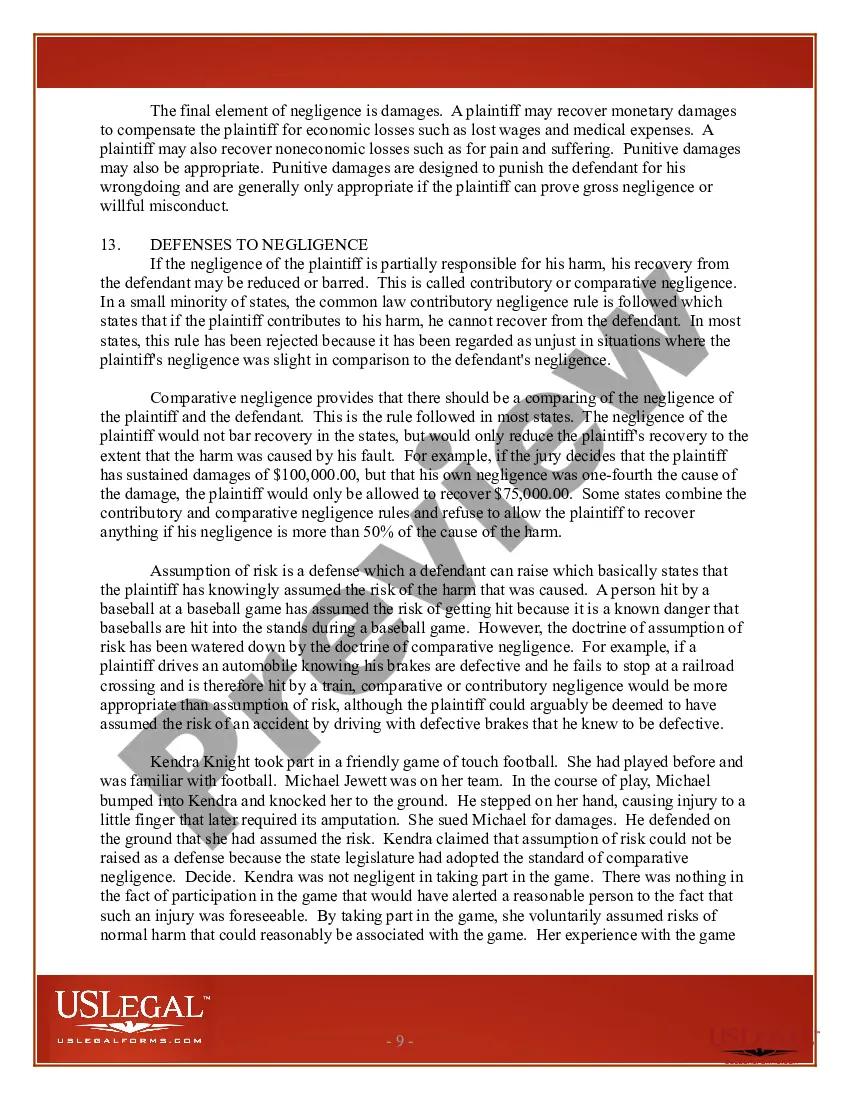
Personal injury tort liability occurs when a person's negligent or intentional actions cause harm or injury to another individual. In these cases, the injured party may be entitled to compensation for medical expenses, lost wages, pain and suffering, and other damages.
Torts are legal wrongs that one party suffers at the hands of another. Negligence is a form of tort which evolved because some types of loss or damage occur between parties that have no contract between them, and therefore there is nothing for one party to sue the other over.
Tort refers to an action that harms another person or his property. Tort usually refers to injuring a person, causing damage to his or her property or reputation, or harming someone's commercial interest. A person who is injured or harmed may sue the person who committed the tort in civil court.
A tort claim is any act that can harm the well-being of a person, by that means violating their rights and making the guilty party liable for their damages and sufferings.
Tort liability. No pecuniary liability of any kind shall be imposed upon the Commonwealth or the locality, town, or landowner therein because of any act, agreement, contract, tort, malfeasance, misfeasance, or nonfeasance by or on the part of a district or its agents, servants, or employees.
Generally, intentional torts are harder to prove than negligence, since a plaintiff must show that the defendant did something on purpose.
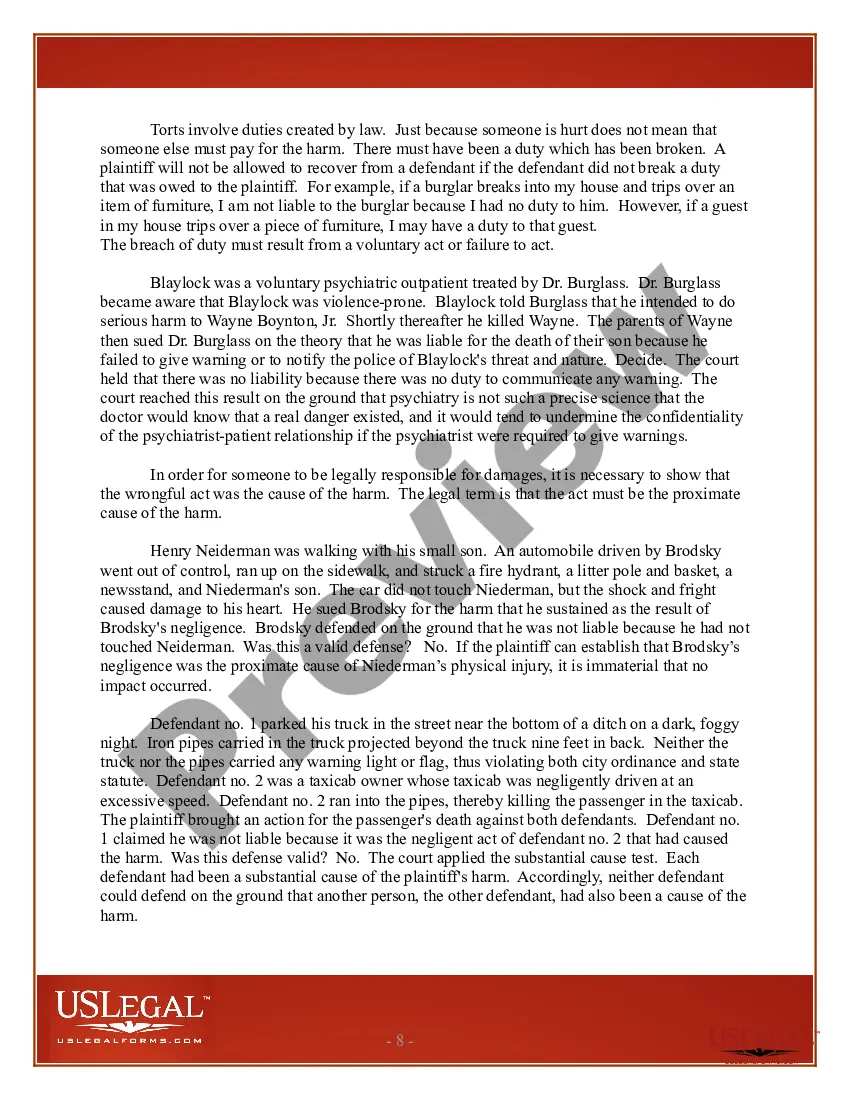
These legal elements include a professional duty owed to a patient, breach of duty, proximate cause or causal con- nection elicited by a breach of duty, and resulting in- juries or damages suffered. 1 These 4 elements apply to all cases of negligence regardless of specialty or clin- ician level.
A tort claim against the United States, based on a negligent or wrongful act or omission of an employee of the Department of Veterans Affairs acting within the scope of his or her employment, may be filed by the injured person or his or her legal representative using Standard Form 95, Claim for Damage, Injury, or Death ...
Your first step is to file an administrative tort claim with the VA. This is done using Standard Form 95, Claim for Damage, Injury, or Death. When filling it out, you should state what your injury is, what act of negligence you believe caused the injury, and the monetary damages you want to receive.
Negligence Torts This usually involves car accidents, slip and fall accidents, or medical malpractice. To succeed in a negligence claim, you must prove duty, breach, causation, and damages.
