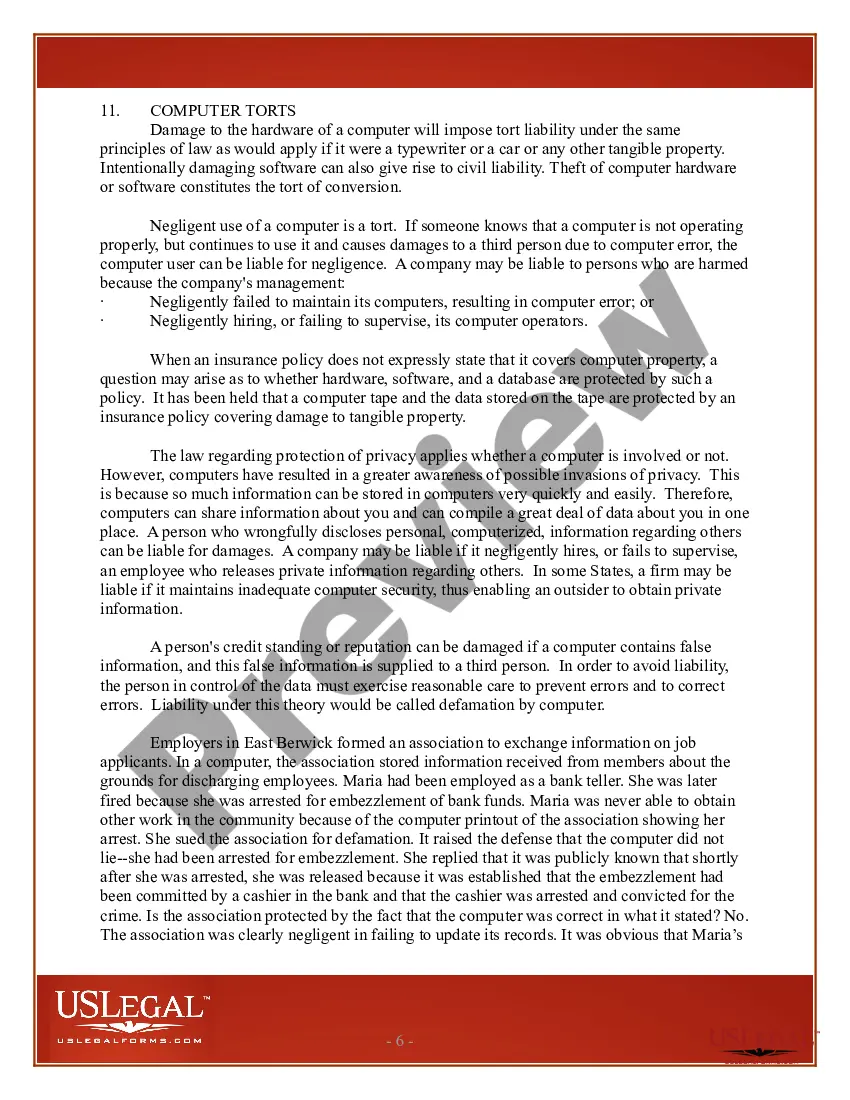
Tort Negligence Liability For Employers In Broward
Description





Get your form ready online
Our built-in tools help you complete, sign, share, and store your documents in one place.
Make edits, fill in missing information, and update formatting in US Legal Forms—just like you would in MS Word.
Download a copy, print it, send it by email, or mail it via USPS—whatever works best for your next step.
Sign and collect signatures with our SignNow integration. Send to multiple recipients, set reminders, and more. Go Premium to unlock E-Sign.
If this form requires notarization, complete it online through a secure video call—no need to meet a notary in person or wait for an appointment.
We protect your documents and personal data by following strict security and privacy standards.

Make edits, fill in missing information, and update formatting in US Legal Forms—just like you would in MS Word.

Download a copy, print it, send it by email, or mail it via USPS—whatever works best for your next step.

Sign and collect signatures with our SignNow integration. Send to multiple recipients, set reminders, and more. Go Premium to unlock E-Sign.

If this form requires notarization, complete it online through a secure video call—no need to meet a notary in person or wait for an appointment.

We protect your documents and personal data by following strict security and privacy standards.
Looking for another form?

Form popularity
FAQ
Respondeat superior refers to the legal doctrine generally used in tort law. Under the doctrine of respondeat superior, the employer or a principal could be held vicariously liable for an unlawful or unjust act of an employee or an agent.
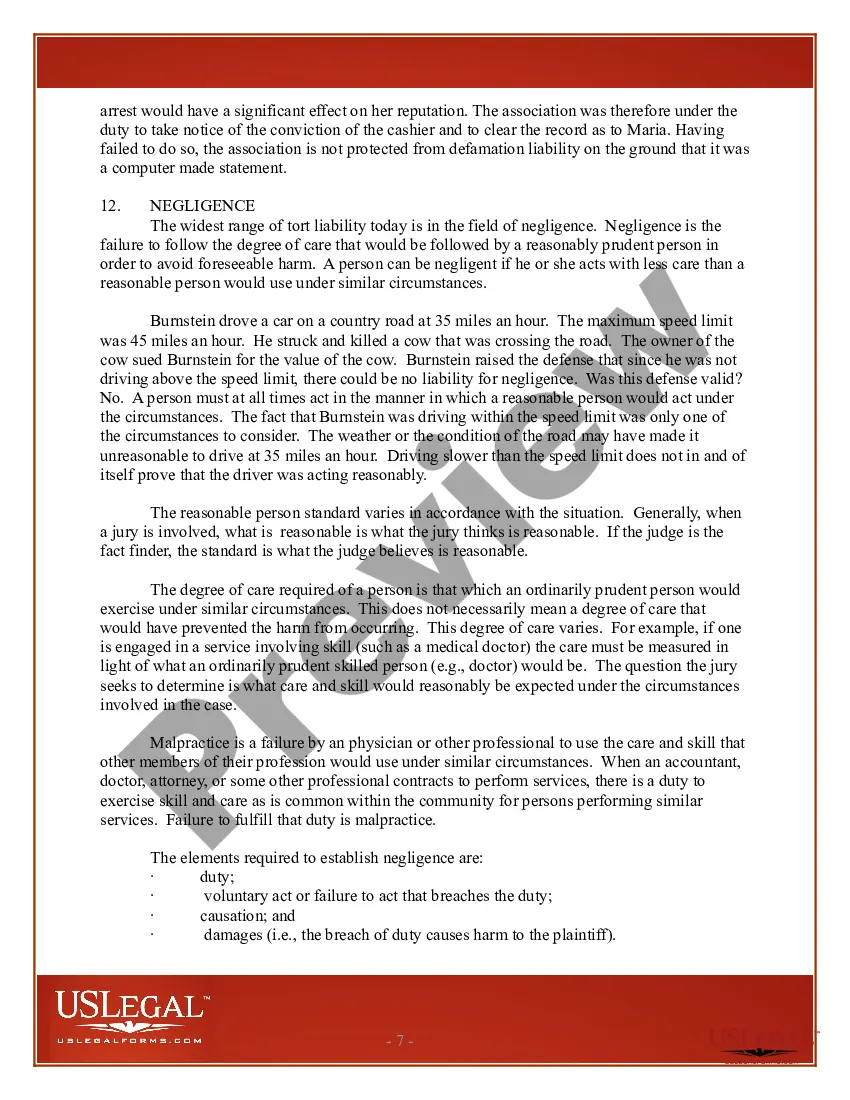
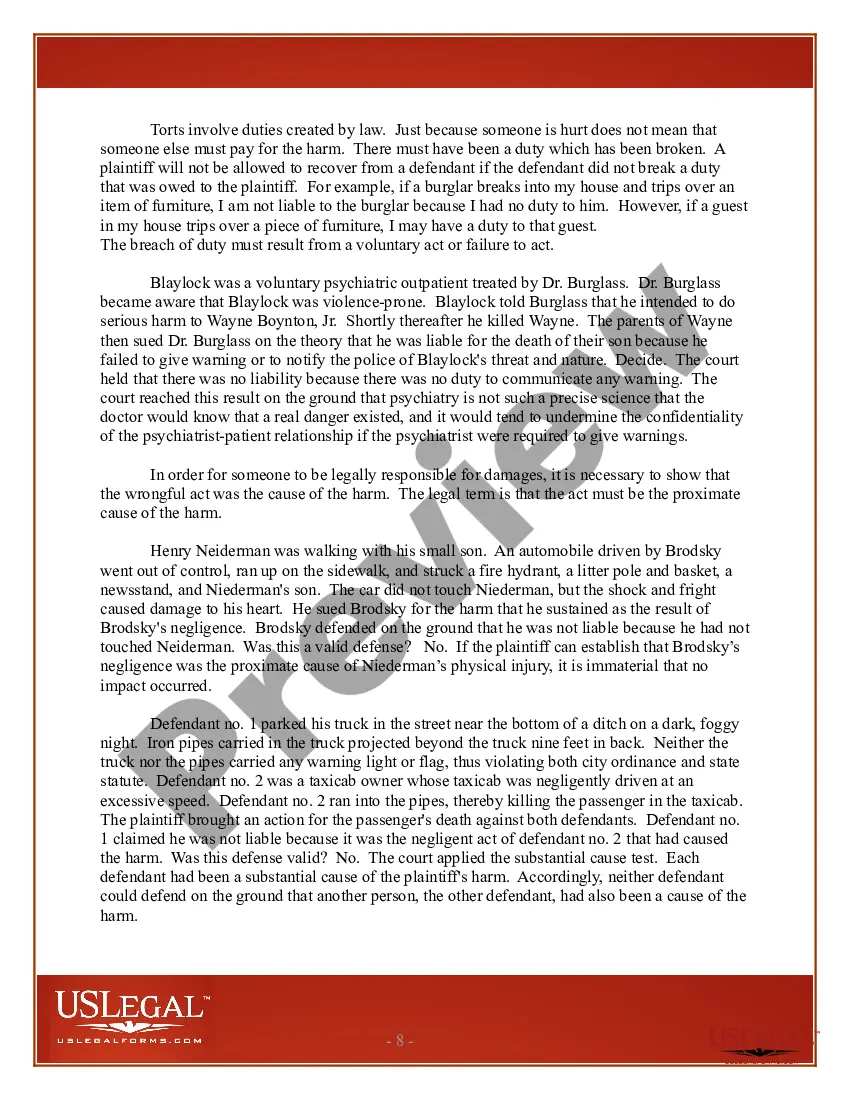
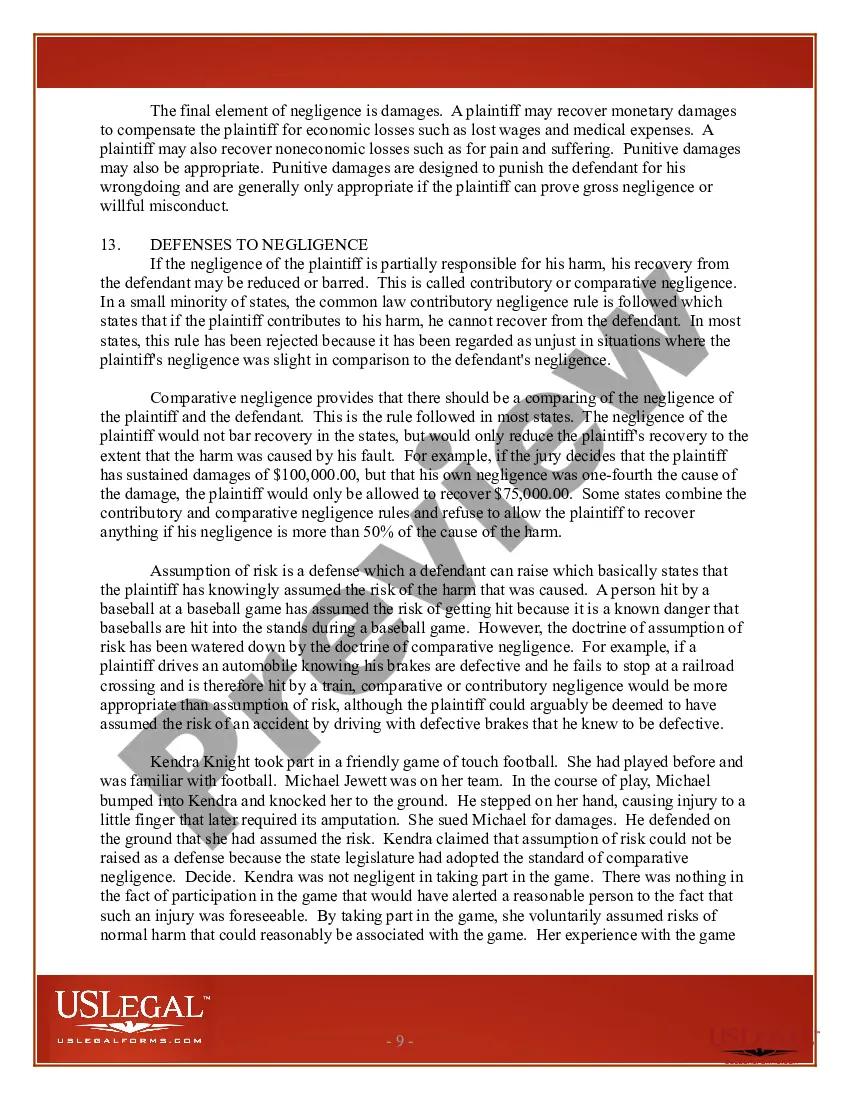
4 Elements of Negligence (1) Duty. In plain terms, the “duty” element requires that the defendant owe a legal duty to the plaintiff. (2) Causation. The “causation” element generally relates to whether the defendant's actions hurt the plaintiff. (3) Breach. Breach is simple to explain but difficult to prove. (4) Damages.
In Florida, injured parties must file a Notice of Claim with the Department of Financial Services to preserve their right to file a lawsuit against a government entity. The notice of claim must be filed in writing within three years of the injury date (two years for wrongful death).
Liability for negligence is a civil, not a criminal, matter. It is for the victim to prove that the defendant owed them a "duty of care", that that duty was breached, and that they have sustained either foreseeable harm or economic loss as a consequence of the negligence alleged.
Most civil lawsuits for injuries allege the wrongdoer was negligent. To win in a negligence lawsuit, the victim must establish 4 elements: (1) the wrongdoer owed a duty to the victim, (2) the wrongdoer breached the duty, (3) the breach caused the injury (4) the victim suffered damages.
Yes, you can sue your employer for negligence at the workplace. However, you must be able to legally prove that the negligence has impacted you.
To recover on a negligence claim, the plaintiff must establish the existence of a legal duty on the part of the defendant, a breach of that duty, causation, and damages. United Blood Servs. v. Quintana, 827 P.
What are the 4 Elements of Negligence in Florida? Duty of Care. First, you need to show that the person/entity who injured them owed them a duty of care. Breach of Duty. The second element requires you to prove a breach of duty to create a legal cause of action. Causation. Damages/Injury.
An employer can only be liable under negligent hiring or retention for an employee's actions taken during the time of employment. An employer will not be liable for any actions taken after the period of employment has ended.
The new modified comparative negligence law went into effect on March 24, 2023, and applies to all negligence claims filed on or after that date, except for medical malpractice cases. Any general personal injury lawsuits filed before March 24, 2023, will still use the previous pure comparative negligence rule.
