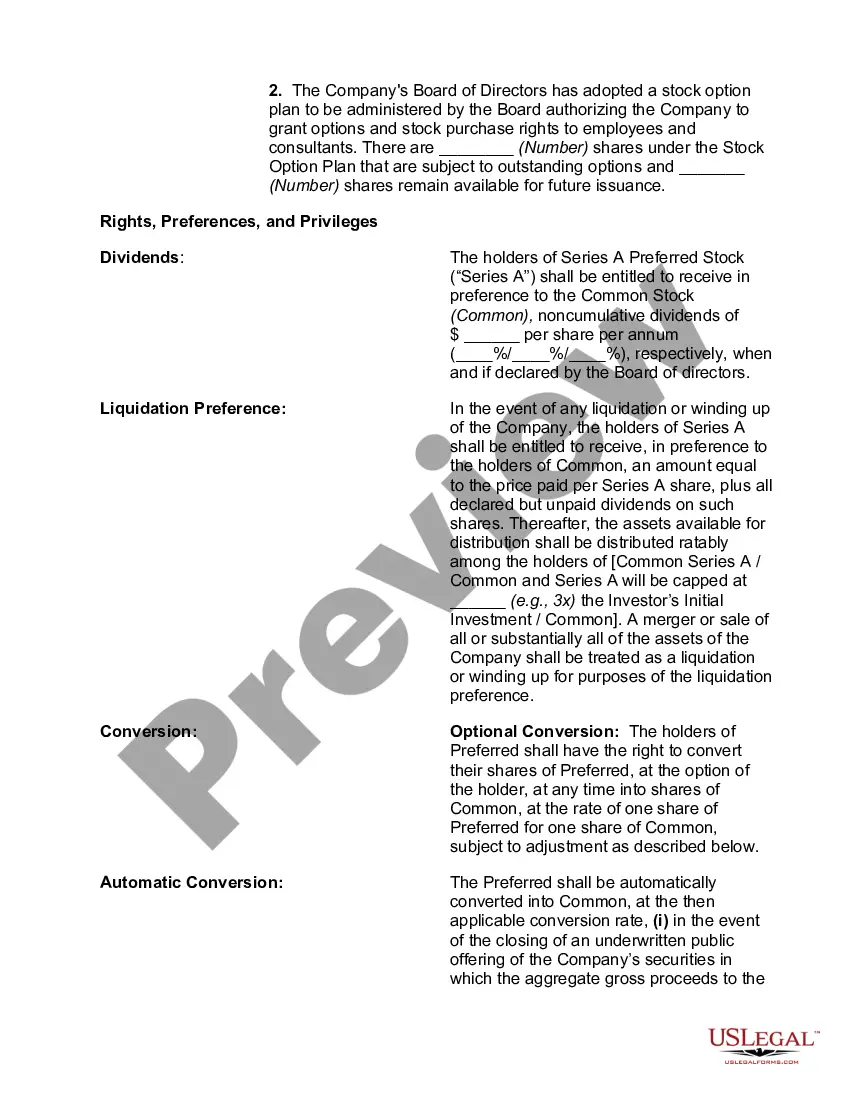
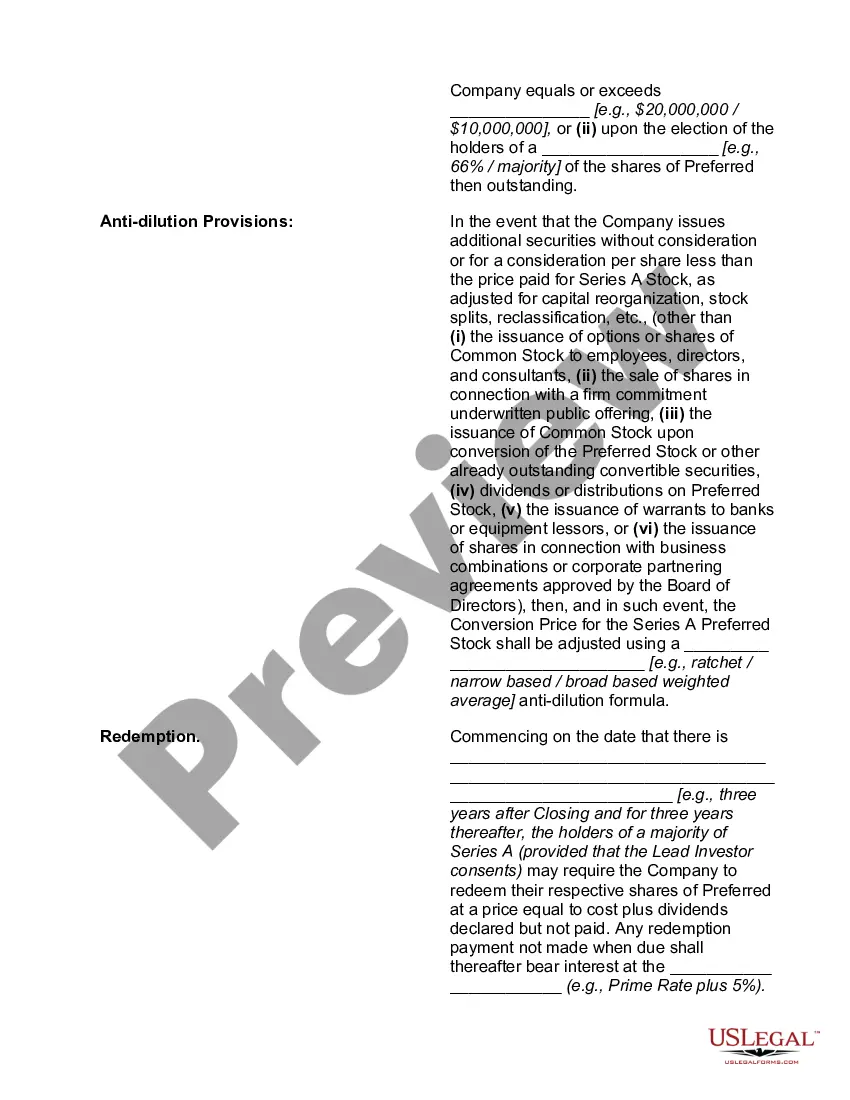
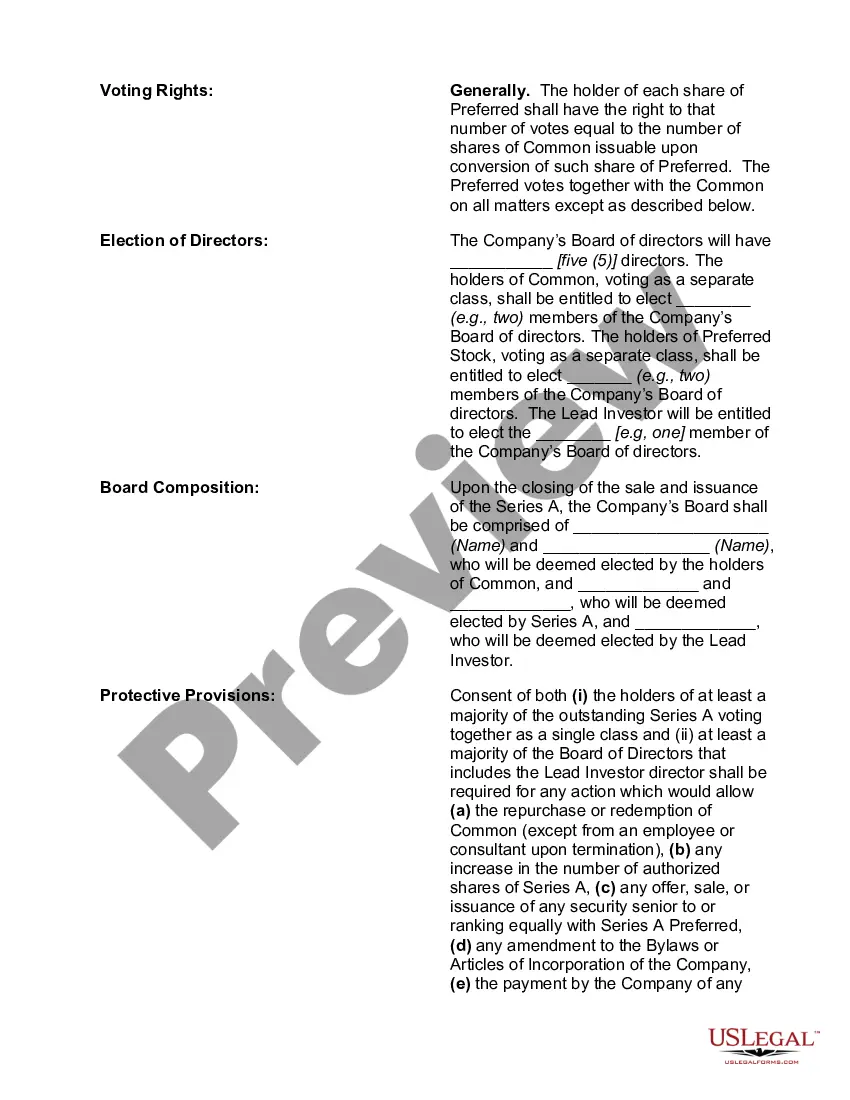
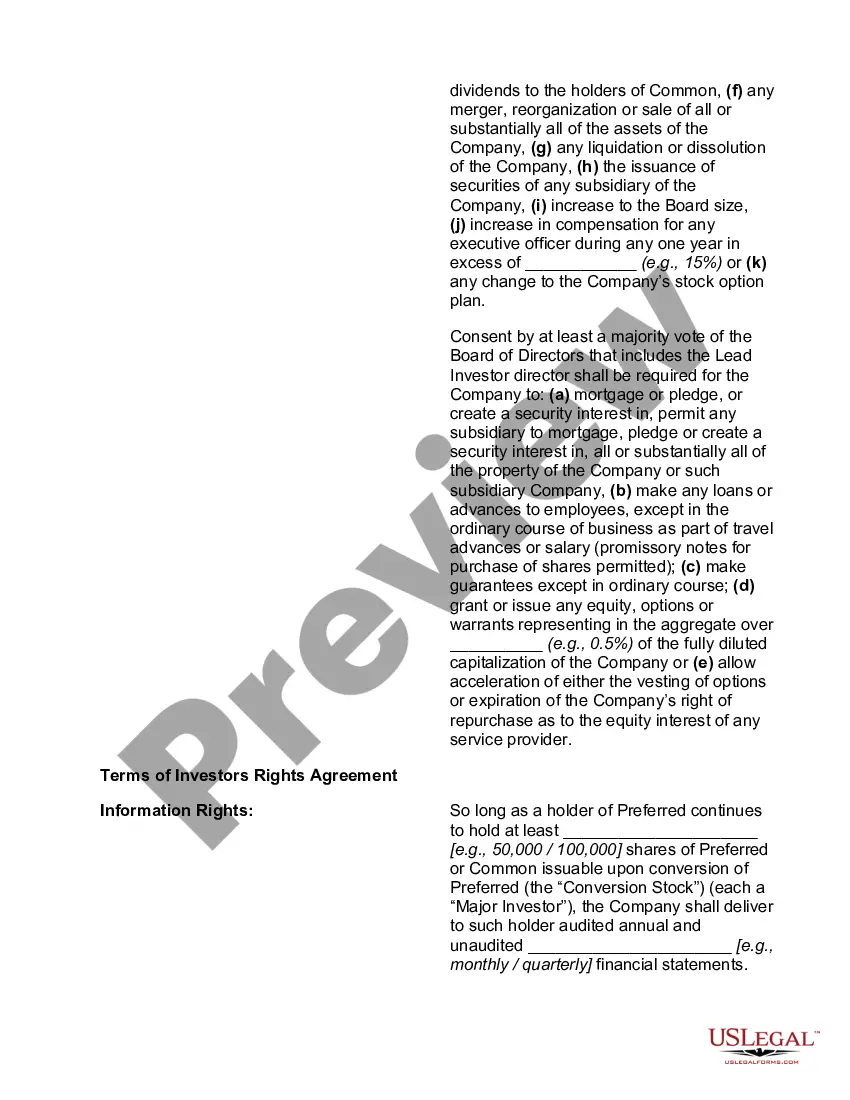
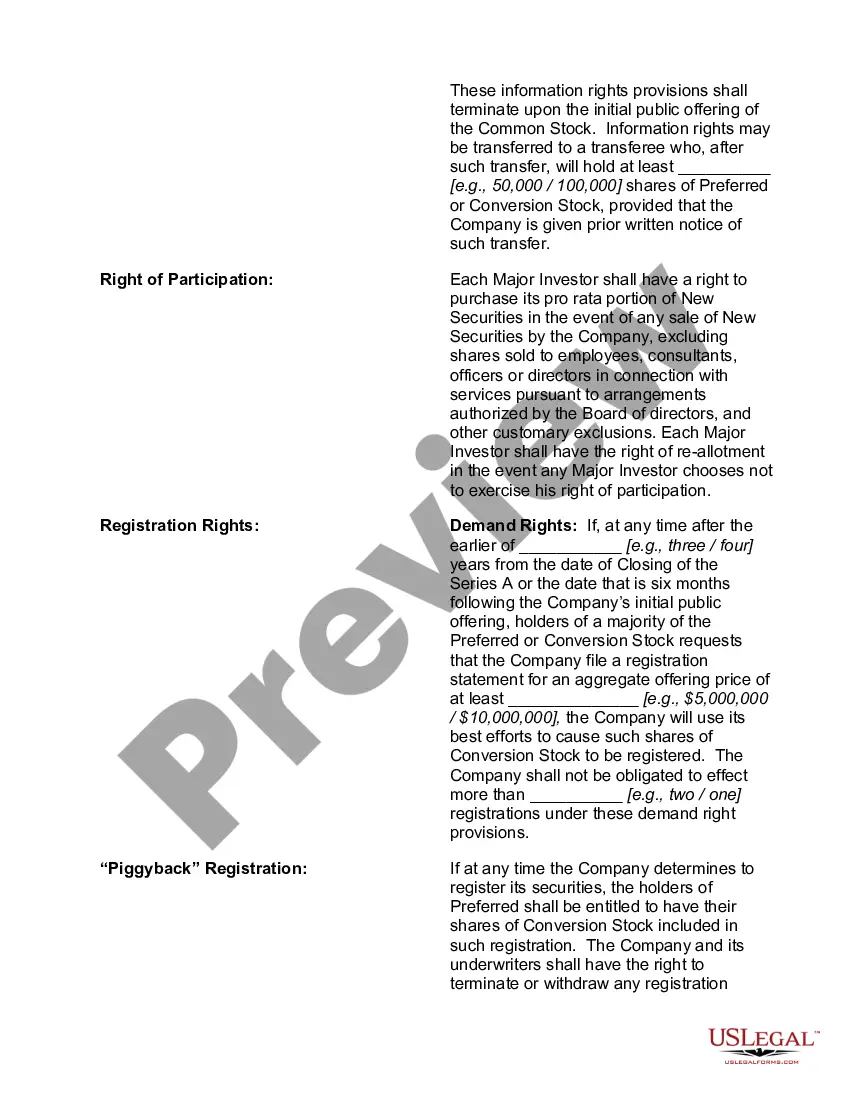
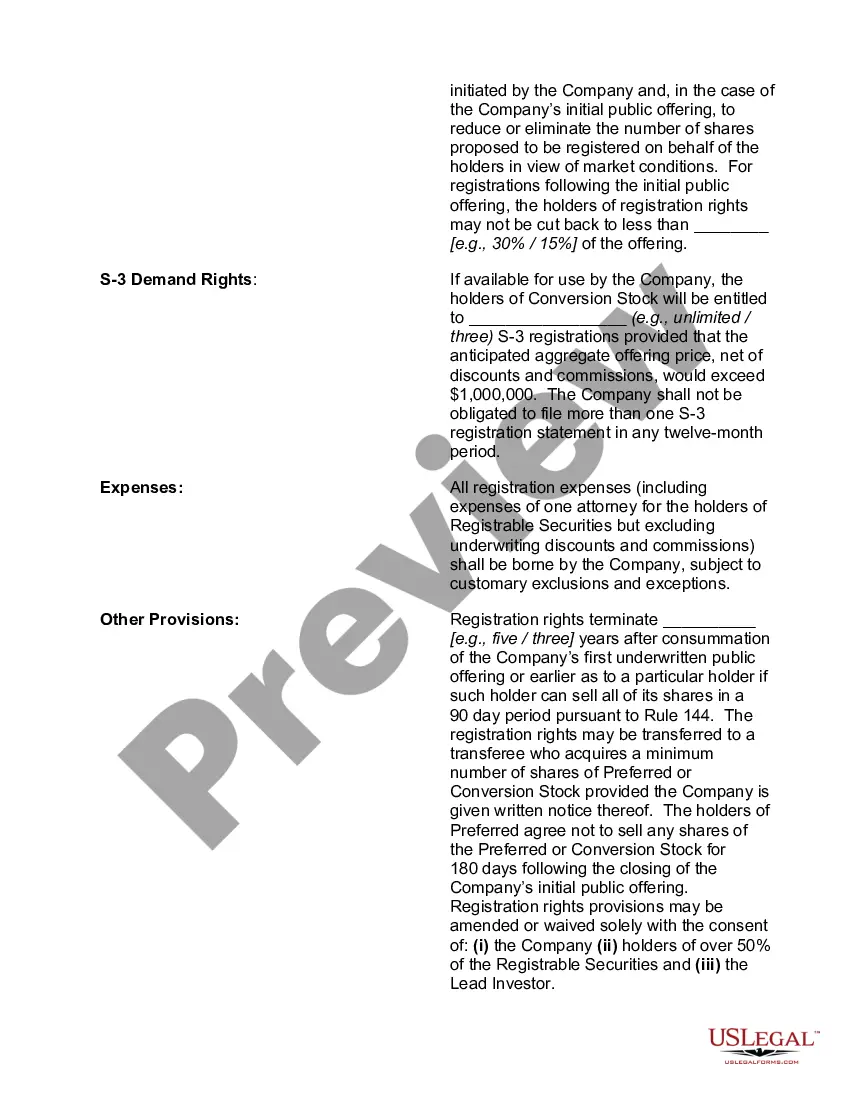
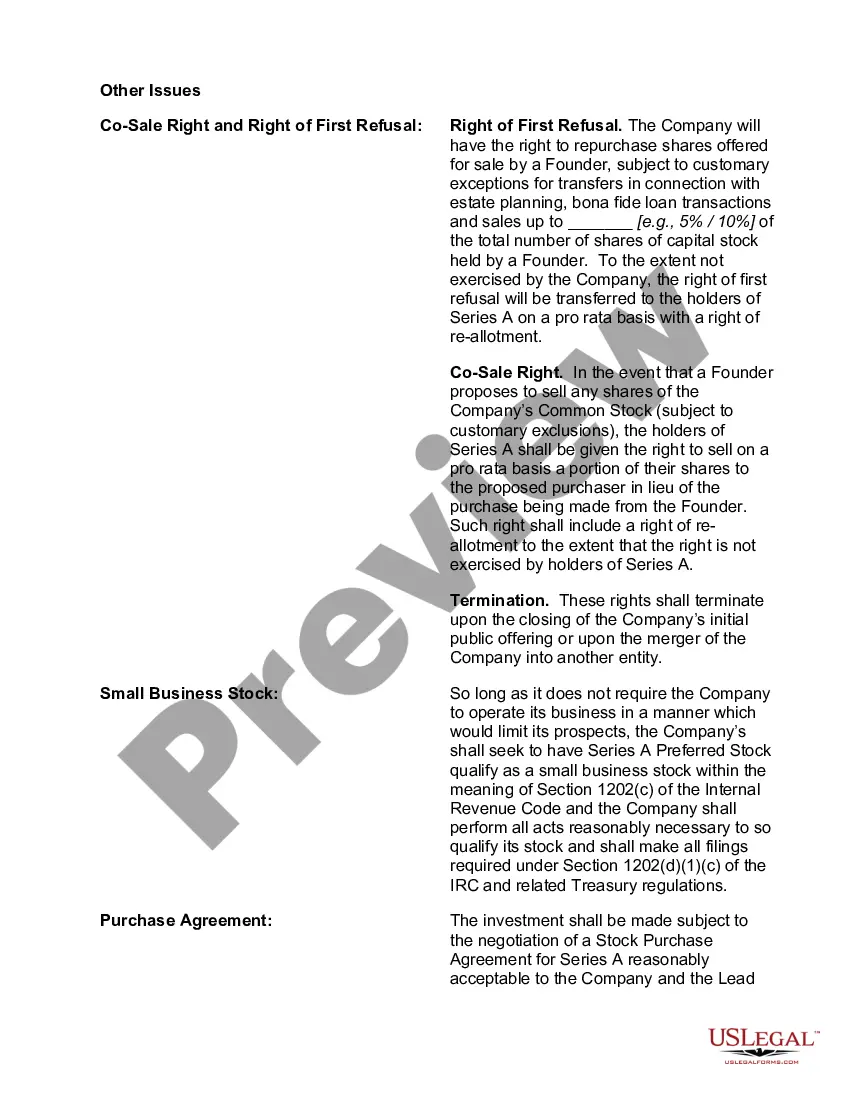
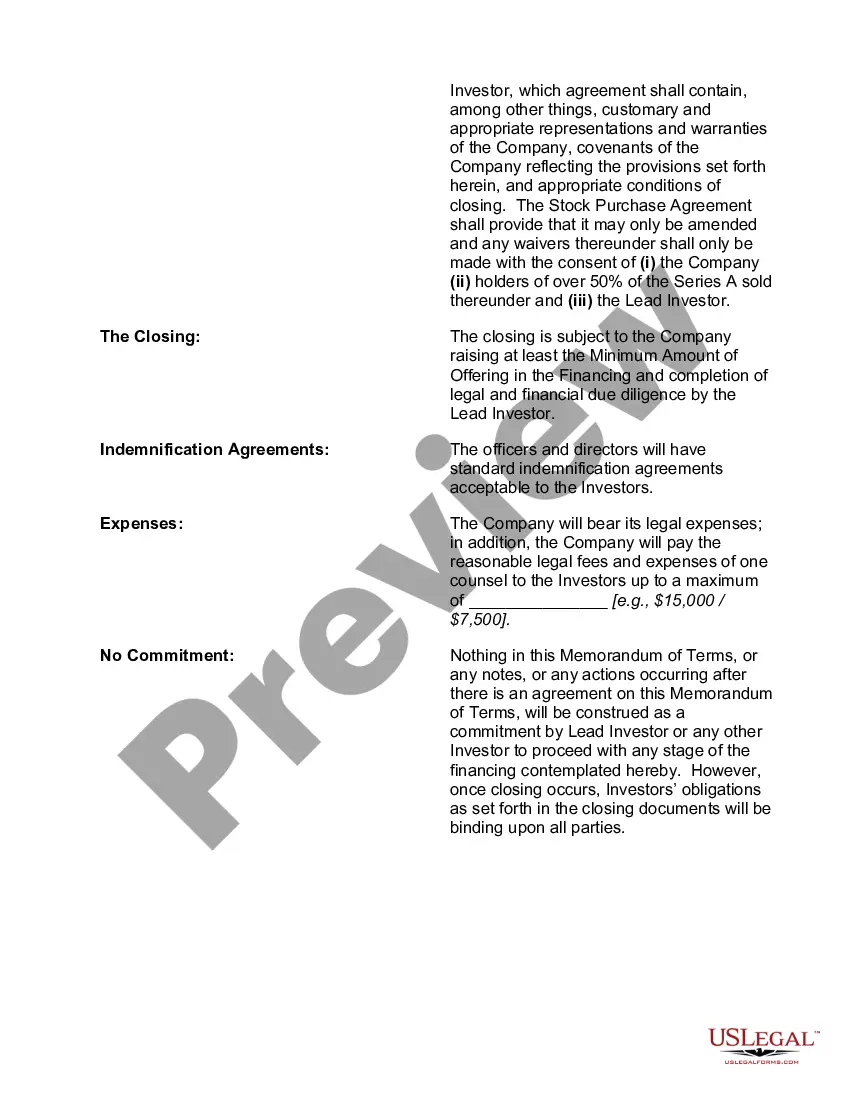
Investor Term Sheet Template For Business Partnership In Philadelphia
Description

Get your form ready online
Our built-in tools help you complete, sign, share, and store your documents in one place.
Make edits, fill in missing information, and update formatting in US Legal Forms—just like you would in MS Word.
Download a copy, print it, send it by email, or mail it via USPS—whatever works best for your next step.
Sign and collect signatures with our SignNow integration. Send to multiple recipients, set reminders, and more. Go Premium to unlock E-Sign.
If this form requires notarization, complete it online through a secure video call—no need to meet a notary in person or wait for an appointment.
We protect your documents and personal data by following strict security and privacy standards.

Make edits, fill in missing information, and update formatting in US Legal Forms—just like you would in MS Word.

Download a copy, print it, send it by email, or mail it via USPS—whatever works best for your next step.

Sign and collect signatures with our SignNow integration. Send to multiple recipients, set reminders, and more. Go Premium to unlock E-Sign.

If this form requires notarization, complete it online through a secure video call—no need to meet a notary in person or wait for an appointment.

We protect your documents and personal data by following strict security and privacy standards.
Looking for another form?








Form popularity
FAQ
Legal counsel is essential when creating or reviewing a term sheet to ensure that the terms are clear, fair, and protect your interests. An experienced attorney can help identify potential issues and provide valuable negotiation advice.
A term sheet may be prepared by either party – the investor or the founder. Usually, if a venture capital firm is investing, the VC offers a term sheet.
The term sheet is “Non-Binding” as it reflects only the key and broad points between parties under which the investment will be made. It also acts as a template for the in-house or external legal teams to draft definitive agreements.
“Term sheets”, “letters of intent”, “memoranda of understanding” and “agreements in principle” may constitute an enforceable agreement if the writing includes all the essential terms of an agreement. This is so even if “the parties intended to negotiate a 'fuller agreement'”.
6 Tips for Writing a Term Sheet List the terms. Summarize the terms. Explain the dividends. Include liquidation preference. Include voting agreement and closing items. Read, edit and prepare for signatures.
Term sheets are not binding. If an investor presents you with a term sheet, it does not mean that you are going to close on the financing. The investor is still completing its due diligence. If the investor discovers something that he or she does not like, then the investor may step away from the transaction.
Validity Period: If the term sheet has a validity period mentioned, then it becomes the whole life period of the term sheet. The same will be expired on the date of the validity with all agreed terms and conditions. However, the parties can anytime renew their contract if they wish to by generating a new term sheet.
Term sheets are nonbinding, though they may often require an upfront good faith deposit or other evidence that both parties intend to carry out an executed full agreement.
In as little as 500 words, a VC's term sheet lays out the financial terms of the investment, how much your startup will be worth, who will control it and who will profit the most if the company is sold or goes public. The term sheet is akin to a letter of intent.
A term sheet is a document which sets out certain terms of a transaction agreed in principle between parties, and is typically negotiated and signed at the beginning of a transaction. Term sheets evidence serious intent, but generally are not legally binding.
