Acceptance For Appointment Letter In Allegheny
Description
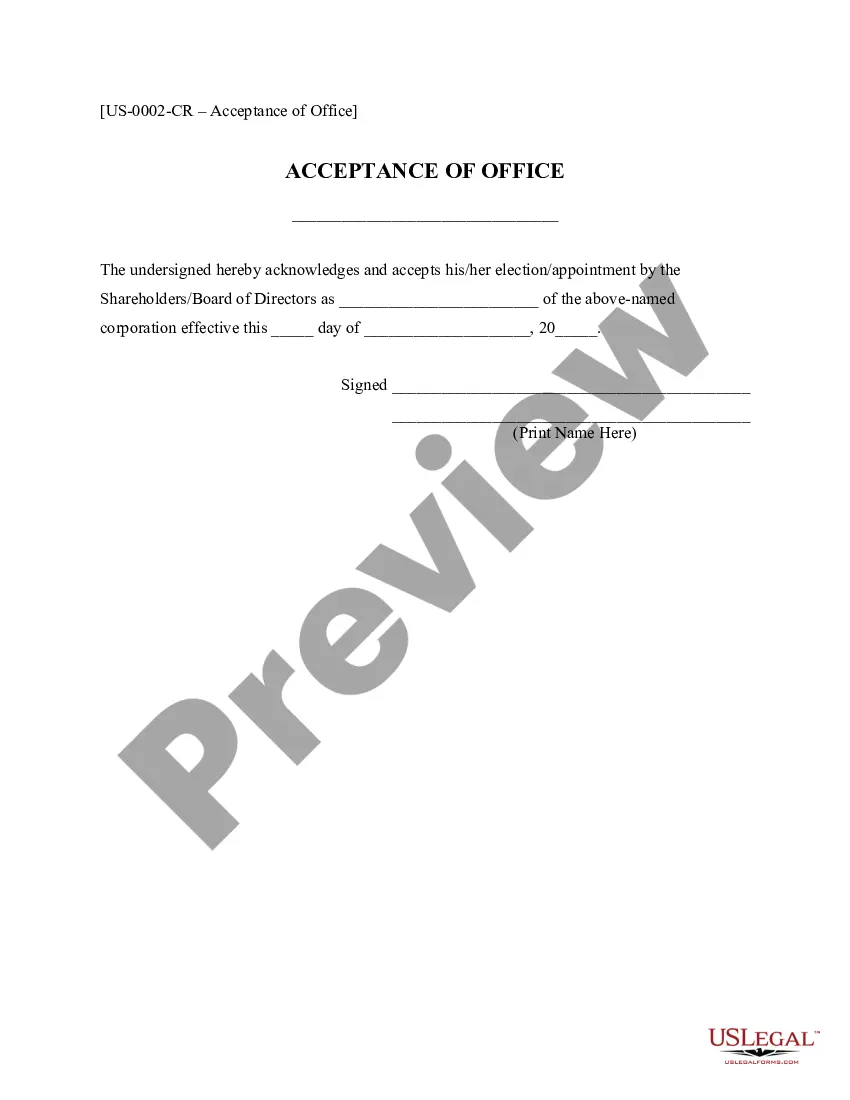

Get your form ready online
Our built-in tools help you complete, sign, share, and store your documents in one place.
Make edits, fill in missing information, and update formatting in US Legal Forms—just like you would in MS Word.
Download a copy, print it, send it by email, or mail it via USPS—whatever works best for your next step.
Sign and collect signatures with our SignNow integration. Send to multiple recipients, set reminders, and more. Go Premium to unlock E-Sign.
If this form requires notarization, complete it online through a secure video call—no need to meet a notary in person or wait for an appointment.
We protect your documents and personal data by following strict security and privacy standards.

Make edits, fill in missing information, and update formatting in US Legal Forms—just like you would in MS Word.

Download a copy, print it, send it by email, or mail it via USPS—whatever works best for your next step.

Sign and collect signatures with our SignNow integration. Send to multiple recipients, set reminders, and more. Go Premium to unlock E-Sign.

If this form requires notarization, complete it online through a secure video call—no need to meet a notary in person or wait for an appointment.

We protect your documents and personal data by following strict security and privacy standards.
Looking for another form?








Form popularity
FAQ
Most schools notify students electronically and with hard copies, so you can expect both mailed and emailed college acceptance letters. Some students will instead get an email notification to view their college acceptance letters through a school's online portal.
Dear recipient's name: or To Whom it May Concern: It is my pleasure to recommend Jane Doe for admission to name of program at name of university.
The introduction, which first and foremost includes your statement of recommendation (i.e. “it is my pleasure to recommend…”). It is common to also briefly state who you are and what your expertise is. The overview, or a description of the applicant's top skills, attributes, and strengths.
College admissions officers aren't your besties, so starting with “Hey!” just doesn't set the right tone. Stick to a professional greeting like “Dear Name,” and save the emojis and slang for texting your friends.
Students that get into Allegheny have an average SAT score between 1140-1360 or an average ACT score of 23-30. The regular admissions application deadline for Allegheny is February 15. Interested students can apply for early action and early decision.
Open with a formal salutation Your letter of recommendation should begin like any business letter. Keep in mind that, while common, “Dear Sir or Madam,” can feel gendered or outdated. “To Whom It May Concern,” is acceptable but can feel a little impersonal. If you can, find out the name of the admissions director.
Address the Admissions Officer Respectfully Try to use the admissions officer's appropriate title and last name. For example, "Dear Mr. Smith" or "Hello, Ms. Doe." You can even write "Dear admission officer" if other details are not available.
Through the Commitment to Access Program (CAP), Allegheny College covers 100% of tuition for Pennsylvania and Ohio students from families earning $50,000 or less. CAP is available to new first-year and transfer students and renewable for up to 4 years.
Allegheny College admissions has an acceptance rate of 59% and an early acceptance rate of 70.2%. Half the applicants admitted to Allegheny College who submitted test scores have an SAT score between 1138 and 1335 or an ACT score of 25 and 31.
