Affidavit Motion Amend For Default Dissolution In Maryland
Description




Get your form ready online
Our built-in tools help you complete, sign, share, and store your documents in one place.
Make edits, fill in missing information, and update formatting in US Legal Forms—just like you would in MS Word.
Download a copy, print it, send it by email, or mail it via USPS—whatever works best for your next step.
Sign and collect signatures with our SignNow integration. Send to multiple recipients, set reminders, and more. Go Premium to unlock E-Sign.
If this form requires notarization, complete it online through a secure video call—no need to meet a notary in person or wait for an appointment.
We protect your documents and personal data by following strict security and privacy standards.

Make edits, fill in missing information, and update formatting in US Legal Forms—just like you would in MS Word.

Download a copy, print it, send it by email, or mail it via USPS—whatever works best for your next step.

Sign and collect signatures with our SignNow integration. Send to multiple recipients, set reminders, and more. Go Premium to unlock E-Sign.

If this form requires notarization, complete it online through a secure video call—no need to meet a notary in person or wait for an appointment.

We protect your documents and personal data by following strict security and privacy standards.
Looking for another form?








Form popularity
FAQ
If a hearing is necessary, the auditor shall fix the time and place for the hearing and shall send written notice to all parties and to all persons who have filed a claim in the proceedings at the address stated in the claim.
Rule 2-534 - Motion to Alter or Amend a Judgment-Court Decision, Md.
You can file a motion to revise or vacate (cancel) the judgment in writing within 30 days after the date of the judgment. This motion is usually filed to correct clerical errors, or to vacate a judgment if you believe that you were not served with the court papers or were not notified of the court date.
If a party's motion for judgment notwithstanding the verdict is granted, the court at the same time shall decide whether to grant that party's motion for new trial, if any, should the judgment thereafter be reversed on appeal.
A defendant can challenge the entry of default by filing a motion pursuant to Federal Rule of Civil Procedure 55(c), which allows the court to set it aside for “good cause” shown. Under certain circumstances, the court is required to do so.
The foundation of the Best Evidence Rule is that the original writing, recording or photograph is the 'best' way to prove the actual content of the evidence.
How will the court handle the motion? In most cases, after leaving time for the other parties to respond, the court will simply read the motion and response(s) and issue an order. In some cases, the court will schedule a hearing, to give you and the other party a chance to explain your arguments further.
Read the complaint and decide what to do. Read the complaint. You may agree with some, all, or none of the complaint. Write down next to each paragraph in the complaint whether you agree or disagree with what that paragraph says. If you agree with everything your spouse is asking for, you may not need to file anything.
Judgment: During the default hearing, the petitioner presents their case, providing evidence to support their claims. The judge evaluates the evidence and considers the petitioner's arguments.
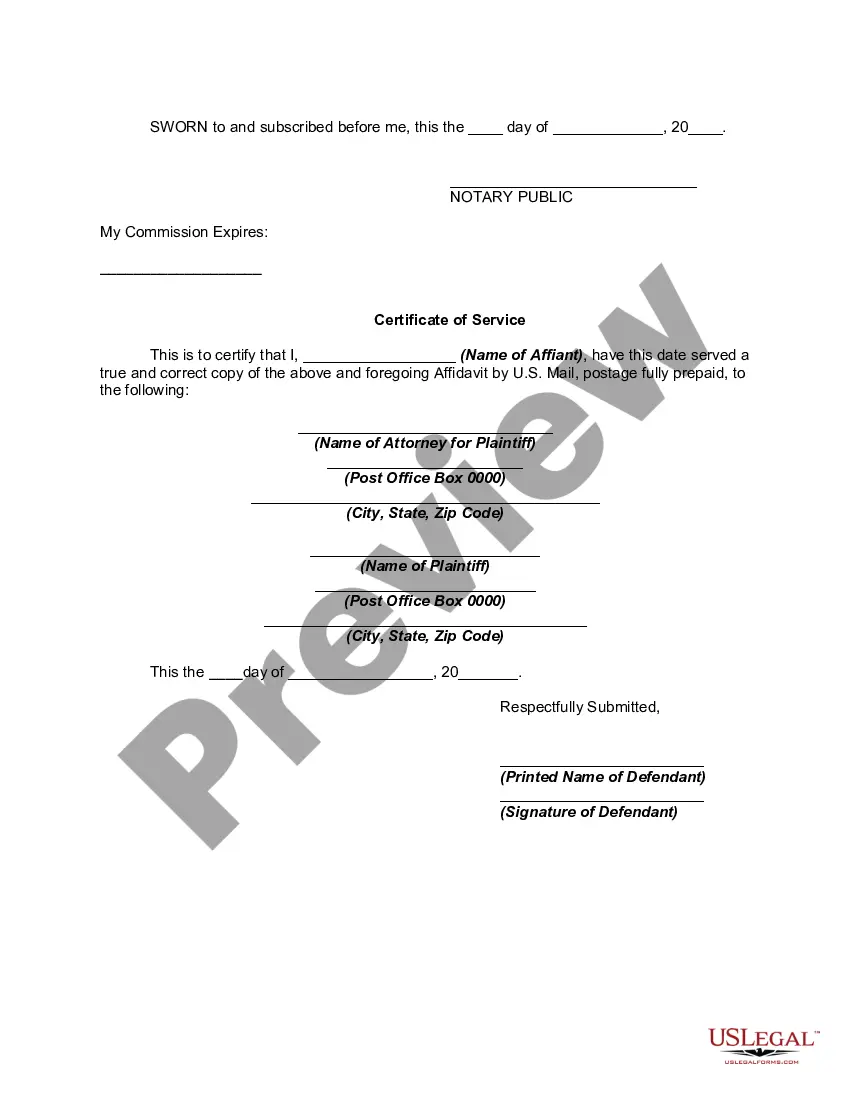
An affidavit is a special document that promises that the statement you are making is true. The affidavit must be signed by you, and swear (or affirm) under the penalties of perjury that what you are saying is true.
