General Warranty Deed With Retained Life Estate
Description


Get your form ready online
Our built-in tools help you complete, sign, share, and store your documents in one place.
Make edits, fill in missing information, and update formatting in US Legal Forms—just like you would in MS Word.
Download a copy, print it, send it by email, or mail it via USPS—whatever works best for your next step.
Sign and collect signatures with our SignNow integration. Send to multiple recipients, set reminders, and more. Go Premium to unlock E-Sign.
If this form requires notarization, complete it online through a secure video call—no need to meet a notary in person or wait for an appointment.
We protect your documents and personal data by following strict security and privacy standards.

Make edits, fill in missing information, and update formatting in US Legal Forms—just like you would in MS Word.

Download a copy, print it, send it by email, or mail it via USPS—whatever works best for your next step.

Sign and collect signatures with our SignNow integration. Send to multiple recipients, set reminders, and more. Go Premium to unlock E-Sign.

If this form requires notarization, complete it online through a secure video call—no need to meet a notary in person or wait for an appointment.

We protect your documents and personal data by following strict security and privacy standards.
Looking for another form?
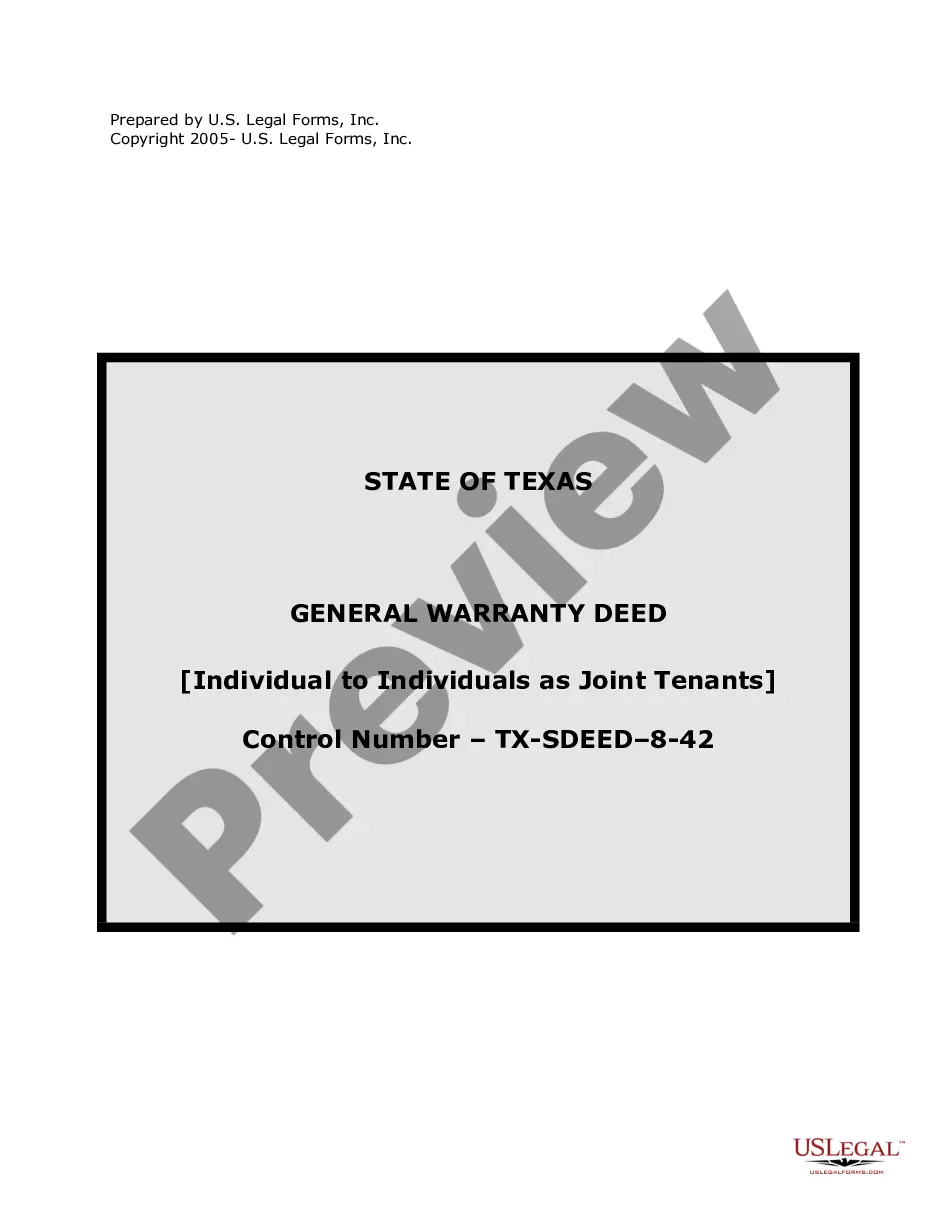
How to fill out Texas General Warranty Deed For Individual To Three (3) Individuals As Joint Tenants With Rights Of Survivorship?
- If you're a returning user, log in to your account. Ensure your subscription is active before attempting to download your desired form.
- For new users, begin by browsing the extensive library. Check the Preview mode and description to choose the right document that fits your needs and complies with local regulations.
- If the needed form isn't available, utilize the Search feature to find a suitable alternative. Once you identify an appropriate template, proceed to the next step.
- Purchase the document by clicking the Buy Now button. Select a subscription plan that suits you and create an account to unlock the full library of resources.
- Finalize your payment by providing credit card details or opting for PayPal. Complete the transaction to gain access to all features.
- Once your purchase is confirmed, download the document to your device. You can access it anytime through the My Forms section of your profile.
In conclusion, US Legal Forms provides a robust platform for obtaining legal documents like the general warranty deed with retained life estate. With a collection larger than many competitors, users can efficiently find, purchase, and download necessary forms, ensuring peace of mind.
Start your hassle-free legal document journey with US Legal Forms today!
Form popularity
FAQ
To file a general warranty deed, you must first complete the deed form accurately, including all pertinent details about the property and the parties involved. Next, you typically need to have the deed notarized to validate it legally. Finally, file the deed with your county recorder’s office, where it becomes part of the public record. Using USLegalForms can streamline this process, offering the right forms and instructions.
You can file a warranty deed yourself, but it requires careful attention to detail. Ensure that you complete all necessary forms accurately and follow your state’s regulations for filing. However, using a platform like USLegalForms can simplify the process. They provide templates and guidance, helping you avoid pitfalls and ensuring compliance.
A general warranty deed transfers property ownership from one person to another, and it comes with certain guarantees. When you use a general warranty deed with retained life estate, you ensure that the seller pledges to defend the title against any claims. This means the buyer receives full protection regarding ownership rights. It's an effective way to protect your investment and ensure peace of mind.
One disadvantage of a life estate is that it limits the owner's control over the property after their passing, as it automatically transfers to other beneficiaries. This situation may not align with your desired estate plan or can complicate selling or mortgaging the property. Understanding these limitations is vital, and a general warranty deed with retained life estate can help clarify intentions among all parties involved.
You can sell a house held under a life estate, but it often requires the consent of the life estate holder. The sale will typically transfer the property subject to the life estate, meaning the new owner will have to respect the existing rights. Employing a general warranty deed with retained life estate can facilitate this process, allowing for clear terms.
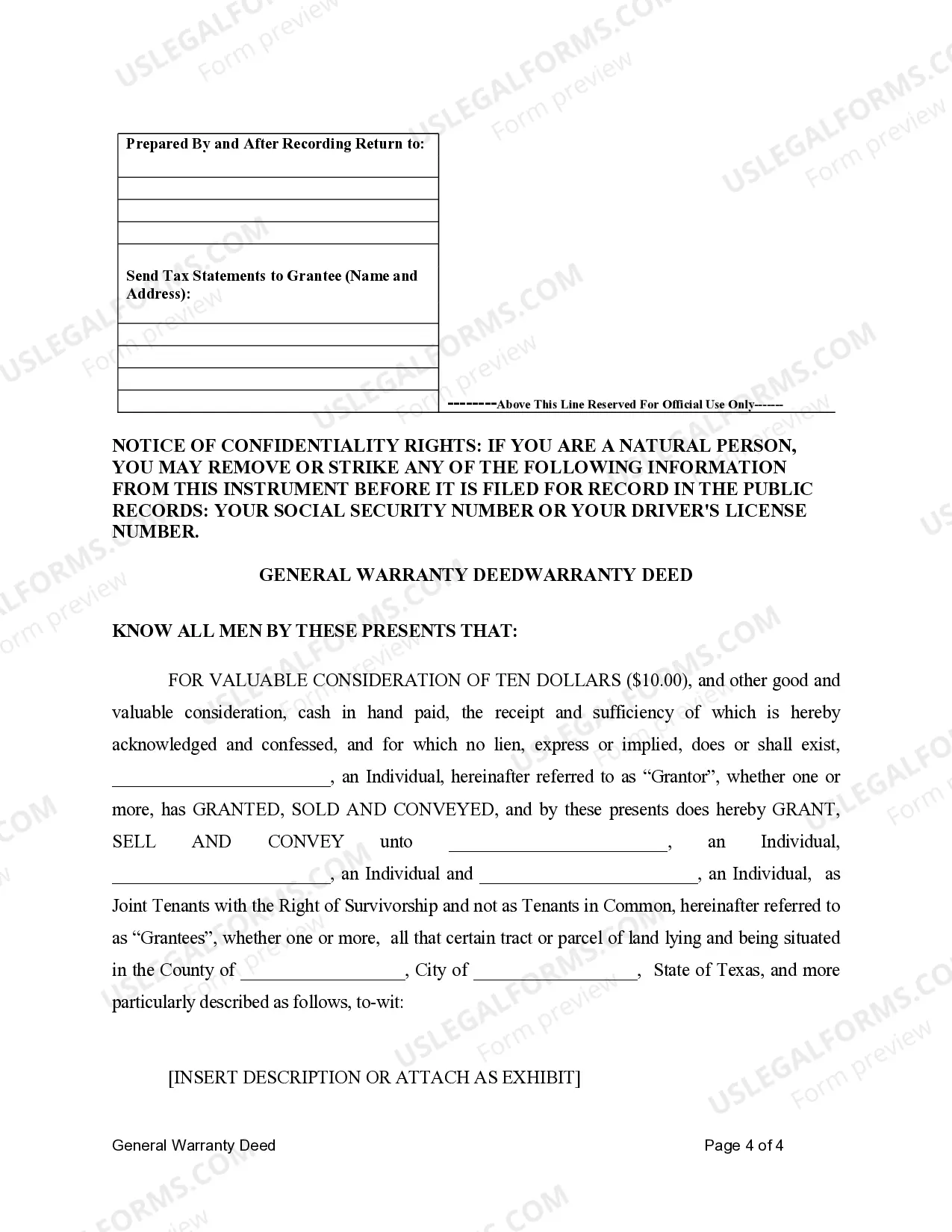
Filling out a general warranty deed involves providing specific details about property ownership, including names of both the grantor and grantee. You should also include a clear description of the property and the retained life estate conditions. For assistance, platforms like US Legal Forms offer templates and examples, streamlining the process and ensuring accuracy.
In general, a will cannot override a life estate because the life estate holds legal precedence during the property owner's lifetime. If the property holder passes away, the life estate typically transfers to the designated beneficiaries. Therefore, it is crucial to understand how a general warranty deed with retained life estate interacts with your overall estate plan.
To navigate around a life estate, you may consider options such as executing a general warranty deed with retained life estate, allowing you to retain certain rights while transferring ownership. Engaging with an attorney or estate planner can provide guidance, ensuring all legal stipulations are met. This approach allows for flexibility while respecting the existing life estate arrangement.
A life estate warranty deed is a legal tool that grants property ownership while ensuring the original owner retains life rights to occupy the property until their passing. This type of deed combines the assurances of a traditional warranty deed with the specific arrangement of a life estate. It is often used to nurture family properties while providing security for the current occupant.
To avoid probate effectively, a general warranty deed with a retained life estate is often recommended as it allows for smooth transitions upon the grantor's passing. This type of deed ensures that the property does not go through the probate process but transfers immediately to the designated remainderman. Choosing the right deed can simplify estate management and help family members avoid legal hassles.