General Warranty Deed With Enhanced Life Estate
Description


Get your form ready online
Our built-in tools help you complete, sign, share, and store your documents in one place.
Make edits, fill in missing information, and update formatting in US Legal Forms—just like you would in MS Word.
Download a copy, print it, send it by email, or mail it via USPS—whatever works best for your next step.
Sign and collect signatures with our SignNow integration. Send to multiple recipients, set reminders, and more. Go Premium to unlock E-Sign.
If this form requires notarization, complete it online through a secure video call—no need to meet a notary in person or wait for an appointment.
We protect your documents and personal data by following strict security and privacy standards.

Make edits, fill in missing information, and update formatting in US Legal Forms—just like you would in MS Word.

Download a copy, print it, send it by email, or mail it via USPS—whatever works best for your next step.

Sign and collect signatures with our SignNow integration. Send to multiple recipients, set reminders, and more. Go Premium to unlock E-Sign.

If this form requires notarization, complete it online through a secure video call—no need to meet a notary in person or wait for an appointment.

We protect your documents and personal data by following strict security and privacy standards.
Looking for another form?
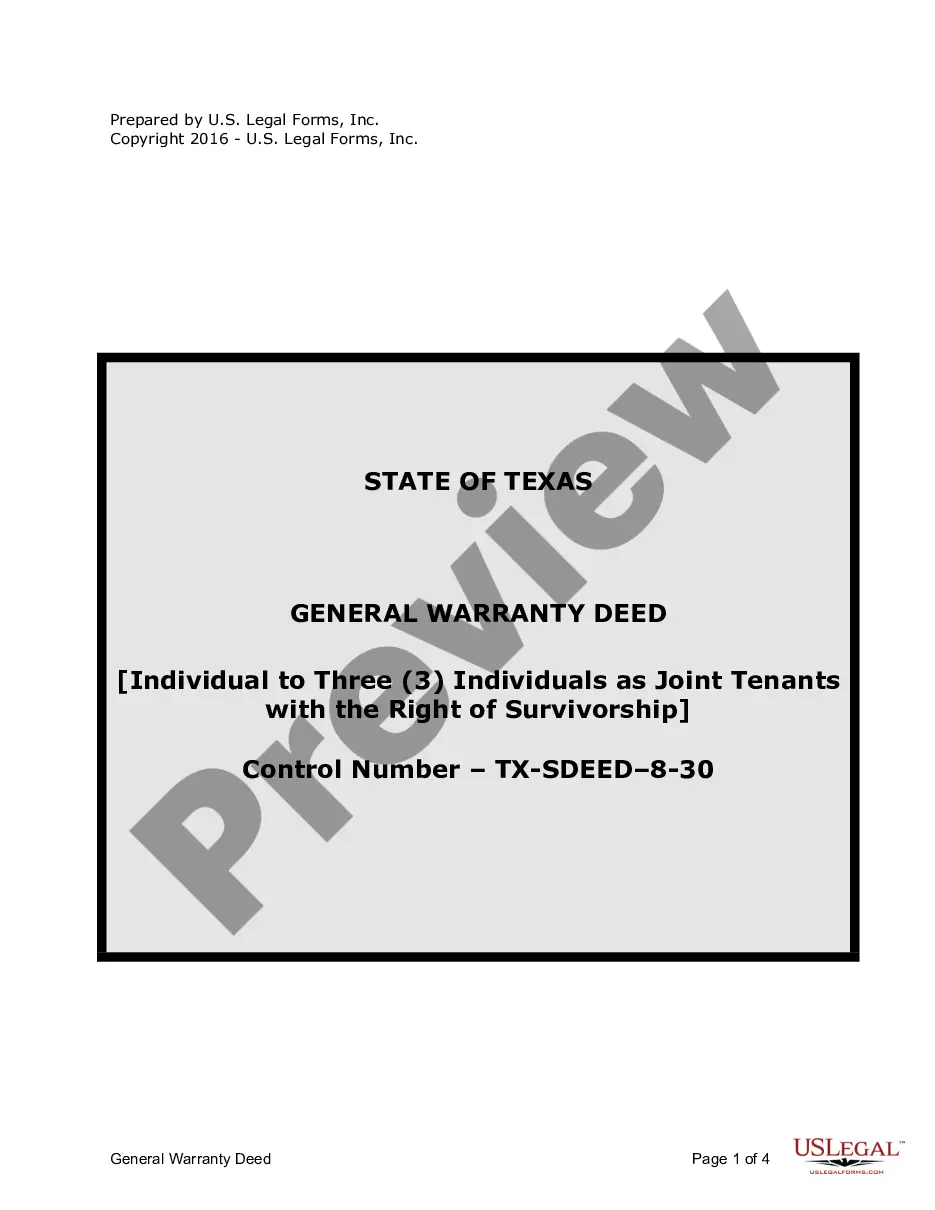
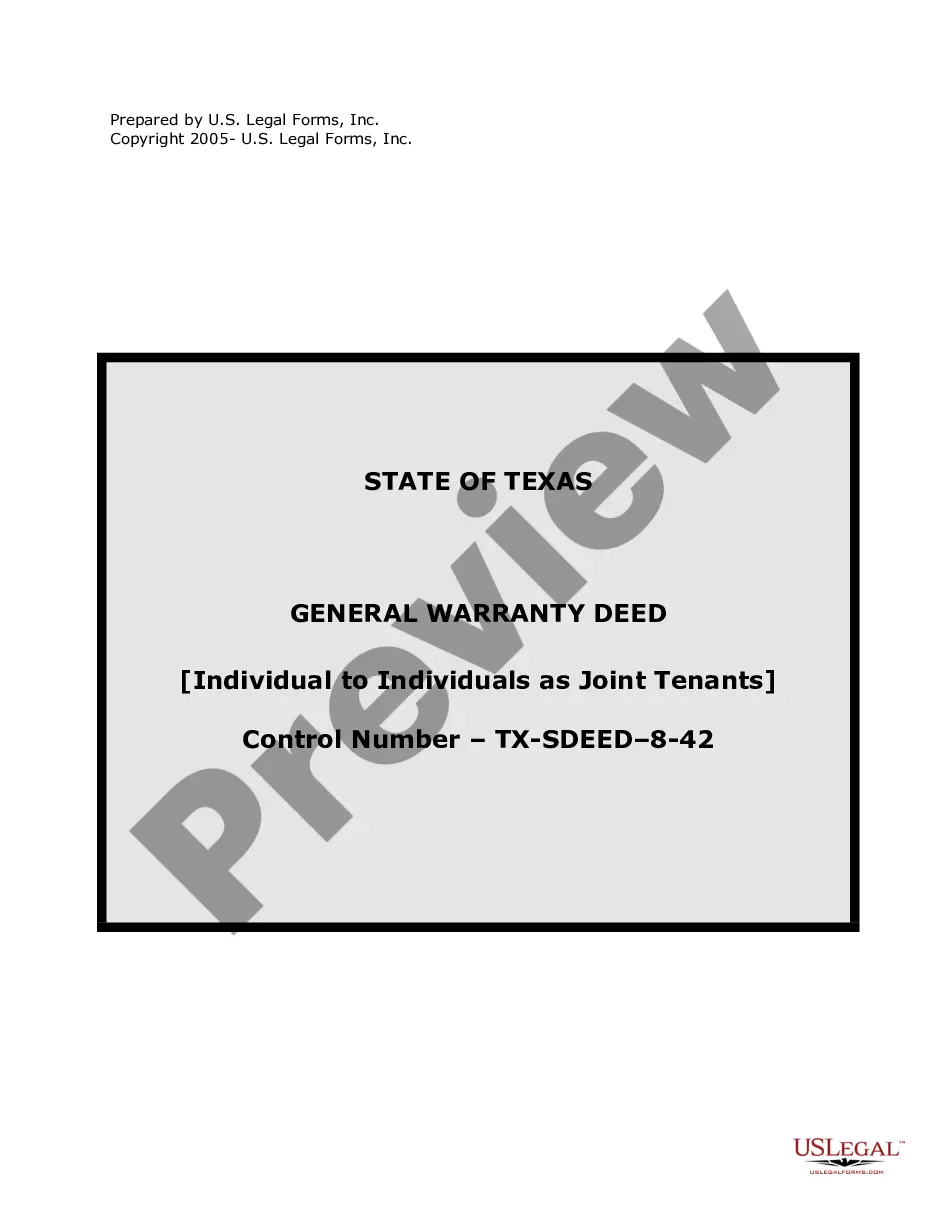
How to fill out Texas General Warranty Deed For Individual To Three (3) Individuals As Joint Tenants With Rights Of Survivorship?
- If you're a returning user, log in to your account and download your required document by clicking the Download button, ensuring your subscription is up to date.
- For first-time users, begin by reviewing the form description and Preview mode. Ensure the template you select meets your specific needs and complies with your local jurisdiction.
- Searching for additional templates is easy. If you find any inconsistencies, utilize the Search tab to find the correct document.
- Purchase your chosen document by clicking the Buy Now button, selecting your preferred subscription plan, and creating an account for full access to the library.
- Complete your payment using your credit card or PayPal account to finalize your subscription.
- Download the finished form and save it to your device. You can access it anytime under the My Forms section of your profile.
By utilizing US Legal Forms, you can ensure that you have the correct legal documents at your fingertips, making the process of preparing a general warranty deed seamless and efficient.
Don't wait any longer! Explore the comprehensive library of forms available at US Legal Forms and take the first step toward securing your property rights today.
Form popularity
FAQ
Ladybird deeds, which are similar to enhanced life estate deeds, are available in a select number of states, including Florida, Michigan, and Texas. These deeds allow property owners to retain control and avoid probate. As you explore the options for estate planning, consider using services like USLegalForms to guide you in creating a ladybird deed that aligns with your goals.
Many states have adopted enhanced life estate deeds, making them a practical choice for estate planning. Along with Florida and Texas, states like Maryland and New Mexico also recognize these deeds. Understanding the specific regulations in your state is essential, and platforms like USLegalForms can provide tailored support to help you navigate the process.
Enhanced life estate deeds are recognized in several states across the U.S., including Florida, Michigan, and Texas. Each state may have slightly different regulations regarding the use and filing of these deeds. Therefore, it is crucial to check your local laws or consult a legal professional to ensure your enhanced life estate deed meets state requirements.
Filing a general warranty deed involves several steps. First, you must complete the deed document accurately, ensuring that it includes all necessary details such as the names of the parties and a legal description of the property. Next, you need to sign the deed in front of a notary public. Finally, submit the deed to your local county recorder’s office to register it officially.
A life estate deed grants someone the right to live on a property for their lifetime, but they cannot sell it or transfer ownership. In contrast, a general warranty deed with enhanced life estate allows the owner to not only live on the property but also sell or transfer it without any restrictions. This flexibility makes the enhanced life estate deed a powerful tool for estate planning.
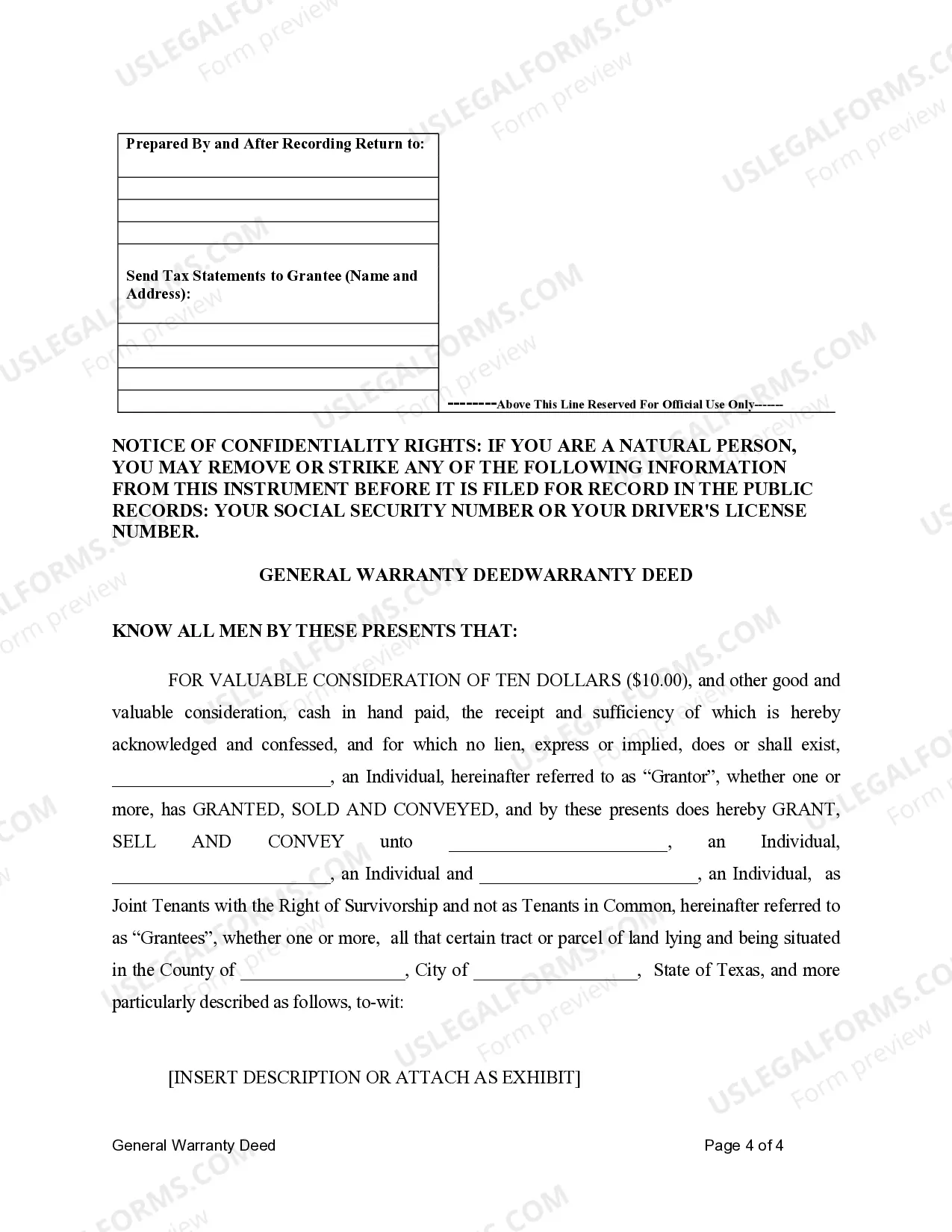
To fill out a general warranty deed, you will need to include details such as the names of the grantor and grantee, the property description, and relevant state laws. It's crucial to clearly define any encumbrances or existing agreements like an enhanced life estate. Additionally, ensure that you have the grantor's signature and necessary witness or notary acknowledgments to validate the document. Platforms like uslegalforms can provide templates and guidance for completing a general warranty deed with enhanced life estate correctly.
The purpose of a general warranty deed is to provide a high level of security to the new property owner. This type of deed guarantees that the seller fully owns the property and has the right to sell it. It protects the buyer against any future claims to the property by ensuring that the seller will defend the title against all possible disputes. For a smoother transaction involving a general warranty deed with enhanced life estate, buyer and seller should clearly understand their rights and responsibilities.
An enhanced life estate warranty deed allows a property owner to transfer their estate while retaining the right to live in the property for their lifetime. This type of deed provides additional protections to the owner, ensuring that they maintain control over the property during their life. After their passing, the property automatically transfers to the designated beneficiaries without going through probate. Understanding a general warranty deed with enhanced life estate is vital for effective estate planning.
Yes, you can sell a house that is in a life estate. However, it's important to understand that the sale will typically require the consent of the life tenant. The new owner will acquire the property subject to the existing life estate, meaning they can’t fully utilize the property until the life tenant passes away. This aspect is essential when considering the flexibility of a general warranty deed with enhanced life estate.
The two primary types of life estates are conventional life estates and enhanced life estates. A conventional life estate grants ownership rights only during a person's lifetime, after which the property passes to a designated remainderman. In contrast, an enhanced life estate gives you the ability to live in the property while allowing for a seamless transfer to a beneficiary upon your passing. Choosing a general warranty deed with enhanced life estate can provide you with peace of mind, ensuring your wishes are honored.