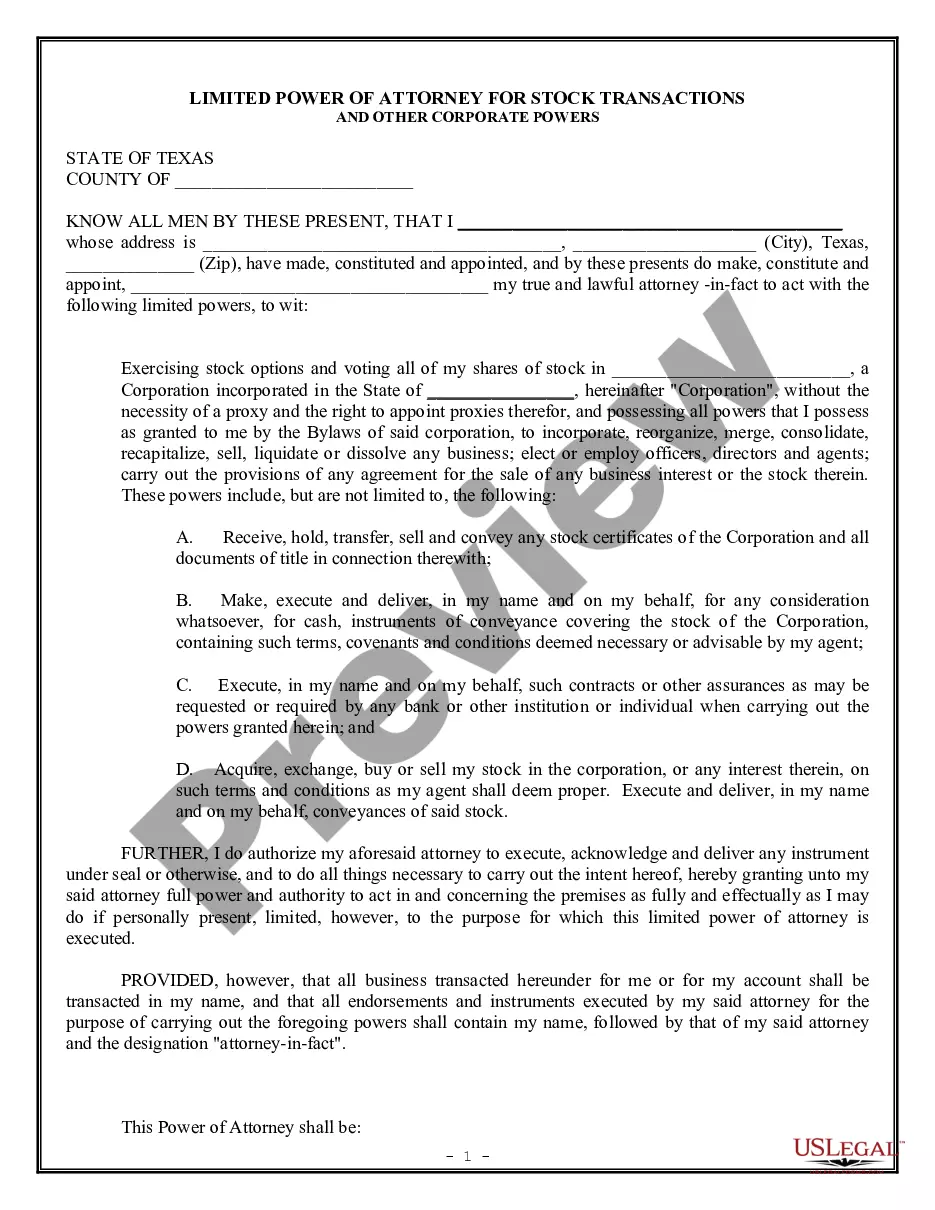
Power Attorney Powers With The State
Description
Get your form ready online
Our built-in tools help you complete, sign, share, and store your documents in one place.
Make edits, fill in missing information, and update formatting in US Legal Forms—just like you would in MS Word.
Download a copy, print it, send it by email, or mail it via USPS—whatever works best for your next step.
Sign and collect signatures with our SignNow integration. Send to multiple recipients, set reminders, and more. Go Premium to unlock E-Sign.
If this form requires notarization, complete it online through a secure video call—no need to meet a notary in person or wait for an appointment.
We protect your documents and personal data by following strict security and privacy standards.

Make edits, fill in missing information, and update formatting in US Legal Forms—just like you would in MS Word.

Download a copy, print it, send it by email, or mail it via USPS—whatever works best for your next step.

Sign and collect signatures with our SignNow integration. Send to multiple recipients, set reminders, and more. Go Premium to unlock E-Sign.

If this form requires notarization, complete it online through a secure video call—no need to meet a notary in person or wait for an appointment.

We protect your documents and personal data by following strict security and privacy standards.
Looking for another form?
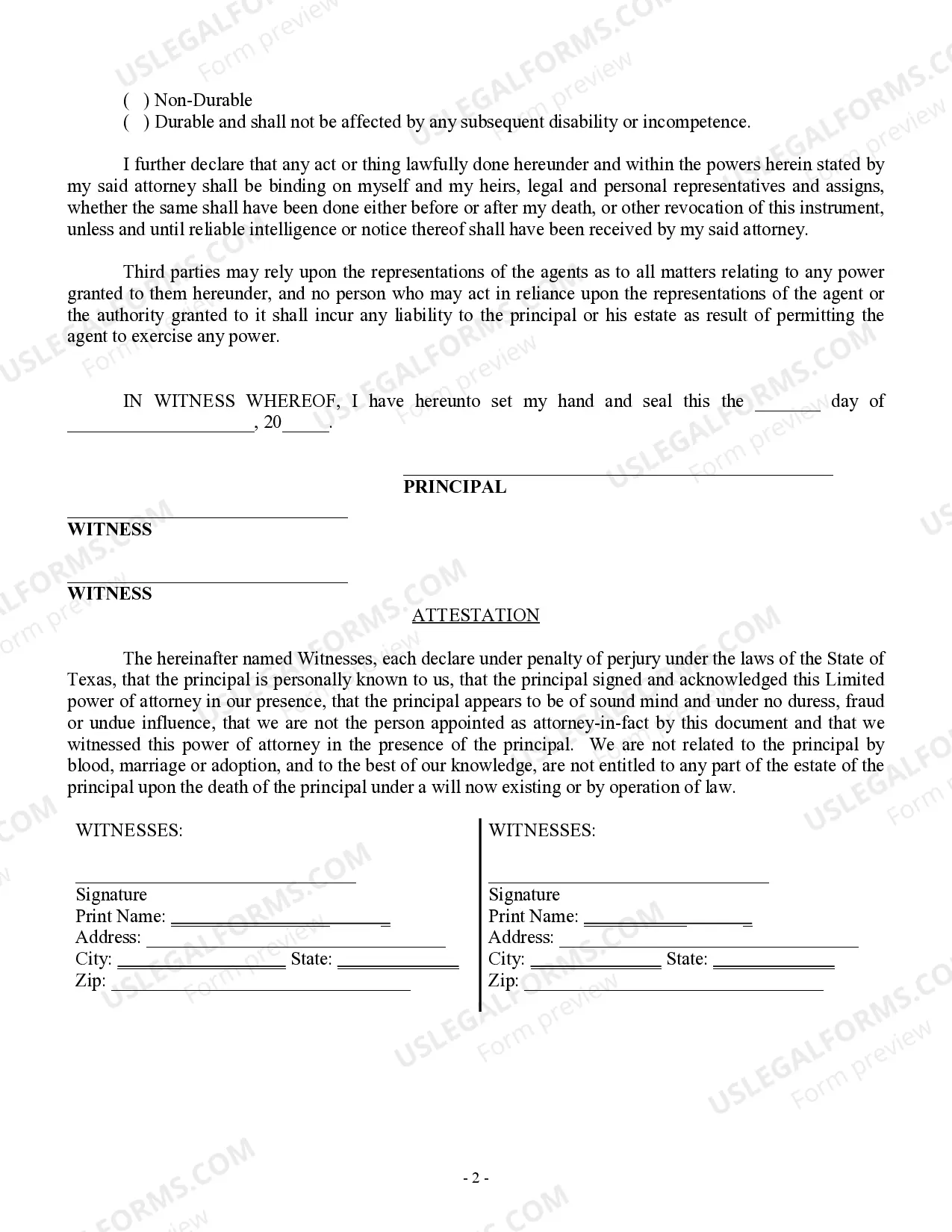
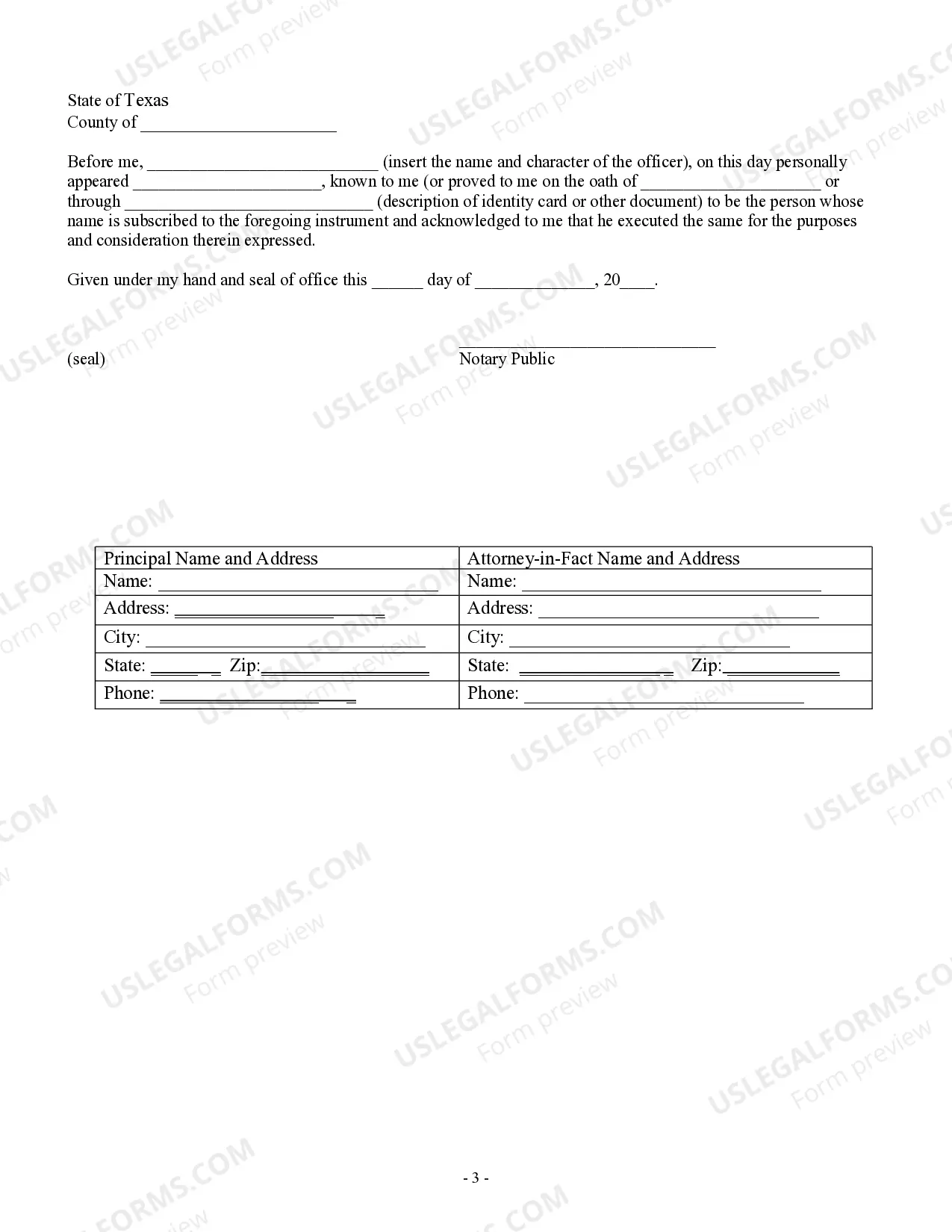
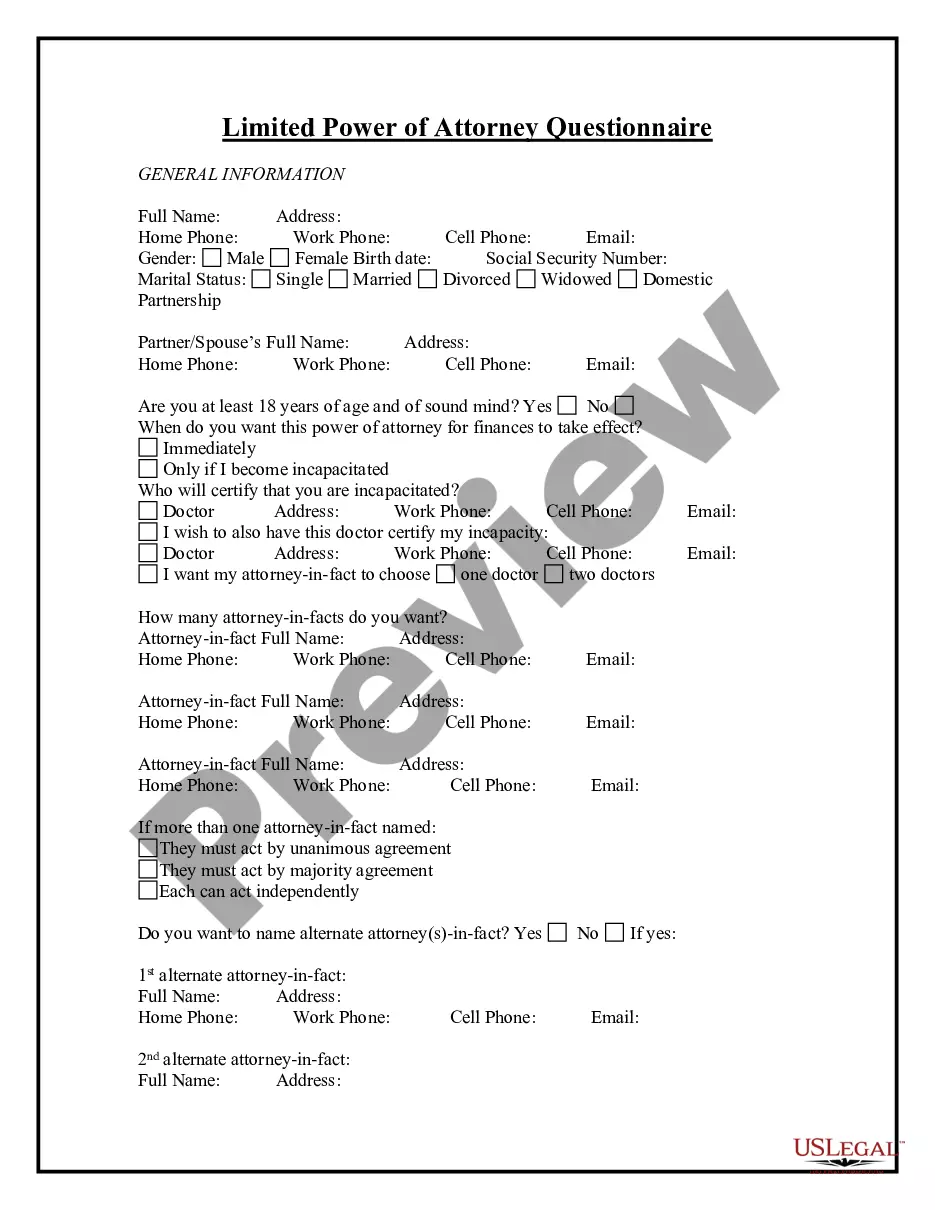
How to fill out Texas Limited Power Of Attorney For Stock Transactions And Corporate Powers?
- If you're an existing user, log in to your account and check the validity of your subscription before downloading your required form template.
- For new users, begin by browsing the available templates to find the power of attorney document that meets your local jurisdiction requirements. Use the Preview mode for better clarity.
- Should you find discrepancies, utilize the Search tab to locate the correct template that aligns with your needs.
- Proceed by clicking the 'Buy Now' button to choose the subscription plan that fits your needs. Register an account to gain access to our extensive library.
- Complete your purchase securely by entering your credit card information or using your PayPal account.
- Finally, download your chosen form to your device and access it later in the My Forms menu.
US Legal Forms offers a vast library of over 85,000 fillable legal forms, making it the premium choice for individuals and attorneys alike. Our robust collection ensures that you can find nearly any legal document without hassle.
Take the first step today and empower yourself with the right legal tools. Visit US Legal Forms now to streamline your document preparation process!
Form popularity
FAQ
Submitting form 2848 to the IRS can be done via mail or fax. Make sure to fill out the form accurately, specifying the powers you are granting. After completing it, you can find the appropriate address or fax number on the IRS website. For peace of mind and efficiency, consider utilizing uslegalforms to create and manage your submissions.
To submit a power of attorney to the IRS, first complete IRS Form 2848, which details the powers granted. You can send the completed form by mail or fax it to the designated fax number based on your location. It’s essential to double-check the submission to ensure that all power attorney powers with the state are properly documented. For streamlined assistance, consider using services like uslegalforms.
Yes, the IRS allows electronic signatures on certain forms of power of attorney. However, it is crucial to use the approved methods for signing electronically. When submitting electronic copies, ensure that you maintain copies of original documents to confirm power attorney powers with the state, if needed. Always verify the latest IRS guidelines for electronic submissions.
The IRS typically takes about four to six weeks to process a power of attorney. This timeline can vary, depending on the volume of submissions they receive. To stay informed, check the status of your submission through the IRS website. Understanding the timeline helps you plan your tax matters effectively.
Yes, you can fax a power of attorney (POA) to the IRS. However, it is important to ensure that the document meets the IRS requirements for submitting power attorney powers with the state. The faxed document must be clear and legible, and you should keep a confirmation of the fax transmission for your records. Always verify the correct fax number applicable to your situation.
Power of attorney does not automatically transfer from one state to another. Each state has its own laws and requirements regarding power attorney powers with the state. To ensure your document is valid in a new state, you may need to create a new power of attorney tailored to that state's laws. Consulting with a legal expert can help you navigate this process.
A power of attorney is generally not allowed to make healthcare decisions for the principal if the principal has explicitly prohibited such actions. Additionally, a POA cannot change the principal's will or engage in self-dealing that benefits the agent. Understanding the limits of power attorney powers with the state is crucial, and it is wise to communicate clearly with your selected agent about what is permissible. Consulting with a legal service like US Legal Forms can provide clarity and guidance.
In Arkansas, the principal can always override their power of attorney as long as they are mentally competent to do so. Additionally, if a court determines that the agent is not acting in the principal's best interest, it may intervene. This highlights the importance of choosing a trustworthy agent who understands your wishes. Always be mindful of the power attorney powers with the state to ensure proper management.
No, a power of attorney does not have to be recorded in Arkansas. However, if the power grants authority over real estate transactions, recording may be beneficial to ensure the document is recognized. Recording can further clarify the power attorney powers with the state. To navigate the specifics of your situation, reaching out to legal resources like US Legal Forms can be helpful.
In Arkansas, you do not generally need to file a power of attorney with the court, as it is a private document between the principal and the agent. However, certain situations may require court filing, particularly if the power attorney powers with the state are disputed. Make sure to keep the original document in a safe place and provide copies to relevant parties. Always consult a legal professional for specific advice tailored to your circumstances.