Sell Contracts
Description
Get your form ready online
Our built-in tools help you complete, sign, share, and store your documents in one place.
Make edits, fill in missing information, and update formatting in US Legal Forms—just like you would in MS Word.
Download a copy, print it, send it by email, or mail it via USPS—whatever works best for your next step.
Sign and collect signatures with our SignNow integration. Send to multiple recipients, set reminders, and more. Go Premium to unlock E-Sign.
If this form requires notarization, complete it online through a secure video call—no need to meet a notary in person or wait for an appointment.
We protect your documents and personal data by following strict security and privacy standards.

Make edits, fill in missing information, and update formatting in US Legal Forms—just like you would in MS Word.

Download a copy, print it, send it by email, or mail it via USPS—whatever works best for your next step.

Sign and collect signatures with our SignNow integration. Send to multiple recipients, set reminders, and more. Go Premium to unlock E-Sign.

If this form requires notarization, complete it online through a secure video call—no need to meet a notary in person or wait for an appointment.

We protect your documents and personal data by following strict security and privacy standards.
Looking for another form?


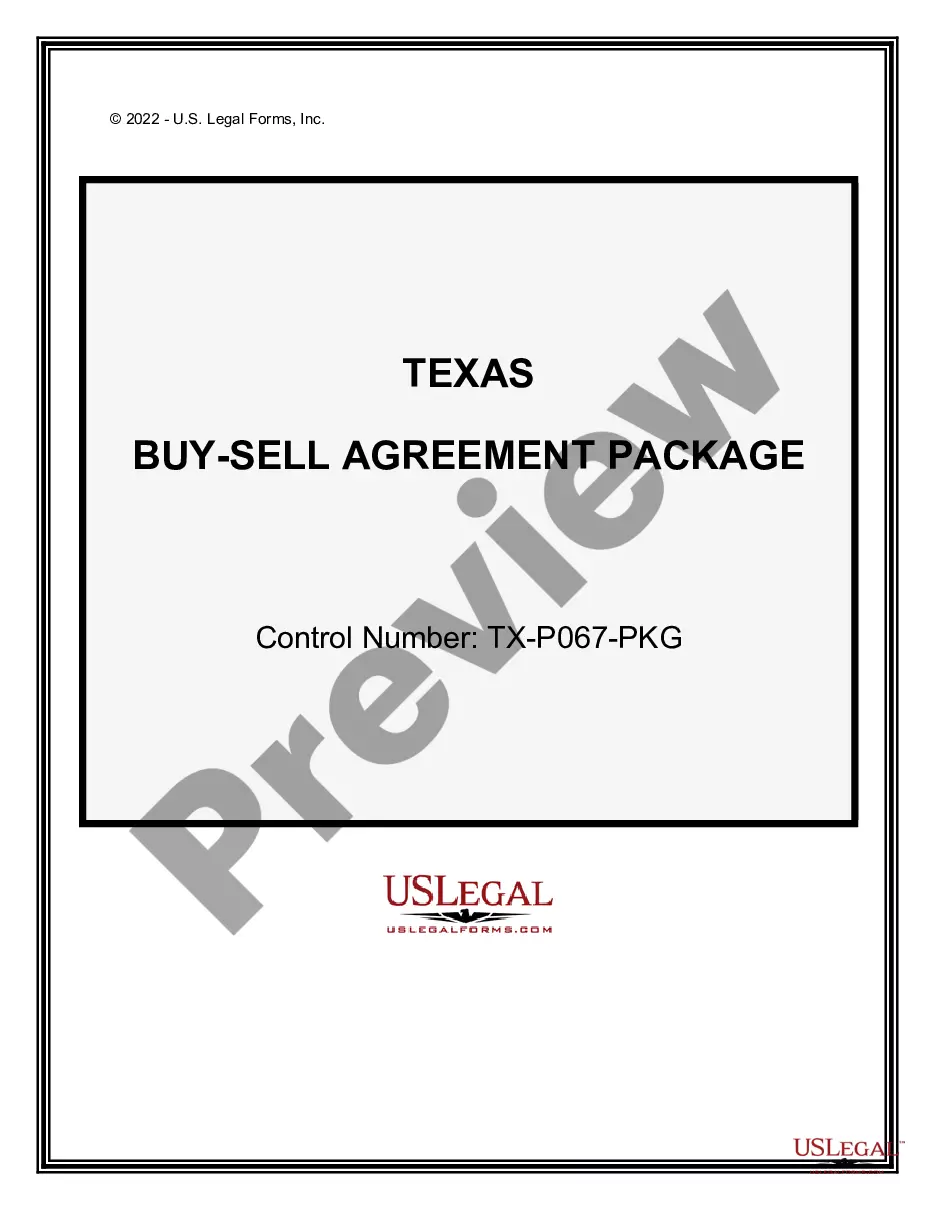
How to fill out Texas Buy Sell Agreement Package?
- Log into your US Legal Forms account. Ensure your subscription is active. If it's not, renew it according to your payment plan.
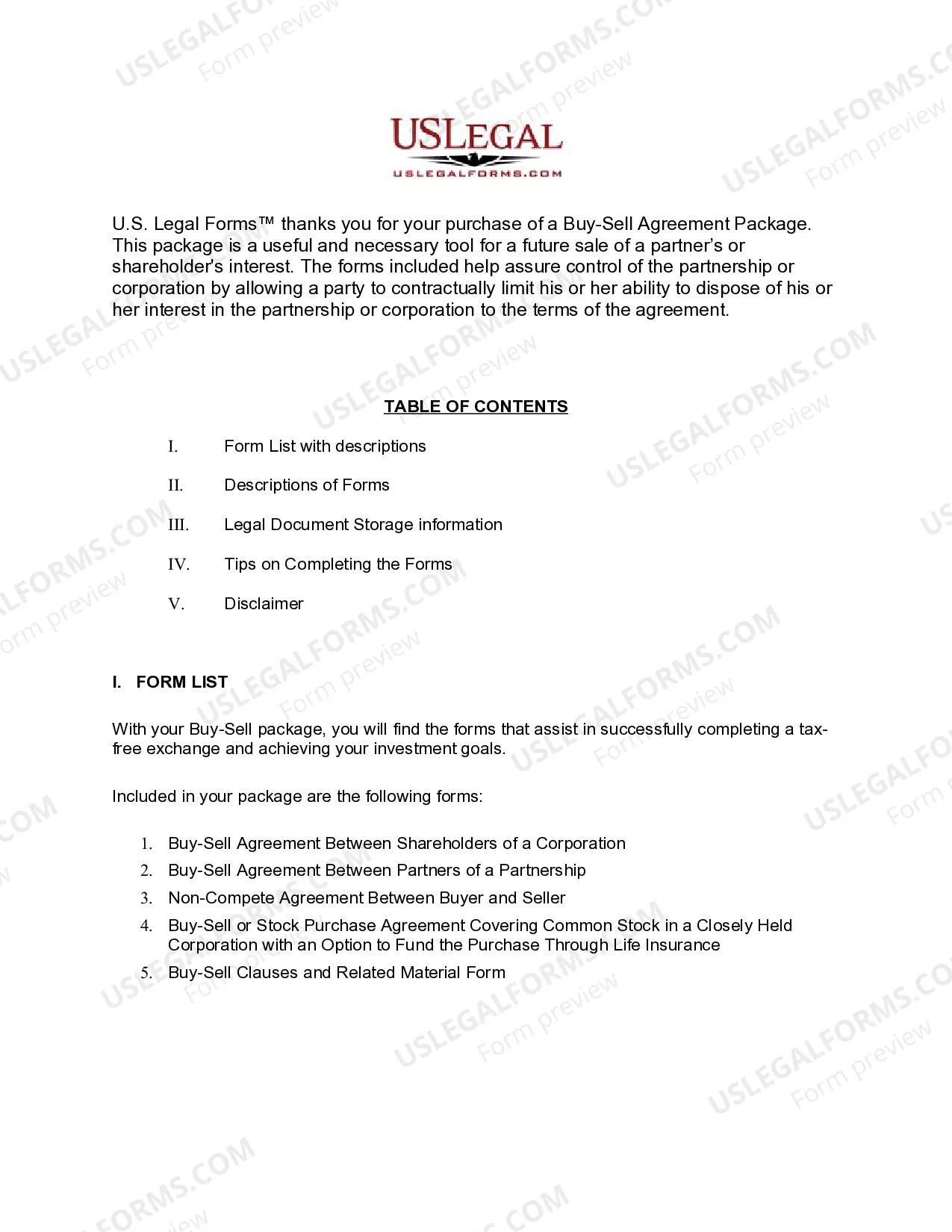
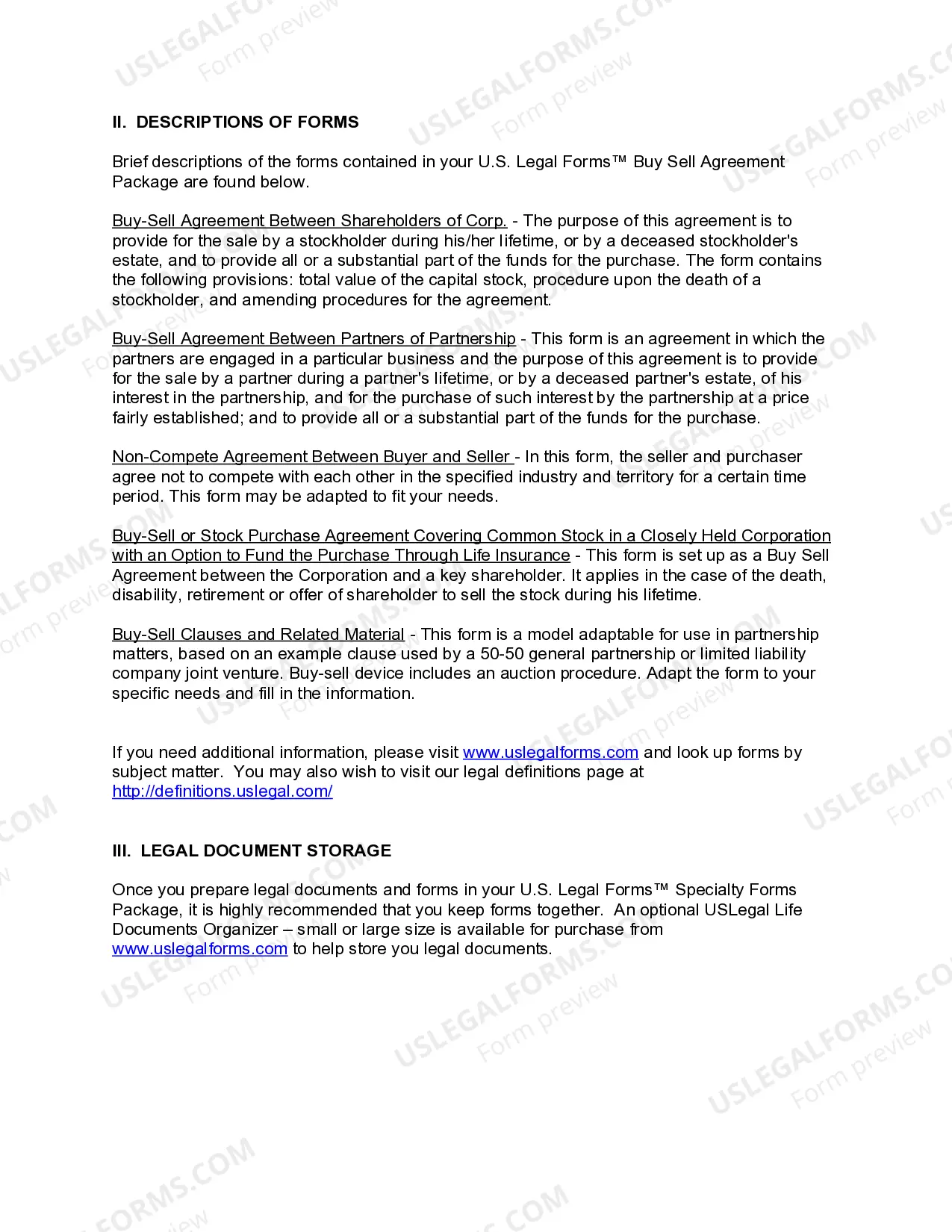
- Preview the form description closely. This ensures you select the correct contract that meets your specific needs and local jurisdiction requirements.
- If necessary, search for additional templates. Use the Search tab to find the right document that fits your criteria.
- Purchase the contract template. Click on the Buy Now button and select a subscription plan that suits your needs. Registration is required to access the form library.
- Complete the transaction. Enter your credit card details or use your PayPal account to finalize your subscription purchase.
- Download your document. Save the completed contract template on your device. You can also access it later in the 'My Forms' section of your profile whenever required.
By following these steps, you can efficiently sell contracts using US Legal Forms, which empowers both individuals and attorneys to navigate legal documentation effortlessly.
Start your journey today by signing up for US Legal Forms and experience the ease of creating legally sound documents!
Form popularity
FAQ
Yes, you must report every stock trade if they lead to a capital gain or loss on your tax return. This includes any trades associated with selling contracts. Keeping accurate records ensures compliance with tax laws. US Legal Forms offers tools to help you manage your trades and report them efficiently.
The 60 40 tax rule applies to certain investment products, specifically 60% of the profit is subject to long-term capital gains while 40% is taxed as short-term. If you sell contracts or similar instruments, understanding this rule can help you optimize your tax payments. For clarity and compliance, US Legal Forms can provide essential information.
Individuals who sell contracts or any capital assets and have capital gains or losses must fill out Form 8949. This includes businesses or freelancers engaging in transactions that lead to reportable income. Properly completing this form will ensure accurate tax reporting. Check out US Legal Forms for comprehensive resources to assist you.
A 1099s form is reported on your tax return based on the income it reflects. Typically, you enter this information on Form 1040 under the ‘Income’ section. If you sell contracts, documenting these earnings accurately is vital. With US Legal Forms, you’ll find the necessary templates and guidance to ensure compliance.
You will need to file Form 8949 first to report individual transactions, followed by Schedule D to summarize your totals. When you sell contracts, reporting details on Form 8949 helps keep your records clear. After that, Schedule D consolidates your information for the IRS. US Legal Forms offers guidance to ensure you complete both accurately.
Yes, Schedule D is necessary for reporting capital gains. When you sell contracts or other investments, this form helps you calculate your overall capital gain or loss. It is essential to include all relevant sales to ensure your tax return is complete. Utilizing the resources at US Legal Forms can aid in preparing this form correctly.
Schedule D summarizes capital gains and losses while Form 8949 details each individual transaction. When you sell contracts or other assets, you often need both forms to accurately report your financial activities. By using US Legal Forms, you can easily access templates for both documents to simplify your tax reporting.
The business or entity that pays an independent contractor or freelancer is responsible for filing 1099s. This form reports payments made to individuals totaling over $600 in a tax year. If you sell contracts for services, it’s imperative to ensure accurate reporting. US Legal Forms can help streamline this process for you.
The 70% rule in flipping suggests that you should spend no more than 70% of a property's after-repair value when buying it. This calculation helps ensure that you can cover renovation costs and still make a profit when you sell contracts. By calculating your expenses carefully, you can reduce financial risks and improve your chances of success. Using tools like US Legal Forms can assist you in drafting contracts that respect this rule.
Contract flipping is a legitimate strategy in real estate investing. It involves purchasing a contract on a property and selling it to another buyer for a profit. As long as you follow local laws and regulations, this practice can be a great way to enter the real estate market. To streamline your process and ensure compliance, consider using US Legal Forms to craft the necessary legal documents.