Eviction Forms Form Forsyth County
Description
Get your form ready online
Our built-in tools help you complete, sign, share, and store your documents in one place.
Make edits, fill in missing information, and update formatting in US Legal Forms—just like you would in MS Word.
Download a copy, print it, send it by email, or mail it via USPS—whatever works best for your next step.
Sign and collect signatures with our SignNow integration. Send to multiple recipients, set reminders, and more. Go Premium to unlock E-Sign.
If this form requires notarization, complete it online through a secure video call—no need to meet a notary in person or wait for an appointment.
We protect your documents and personal data by following strict security and privacy standards.

Make edits, fill in missing information, and update formatting in US Legal Forms—just like you would in MS Word.

Download a copy, print it, send it by email, or mail it via USPS—whatever works best for your next step.

Sign and collect signatures with our SignNow integration. Send to multiple recipients, set reminders, and more. Go Premium to unlock E-Sign.

If this form requires notarization, complete it online through a secure video call—no need to meet a notary in person or wait for an appointment.

We protect your documents and personal data by following strict security and privacy standards.
Looking for another form?


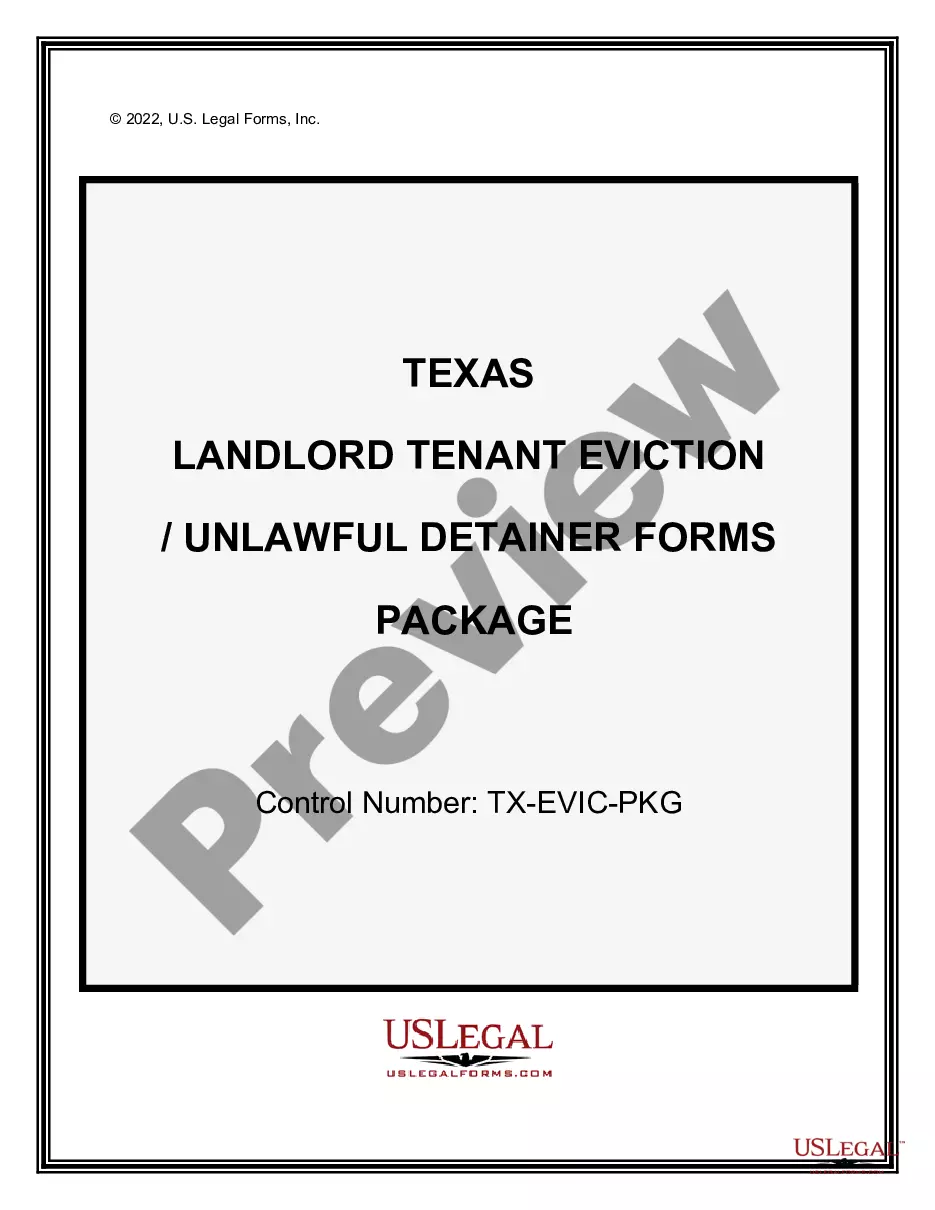
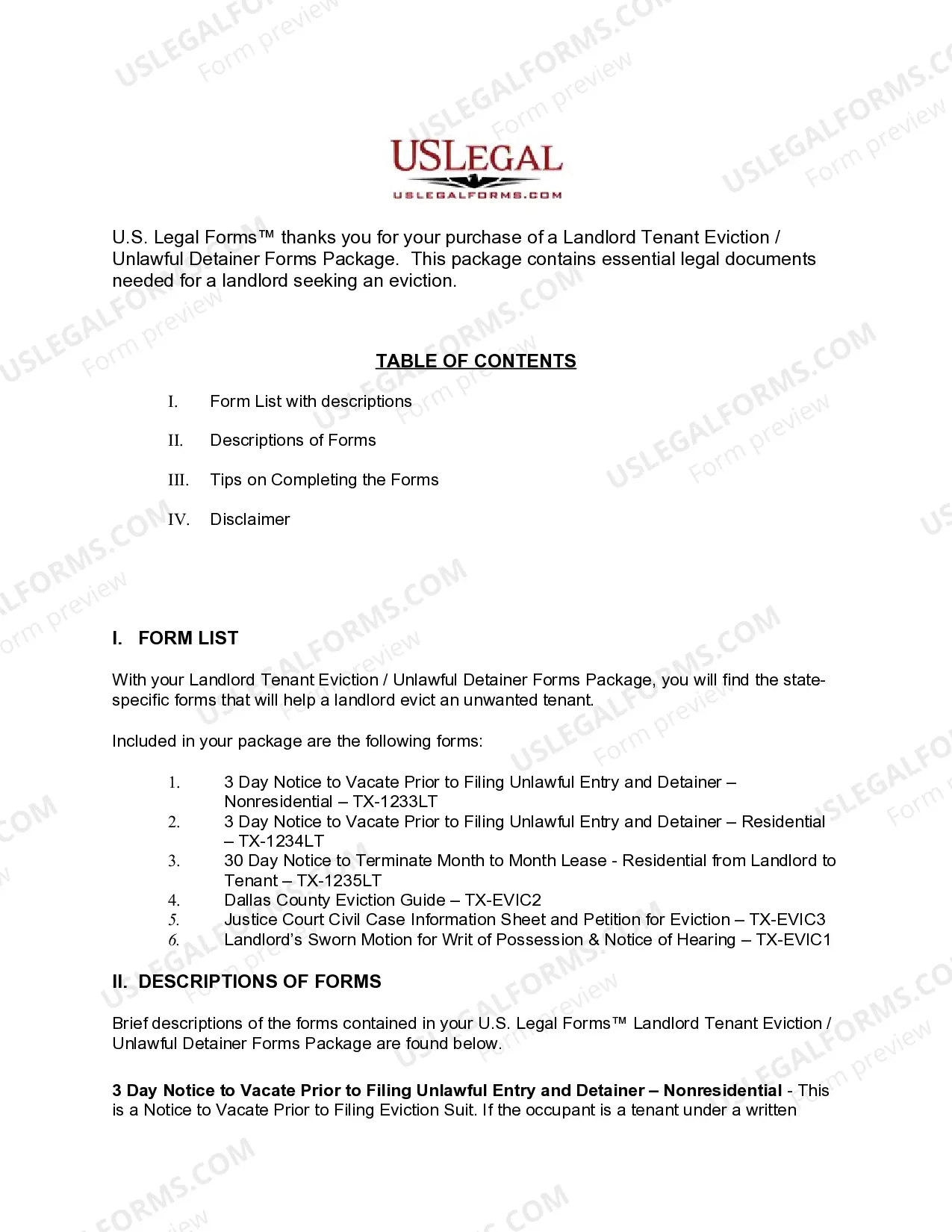
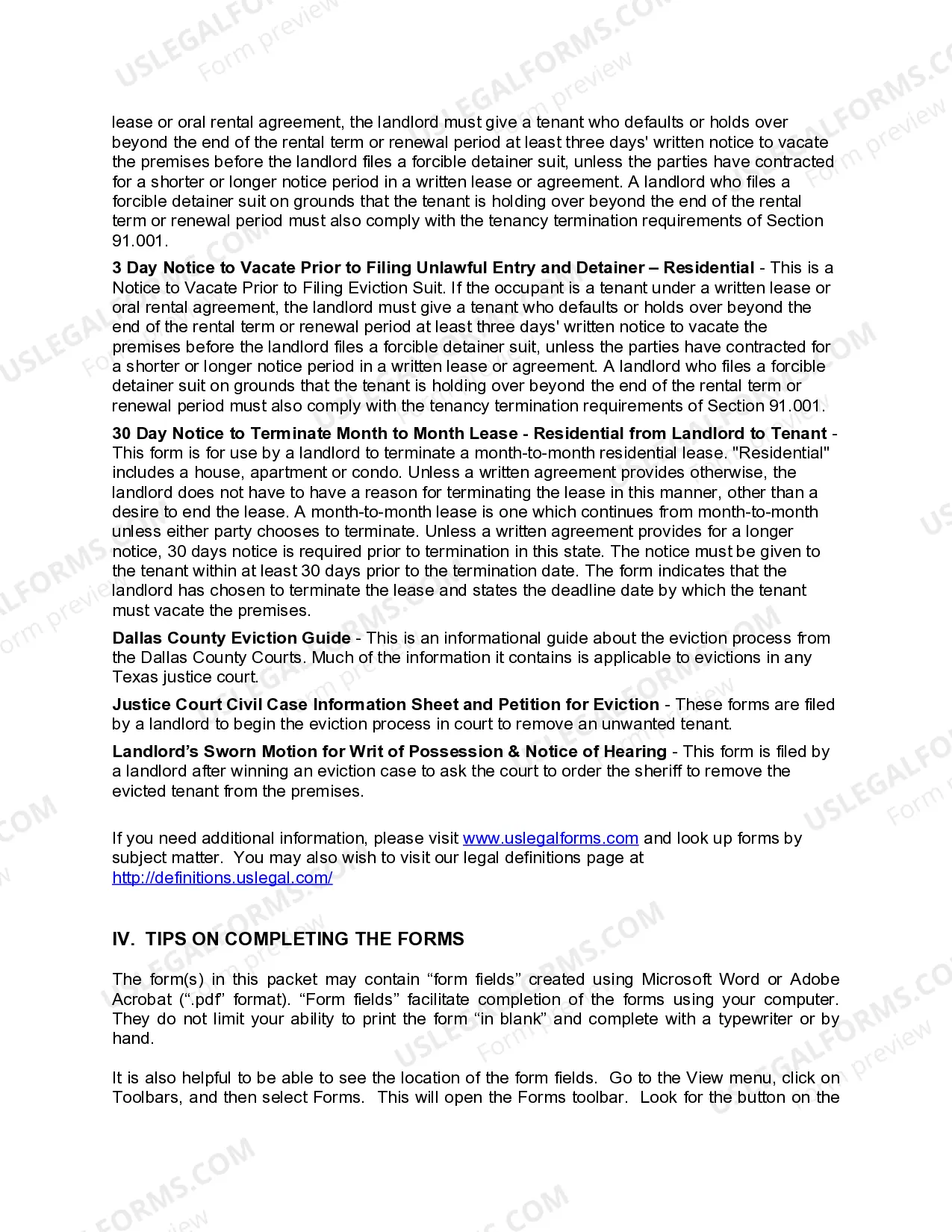
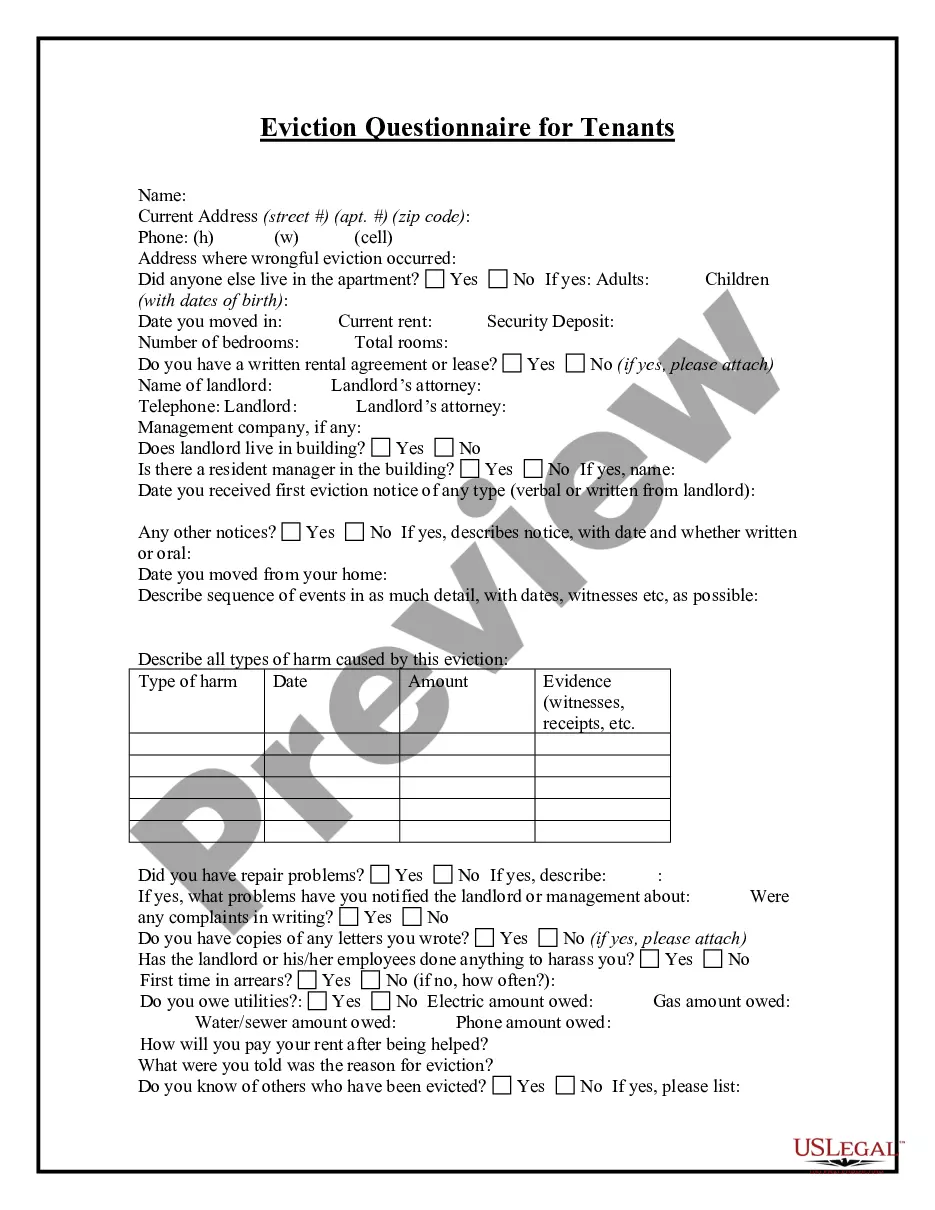
How to fill out Texas Landlord Tenant Eviction / Unlawful Detainer Forms Package?
Regardless of whether it's for commercial purposes or personal matters, everyone has to handle legal situations at some point in their lives.
Completing legal documents necessitates careful consideration, starting with choosing the correct form template.
With an extensive US Legal Forms catalog available, you don't need to waste time searching for the right sample online. Use the library's user-friendly navigation to find the appropriate template for any scenario.
- Locate the sample you require using the search bar or catalog navigation.
- Review the document's description to verify it matches your case, state, and location.
- Select the form's preview to examine it.
- If it is the incorrect document, return to the search feature to find the Eviction Forms Form Forsyth County template you need.
- Download the template if it aligns with your requirements.
- If you possess a US Legal Forms account, simply click Log in to access previously saved templates in My documents.
- If you do not have an account yet, you can download the document by clicking Buy now.
- Select the appropriate pricing option.
- Fill out the account registration form.
- Choose your payment method: use a credit card or PayPal account.
- Select the document format you prefer and download the Eviction Forms Form Forsyth County.
- Once it's saved, you can fill out the form using editing software or print it and complete it by hand.
Form popularity
FAQ
Usually, the eviction process takes a little bit over a month, as follows. Approximately fourteen days from filing of the summary ejectment until the hearing at the small claims court. Ten days from date of hearing at the small claims court until the filing of writ of possession or the expiry of the appeals period.
To begin the eviction process, the landlord must file a Magistrate's Summons and a Complaint in Summary Ejectment with the Clerk of Court. In most cases, the landlord must give the tenant advance notice to end the lease or make a demand for past-due rent before starting the eviction process.
If your ex-spouse no longer lives in Georgia and you need to file a contempt for custody or visitation against your ex-spouse, you must seek the advice of an attorney, unless your ex-spouse can be personally served while in Georgia with a copy of your petition that was filed in Georgia.
The landlord cannot remove the tenant from the home until the appeal period has ended, whether or not the tenant appeals the case. Once the 10 days have passed, the landlord can return to court and ask the clerk for an order called a ?Writ of Possession,? which allows the sheriffs to padlock the home.
The Motion must be EFiled. You can come into the Clerks office to use an EFile hub provided at no additional cost. PAYING THE FILING FEE: If the contempt is on Non-Payment of Child Support, Alimony or Medical expenses, the filing fee is waived.