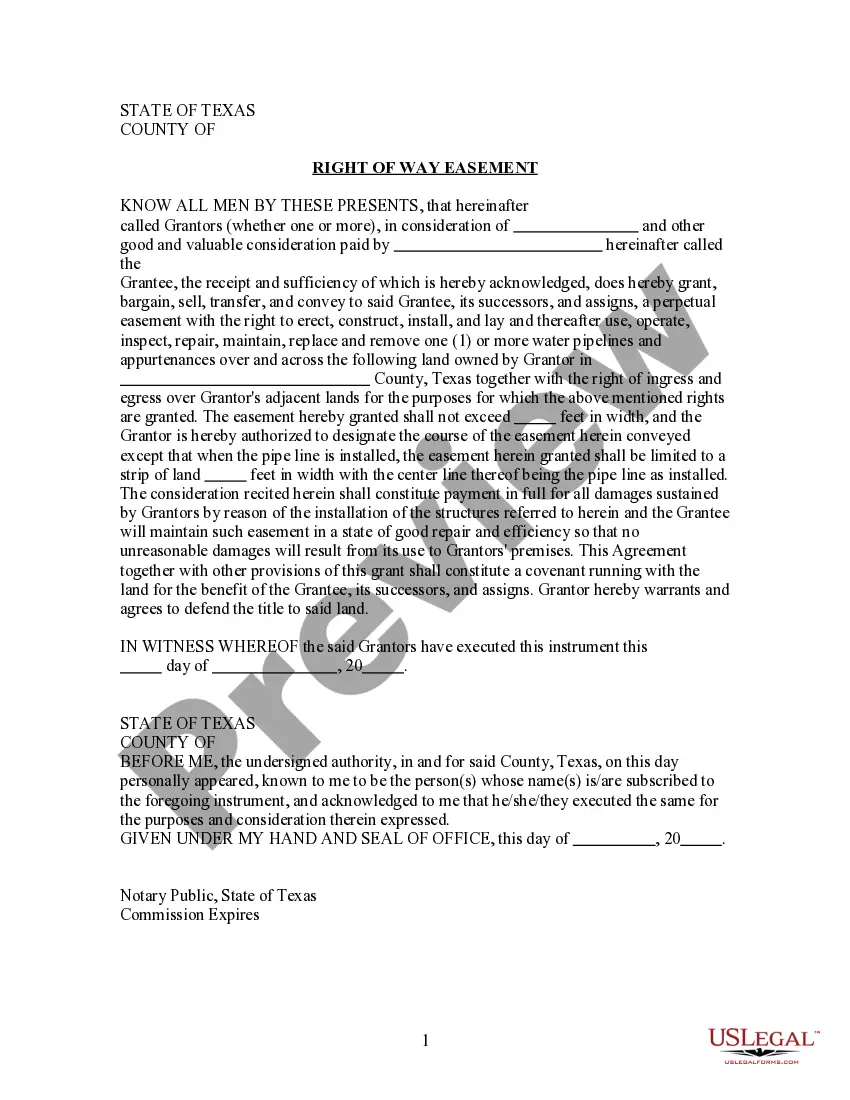
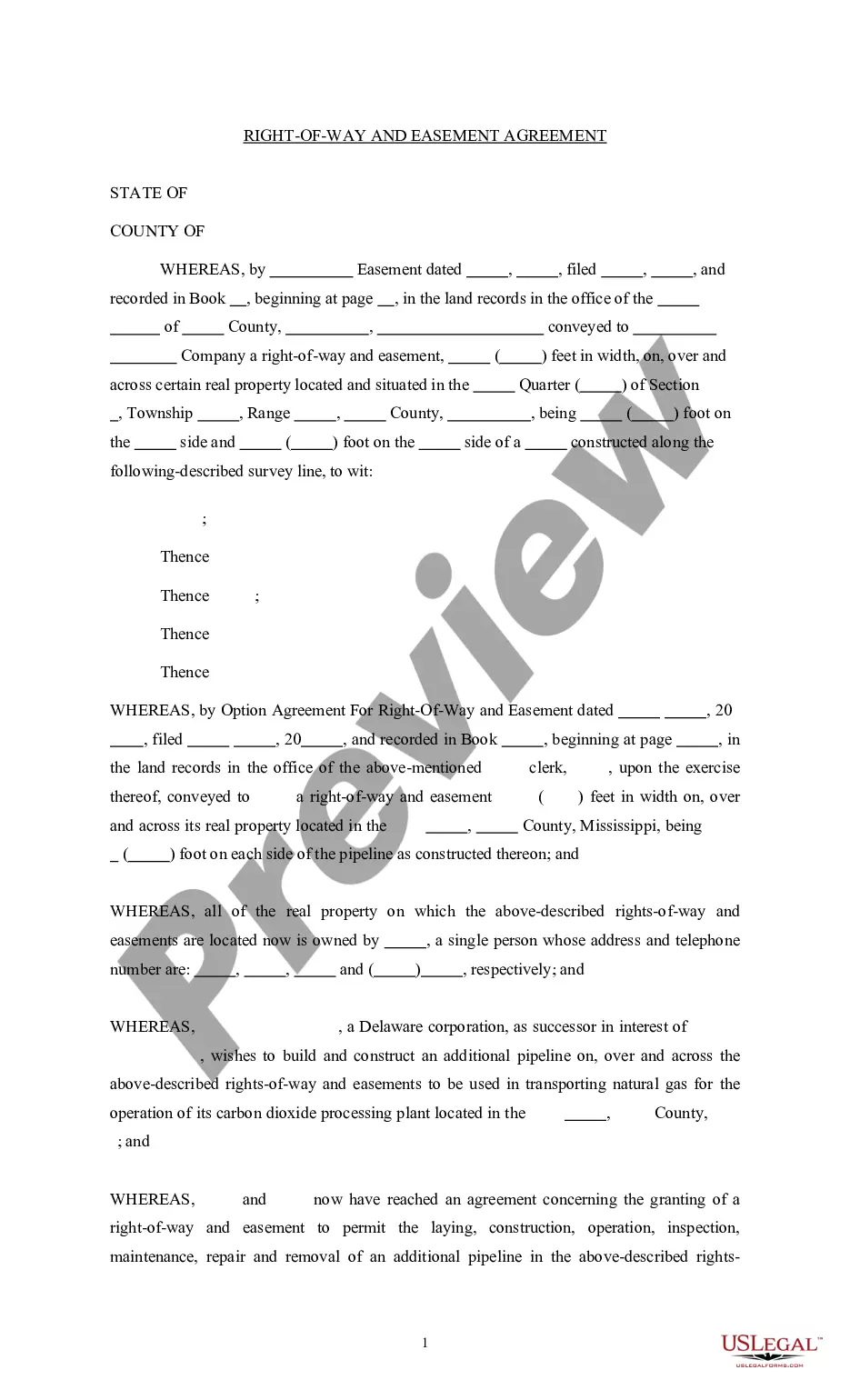
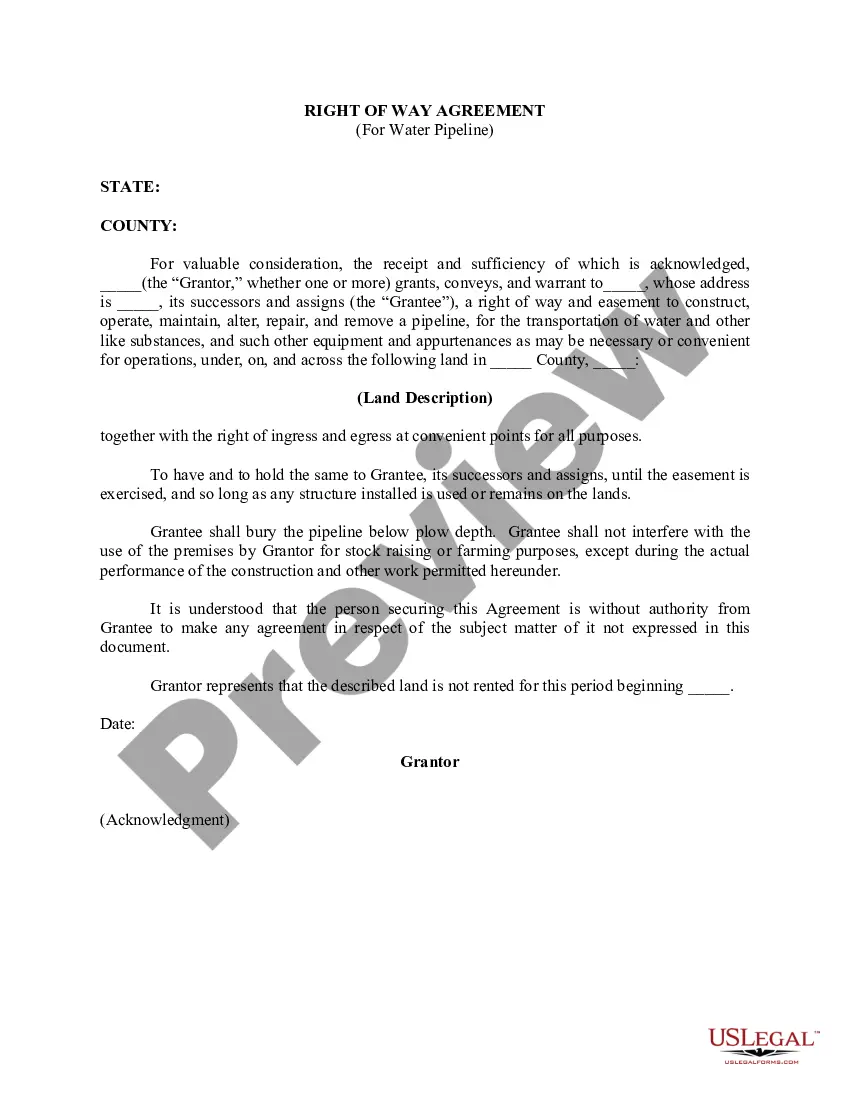
Water Line Easement Without Permit
Description
Get your form ready online
Our built-in tools help you complete, sign, share, and store your documents in one place.
Make edits, fill in missing information, and update formatting in US Legal Forms—just like you would in MS Word.
Download a copy, print it, send it by email, or mail it via USPS—whatever works best for your next step.
Sign and collect signatures with our SignNow integration. Send to multiple recipients, set reminders, and more. Go Premium to unlock E-Sign.
If this form requires notarization, complete it online through a secure video call—no need to meet a notary in person or wait for an appointment.
We protect your documents and personal data by following strict security and privacy standards.

Make edits, fill in missing information, and update formatting in US Legal Forms—just like you would in MS Word.

Download a copy, print it, send it by email, or mail it via USPS—whatever works best for your next step.

Sign and collect signatures with our SignNow integration. Send to multiple recipients, set reminders, and more. Go Premium to unlock E-Sign.

If this form requires notarization, complete it online through a secure video call—no need to meet a notary in person or wait for an appointment.

We protect your documents and personal data by following strict security and privacy standards.
Looking for another form?








How to fill out Texas Right Of Way Easement For Water Pipeline Or Pipelines?
Creating legal documents from the ground up can occasionally be daunting.
Certain situations may entail extensive research and substantial financial investment.
If you’re looking for a simpler and more cost-effective method of generating Water Line Easement Without Permit or any other paperwork without facing obstacles, US Legal Forms is always accessible to you.
Our online repository of over 85,000 current legal documents encompasses nearly every area of your financial, legal, and personal affairs. With just a few clicks, you can promptly obtain state- and county-compliant forms meticulously prepared for you by our legal professionals.
Examine the document preview and descriptions to confirm that you are selecting the correct form. Ensure that the template you select complies with the regulations and legal requirements of your state and county. Choose the most appropriate subscription plan to acquire the Water Line Easement Without Permit. Download the form, then fill it out, sign it, and print it. US Legal Forms boasts an impeccable reputation and over 25 years of experience. Join us today and turn form completion into a straightforward and efficient process!
- Utilize our platform anytime you require dependable services that allow you to effortlessly locate and download the Water Line Easement Without Permit.
- If you're familiar with our services and have set up an account previously, simply Log In to your profile, find the form, and download it or re-download it anytime in the My documents section.
- Don’t have an account? No worries. Setting it up takes mere minutes, and you can easily navigate the library.
- But before rushing to download the Water Line Easement Without Permit, consider these suggestions.
Form popularity
FAQ
The North Carolina courts have defined an easement as ?a non-possessory right to make limited use of land owned by another without taking a part thereof.?
You'll want to check if you're the easement user, known as the dominant property, or if you're the property owner who must allow your neighbor to use your property, known as the servient property. The servient property owner cannot block the use of the easement.
Easements are nonpossessory interests in land. The holder of an easement has the right to use a tract of land for a special use only, and does not own or have full use and enjoyment of the land. Often, easements are created in Texas to give a person or corporation a right of access across a piece of land.
You can refuse a utility easement request, especially if there are alternate properties that the company could use instead of yours.
Easement width shall be 24 feet and the length shall be the full width of adjoining properties fronting the roadway. The Director of Public Works may approve an alternative layout as necessary given the shape of the particular tract.