Motion To Sever Charges Example
Description
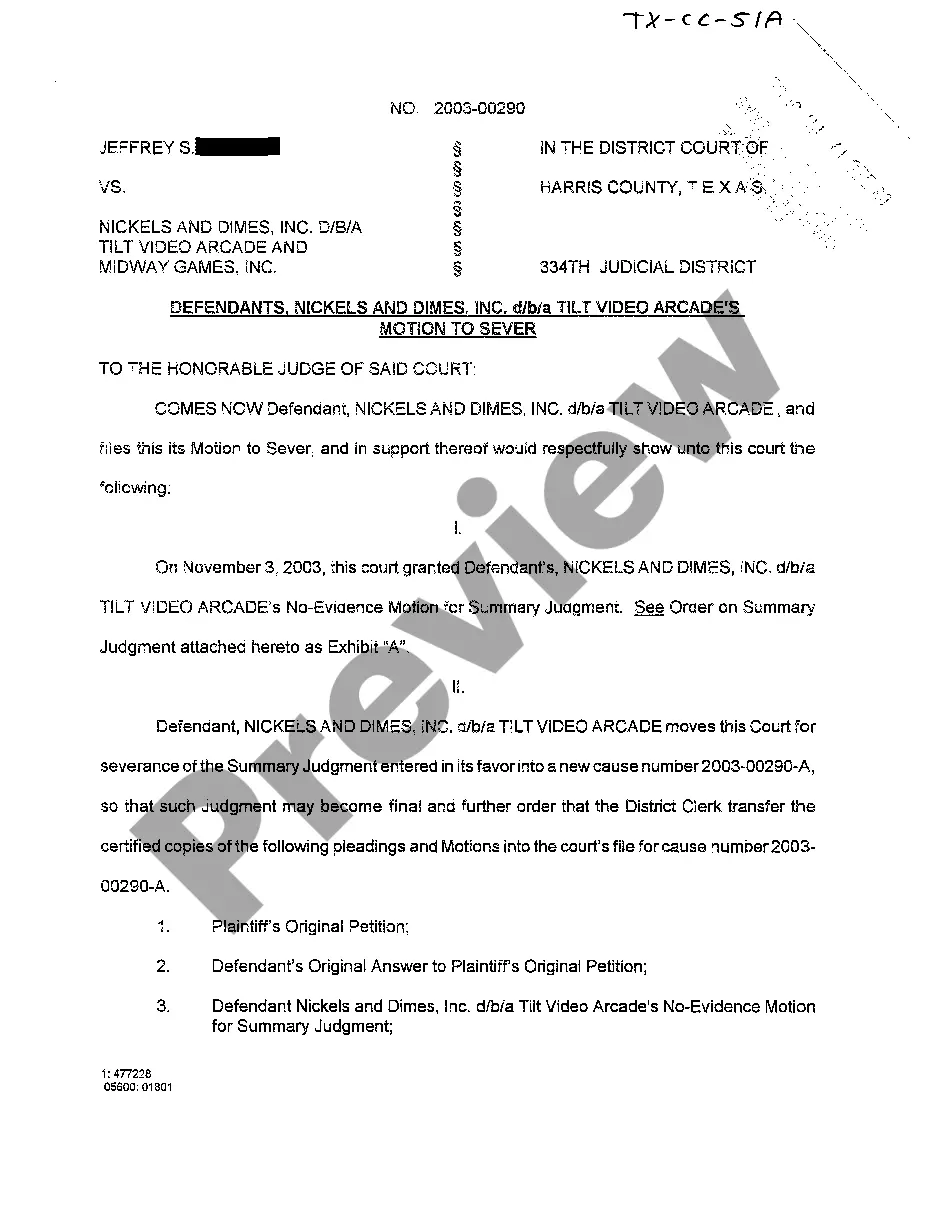
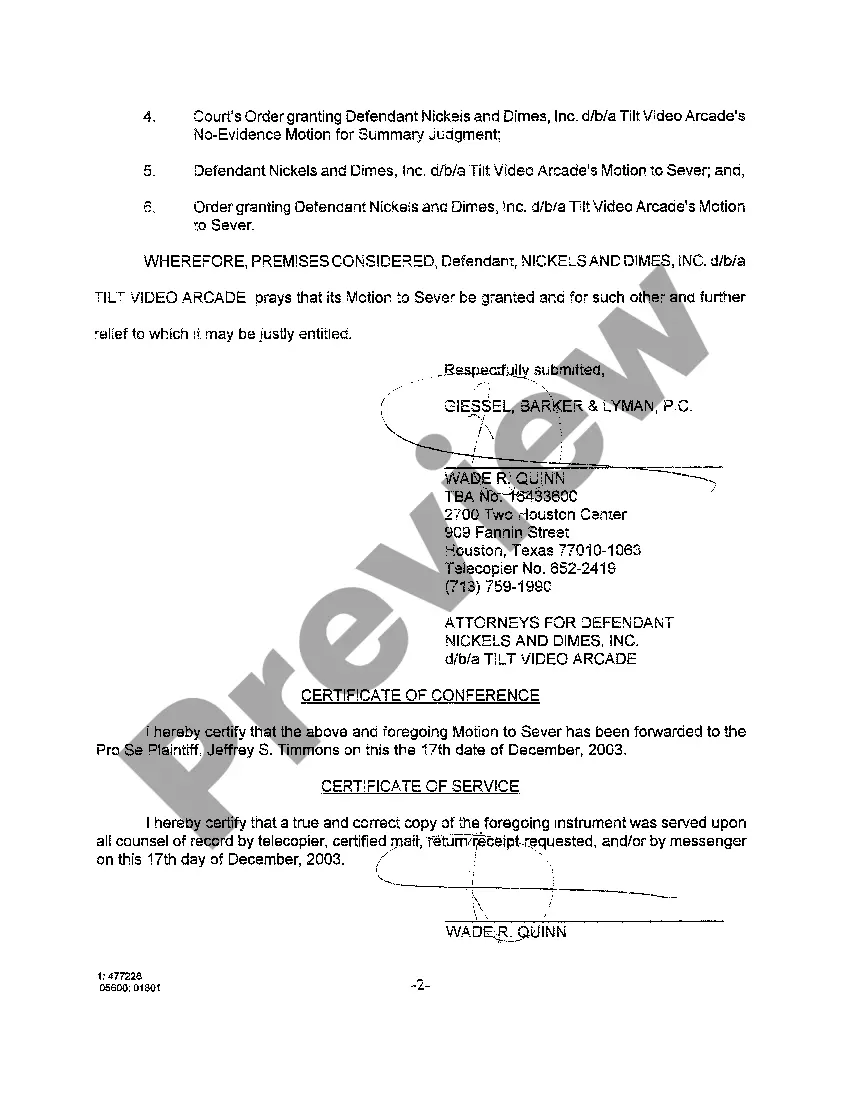
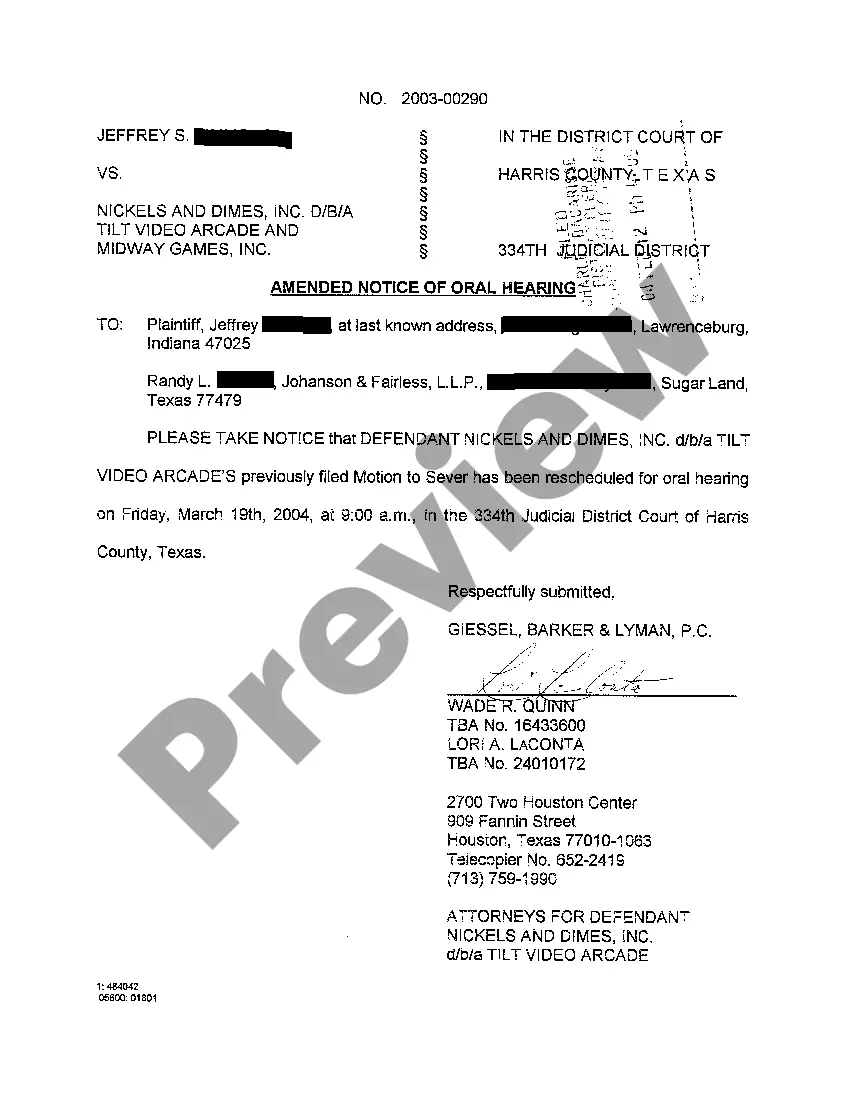




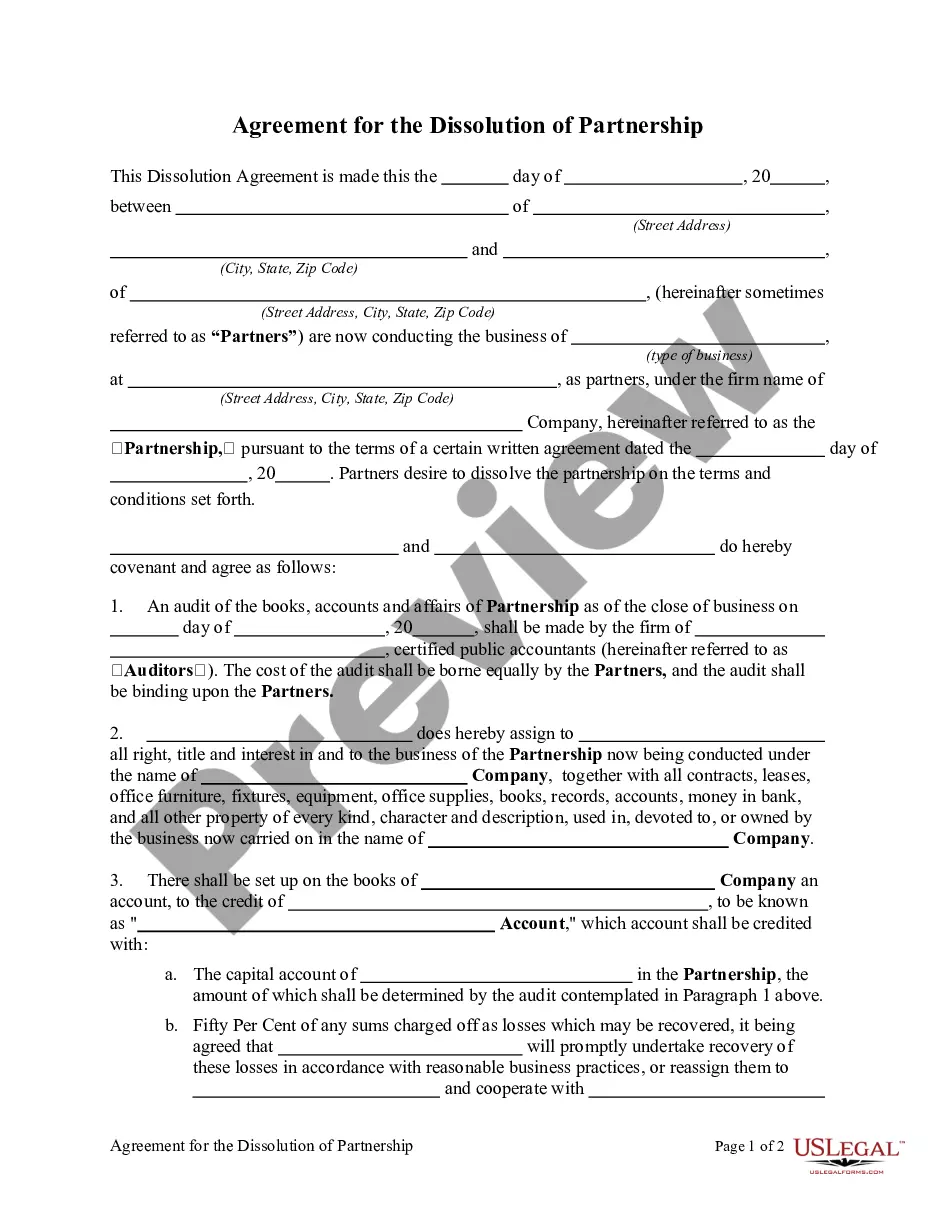
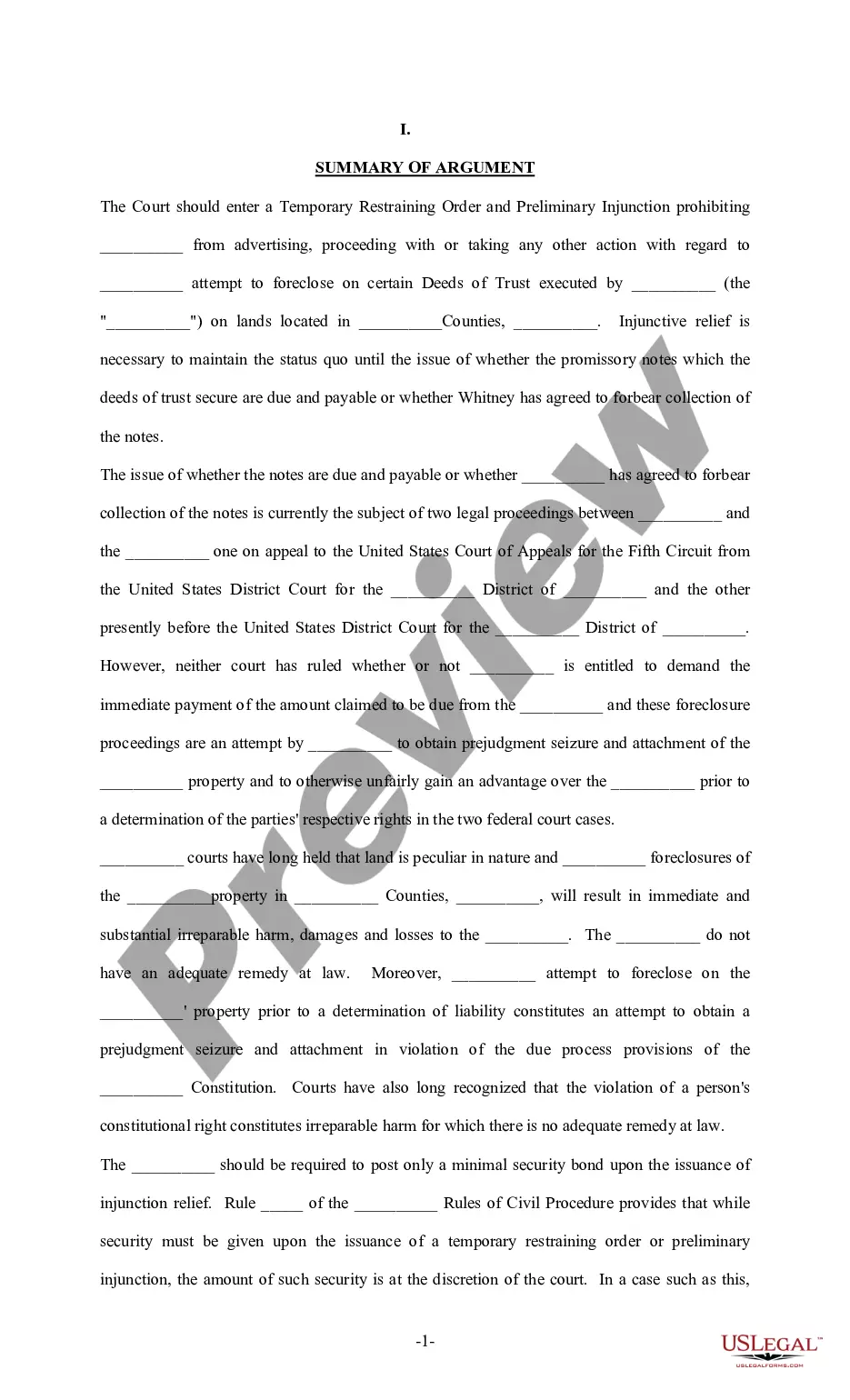




How to fill out Texas Defendant's Motion To Sever?
The Motion To Sever Charges Sample you observe on this site is a versatile legal template created by experienced attorneys in accordance with federal and local regulations.
For over 25 years, US Legal Forms has supplied individuals, enterprises, and lawyers with more than 85,000 verified, state-specific forms for any business and personal situation. It’s the fastest, easiest, and most trustworthy way to acquire the documents you require, as the service guarantees the utmost level of data security and anti-virus protection.
Select the format you want for your Motion To Sever Charges Sample (PDF, Word, RTF) and save it to your device. Complete and sign the documentation. Print the template to fill it out by hand or, alternatively, use an online multi-functional PDF editor to swiftly and accurately complete and sign your form electronically.
- Explore the document you require and review it.
- Review the file you searched and preview it or verify the form description to ensure it meets your needs. If not, use the search bar to find the correct one. Click Buy Now once you have found the template you require.
- Register and Log In.
- Select the pricing option that suits you and create an account. Use PayPal or a credit card for a quick payment. If you already possess an account, Log In and verify your subscription to continue.
- Acquire the editable template.
Form popularity
FAQ
The main purpose of a motion is to formally request the court to take a specific action or make a ruling on a legal issue. In the context of a motion to sever charges example, it seeks to influence the legal proceedings to enhance fairness and justice for the defendant. Through various motions, attorneys can address procedural matters and advocate for their clients’ rights. Therefore, motions play a vital role in navigating the complexities of the legal system.
A severance motion is a formal request made by a defendant to divide charges or trials into separate proceedings. This motion argues that joining multiple charges could harm the defendant's ability to receive a fair trial. In a motion to sever charges example, the defendant may demonstrate how their cases are distinct, warranting separate trials to ensure just outcomes. Courts evaluate these motions carefully to uphold fairness in the judicial process.
Generally, a lien claimant must record a notice of construction lien either 180 days after the original contract reaches final completion or 90 days after a notice of completion is filed with the Utah State Construction Registry, whichever is earlier.
In general terms, liens on real property attach through execution of a valid mortgage deed and are perfected by recording in the land records, while liens on personal property attach through execution of a written security agreement and are perfected by filing a financing statement with the Vermont Secretary of State.
The execution of a Florida Conditional Waiver upon Final Payment means that the signor has waived their right to file a mechanics lien for payment in any amount and extinguishes all preexisting claimant rights.
Here is a field-by-field breakdown of this form: Name of Claimant. This is the name the party to be paid, and the party who will be signing the lien waiver document. ... Name of Customer. ... Job Location. ... Owner. ... Maker of the Check. ... Amount of the Check. ... Check Payable To. ... Exceptions.
Conditional Waiver and Release Upon Final Payment. Use this form when the claimant is required to execute a waiver and release in exchange for or in order to induce the. payment of a final payment and the claimant has not been paid. This release is only binding if there is evidence of. payment to the claimant.
The lien is called a mechanics lien because construction workers were referred to as mechanics (or people who work with their hands) in those days.
Unconditional lien waiver When signing unconditional lien waivers, the subcontractor gives up their lien rights regardless of whether they, as payee, have been or will be paid. In contrast to conditional waivers, an unconditional one is far more risky for the signing party.
A claimant is a person who, if not paid, can file a lien on your property.