Name Change Law In Ohio
Description





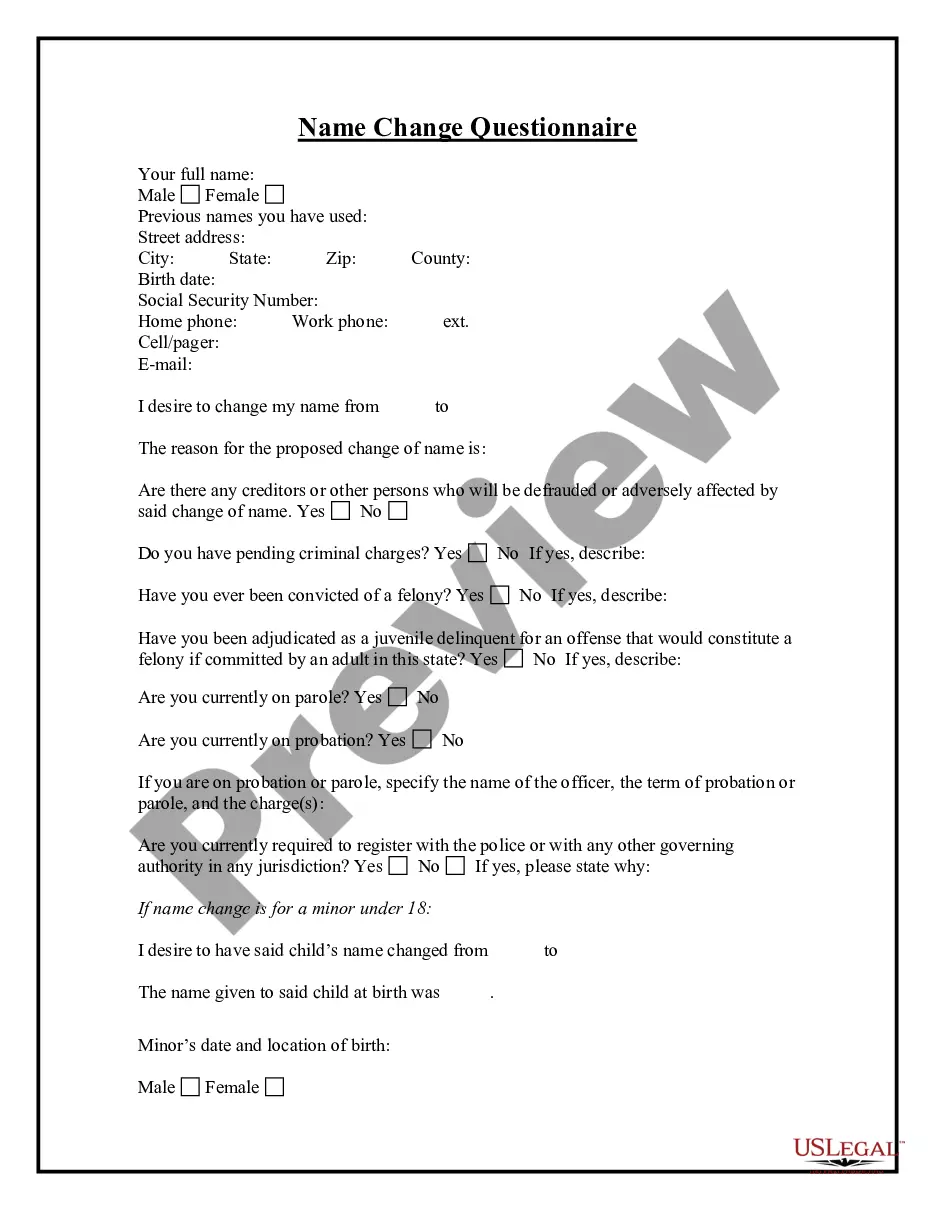
Get your form ready online
Our built-in tools help you complete, sign, share, and store your documents in one place.
Make edits, fill in missing information, and update formatting in US Legal Forms—just like you would in MS Word.
Download a copy, print it, send it by email, or mail it via USPS—whatever works best for your next step.
Sign and collect signatures with our SignNow integration. Send to multiple recipients, set reminders, and more. Go Premium to unlock E-Sign.
If this form requires notarization, complete it online through a secure video call—no need to meet a notary in person or wait for an appointment.
We protect your documents and personal data by following strict security and privacy standards.

Make edits, fill in missing information, and update formatting in US Legal Forms—just like you would in MS Word.

Download a copy, print it, send it by email, or mail it via USPS—whatever works best for your next step.

Sign and collect signatures with our SignNow integration. Send to multiple recipients, set reminders, and more. Go Premium to unlock E-Sign.

If this form requires notarization, complete it online through a secure video call—no need to meet a notary in person or wait for an appointment.

We protect your documents and personal data by following strict security and privacy standards.
Looking for another form?

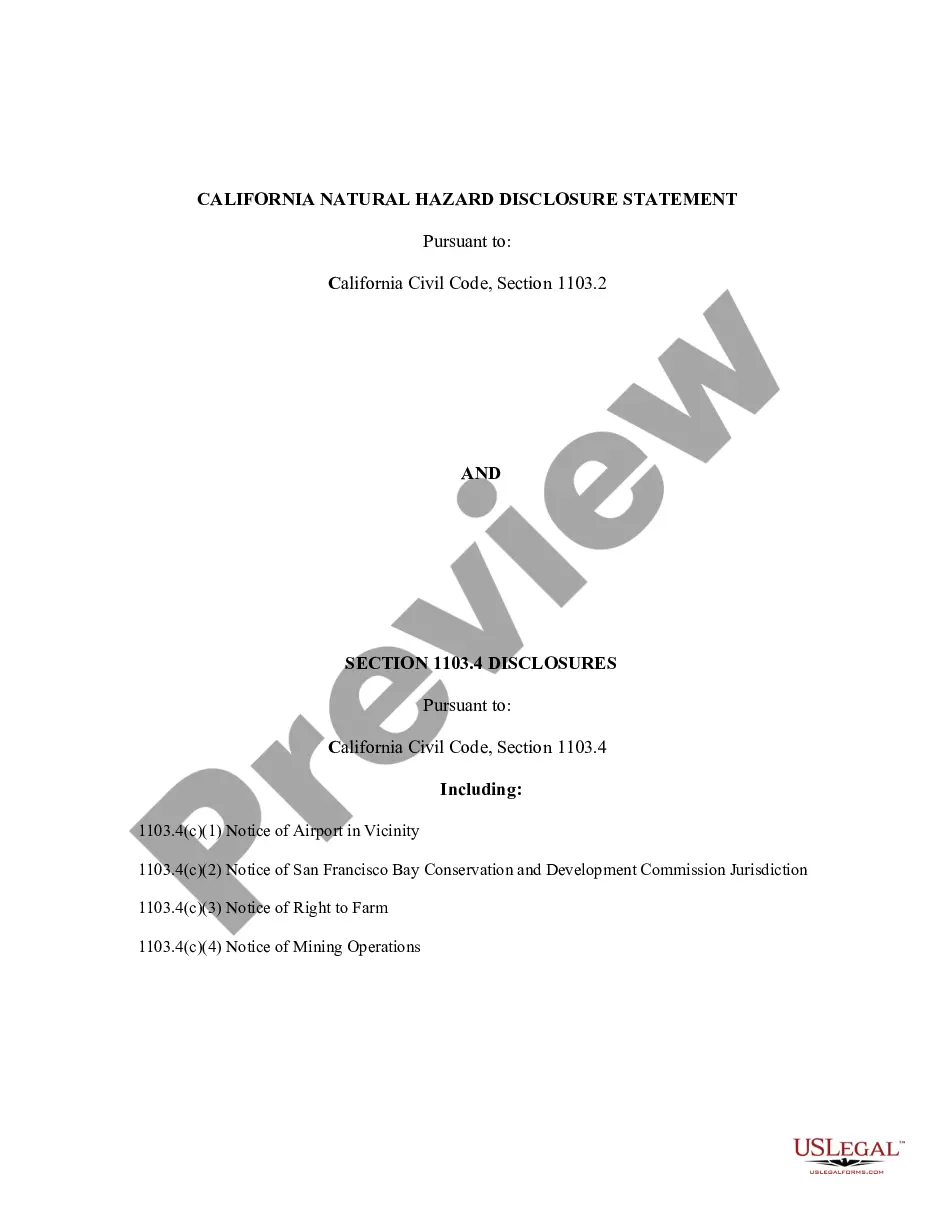




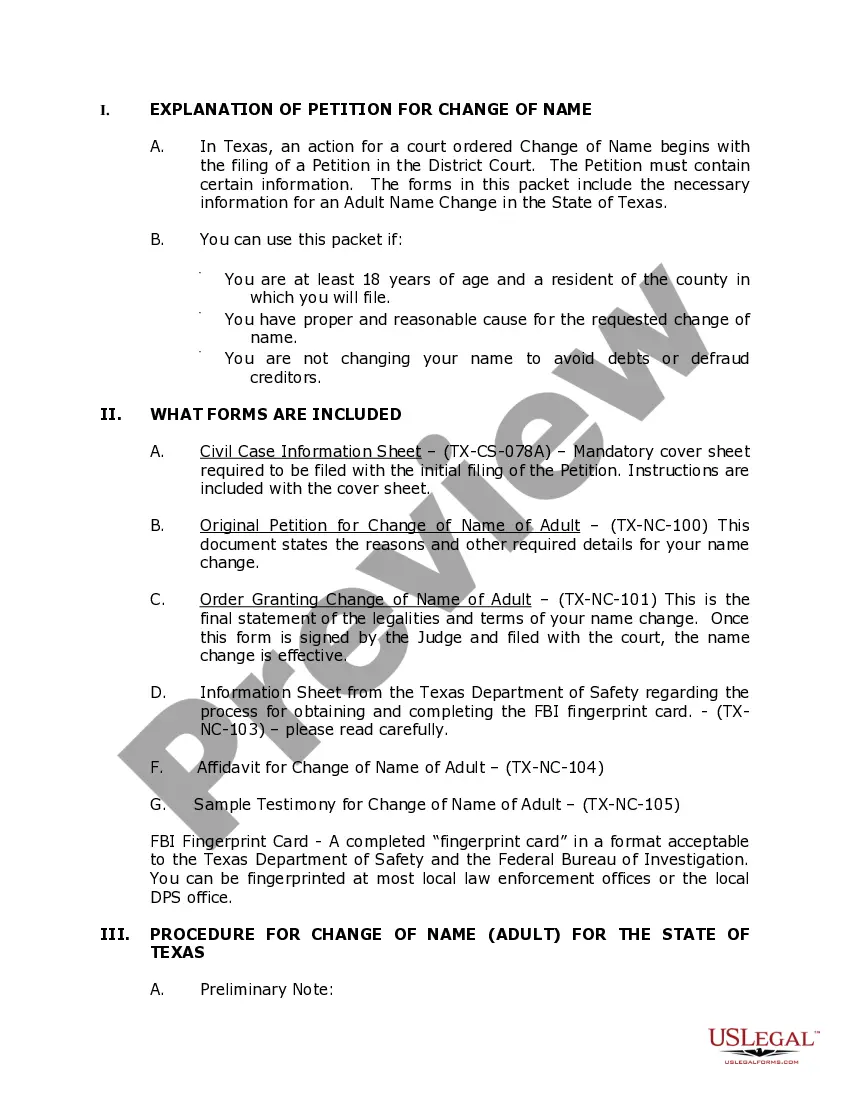
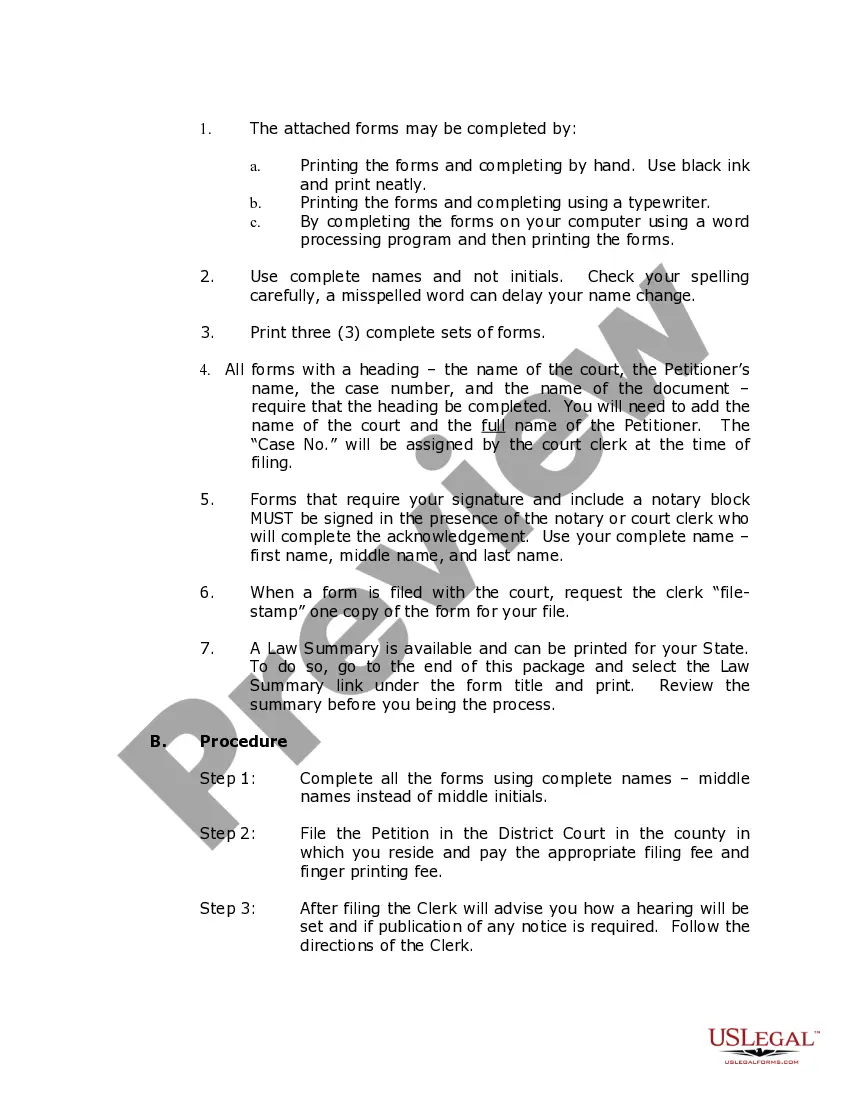
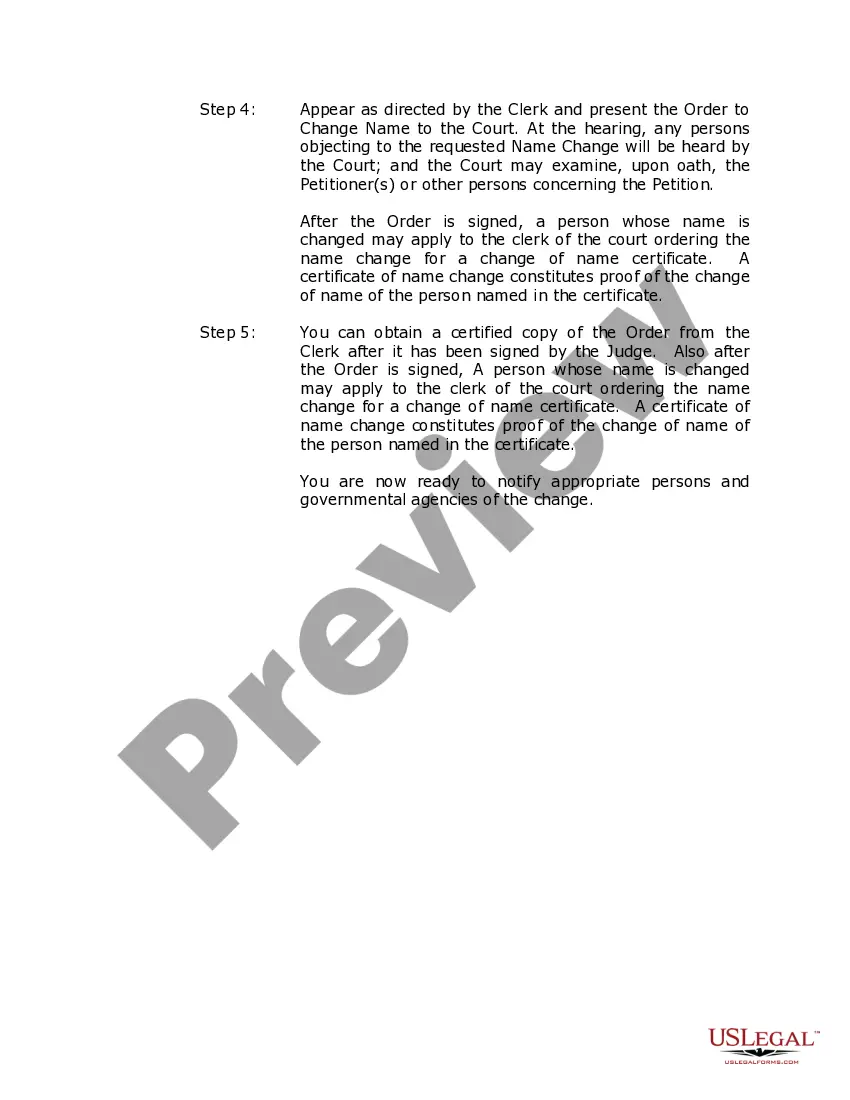
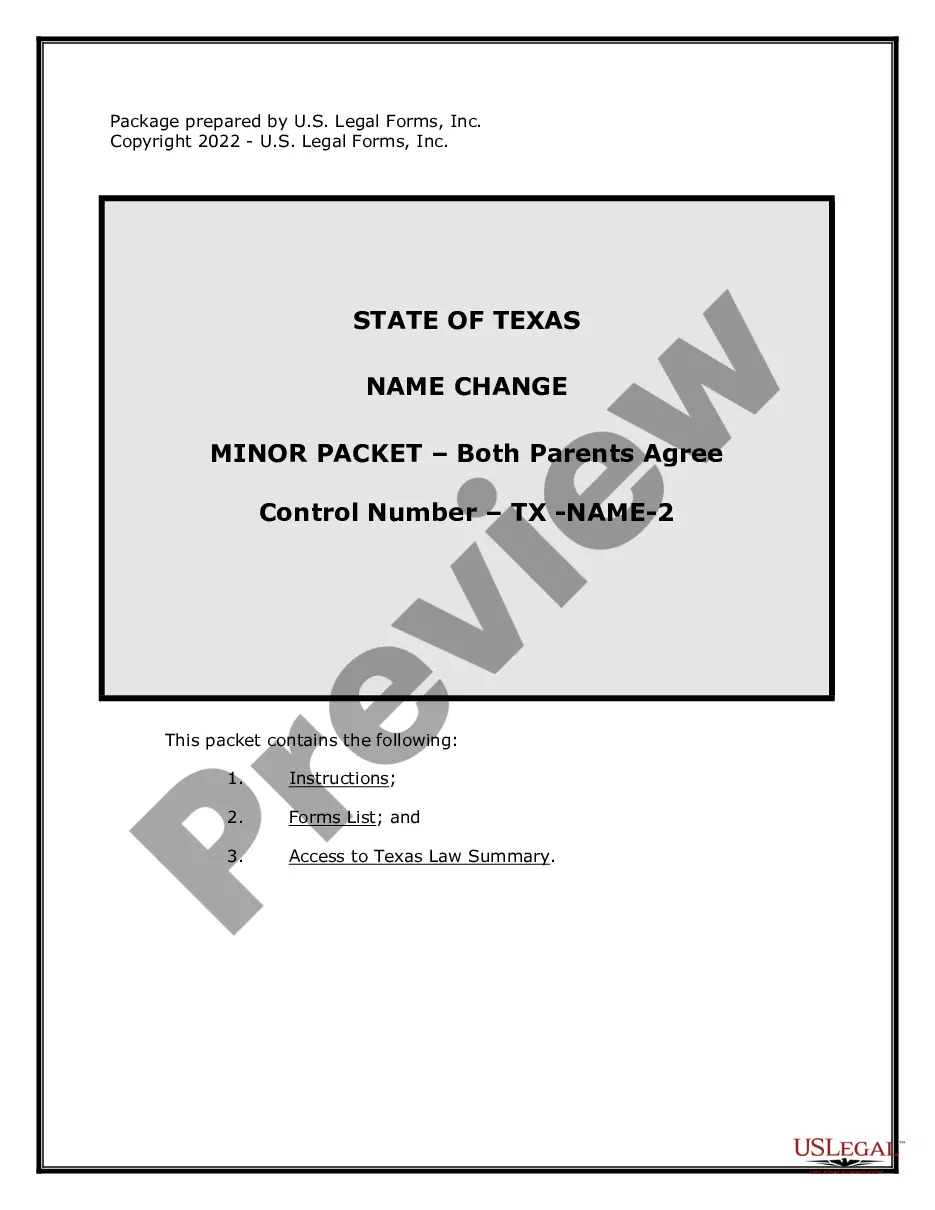
How to fill out Texas Name Change Instructions And Forms Package For An Adult?
Regardless of whether for commercial objectives or personal matters, everyone eventually encounters legal circumstances in their lifetime.
Filling out legal paperwork requires meticulous care, starting from choosing the right template form.
Once saved, you can complete the form using editing software or print it out and finish it by hand. With a vast US Legal Forms collection available, you don’t need to waste time searching for the suitable template on the internet. Take advantage of the library’s straightforward navigation to find the appropriate form for any scenario.
- Obtain the sample you need by utilizing the search field or catalog browsing.
- Review the form’s details to verify it aligns with your situation, state, and locality.
- Click on the form’s preview to inspect it.
- If it is not the correct document, return to the search feature to locate the Name Change Law In Ohio template you need.
- Download the form if it meets your specifications.
- If you possess a US Legal Forms account, click Log in to access previously stored documents in My documents.
- Should you not have an account yet, you can download the form by clicking Buy now.
- Select the appropriate pricing option.
- Fill out the account registration form.
- Choose your payment method: a credit card or PayPal account.
- Select the file format you desire and download the Name Change Law In Ohio.
Form popularity
FAQ
While most name changes require court approval, there are certain situations, such as informal name usage or marital name changes, where you may not need to go to court. You can start using your new name and update your documents, like your driver's license and Social Security card, accordingly. However, for a formal name change recognized by all legal and governmental agencies, understanding the name change law in Ohio is crucial. U.S. Legal Forms offers resources that can guide you through the steps and provide forms you may need.
In Ohio, there is no strict deadline for changing your name after marriage, but it's best to do so shortly after the ceremony. Most organizations require your marriage certificate to process the name change, so have that handy. Promptly changing your name can help avoid confusion with legal documents and identification. Familiarizing yourself with the name change law in Ohio can make this process easier.
The process for a name change in Wisconsin typically takes several weeks. After filing your petition, the court will schedule a hearing, which might be a month or two out. Once approved, you can expect your new name to be official shortly after. Always consider checking the name change law in Ohio for broader context, as regulations may differ by state.
The rule for changing your name in Ohio includes filing a petition in probate court and explaining why you want the change. You must not change your name for fraudulent purposes. Follow the necessary legal processes, which include notifications and public announcement requirements. Familiarizing yourself with the name change law in Ohio will help you navigate this process smoothly.
To legally change your name in Ohio, you must complete a petition for a name change through your local court. You need to provide a valid reason for the name change, along with identification documents. Additionally, you must notify the public by publishing a notice in a local newspaper. Understanding the name change law in Ohio is essential to ensure you follow all steps correctly.
The duration for a legal name change in Ohio can vary, but generally, it takes about 6 to 8 weeks. This time frame includes the necessary court processing and any required waiting periods. To expedite the process, you should ensure that you have all your documents prepared and filed correctly. Understanding the name change law in Ohio can also help streamline your experience.
Filling out an affidavit for a name change in Ohio requires you to include specific information, such as your current name, the new name you wish to adopt, and any reasons for the change. Be sure to follow the format outlined in the name change law in Ohio, as it dictates how to present your information. Once completed, you will need to have it notarized before submitting it to the court. For guidance, USLegalForms offers templates and resources to assist you in this process.
You can declare a name change by formally filing a petition with the court in Ohio, as prescribed by the name change law in Ohio. This petition includes your current legal name, the desired name, and reasons for the change. After your petition is submitted, a court hearing may be necessary to finalize the change. Once approved, you can update your legal documents to reflect your new name.
To change your name informally under common law in Ohio, you should consistently use your new name in all areas of your life. However, remember that this does not update your legal documents. To ensure your change is recognized legally, it is advisable to follow the name change law in Ohio and file a formal petition with the court. This official process solidifies your name change for legal purposes.
In Ohio, common law does not allow for automatic name changes simply through usage. To officially change your name, you must follow the established name change law in Ohio, which requires court involvement. Many people choose to pursue a legal name change for clarity and consistency in their personal and professional lives. Therefore, if you want a permanent name change, you should complete the legal process.