Texas Will
Description

Get your form ready online
Our built-in tools help you complete, sign, share, and store your documents in one place.
Make edits, fill in missing information, and update formatting in US Legal Forms—just like you would in MS Word.
Download a copy, print it, send it by email, or mail it via USPS—whatever works best for your next step.
Sign and collect signatures with our SignNow integration. Send to multiple recipients, set reminders, and more. Go Premium to unlock E-Sign.
If this form requires notarization, complete it online through a secure video call—no need to meet a notary in person or wait for an appointment.
We protect your documents and personal data by following strict security and privacy standards.

Make edits, fill in missing information, and update formatting in US Legal Forms—just like you would in MS Word.

Download a copy, print it, send it by email, or mail it via USPS—whatever works best for your next step.

Sign and collect signatures with our SignNow integration. Send to multiple recipients, set reminders, and more. Go Premium to unlock E-Sign.

If this form requires notarization, complete it online through a secure video call—no need to meet a notary in person or wait for an appointment.

We protect your documents and personal data by following strict security and privacy standards.
Looking for another form?





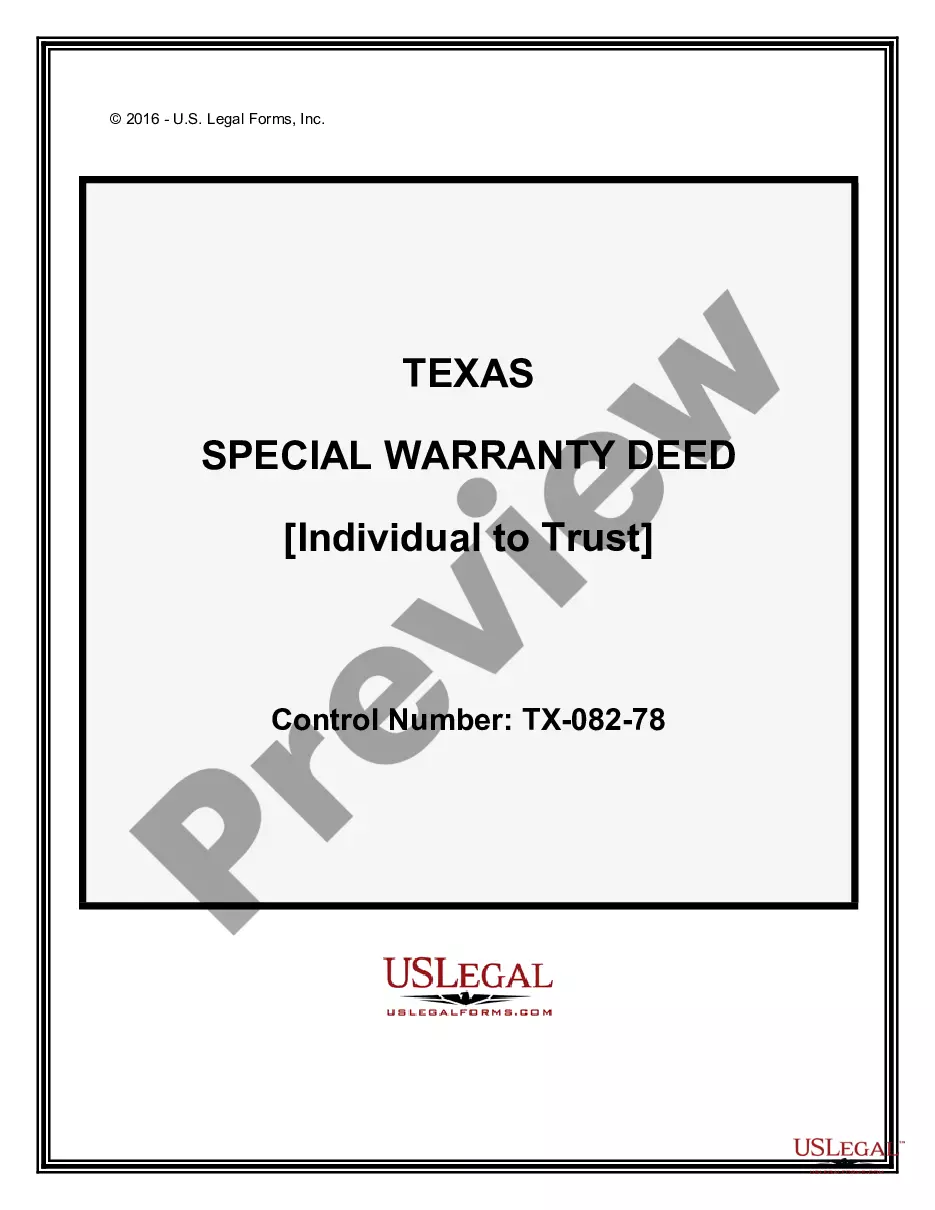
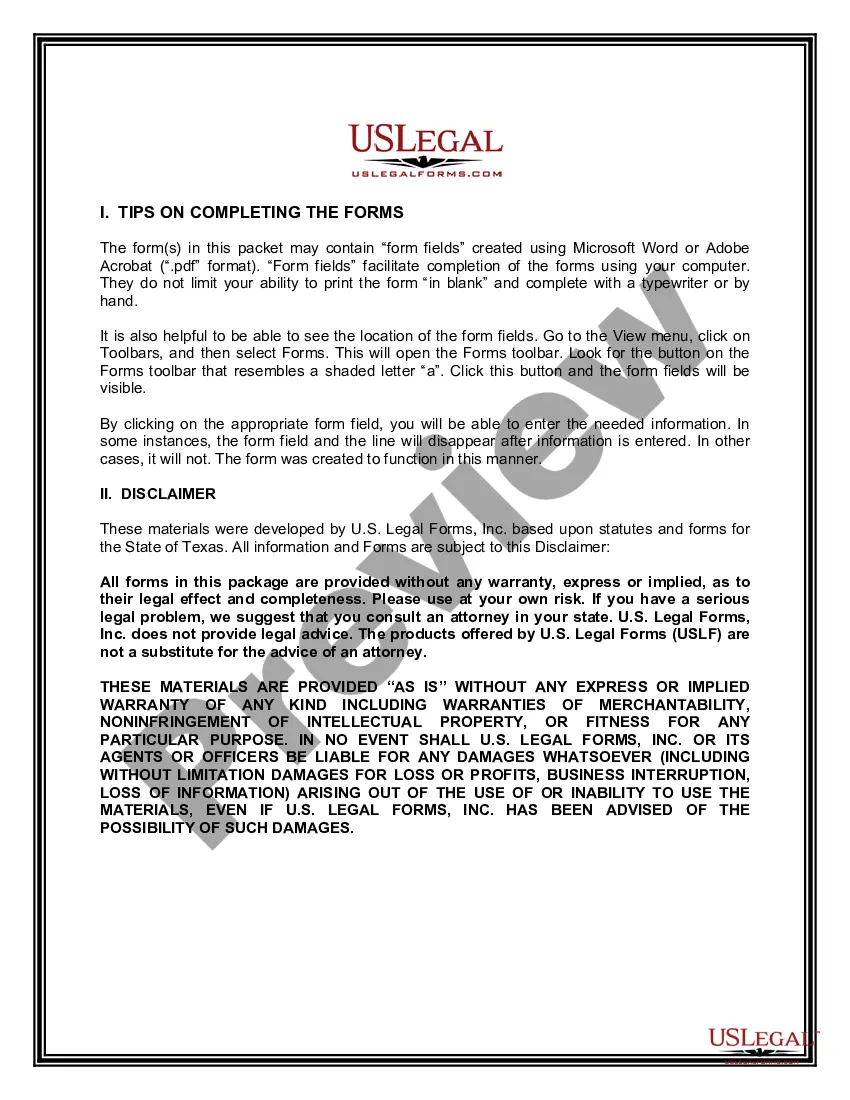
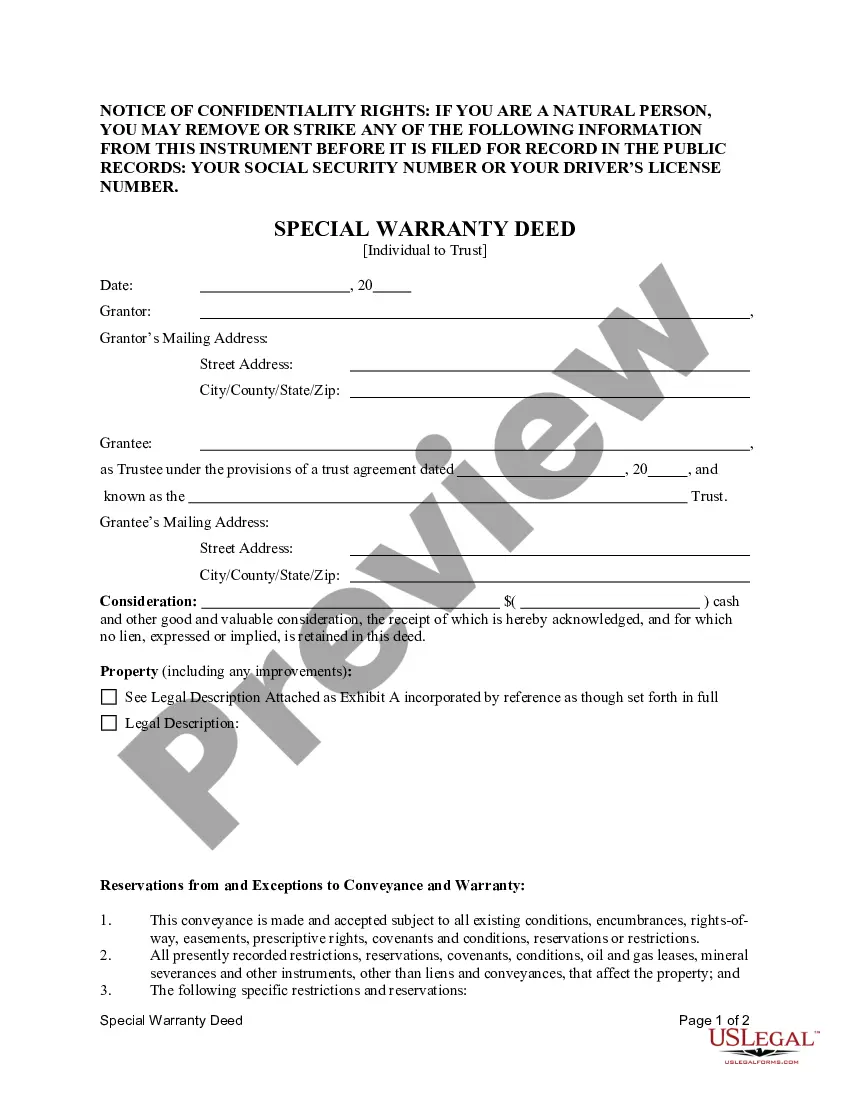
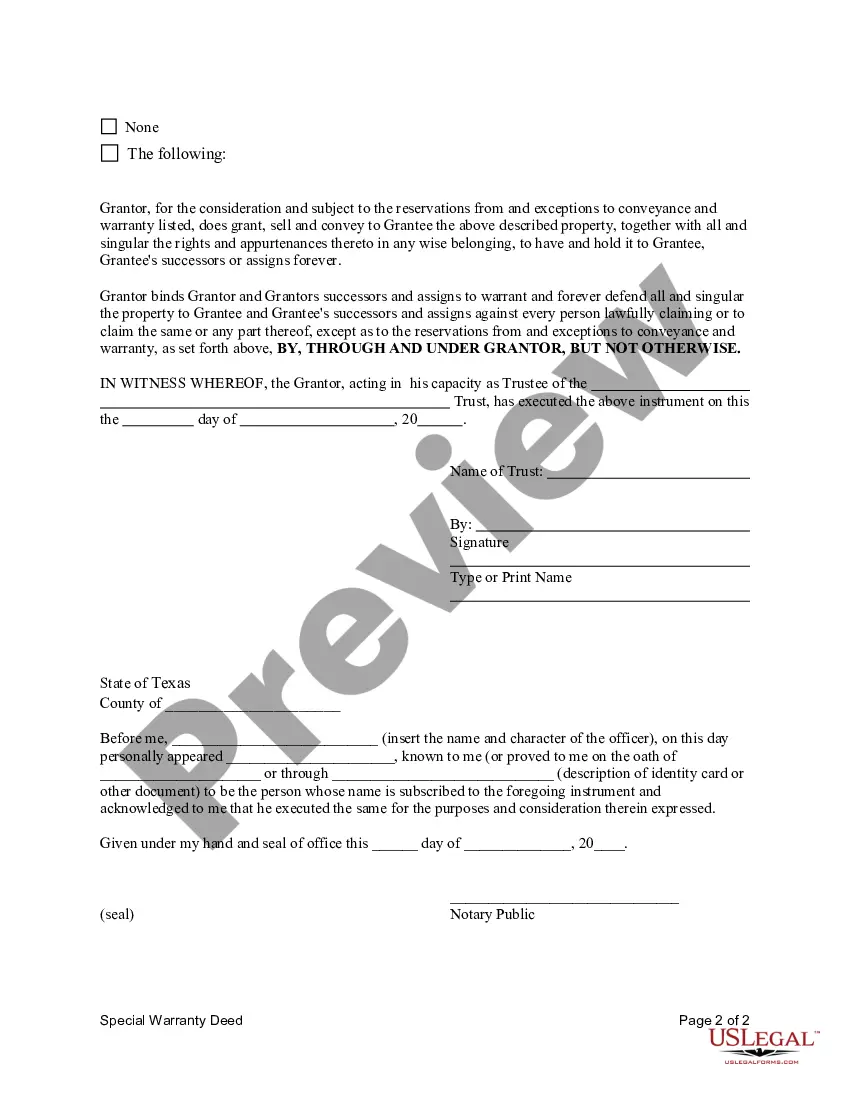
How to fill out Texas Special Warranty Deed From An Individual To A Trust?
- Start by checking the Preview mode and form description to ensure you select a template that aligns with your requirements.
- If you don’t find the right form, use the Search tab to look for alternatives until you find the one that meets your local jurisdiction needs.
- Purchase the document by clicking on the Buy Now button and selecting your preferred subscription plan. You'll need to create an account to access the comprehensive legal resource library.
- Complete your purchase by entering your payment details, either through credit card or PayPal.
- Finally, download the form to your device and you can access it anytime from the My Forms menu in your profile.
By following these steps, you ensure that you have the right legal documents at your fingertips, expertly vetted and ready for use. US Legal Forms not only saves you time but provides peace of mind with expert assistance available.
Start using Texas's comprehensive legal form services today and unlock the ease of managing your legal documentation!
Form popularity
FAQ
In Texas, a will does not necessarily need to be notarized to be valid. However, notarization can help in making the will self-proving, simplifying the probate process. If your Texas will is properly signed and witnessed, it can still be valid without a notary. Our platform can assist you in understanding the benefits of notarization and help you create your will correctly.
You can indeed make a will without a lawyer in Texas. Many individuals choose to create their own will using templates available online. However, it's crucial to ensure your Texas will meets all legal requirements to avoid issues later. Our platform offers user-friendly tools and resources that can help you draft a legally binding will without needing legal assistance.
Yes, you can write your own will and have it notarized in Texas. However, it's essential the will complies with state laws to ensure it is recognized in court. While notarization can strengthen the document, having it properly witnessed is also important for a valid Texas will. Using our service can simplify this process by providing templates and guidance.
For a Texas will to be valid, it must be in writing, signed by the testator, and the testator must be at least 18 years old. The will should express the testator's intent to distribute their estate after death. Witnesses may be required, depending on the type of will. Our platform can guide you through these requirements to ensure your Texas will is legally sound.
Yes, a handwritten will can hold up in court in Texas, provided it meets specific criteria. It must be signed by the testator, and the intent must be clear. Additionally, witnesses may be necessary if the court considers it to be a self-proving will. You can use our platform to create a valid Texas will that meets your needs.
To obtain a copy of a Texas will, you can start by checking with the county clerk's office where the will was filed. If the will is part of a probate case, it will be accessible through the court records. Additionally, you may also contact the executor of the estate, as they typically have the original will. Platforms like USLegalForms can assist you in navigating the process more effectively.
One of the biggest mistakes people make with Texas wills is not updating them as life changes. Events such as marriage, divorce, or the birth of a child can alter your intentions regarding asset distribution. Failing to review and revise your Texas will can lead to confusion and disputes among your loved ones. Regularly checking your will ensures it reflects your current wishes and circumstances.
In Texas, notarization is not a legal requirement for wills. However, notarizing your Texas will can provide extra protection against potential disputes. A self-proving will, which is notarized, can simplify the probate process by eliminating the need for witnesses during court proceedings. Therefore, while it's not mandatory, notarizing your will is a smart move.
In Texas, a will does not need to be recorded while the testator is alive. However, once the individual passes away, the will must be filed with a probate court to validate it. This process ensures that the terms of your Texas will are honored and that your assets are distributed according to your wishes. For further guidance, you can explore the US Legal Forms platform, providing tools and templates to assist with your Texas will needs.
To file a living will in Texas, you first need to complete the document correctly. After filling it out, you should sign the living will in the presence of two witnesses who also sign the document. It is important to keep a copy for your records and share it with your healthcare provider. If you have questions or need assistance, consider using the US Legal Forms platform, which offers resources to help create and manage your Texas will effectively.