Texas Correction Deed Prior Uslegal For The Future
Description
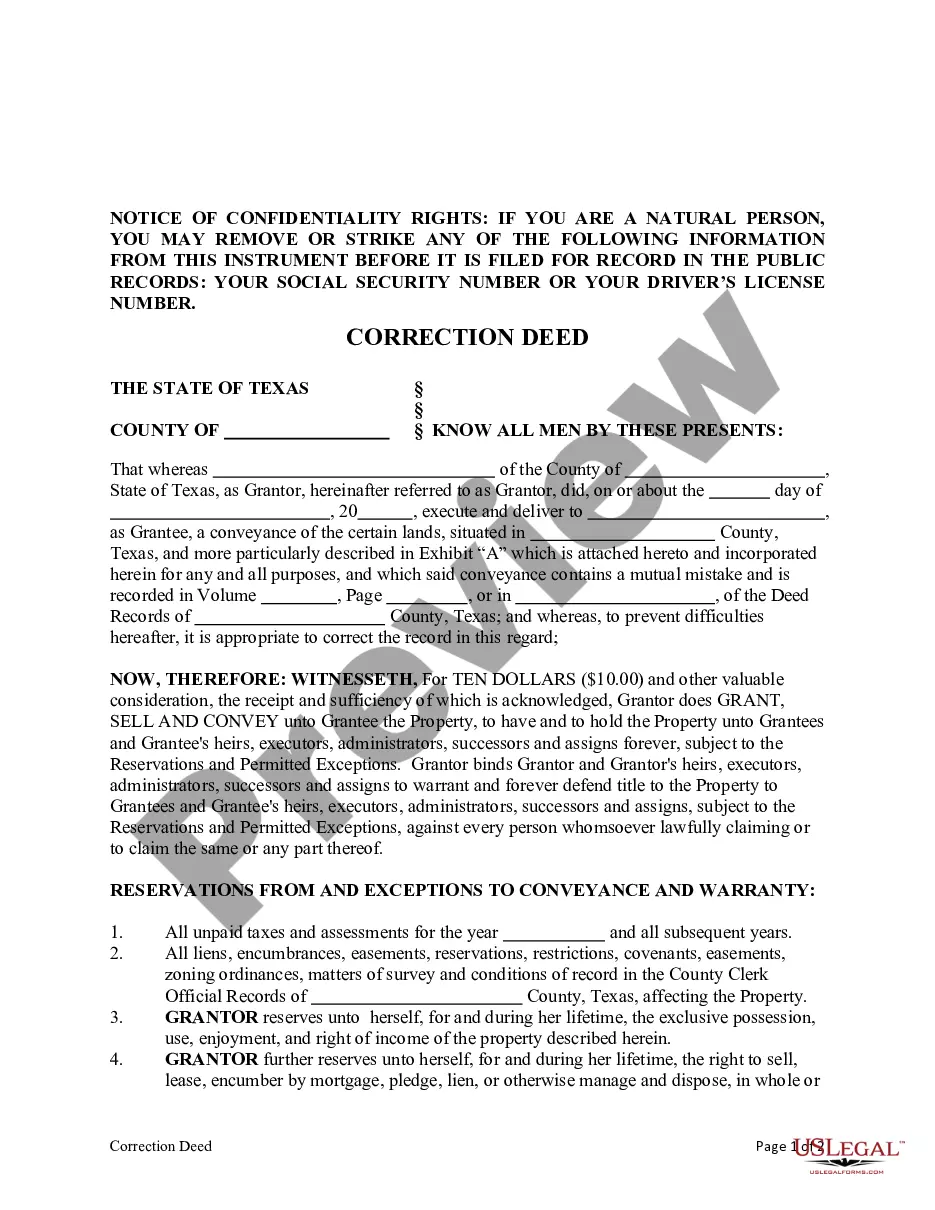
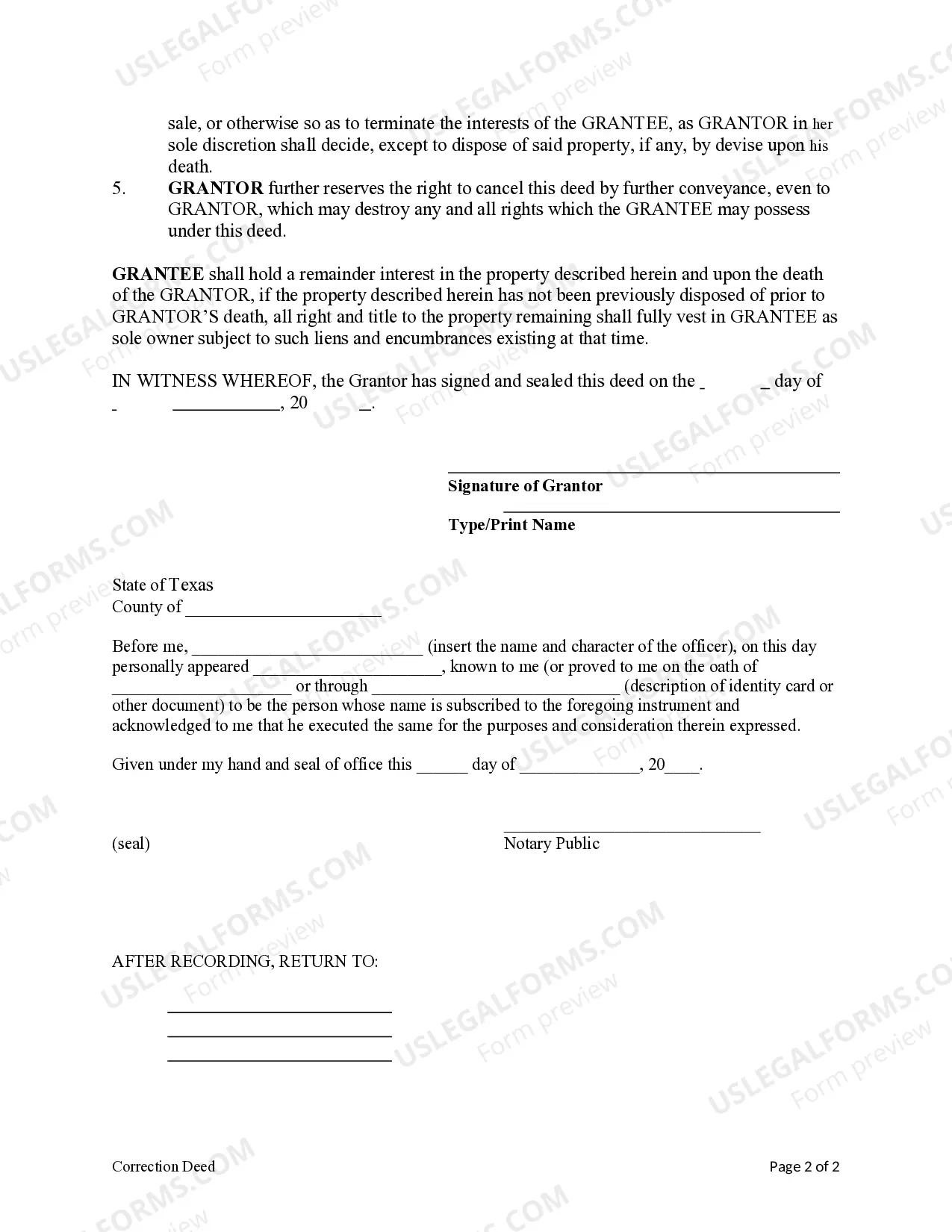
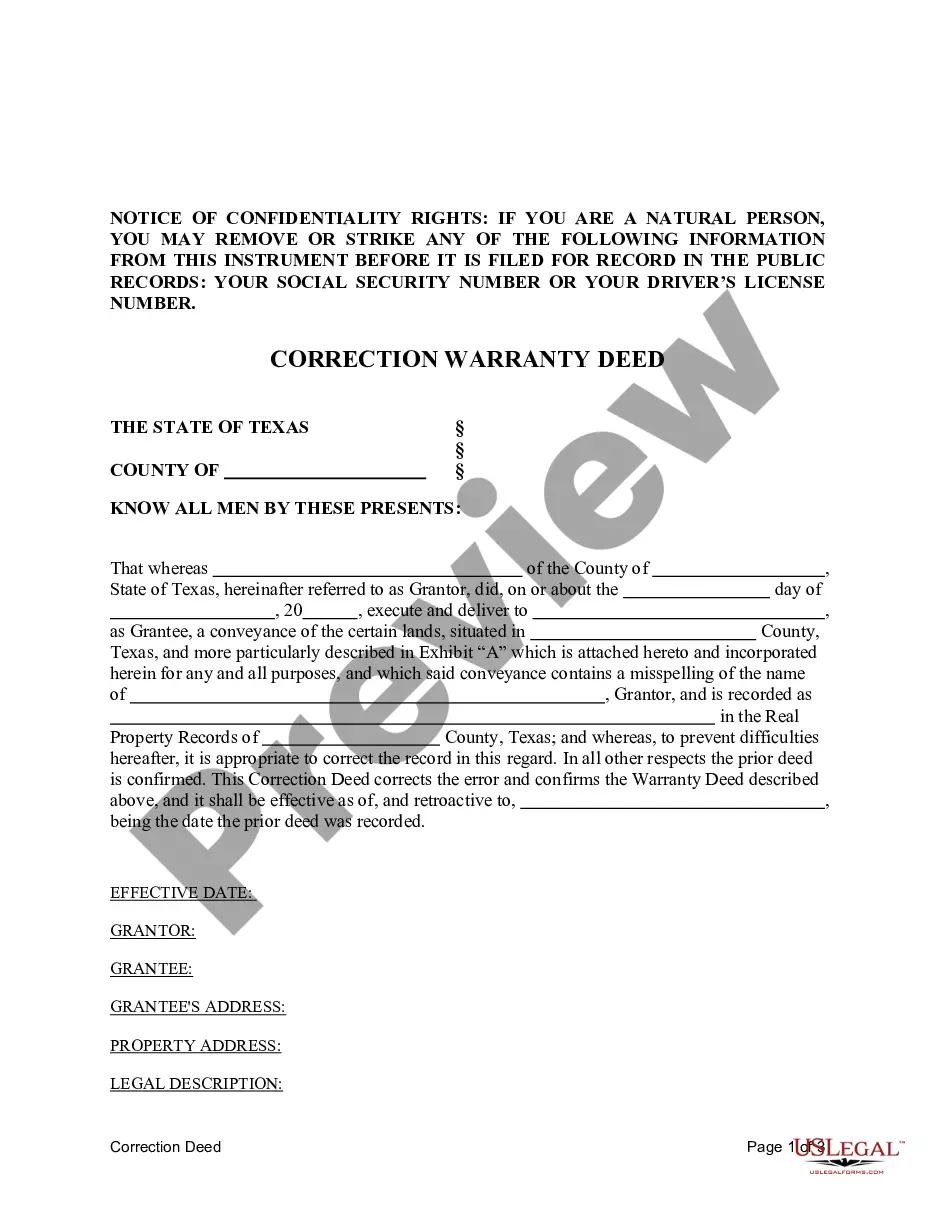
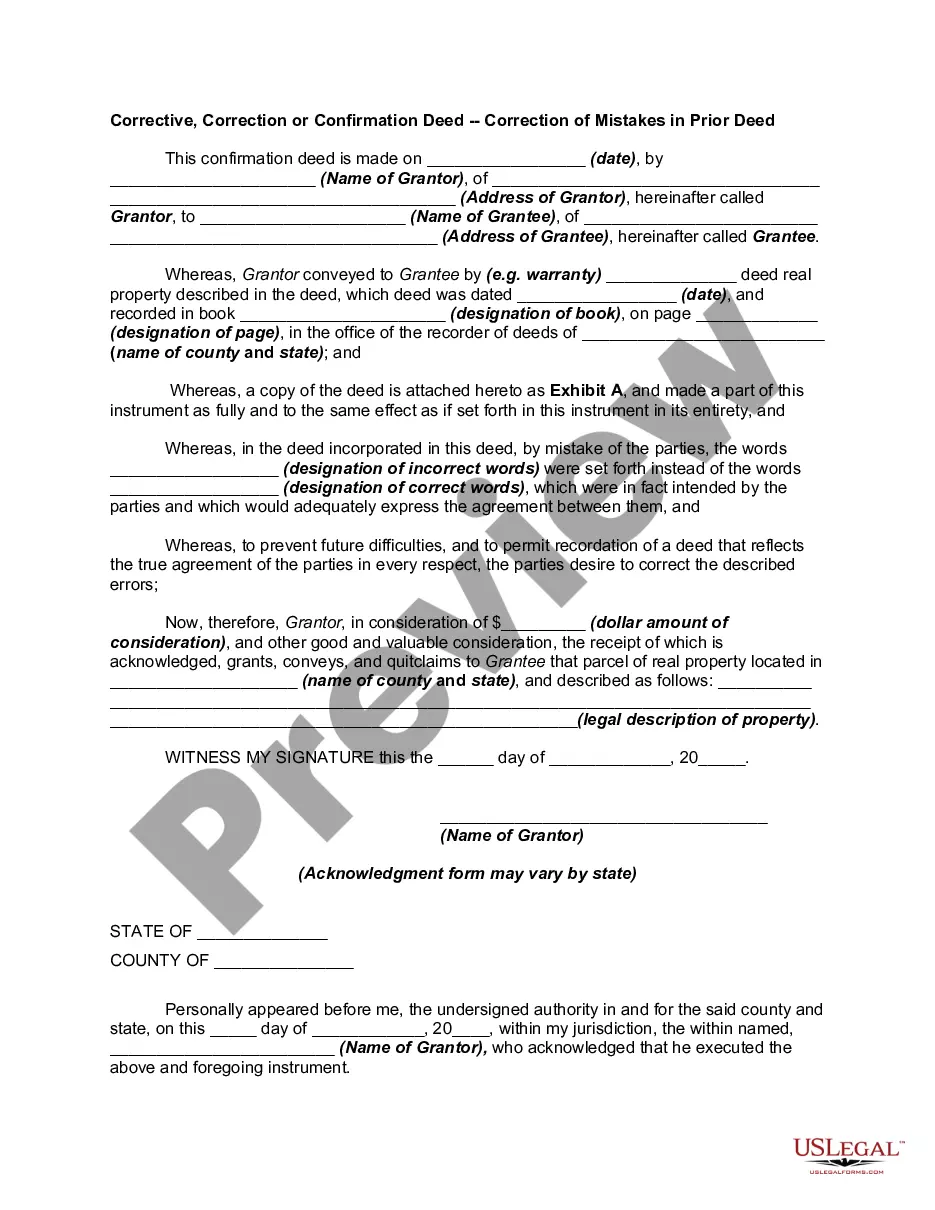

Get your form ready online
Our built-in tools help you complete, sign, share, and store your documents in one place.
Make edits, fill in missing information, and update formatting in US Legal Forms—just like you would in MS Word.
Download a copy, print it, send it by email, or mail it via USPS—whatever works best for your next step.
Sign and collect signatures with our SignNow integration. Send to multiple recipients, set reminders, and more. Go Premium to unlock E-Sign.
If this form requires notarization, complete it online through a secure video call—no need to meet a notary in person or wait for an appointment.
We protect your documents and personal data by following strict security and privacy standards.

Make edits, fill in missing information, and update formatting in US Legal Forms—just like you would in MS Word.

Download a copy, print it, send it by email, or mail it via USPS—whatever works best for your next step.

Sign and collect signatures with our SignNow integration. Send to multiple recipients, set reminders, and more. Go Premium to unlock E-Sign.

If this form requires notarization, complete it online through a secure video call—no need to meet a notary in person or wait for an appointment.

We protect your documents and personal data by following strict security and privacy standards.
Looking for another form?

How to fill out Texas Correction Deed - Prior Deed From An Individual To An Individual?
- If you have an existing account with US Legal Forms, log in to access your needed form template and ensure your subscription is current. If it’s expired, renew it according to your chosen payment plan.
- For new users, start by reviewing the Preview mode and form description. Confirm it aligns with your requirements to meet local jurisdiction guidelines.
- In case of discrepancies, make use of the Search tab to locate the appropriate template.
- To purchase the document, click on the Buy Now button and select your preferred subscription plan. Registration is necessary to unlock access to the comprehensive library.
- Proceed with payment using your credit card or PayPal to complete the subscription process.
- Finally, download your completed form to your device, allowing for easy access anytime through the My Forms section of your account.
In conclusion, US Legal Forms empowers both individuals and legal professionals by providing a vast collection of legal templates, ensuring you can obtain your Texas correction deed efficiently. Their exceptional support and robust library make legal documentation straightforward.
Start exploring today and take advantage of the convenience offered at US Legal Forms!
Form popularity
FAQ
A corrective deed is a document used to fix errors in a previously recorded deed. For instance, if a property deed lists the wrong legal description or misspells a name, a Texas correction deed prior uslegal for the future can resolve those issues efficiently. By using platforms like uslegalforms, you can ensure that your corrective deed meets state requirements and protects your property interests. This process ultimately helps in maintaining accurate public records and preventing potential legal disputes.
A deed may be deemed invalid if it lacks essential elements, such as the grantor's signature, or if it is not properly notarized. Additionally, if the deed transfers property that the grantor does not own, it cannot be considered valid. Utilizing services like uslegalforms helps ensure that your documents comply with the Texas correction deed prior uslegal for the future, reducing the chances of invalidation.
In Texas, the statute of limitations for enforcing a deed restriction is generally four years from the date of the violation. After this period, you may lose the right to enforce the restriction in court. It is crucial to keep these timelines in mind when managing your property, following guidelines such as those provided by uslegalforms regarding the Texas correction deed prior uslegal for the future.
Altering a deed is generally not permitted, as modifications can invalidate the document. Instead, a correction deed should be filed to amend any errors or update details. Resources like uslegalforms offer guidance on creating a Texas correction deed prior uslegal for the future, ensuring you follow the appropriate process for any necessary changes.
A deed can become void in Texas for several reasons, including lack of proper execution or if the grantor lacked the legal capacity to transfer the property. A deed can also be considered void if it violates state laws or public policy. Understanding these factors is essential for maintaining a valid deed, especially when using tools like uslegalforms focused on Texas correction deed prior uslegal for the future.
To correct a deed in Texas, you generally need to file a correction deed with the county clerk. This deed must include the specific errors being corrected and reference the original deed. Utilizing uslegalforms can provide you with accurate forms to ensure compliance with the Texas correction deed prior uslegal for the future. Proper execution and filing will rectify the deed's record.
Yes, you can rewrite a deed to correct errors or update the information. Using a reliable service such as uslegalforms can simplify creating a new deed, ensuring it adheres to the Texas correction deed prior uslegal for the future requirements. Once rewritten, the new deed must be executed properly and filed with the appropriate authorities to be effective.
To replace a property deed, you typically need to draft a new deed that reflects the necessary changes. You can obtain templates from resources like uslegalforms, which specialize in Texas correction deed prior uslegal for the future. Once completed, you must sign the deed in front of a notary and file it with the county clerk's office. This process ensures the public record is updated and accurate.
In Texas, a deed may be voidable if one party was misled or coerced into signing it. Factors such as fraud, undue influence, or lack of mental capacity can render a deed voidable rather than completely void. Awareness of such conditions is vital for property owners. Utilizing services like US Legal Forms can help protect your interests by ensuring the validity of a Texas correction deed prior uslegal for the future.
A deed can be considered void in several situations, such as when it lacks the proper signatures or legal capacity of the parties involved. Additionally, if the deed conveys property that was already sold, it may be deemed invalid. Understanding these aspects is crucial when dealing with correction deeds. Resources like US Legal Forms can guide you in avoiding such pitfalls when preparing a Texas correction deed prior uslegal for the future.