Texas Foreign Guardianship
Description
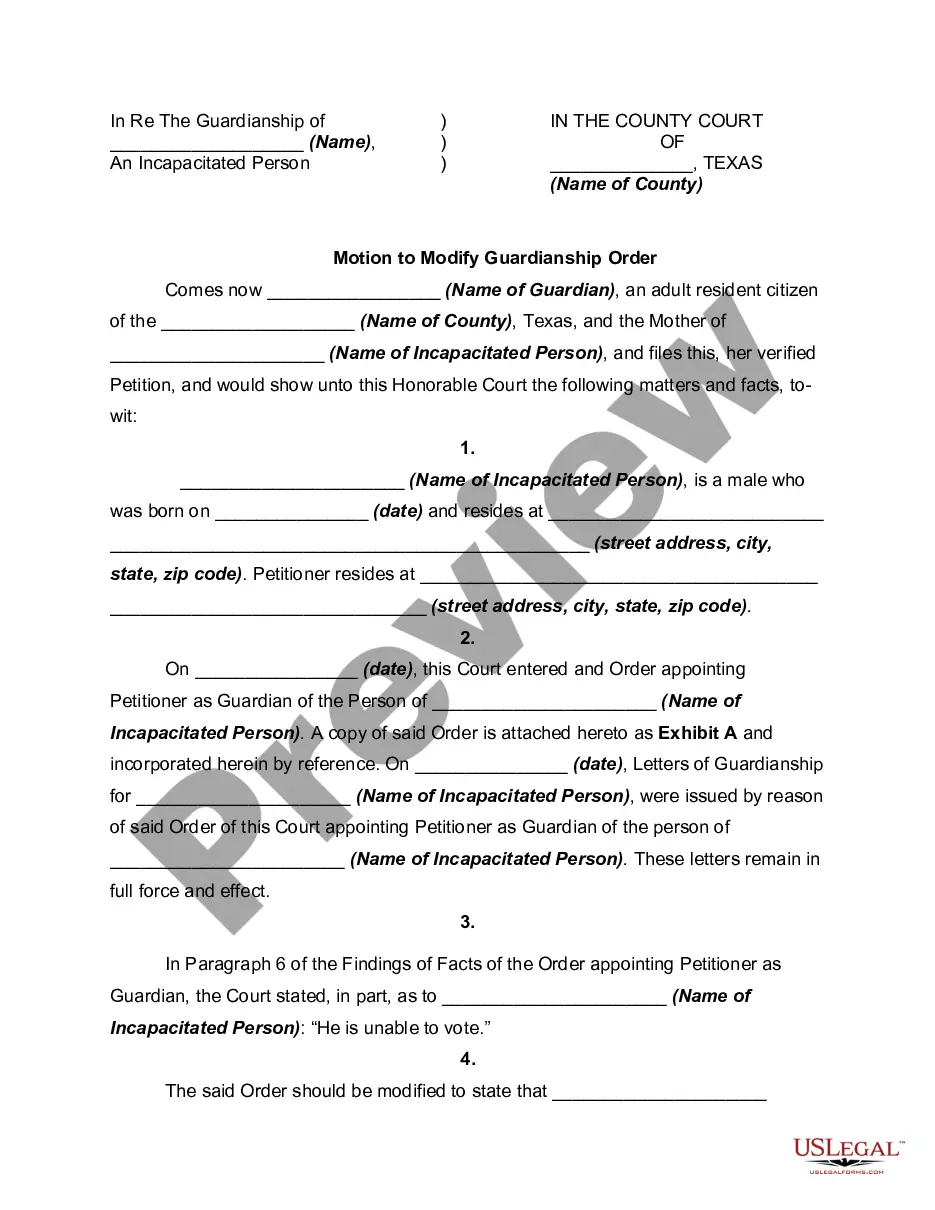

Get your form ready online
Our built-in tools help you complete, sign, share, and store your documents in one place.
Make edits, fill in missing information, and update formatting in US Legal Forms—just like you would in MS Word.
Download a copy, print it, send it by email, or mail it via USPS—whatever works best for your next step.
Sign and collect signatures with our SignNow integration. Send to multiple recipients, set reminders, and more. Go Premium to unlock E-Sign.
If this form requires notarization, complete it online through a secure video call—no need to meet a notary in person or wait for an appointment.
We protect your documents and personal data by following strict security and privacy standards.

Make edits, fill in missing information, and update formatting in US Legal Forms—just like you would in MS Word.

Download a copy, print it, send it by email, or mail it via USPS—whatever works best for your next step.

Sign and collect signatures with our SignNow integration. Send to multiple recipients, set reminders, and more. Go Premium to unlock E-Sign.

If this form requires notarization, complete it online through a secure video call—no need to meet a notary in person or wait for an appointment.

We protect your documents and personal data by following strict security and privacy standards.
Looking for another form?
Form popularity
FAQ
While you can file for guardianship in Texas without an attorney, having legal assistance is highly advisable. An attorney can help navigate the complexities of guardianship laws, ensuring that all paperwork is correctly completed and submitted. Utilizing a service like UsLegalForms can also simplify the process and provide the necessary forms and guidance for your situation.
To register as a foreign entity in Texas, you'll need to file an application with the Texas Secretary of State. This usually involves submitting forms that outline the business details, along with payment of any applicable fees. Once registered, your entity will be legally recognized to operate in Texas, which can be beneficial if you are pursuing Texas foreign guardianship matters.
Registering a foreign custody order in Texas involves submitting a request to the appropriate court. You'll need to provide a copy of the original custody order along with any necessary supporting documents. This process ensures that the foreign order is recognized and enforced according to Texas law.
To file a Suit Affecting Parent-Child Relationship (SAPCR) in Texas, you need to complete the necessary forms, including the petition. You can file the petition at the local family court or online through a legal platform like UsLegalForms. Once filed, the court will set a hearing date, giving all parties a chance to present their positions.
To establish guardianship in Texas, you must file a petition in the appropriate court. The petition should include relevant details about the child, the proposed guardian, and reasons for guardianship. Following the filing, the court will schedule a hearing, allowing interested parties to present their cases.
The 100 mile rule in Texas pertains to child custody and visitation arrangements. It generally prohibits custodial parents from moving more than 100 miles away from the other parent without proper consent. This rule aims to preserve the child's relationship with both parents, ensuring access and visitation opportunities.
In Texas, immigration status does not directly affect child custody decisions. Courts primarily focus on the best interests of the child, considering factors such as stability and safety. However, complexities can arise, particularly if a parent is facing legal challenges, so it's recommended to consult legal resources for guidance.
Yes, Texas recognizes foreign guardianships established in other states, provided that they comply with Texas laws. You may need to register the foreign guardianship with a Texas court to ensure its enforcement. This process helps legally honor the guardianship arrangement made outside Texas while safeguarding the rights of all parties involved.
To establish legal guardianship in Texas, you must file a petition with the court, outlining the need for guardianship. Documentation supporting your case, such as medical evaluations and financial records, is essential. Additionally, the nominee for guardianship must pass a background check and agree to their responsibilities. For Texas foreign guardianship, using services like USLegalForms can simplify compliance with all legal obligations.
The guardianship process in Texas typically takes several months from filing to final approval. Initial filings, notifications, and court hearings can extend the timeline, especially if disputes arise. It is advisable to prepare documentation thoroughly to streamline the process. For those considering Texas foreign guardianship, USLegalForms offers resources to help demystify the requirements and expedite the necessary paperwork.