Texas Interrogatories Sample For The Case
Description
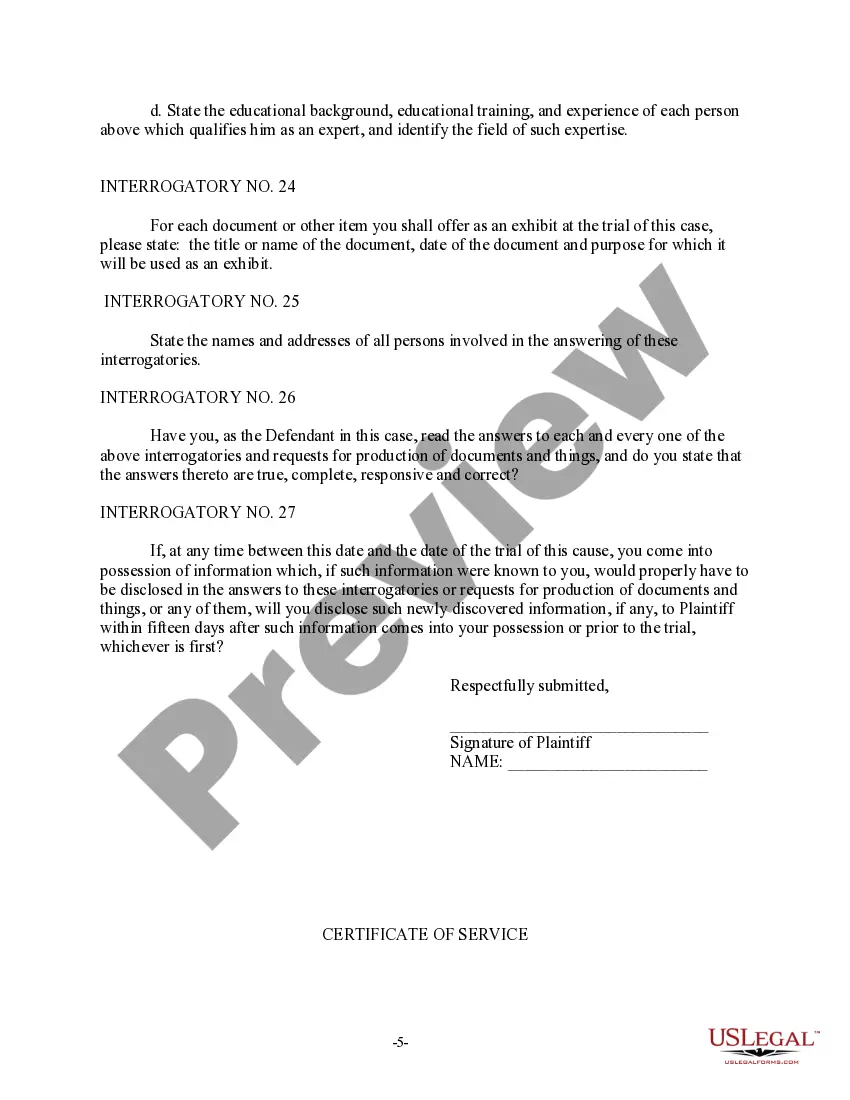

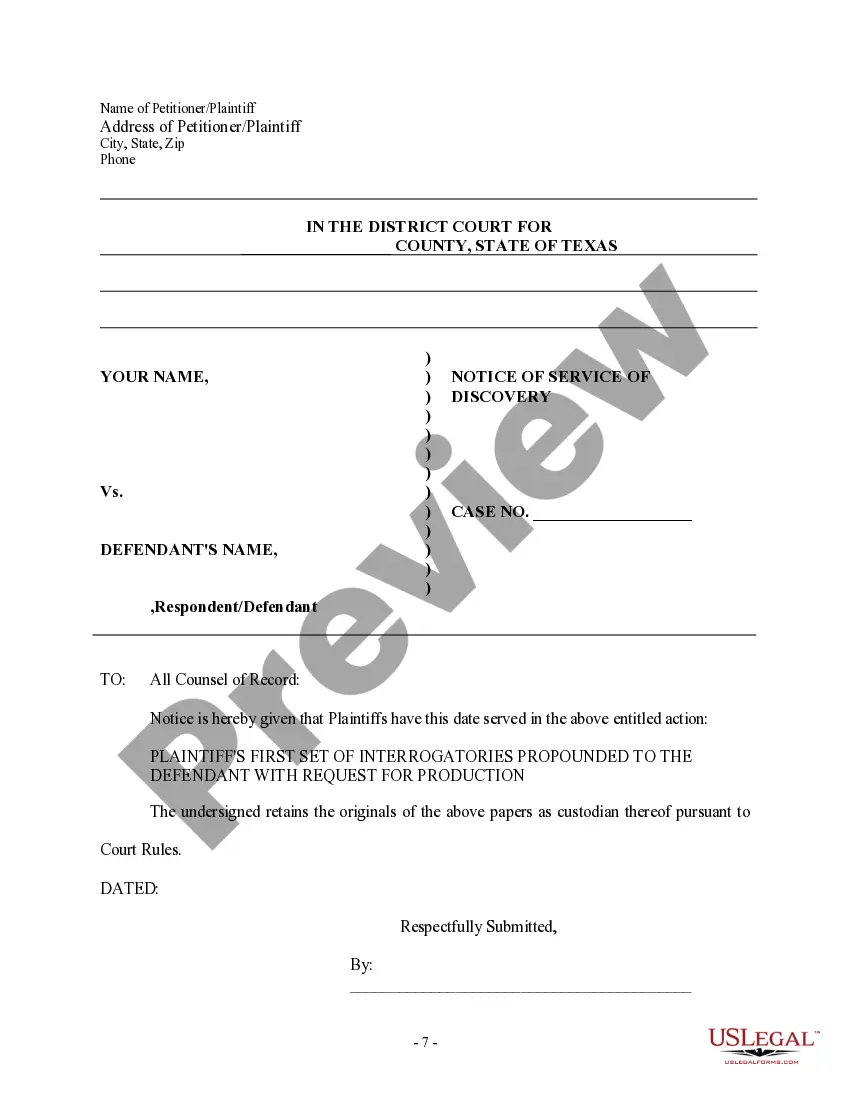
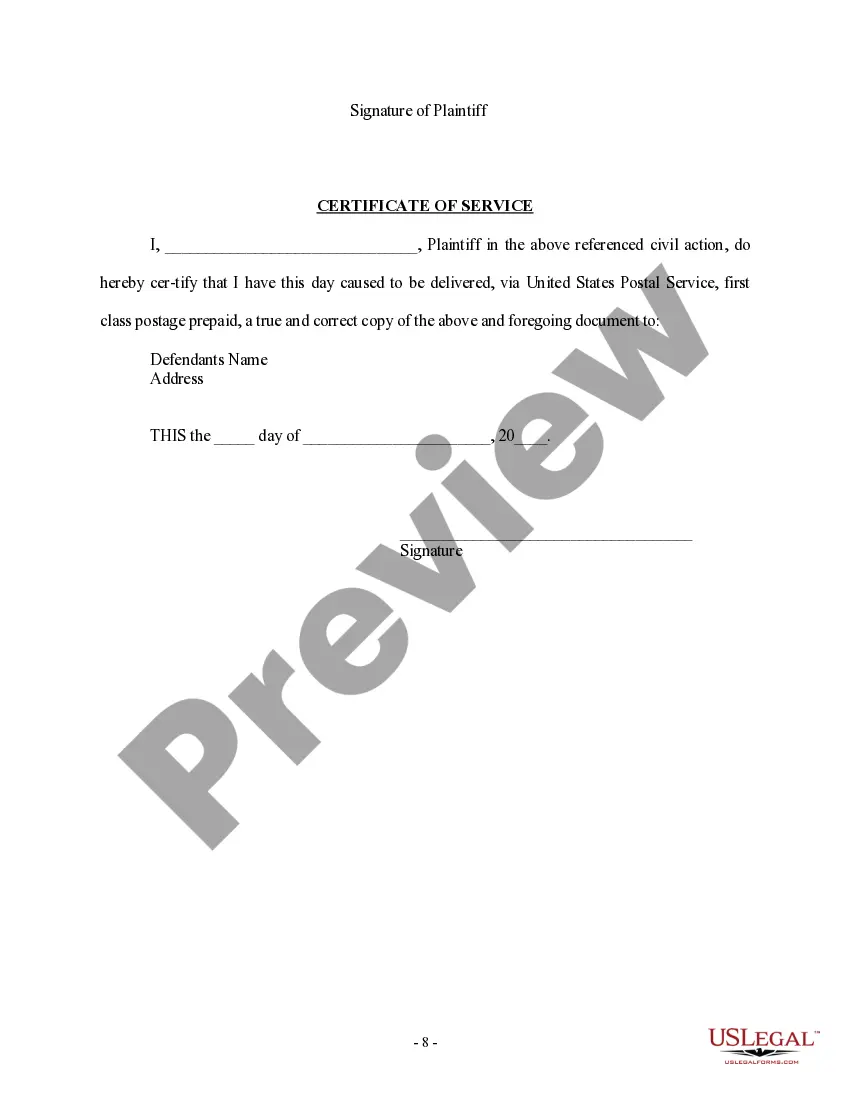
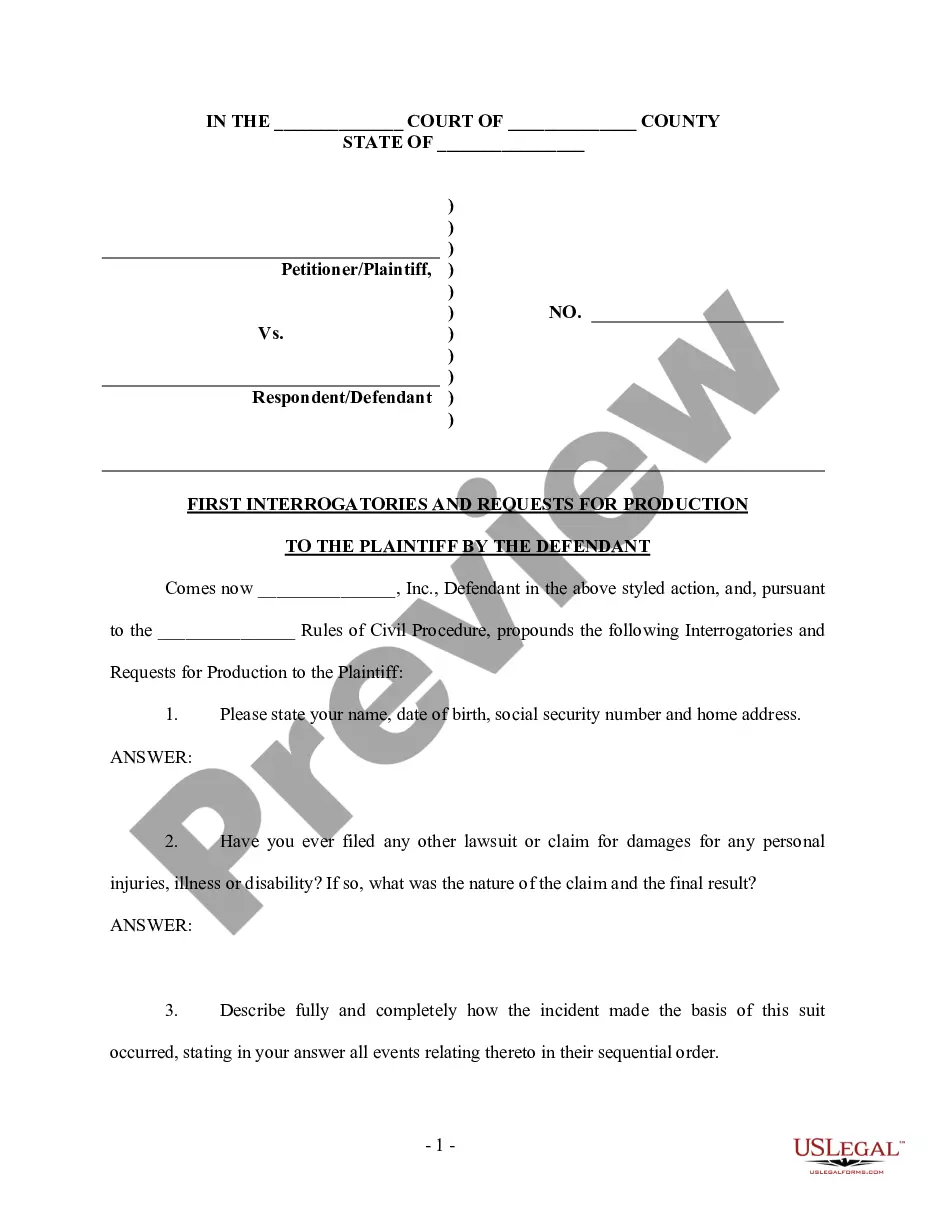
Get your form ready online
Our built-in tools help you complete, sign, share, and store your documents in one place.
Make edits, fill in missing information, and update formatting in US Legal Forms—just like you would in MS Word.
Download a copy, print it, send it by email, or mail it via USPS—whatever works best for your next step.
Sign and collect signatures with our SignNow integration. Send to multiple recipients, set reminders, and more. Go Premium to unlock E-Sign.
If this form requires notarization, complete it online through a secure video call—no need to meet a notary in person or wait for an appointment.
We protect your documents and personal data by following strict security and privacy standards.

Make edits, fill in missing information, and update formatting in US Legal Forms—just like you would in MS Word.

Download a copy, print it, send it by email, or mail it via USPS—whatever works best for your next step.

Sign and collect signatures with our SignNow integration. Send to multiple recipients, set reminders, and more. Go Premium to unlock E-Sign.

If this form requires notarization, complete it online through a secure video call—no need to meet a notary in person or wait for an appointment.

We protect your documents and personal data by following strict security and privacy standards.
Looking for another form?
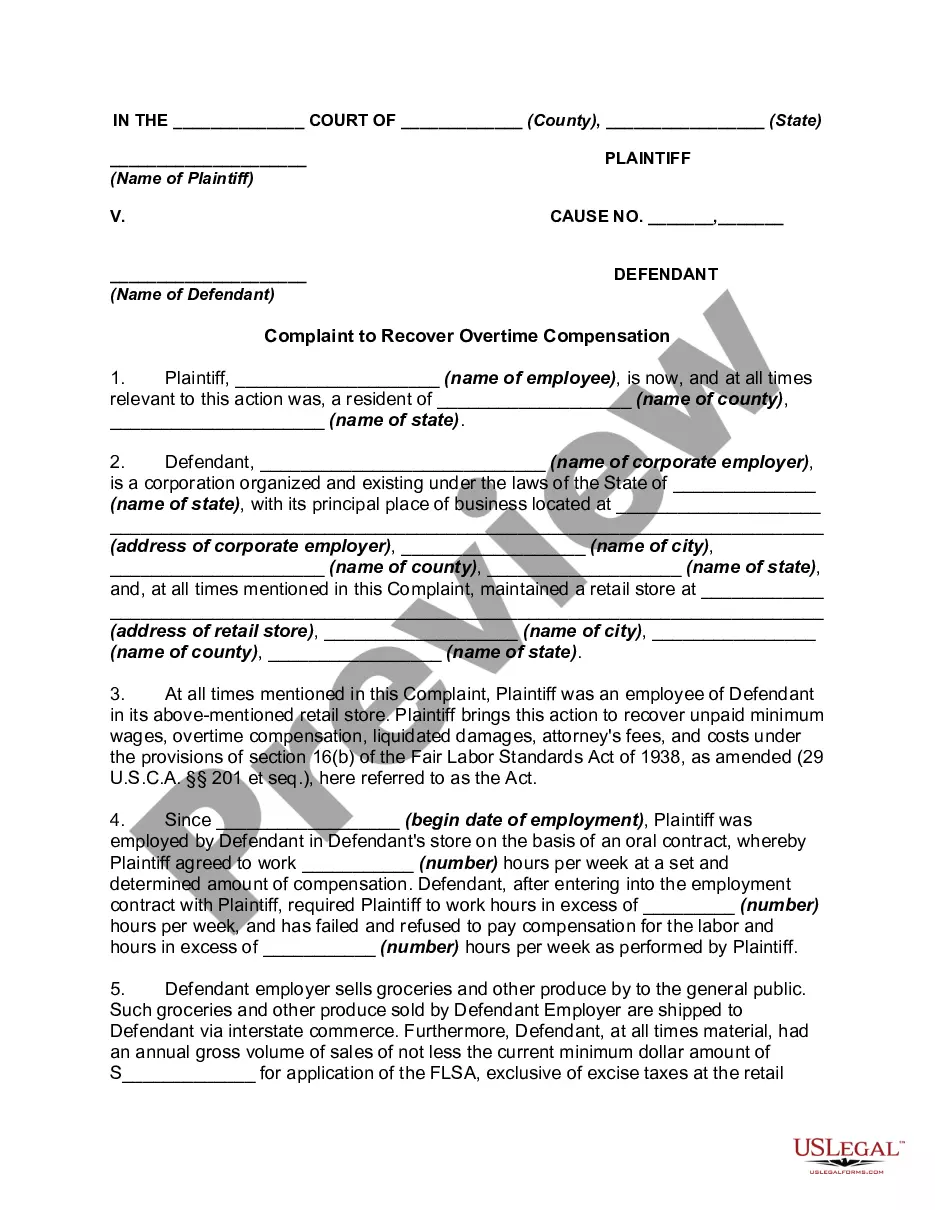

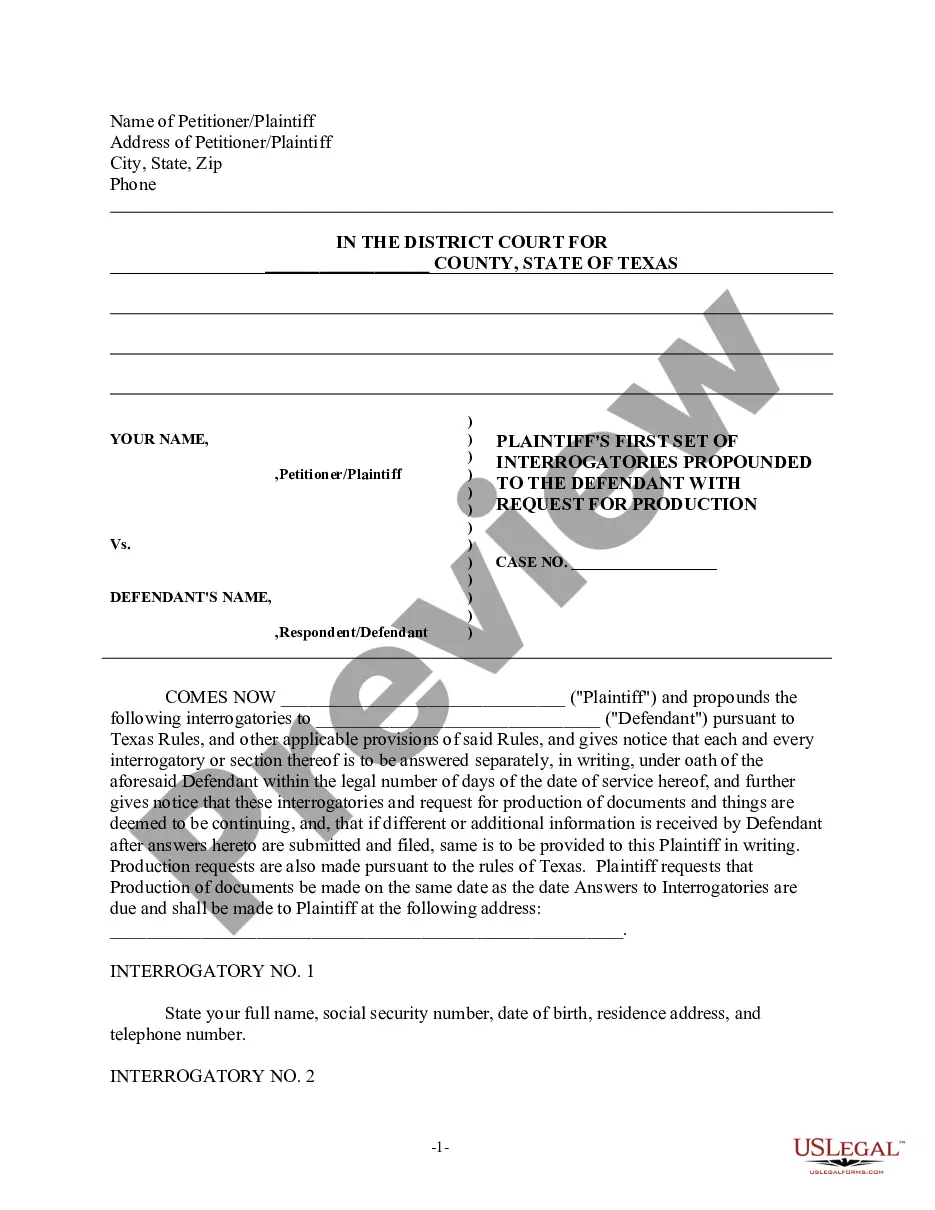
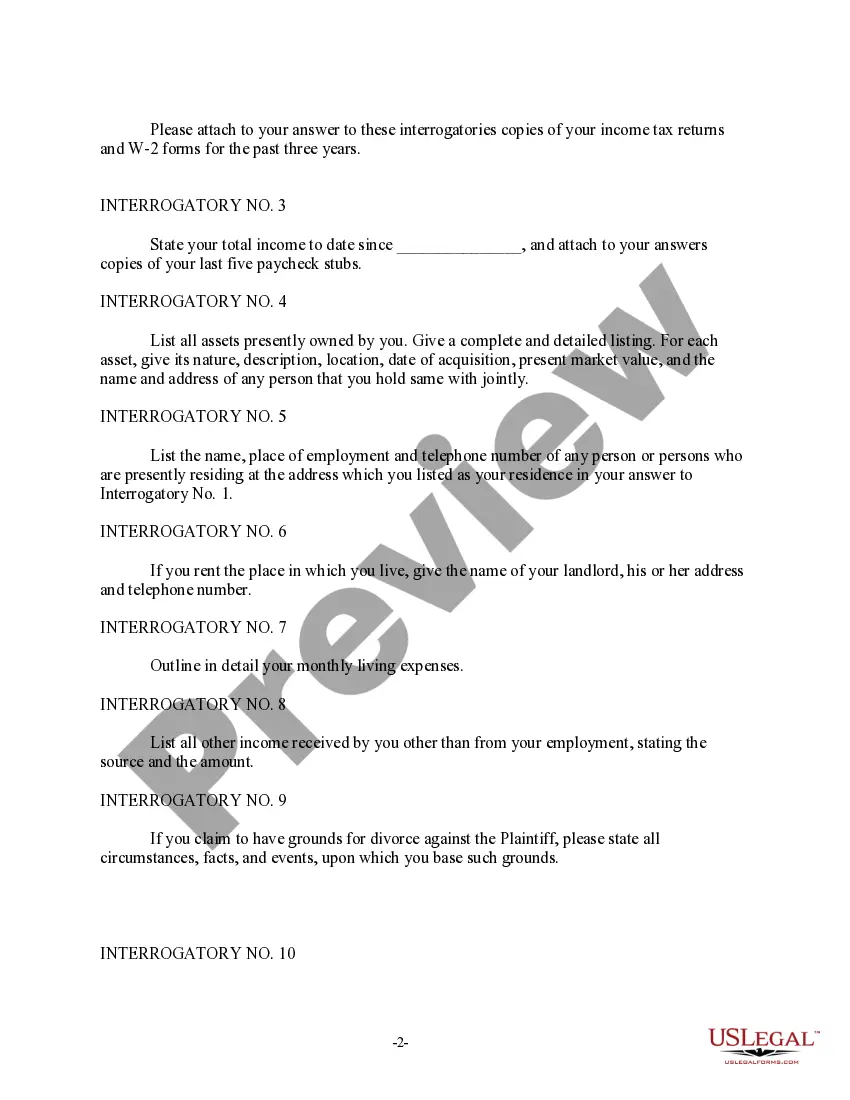
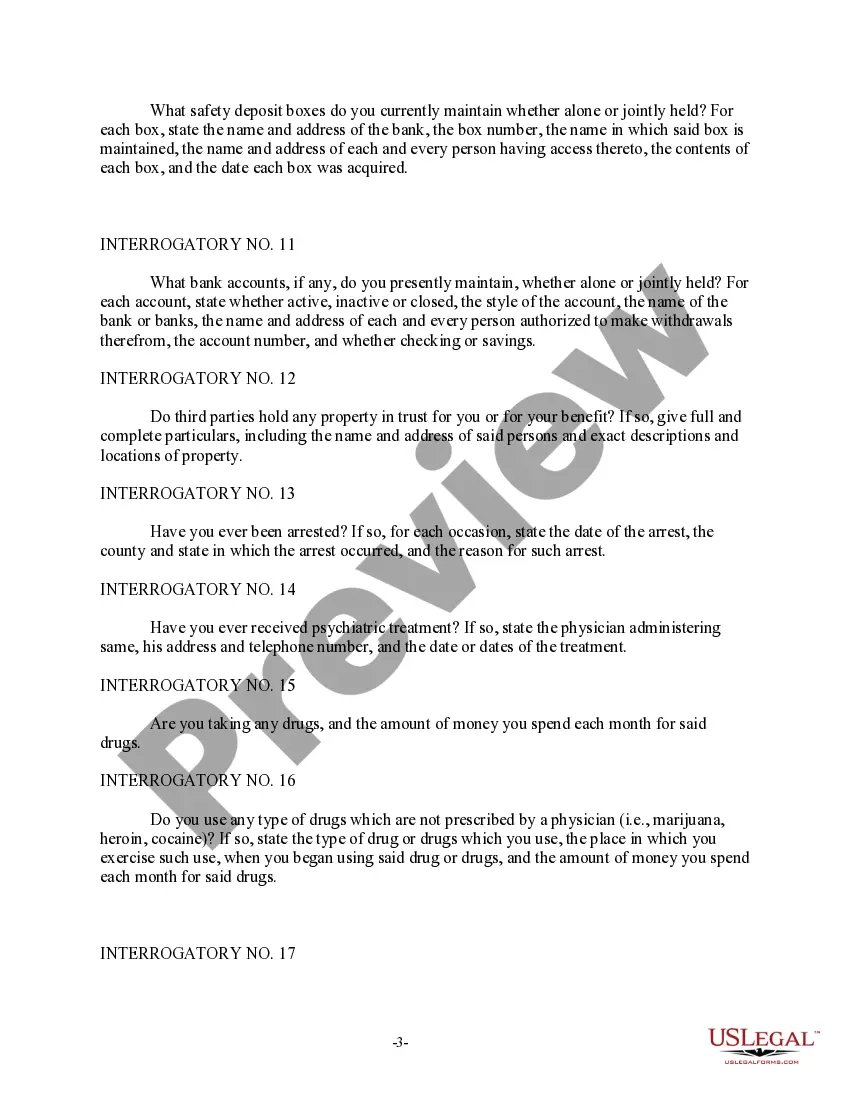
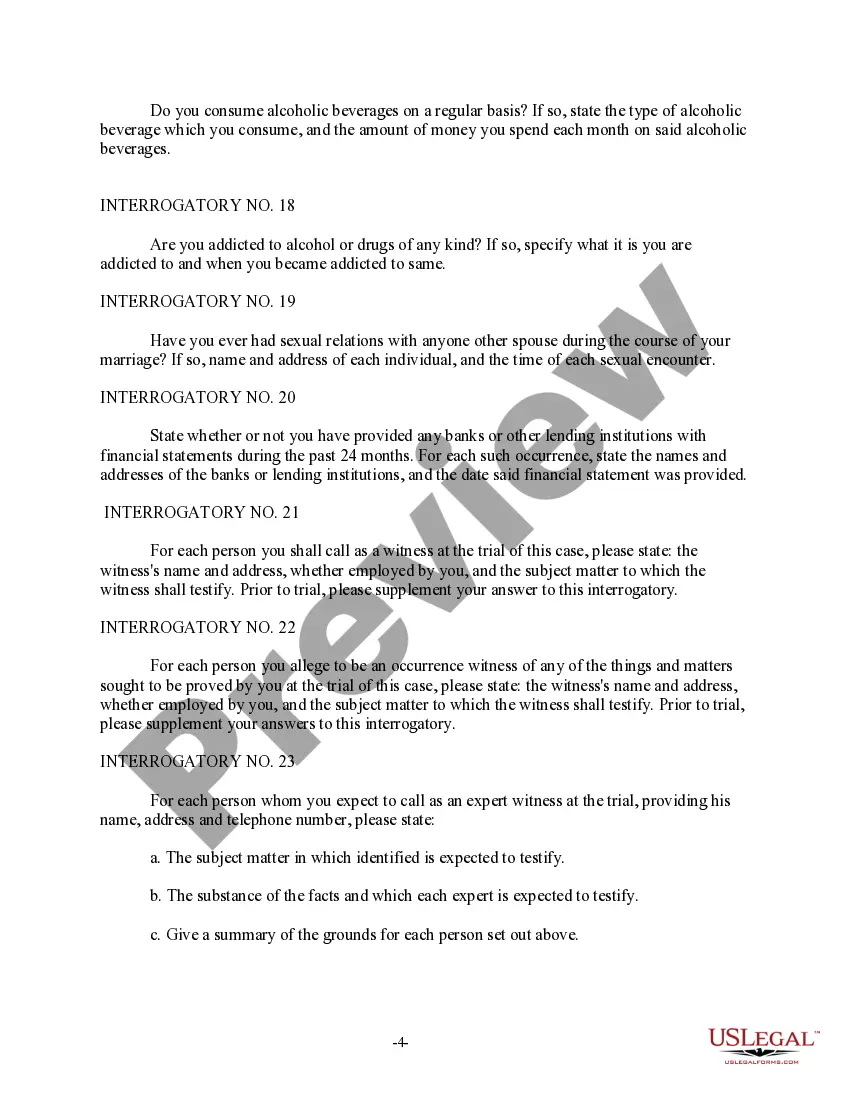
How to fill out Texas Discovery Interrogatories From Plaintiff To Defendant With Production Requests?
- Log in to your US Legal Forms account if you are already a member. Ensure your subscription is current; if it's expired, renew it to access the documents.
- If you are a new user, start by browsing the extensive online library. Use the search function to find the Texas interrogatories sample for your specific needs.
- Preview the document to verify that it fits your local jurisdiction's requirements and your case's particulars.
- Click the Buy Now button and select a subscription plan that best suits your legal needs. You will be required to create an account.
- Complete your payment using either a credit card or PayPal to finalize your subscription and gain access.
- Once the purchase is complete, download your Texas interrogatories sample directly to your device and keep it handy for easy reference in the future.
With US Legal Forms, you gain access to a robust collection of over 85,000 editable legal forms, providing unmatched convenience and support through premium expert assistance.
Start your legal journey with confidence by exploring US Legal Forms today and ensure that your documents are precise and ready for court.
Form popularity
FAQ
In interrogatories, you cannot ask questions that are irrelevant, overly broad, or invade a person’s privacy. Additionally, inquiries that would lead to privileged information are prohibited. Familiarizing yourself with the guidelines can help safeguard against such issues, and a Texas interrogatories sample for the case can provide insight into what constitutes appropriate queries. This way, you can craft interrogatories that comply with legal standards.
An example of an interrogatory could be, 'Please describe in detail the events leading up to the incident on specific date.' This question seeks specific information about your knowledge and involvement. Using a Texas interrogatories sample for the case can provide you with additional examples to better understand how these questions are typically framed, enhancing your preparation.
Formatting your answers to interrogatories requires clarity and consistency. Begin each answer on a new line or paragraph, clearly referencing the corresponding question number. This organization helps maintain a neat presentation and ease of reading. Checking a Texas interrogatories sample for the case can provide you with a good format to follow, ensuring your answers are well-structured.
Filling out an interrogatories form involves carefully reading each question and providing clear, precise answers. You should write your responses directly on the form, ensuring you answer every question unless you have valid objections. For guidance, a Texas interrogatories sample for the case can be a helpful resource to follow. This ensures you maintain the correct format and completeness.
To respond to interrogatories in Texas, you need to prepare your answers within the required timeframe, usually 30 days. Start by carefully reading each question, drafting your responses, and verifying the accuracy of your information. Remember to comply with Texas rules, referencing a Texas interrogatories sample for the case can aid in understanding the process. This ensures you provide complete and compliant answers.
The best way to answer interrogatories is to do so thoroughly and truthfully, while staying concise. Review each question carefully, then provide precise answers, referencing any relevant documents when applicable. It's also beneficial to follow a Texas interrogatories sample for the case to ensure consistency in your responses. This method can improve the effectiveness of your answers and strengthen your case.
To avoid answering interrogatories, you can file an objection, explaining your reasons clearly. Typically, parties refuse to answer if the questions are overly broad, irrelevant, or invade privacy. However, it's essential to base your objections on strong legal grounds to avoid sanctions. Utilizing a Texas interrogatories sample for the case can help you identify which questions you may challenge.
Writing good special interrogatories requires clear, focused questions that specifically address the facts of your case. Use a Texas interrogatories sample for the case to ensure your questions are direct and relevant. Avoid complex language and structure each question to elicit precise responses. Aim for clarity to help the other party provide the necessary information without confusion.
To object to interrogatories, first identify the valid reasons for doing so, such as being overly broad or irrelevant. Use a Texas interrogatories sample for the case to guide your objection wording. Clearly state your objection, and provide specific explanations for each point of contention. It is crucial to submit these objections within the required time frame to protect your legal rights.
When answering interrogatories, be thorough and precise in your responses. Refer to a Texas interrogatories sample for the case to understand how to structure your answers. Make sure to provide truthful information while avoiding any ambiguous language. If necessary, clarify your responses with additional details to ensure the requesting party has a complete understanding.