What Are The Rules For Intestate Succession
Description
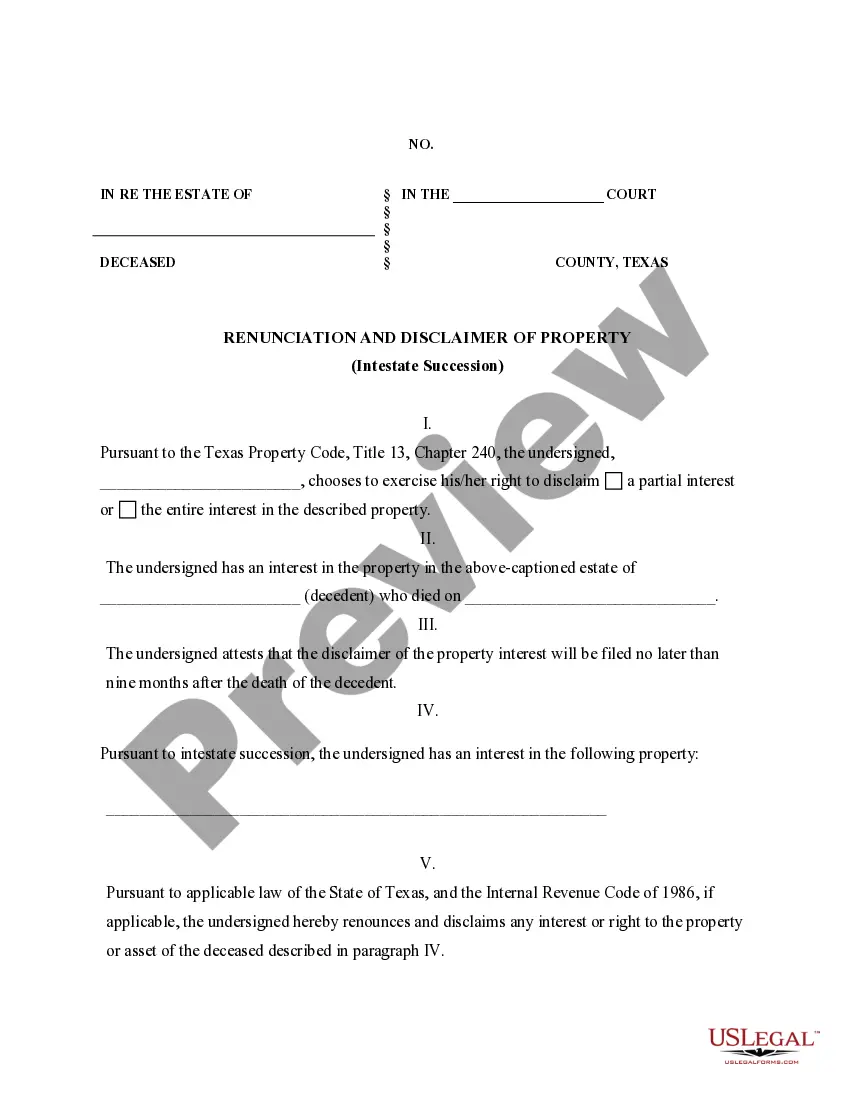
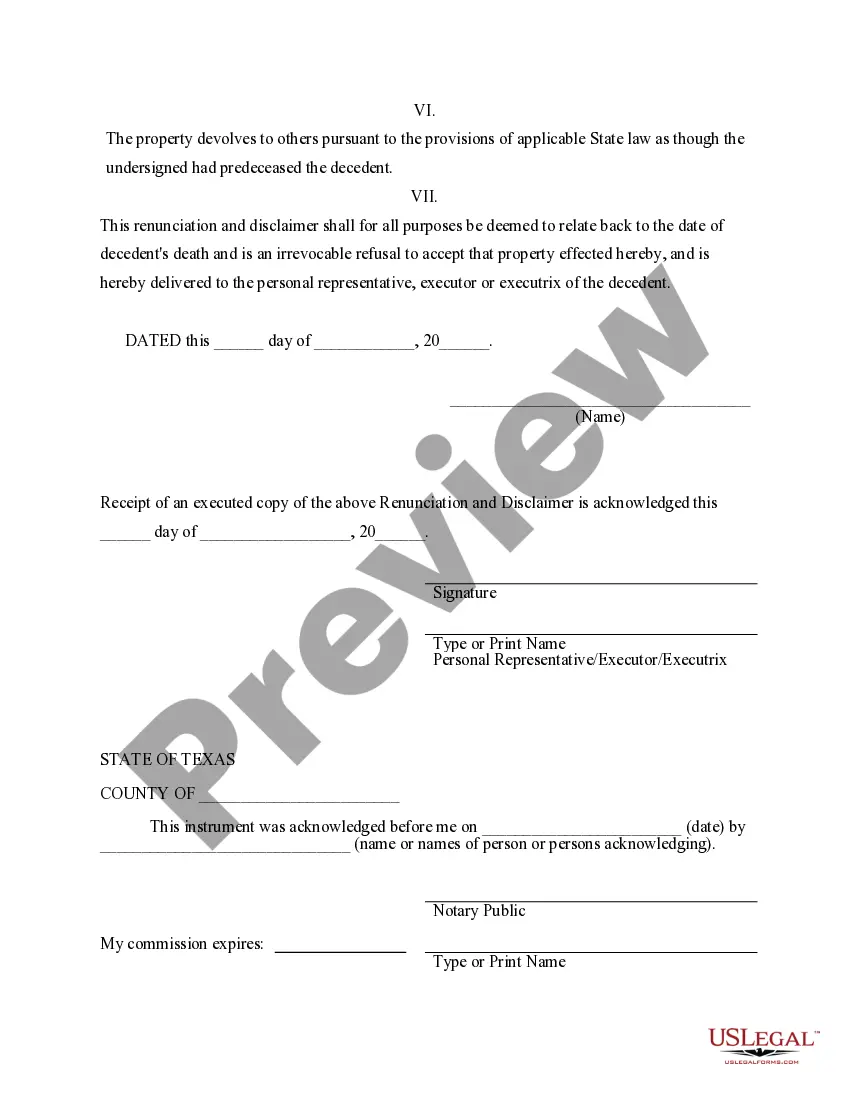
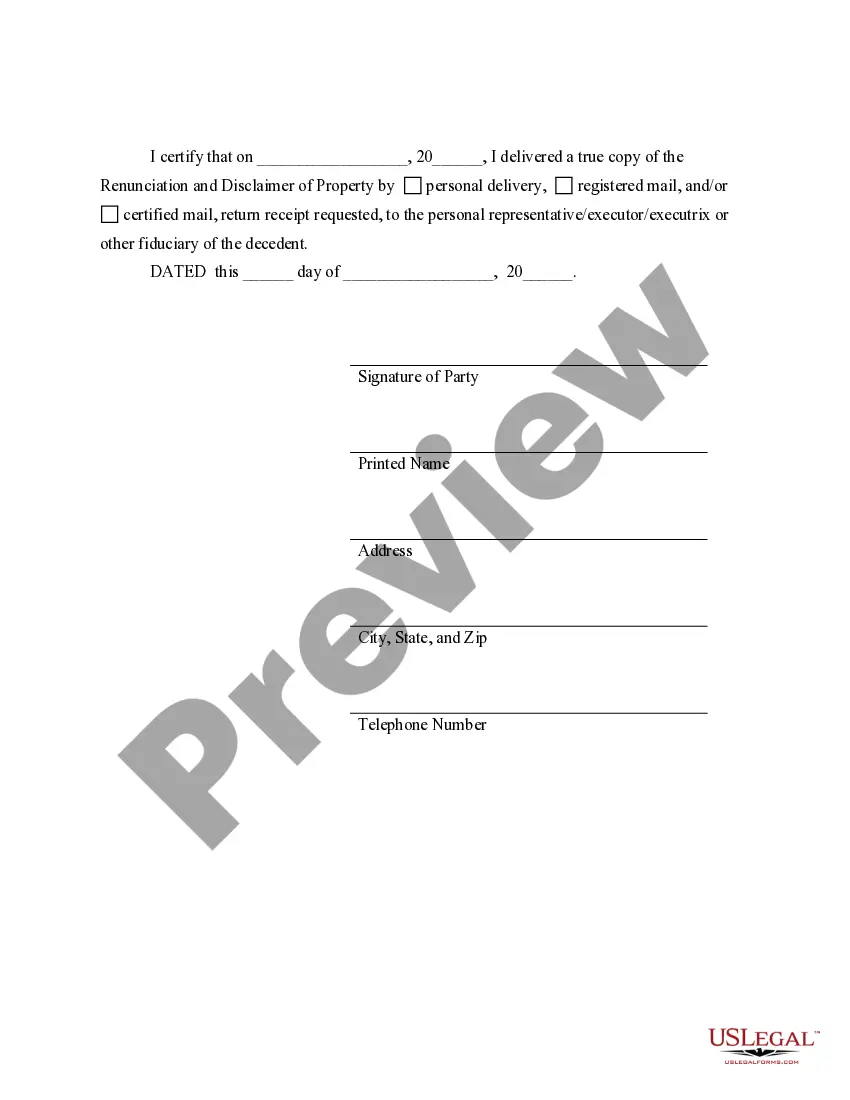
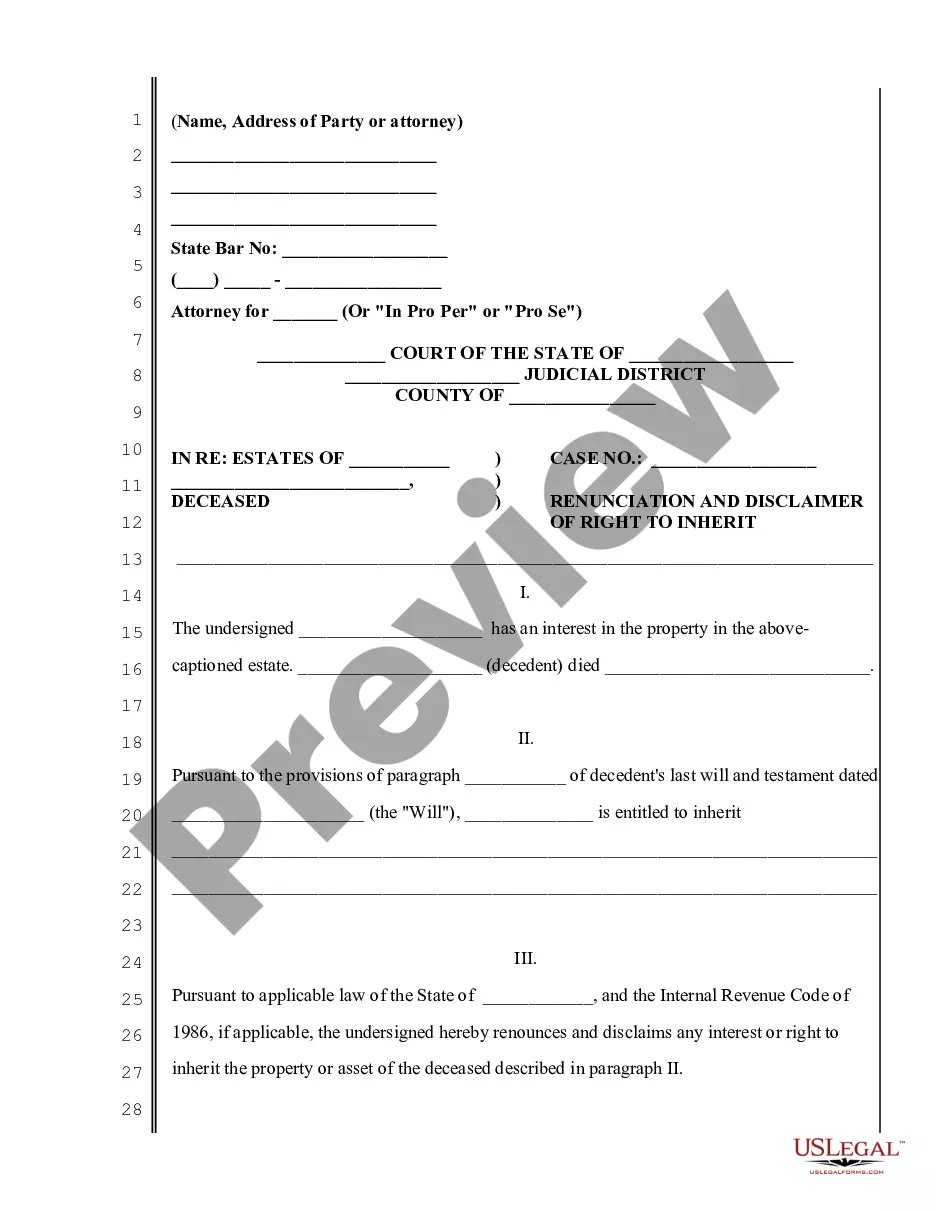
How to fill out Texas Renunciation And Disclaimer Of Property Received By Intestate Succession?
- If you're a returning user, log in to your account. Ensure your subscription is active, or renew it if necessary.
- For first-time users, start by checking the Preview mode and description of the desired form to verify it meets your requirements and local jurisdiction.
- If adjustments are needed, utilize the Search feature to find the right template. Once you confirm it's suitable, proceed to the next step.
- To purchase the document, click the Buy Now button and select your preferred subscription plan. You'll need to create an account to access the document library.
- Complete your purchase by entering your payment details, either through credit card or PayPal.
- Finally, download the completed form onto your device for easy access later in your My Forms section.
US Legal Forms provides a robust collection of legal forms, enabling users to efficiently complete critical documents. With over 85,000 forms available, you're likely to find exactly what you need.
Start your legal document preparation today—visit US Legal Forms and empower yourself with expert resources for legally sound documents!
Form popularity
FAQ
To get heir property in your name without having a will, you must follow the intestacy laws in your state, which outline the distribution of assets. You might need to file a petition for probate to clarify your claim to the property. It’s advisable to consult legal resources or professionals to assist with this process. US Legal Forms can provide templates and guides to help navigate the complexities of intestate succession.
The principles of intestate succession involve determining how assets are allocated to relatives based on established laws. Key principles include the prioritization of immediate family and the division of assets across various beneficiary categories. Knowing these principles can help you understand your potential claims on an estate. US Legal Forms offers tools to simplify this process and ensure you are well-informed.
The rules of intestacy in the United States are designed to ensure that a deceased person's assets are transferred to their closest relatives. These rules typically specify a hierarchy of beneficiaries, starting with the spouse and children, followed by parents and siblings if no direct descendants exist. Familiarizing yourself with these rules is essential for understanding what happens to an estate when no will exists. For personalized assistance, consider exploring the resources at US Legal Forms.
When a person dies without leaving a valid will, they are said to have died intestate. This condition triggers the intestacy laws of their state, which dictate how their estate will be divided among surviving family members. It’s crucial to understand these rules for intestate succession, as they can significantly affect your rights to inheritance. Utilizing resources like US Legal Forms can help demystify the process.
The laws of intestacy in the United States determine how a deceased person's assets are distributed when there is no valid will. These laws vary by state, but generally prioritize family members such as spouses, children, and parents. Understanding these laws can help you navigate the complex process of inheritance. For those seeking clarity, US Legal Forms can provide resources and guidance.
When a person dies intestate, several problems can arise, primarily the lack of clarity regarding asset distribution. Without a will, family members may disagree on who should inherit what, often leading to lengthy legal battles. Furthermore, the process can take longer as the court must follow state intestate succession laws. Familiarizing yourself with what are the rules for intestate succession can empower you to take proactive steps and secure your family's future.
Not having a will can complicate the process of distributing your assets after death. In such cases, state laws will determine the distribution based on intestate rules, often leaving loved ones uncertain about their inheritance. Additionally, without a will, you cannot appoint guardians for your children or specify your preferences for end-of-life care. Knowing what are the rules for intestate succession can help you avoid these complications.
Intestate succession can lead to unintended consequences for families. When someone dies without a will, their estate is distributed according to state laws, which may not reflect their wishes. This can create confusion, conflict among heirs, and delays in asset distribution. To avoid these issues, it is wise to understand what are the rules for intestate succession and consider creating a will.
No, an executor cannot unilaterally decide who receives assets if there is no will. In situations of intestate succession, state law dictates how assets are distributed among heirs. Typically, this means that the deceased's estate is divided among family members according to established rules of intestate succession. Understanding what these rules entail can help clarify expectations and avoid disputes.
The order of priority of succession specifies who inherits first when someone dies intestate. Generally, this order begins with the surviving spouse and children, then moves on to parents, siblings, and more distant relatives. This priority ensures that close family members benefit from the estate first. By understanding this order, you can effectively navigate your potential inheritance journey.