Texas States
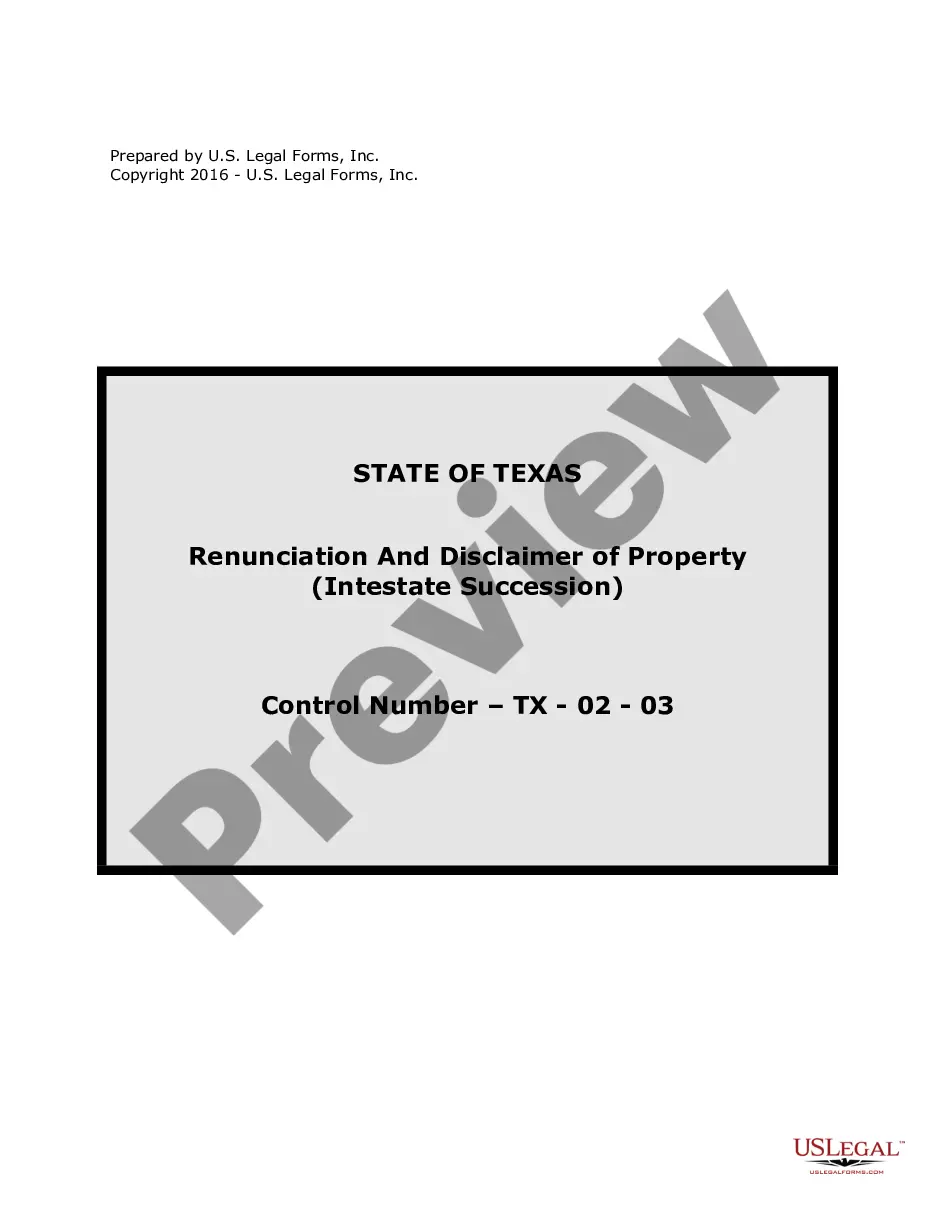
Description
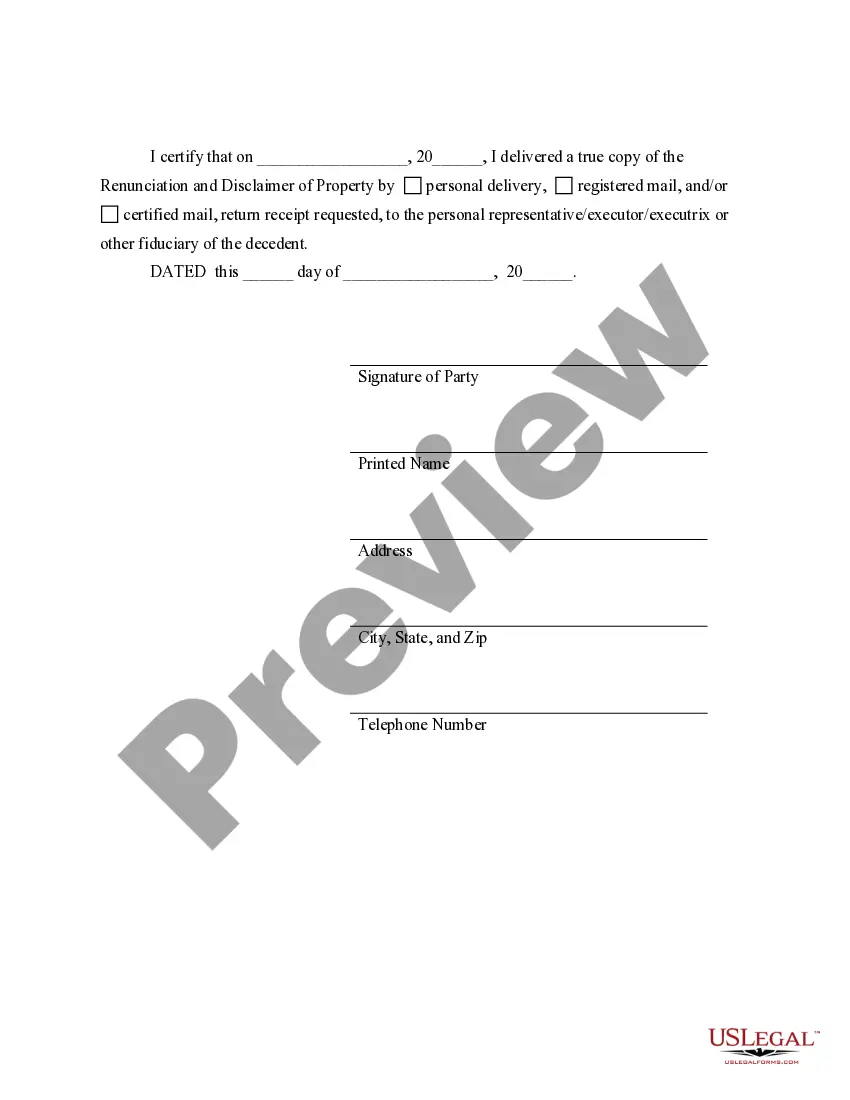
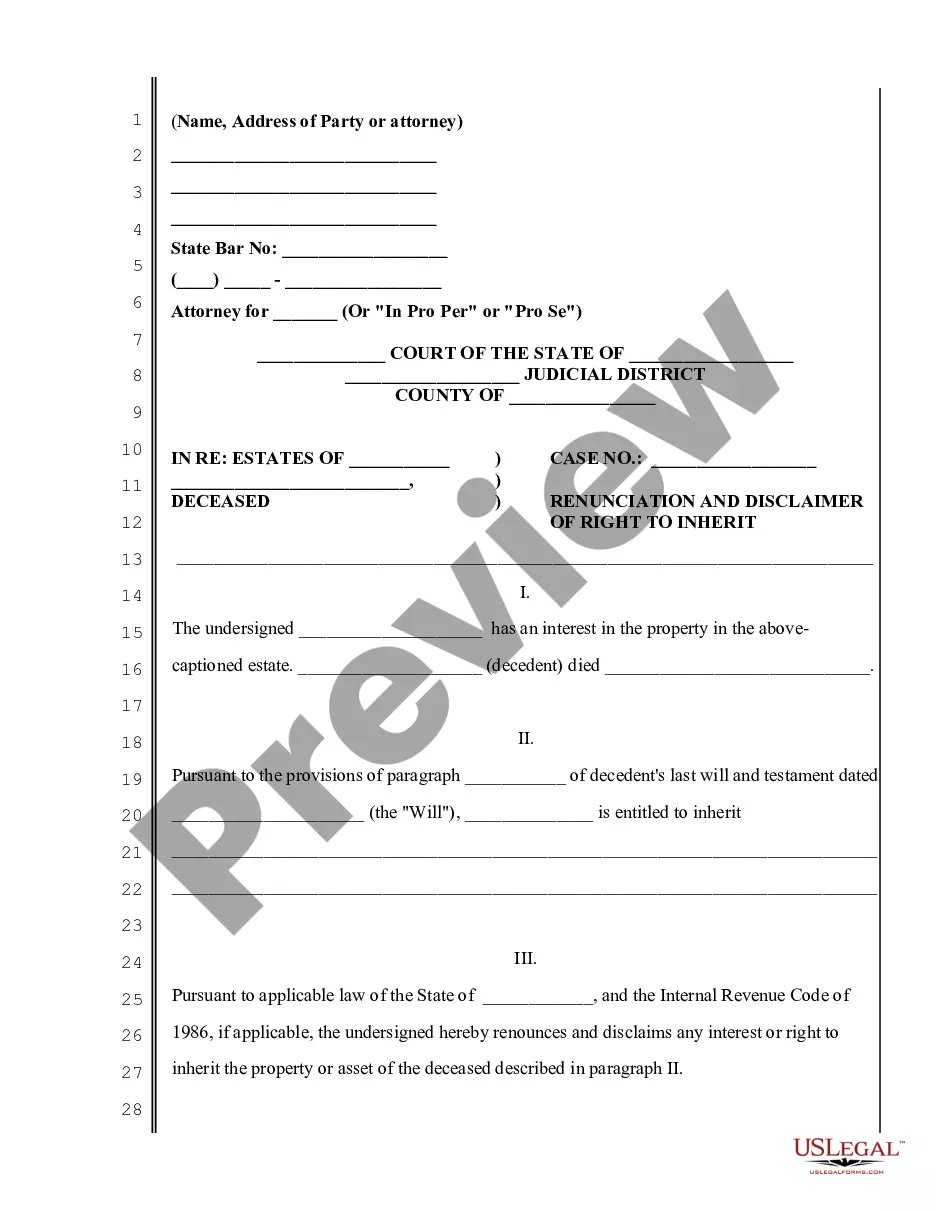
Get your form ready online
Our built-in tools help you complete, sign, share, and store your documents in one place.
Make edits, fill in missing information, and update formatting in US Legal Forms—just like you would in MS Word.
Download a copy, print it, send it by email, or mail it via USPS—whatever works best for your next step.
Sign and collect signatures with our SignNow integration. Send to multiple recipients, set reminders, and more. Go Premium to unlock E-Sign.
If this form requires notarization, complete it online through a secure video call—no need to meet a notary in person or wait for an appointment.
We protect your documents and personal data by following strict security and privacy standards.

Make edits, fill in missing information, and update formatting in US Legal Forms—just like you would in MS Word.

Download a copy, print it, send it by email, or mail it via USPS—whatever works best for your next step.

Sign and collect signatures with our SignNow integration. Send to multiple recipients, set reminders, and more. Go Premium to unlock E-Sign.

If this form requires notarization, complete it online through a secure video call—no need to meet a notary in person or wait for an appointment.

We protect your documents and personal data by following strict security and privacy standards.
Looking for another form?




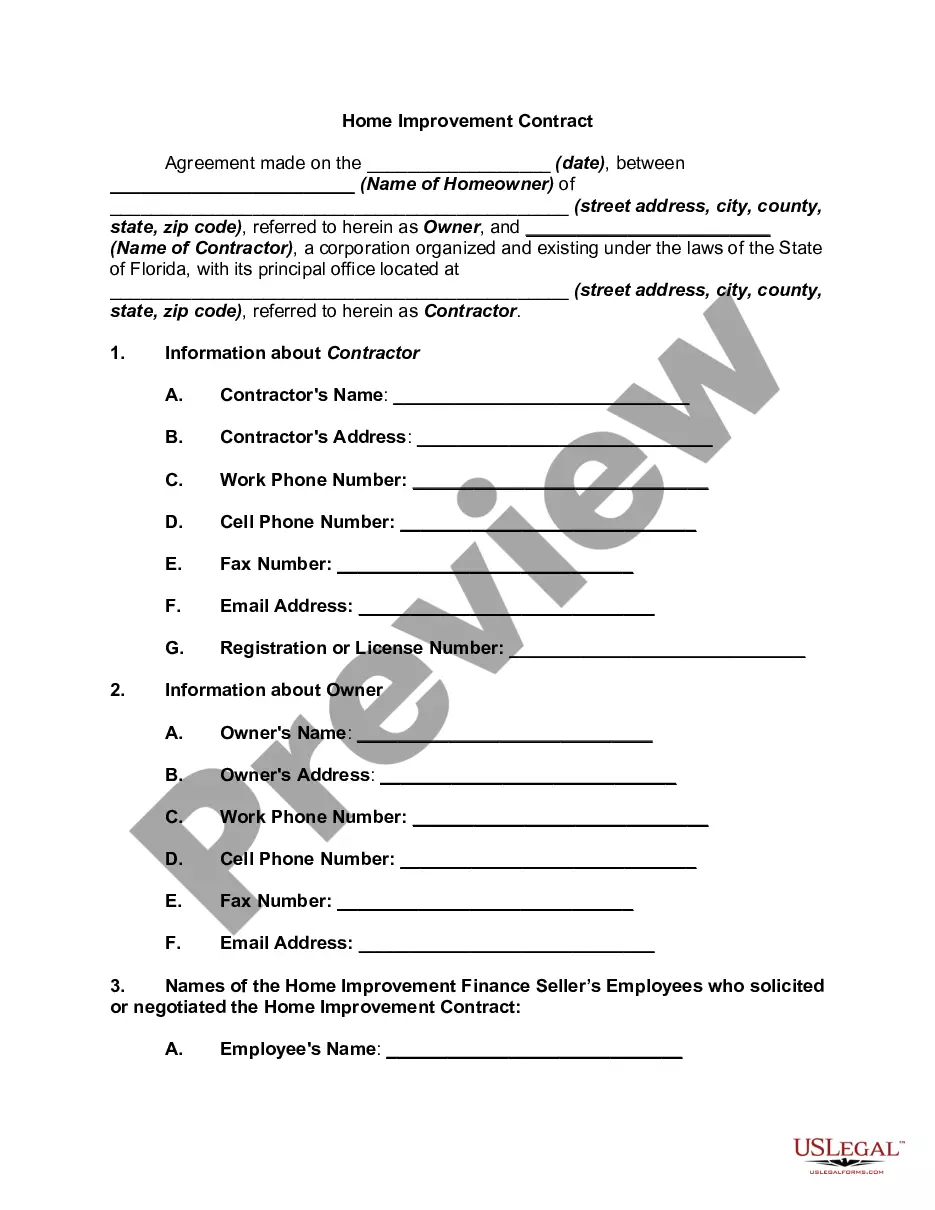



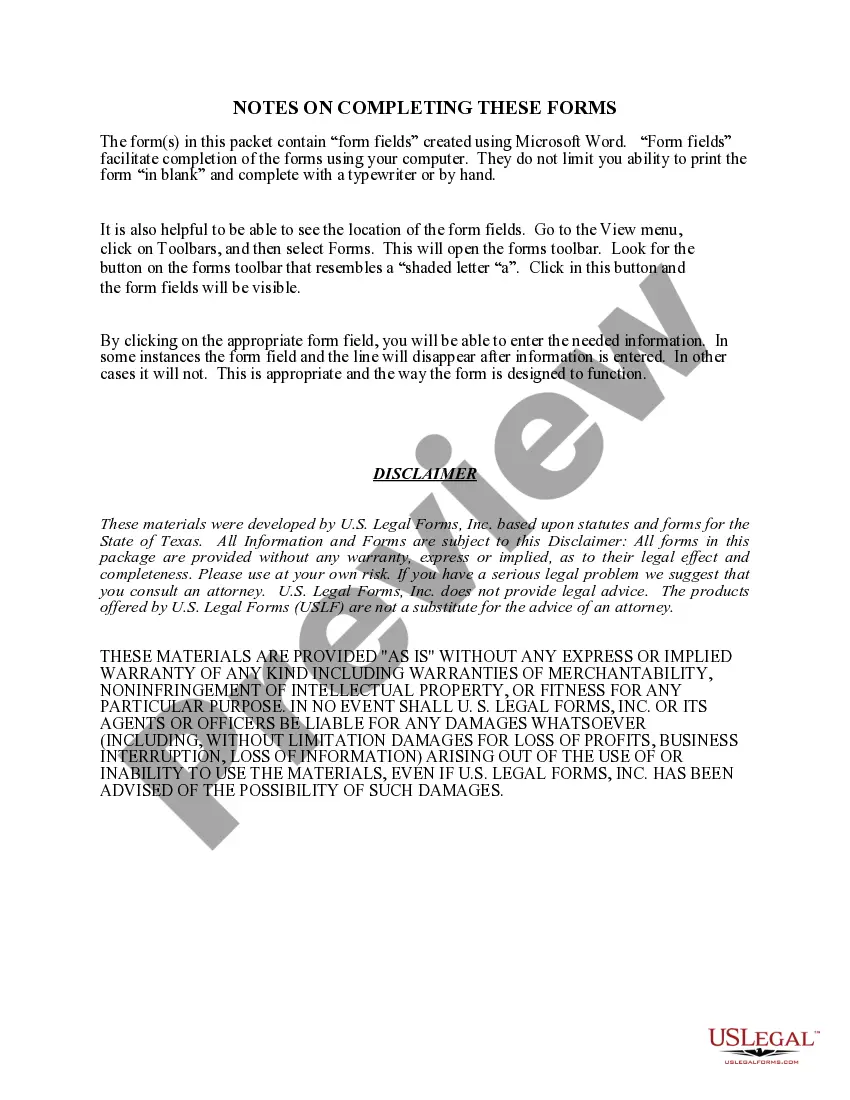
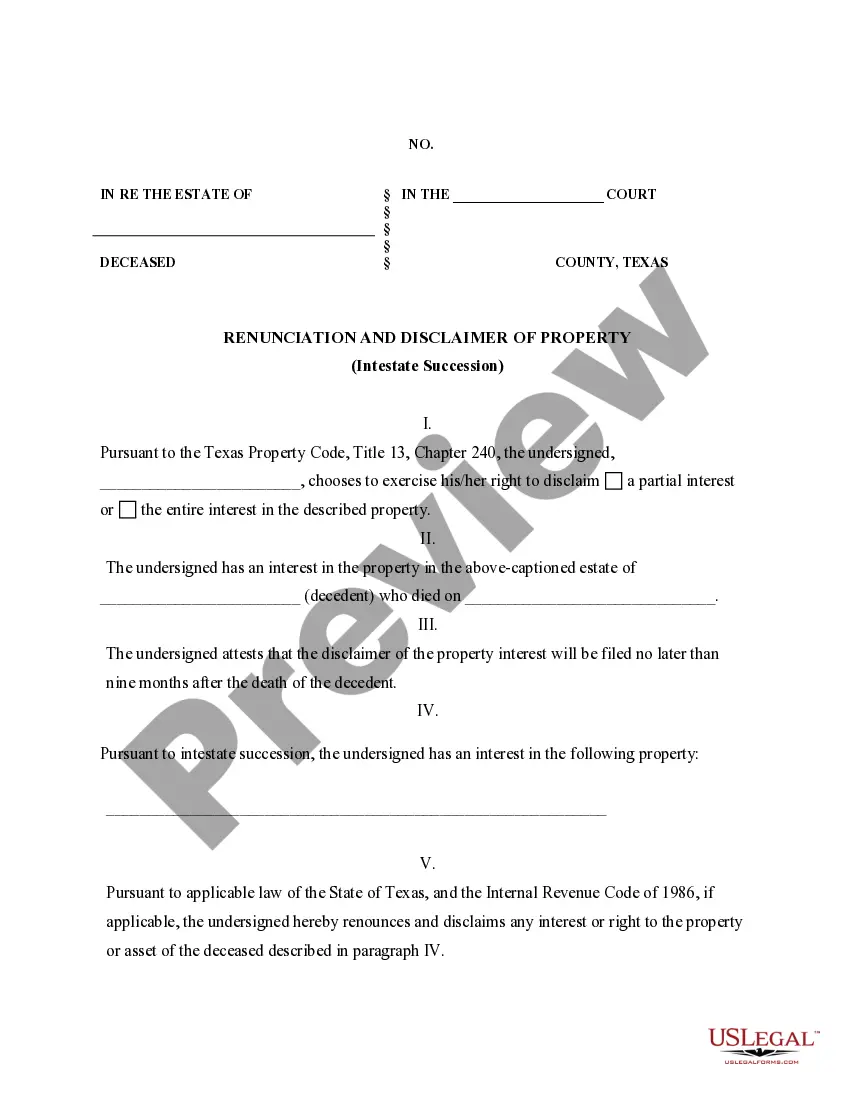
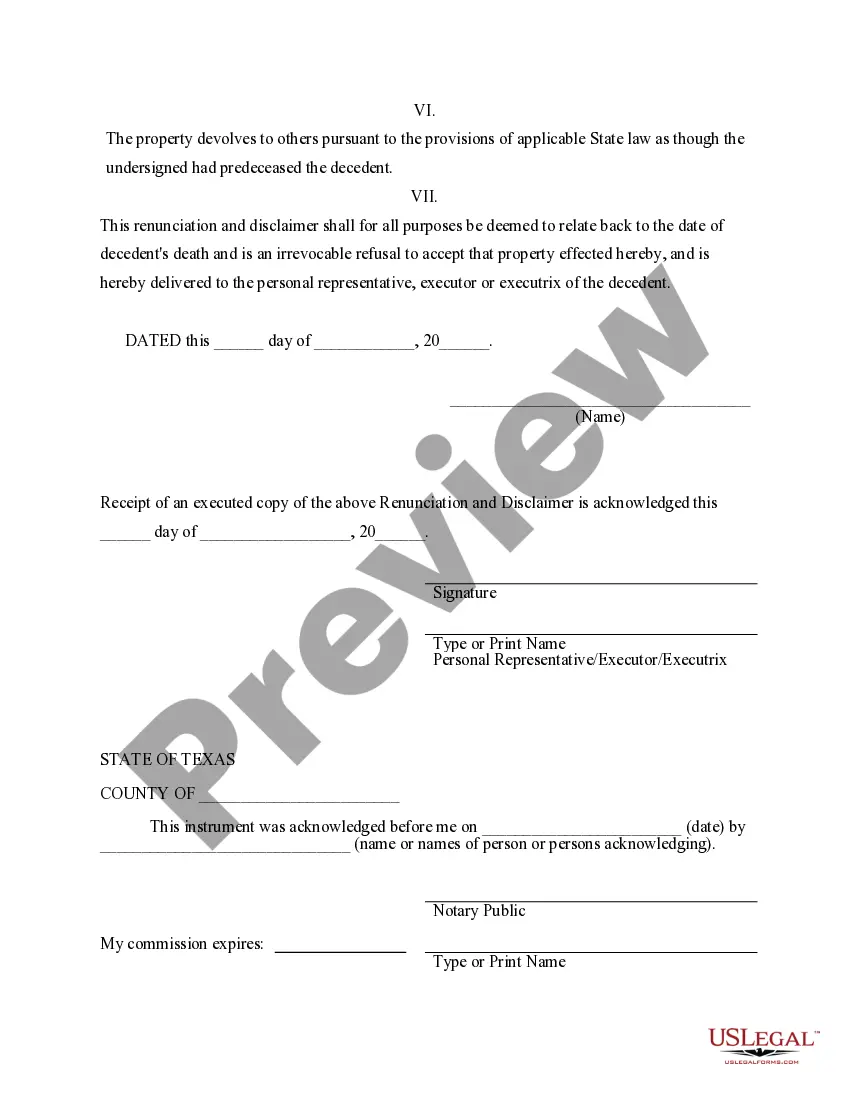
How to fill out Texas Renunciation And Disclaimer Of Property Received By Intestate Succession?
- Log in to your US Legal Forms account if you are a returning user. Ensure your subscription is active, renewing it if necessary.
- For first-time users, start by browsing the extensive form collection to find the document that corresponds with your needs and local jurisdiction.
- Use the preview mode to carefully review form descriptions and ensure accuracy before proceeding.
- In case you can’t find the right form, utilize the search function to locate other templates quickly.
- Once you've chosen the necessary form, click the Buy Now button and select your preferred subscription plan. Registration is required to access all resources.
- Complete your purchase by entering your payment details through credit card or PayPal.
- Download your chosen form to your device. You can revisit it anytime under the My Forms section in your account.
By following these steps, you can effortlessly secure the legal documents you need in Texas states. US Legal Forms is dedicated to ensuring that your experience is smooth and efficient.
Start exploring legal forms now and ensure you have the right documents at your fingertips!
Form popularity
FAQ
Yes, while Texas does not require a personal income tax filing, there are several state filing requirements for businesses. For instance, sales tax and franchise tax filings are mandatory for Texas states. Understanding these requirements is crucial for maintaining compliance and avoiding penalties. If you need assistance, consider reaching out to platforms like uslegalforms for guidance.
To obtain a Texas state file number, you need to register your business with the Texas Secretary of State. This process ensures that your business is recognized within Texas states. Once registered, you will receive your state file number, which is essential for tax purposes and business identification. Utilizing services like uslegalforms can streamline this process.
Failing to file your taxes in Texas can lead to significant consequences. Although there is no state income tax in Texas states, not filing other applicable taxes could result in penalties or interest. Even missing deadlines can complicate your tax situation and lead to legal problems. Always consider filing your taxes on time to avoid further complications.
To determine whether you must file taxes in Texas states, consider your filing status and gross income. If your income meets or exceeds the federal IRS limits for your situation, filing is necessary. Remember that while Texas does not have a state income tax, you still need to file federal taxes. Stay informed and compliant to avoid any issues.
In Texas states, the minimum income amount for filing federal taxes can vary based on your filing status. Generally, if your income exceeds a certain threshold, you will likely need to file. For details, check the IRS guidelines for specific income limits. Knowing these thresholds will help ensure you comply with tax regulations.
While Texas does not have a state income tax, residents may still need to file other types of state taxes. This includes sales tax and franchise tax for businesses operating in Texas states. It's essential to understand which taxes apply to your particular situation. You can find guidance on this through state resources or platforms like uslegalforms.
No, Texas is one of the few states that does not impose a personal income tax. Residents of Texas states do not need to fill out state income tax forms. This can greatly simplify the tax filing process for individuals and families living in Texas. However, they should still be aware of federal income tax obligations.
Yes, Texas requires certain businesses to file annual reports. This helps the state keep track of businesses operating within Texas states. Depending on your business structure, you may need to submit reports with specific information by a deadline. Failing to file can lead to penalties or administrative dissolution.
Two common forms of proof of Texas residency include a utility bill with your name and Texas address and a lease agreement that includes your name along with the property address. Other valid proofs can be bank statements or official government correspondence sent to your Texas address. Having these documents readily available can ease the ID application process, connecting you further to the Texas states.
To obtain a Texas ID on the same day, you need to visit a Texas Department of Public Safety (DPS) office that offers same-day services. Be sure to bring all required documents to verify your identity and residency, as having everything prepared increases your chances of a quick approval. While same-day services are available, timings may vary, so checking ahead is wise. Use our platforms to find the latest information and forms needed for a smooth experience.