Texas Enhanced Individual For Llc
Description



Get your form ready online
Our built-in tools help you complete, sign, share, and store your documents in one place.
Make edits, fill in missing information, and update formatting in US Legal Forms—just like you would in MS Word.
Download a copy, print it, send it by email, or mail it via USPS—whatever works best for your next step.
Sign and collect signatures with our SignNow integration. Send to multiple recipients, set reminders, and more. Go Premium to unlock E-Sign.
If this form requires notarization, complete it online through a secure video call—no need to meet a notary in person or wait for an appointment.
We protect your documents and personal data by following strict security and privacy standards.

Make edits, fill in missing information, and update formatting in US Legal Forms—just like you would in MS Word.

Download a copy, print it, send it by email, or mail it via USPS—whatever works best for your next step.

Sign and collect signatures with our SignNow integration. Send to multiple recipients, set reminders, and more. Go Premium to unlock E-Sign.

If this form requires notarization, complete it online through a secure video call—no need to meet a notary in person or wait for an appointment.

We protect your documents and personal data by following strict security and privacy standards.
Looking for another form?
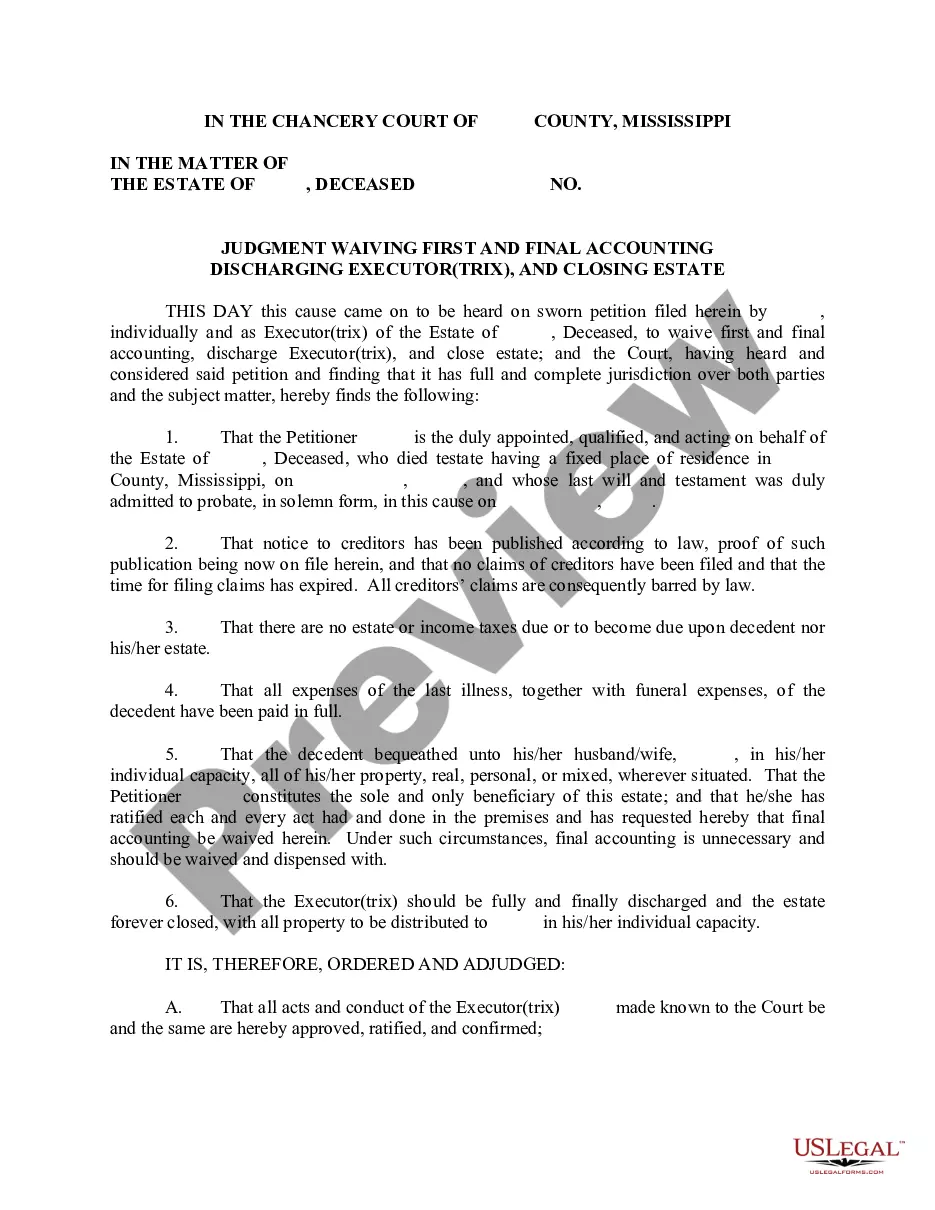







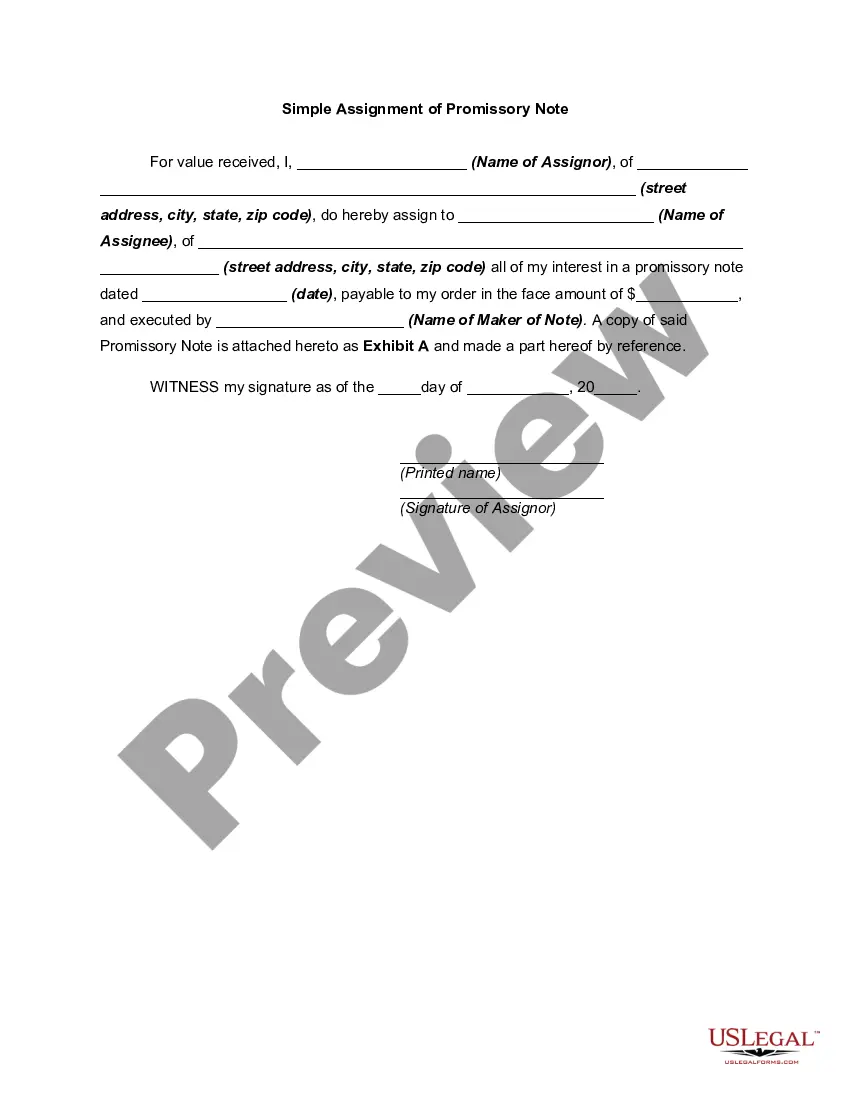
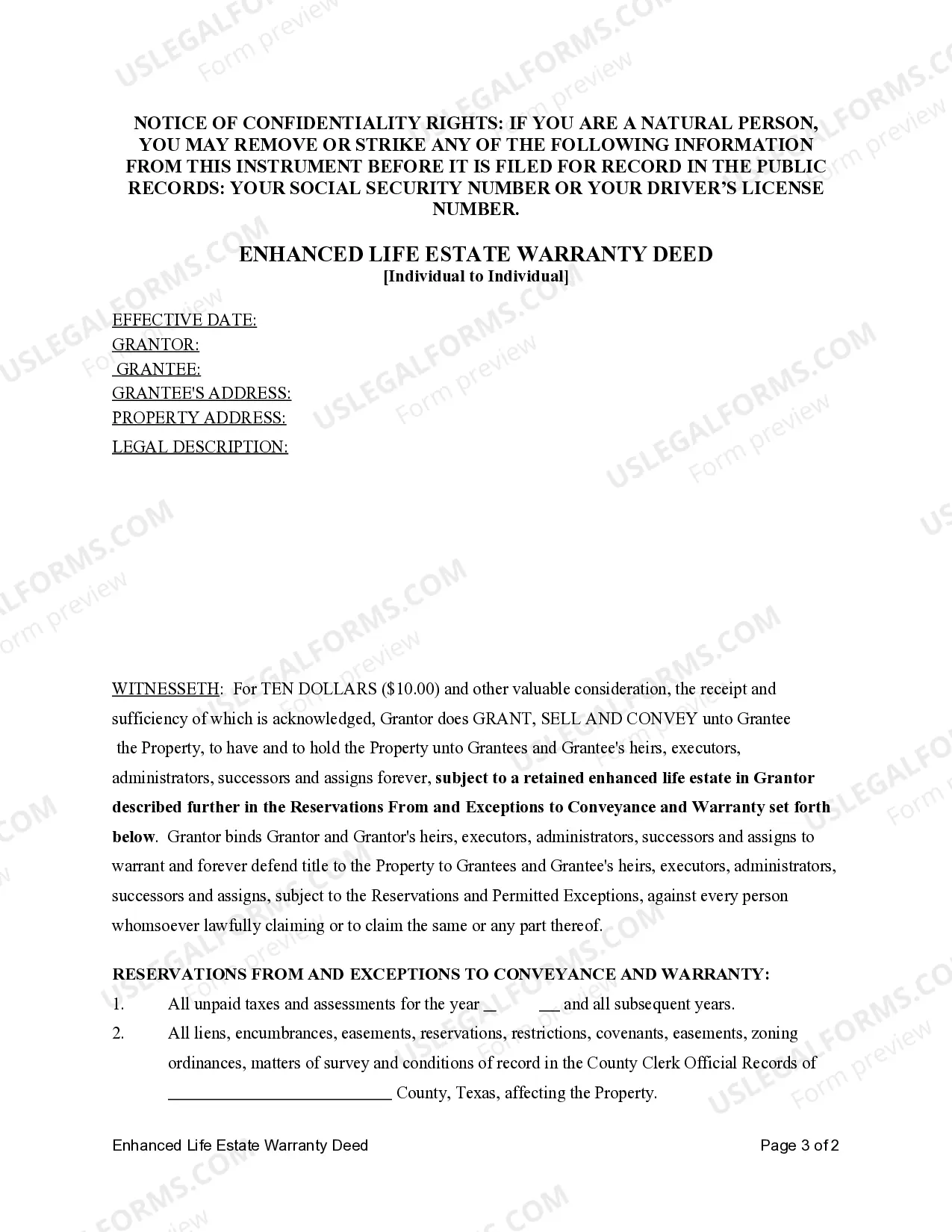
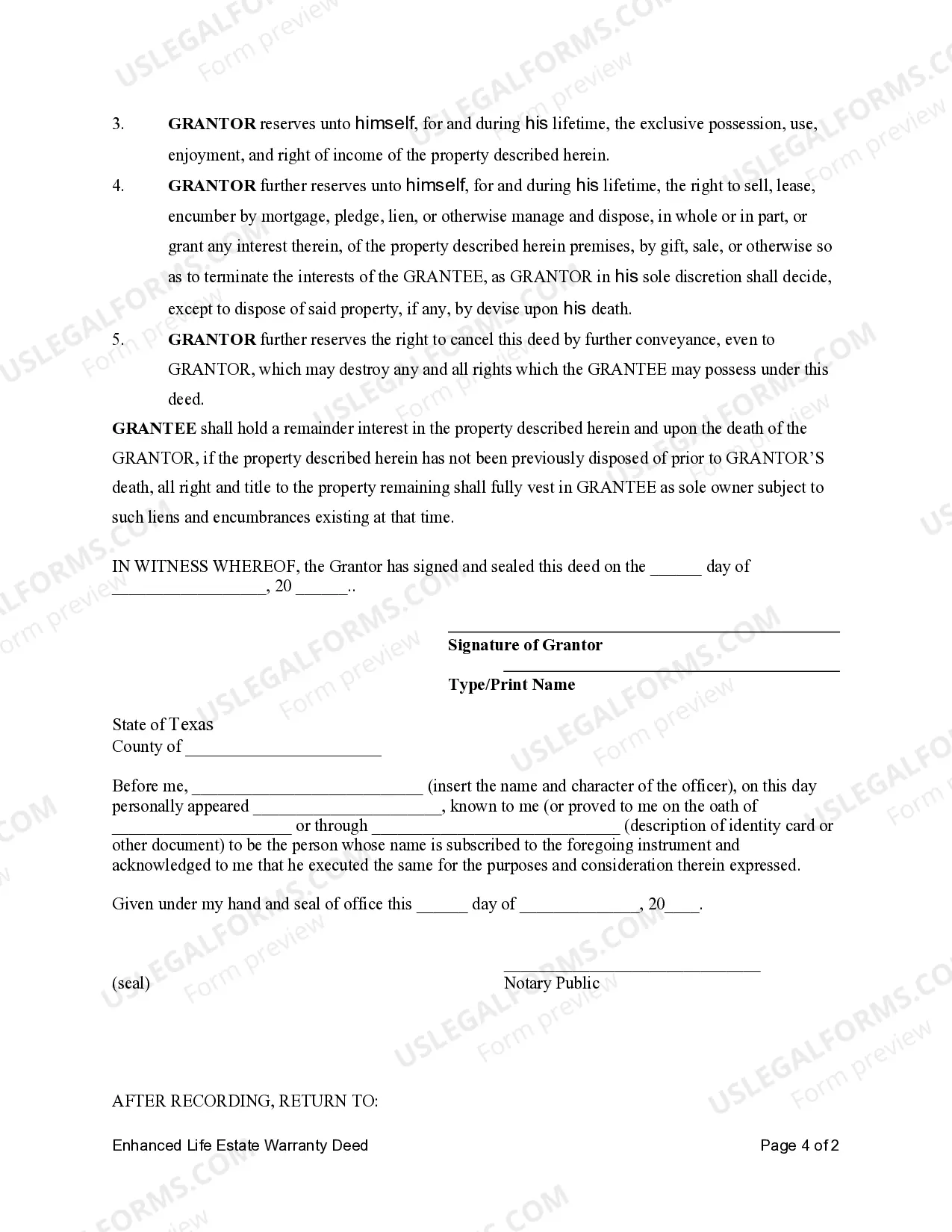
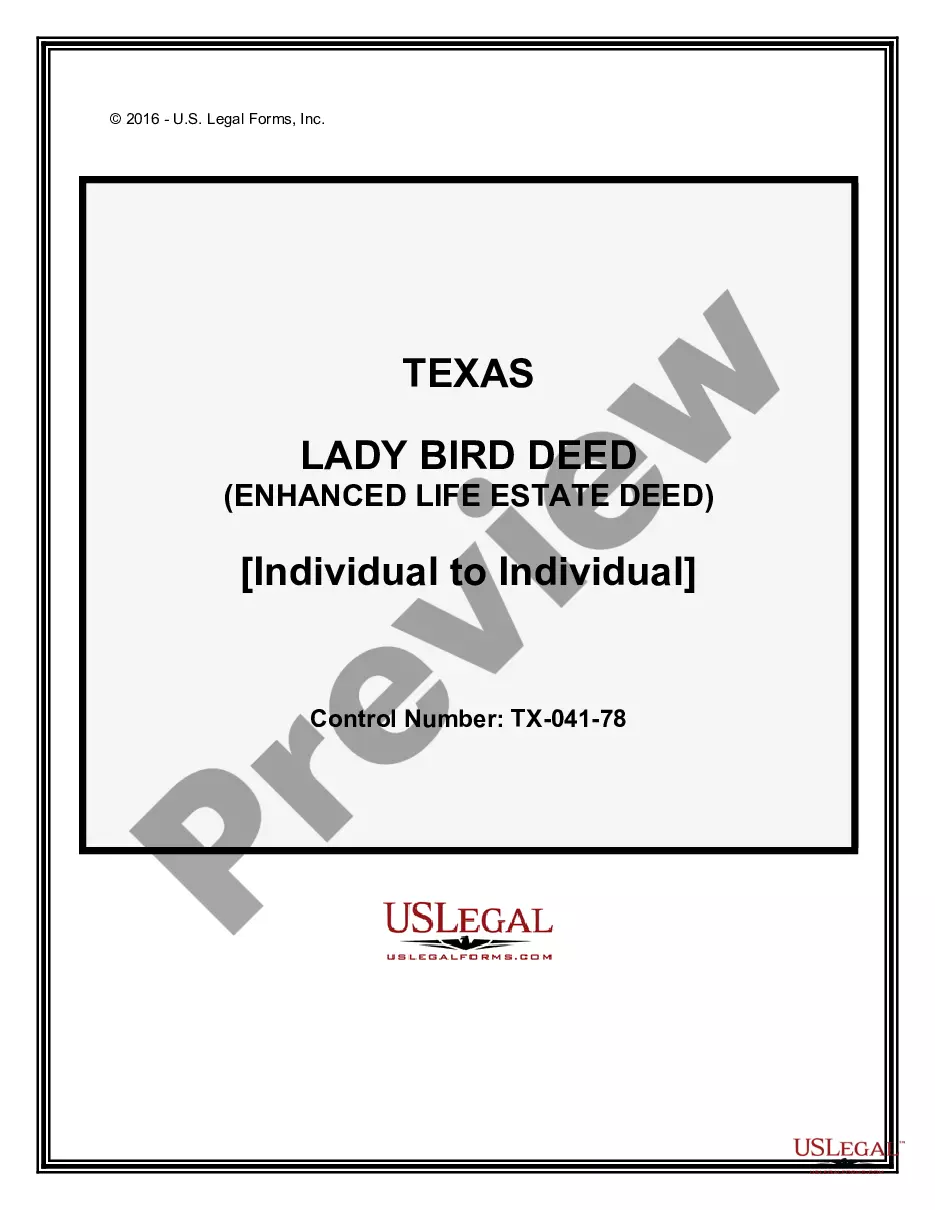
How to fill out Texas Lady Bird Or Enhanced Life Estate Warranty Deed - Individual To Individual?
- Log in to your US Legal Forms account if you're a returning user and download your required form by clicking the Download button. Ensure your subscription is current; if not, renew it according to your payment plan.
- For first-time users, start by checking the Preview mode and form description. Confirm that you've selected the correct document that aligns with your specific requirements and local jurisdiction.
- If the selected template doesn’t suit your needs, use the Search tab to find another option that fits better. Once you identify the right document, proceed to the next step.
- Purchase your document by clicking the Buy Now button and selecting the preferred subscription plan. You will need to create an account for full access to the library.
- Complete your purchase by entering your payment details, either via credit card or PayPal.
- Finally, download your form to your device. You can later access it anytime from the My Forms section of your profile.
In conclusion, US Legal Forms makes it straightforward to execute legal documents effectively and efficiently. With an extensive library and professional assistance available, you can ensure your paperwork is completed correctly.
Start your journey today and simplify your legal document needs with US Legal Forms!
Form popularity
FAQ
Setting up an LLC in Texas by yourself is an achievable goal. First, select a name for your LLC and confirm its availability through the Secretary of State's website. Then, complete and file the Certificate of Formation, which you can easily do online or by mail. Consider using US Legal Forms, which provides user-friendly templates and support specifically designed for individuals navigating the Texas enhanced individual for LLC formation.
To form an LLC in Texas, start by choosing a unique name that includes 'Limited Liability Company' or its abbreviation. Next, file the Certificate of Formation with the Texas Secretary of State, providing necessary information about your LLC. After that, create an operating agreement to outline the management structure and roles. Finally, obtain any required licenses and permits to ensure compliance with local regulations. Utilizing the US Legal Forms platform can streamline this process, offering templates and guidance tailored for Texas enhanced individual for LLC.
To add someone to your LLC in Texas, you need to amend your Articles of Organization to reflect the new member. This process requires you to file the appropriate forms with the Texas Secretary of State. Once the amendment is approved, ensure that your operating agreement is updated to include the new member's rights and responsibilities. Using platforms like US Legal Forms can help you draft and submit these documents smoothly, particularly when managing a Texas enhanced individual for LLC.
You can indeed be your own registered agent for your LLC in Texas, provided you fulfill the necessary requirements. This approach allows for greater convenience, as you can oversee all legal correspondence. As a Texas enhanced individual for LLC, you maintain greater control over your business operations and ensure compliance with state regulations.
Yes, the owner of an LLC can also serve as the registered agent in Texas. This setup is often ideal for single-member LLCs, as it simplifies communications. By assuming both roles, you streamline your responsibilities as a Texas enhanced individual for LLC.
Yes, Texas allows the formation of single-member LLCs. This structure permits one individual to own and operate the business without needing a partner. As a Texas enhanced individual for LLC, you can enjoy the benefits of personal liability protection while maintaining full control over your enterprise.
Yes, you can serve as your own registered agent in Texas if you meet the state's criteria. Being your own registered agent offers flexibility and direct control over your LLC's legal affairs. However, consider the importance of being available during business hours to receive essential documents as a Texas enhanced individual for LLC.
Yes, a registered agent must be located in the same state where the LLC is formed, which in this case is Texas. This requirement ensures that your business can receive important legal documents promptly. It is crucial for maintaining compliance and ensuring smooth operations as a Texas enhanced individual for LLC.
To become your own registered agent in Texas, you must be a resident of the state and at least 18 years old. You will need to provide your name and address during the registration process for your LLC. As a Texas enhanced individual for LLC, you take on the responsibility of receiving legal documents and notifications for your business.
Yes, you can add someone to your LLC in Texas, provided you follow the necessary steps outlined in your operating agreement. This includes discussing the roles of the new member, updating the agreement, and possibly filing paperwork with the state. If you are a Texas enhanced individual for LLC, this process can help strengthen your business's foundation and promote growth.