Life Estate Language For Deed
Description
Get your form ready online
Our built-in tools help you complete, sign, share, and store your documents in one place.
Make edits, fill in missing information, and update formatting in US Legal Forms—just like you would in MS Word.
Download a copy, print it, send it by email, or mail it via USPS—whatever works best for your next step.
Sign and collect signatures with our SignNow integration. Send to multiple recipients, set reminders, and more. Go Premium to unlock E-Sign.
If this form requires notarization, complete it online through a secure video call—no need to meet a notary in person or wait for an appointment.
We protect your documents and personal data by following strict security and privacy standards.

Make edits, fill in missing information, and update formatting in US Legal Forms—just like you would in MS Word.

Download a copy, print it, send it by email, or mail it via USPS—whatever works best for your next step.

Sign and collect signatures with our SignNow integration. Send to multiple recipients, set reminders, and more. Go Premium to unlock E-Sign.

If this form requires notarization, complete it online through a secure video call—no need to meet a notary in person or wait for an appointment.

We protect your documents and personal data by following strict security and privacy standards.
Looking for another form?







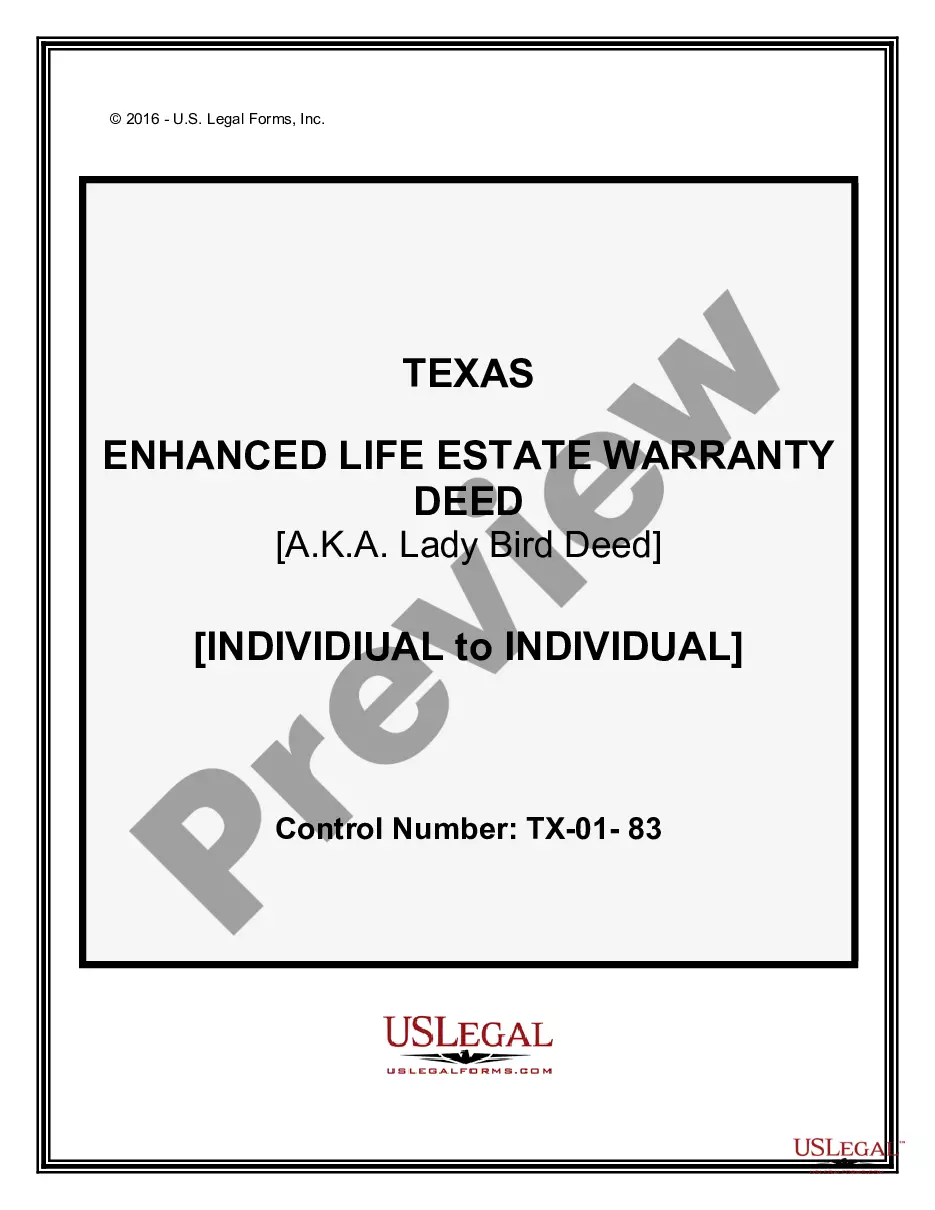
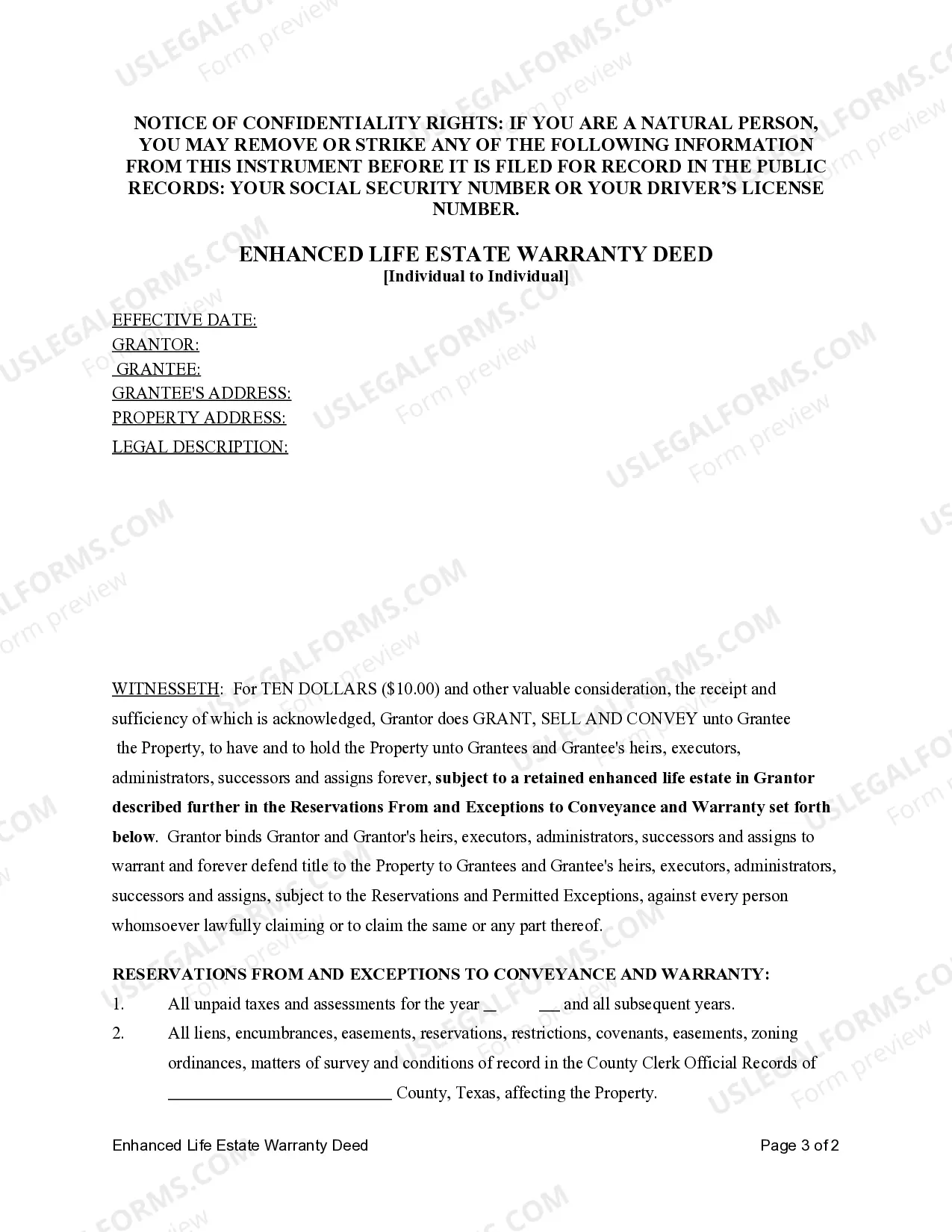
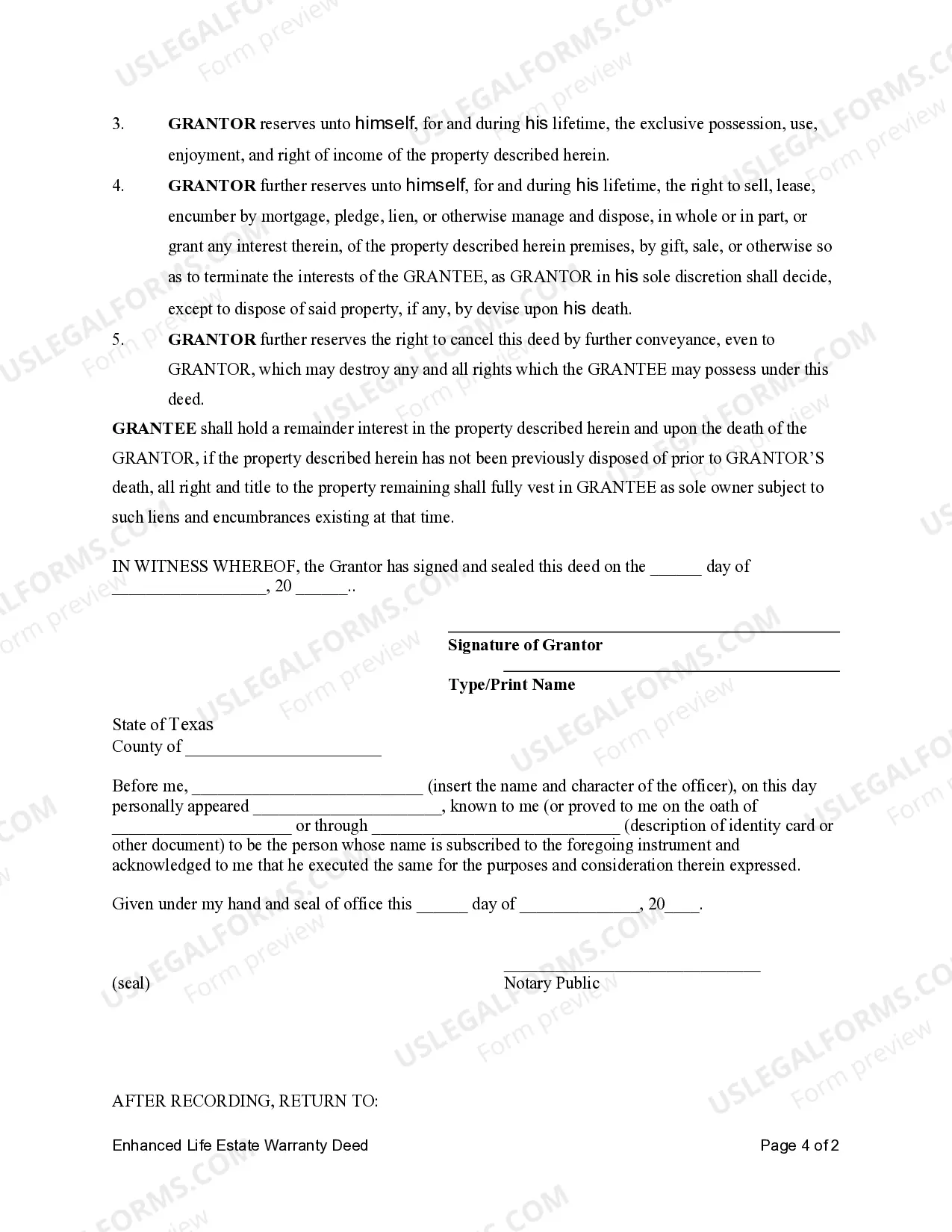
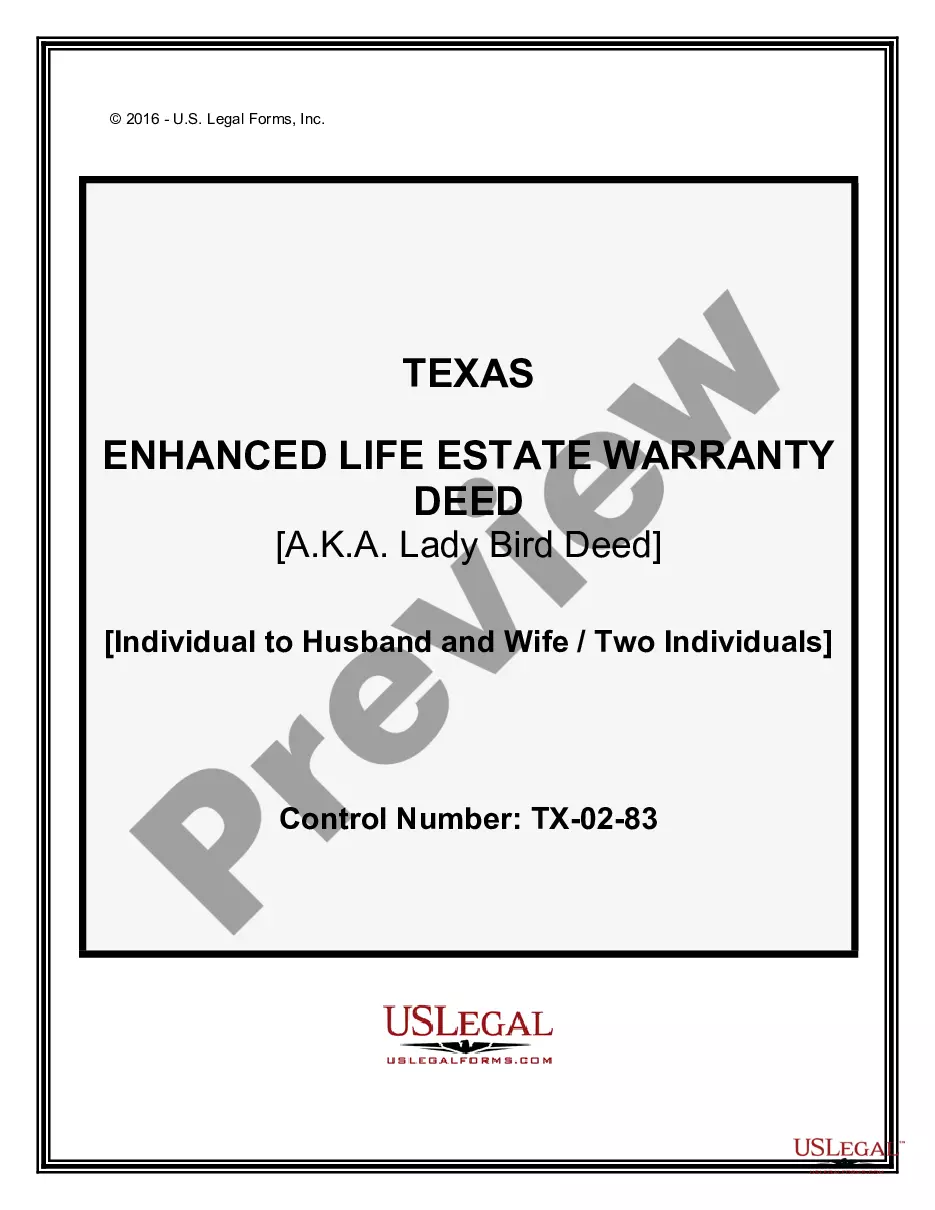
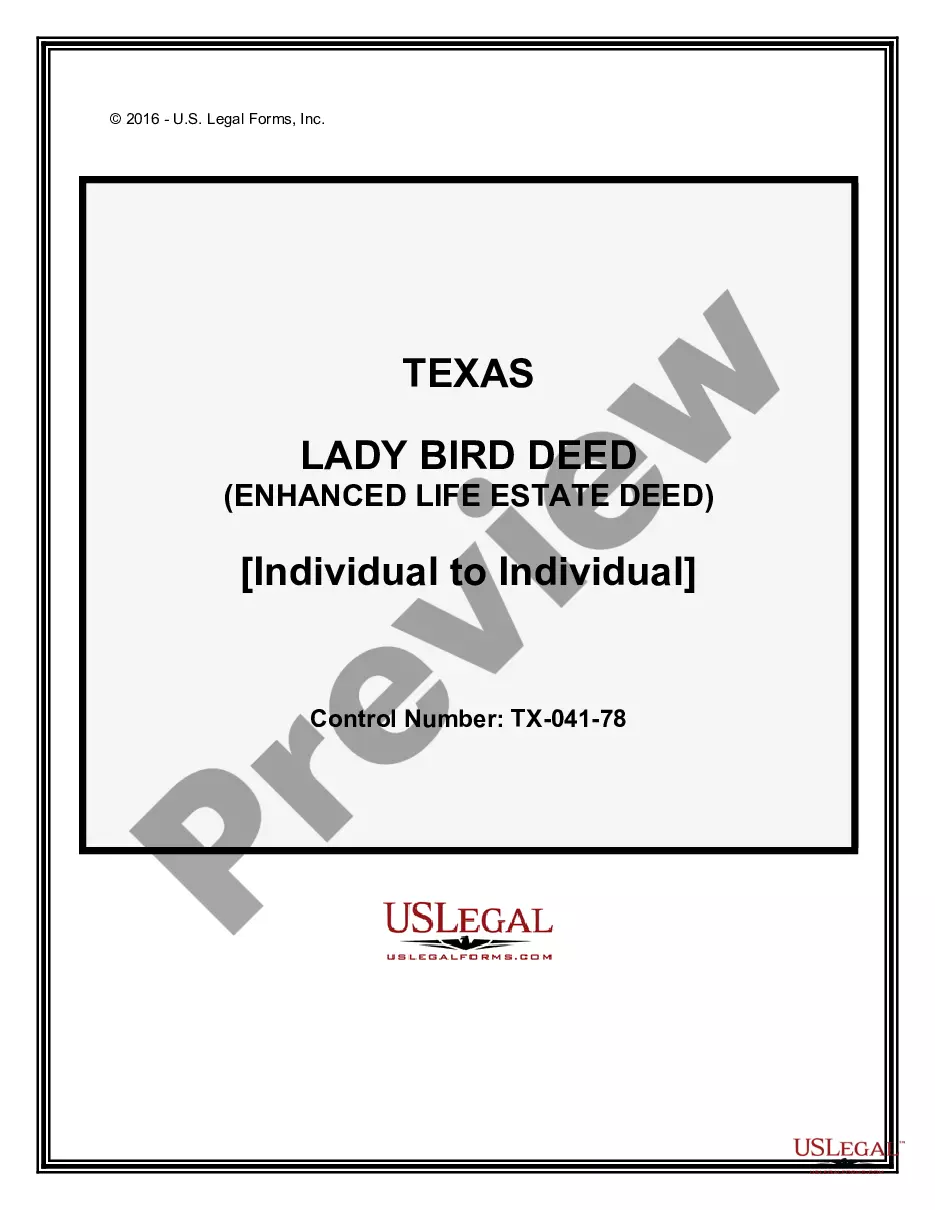
How to fill out Texas Lady Bird Or Enhanced Life Estate Warranty Deed - Individual To Individual?
- If you're a returning user, log in to your account and retrieve the necessary form template by clicking the Download button. Ensure you have a valid subscription; renew it if necessary.
- For first-time users, start by exploring the Preview mode and form descriptions to confirm you've selected the appropriate document that meets your jurisdiction’s requirements.
- If you require a different template, utilize the Search tab to find the correct one. Once you identify it, proceed to the next step.
- Purchase the document by clicking the Buy Now button. Choose a suitable subscription plan and create an account to access the library’s resources.
- Complete the transaction by entering your payment details via credit card or PayPal.
- Download your form to your device, ensuring easy access to it anytime through the My Forms section of your profile.
In conclusion, utilizing US Legal Forms provides an extensive collection of legal documents, making it easier to access life estate language for deed. The platform's unique offerings not only simplify document retrieval but also ensure accuracy and compliance with legal standards.
Don't wait any longer—start your journey to secure legal documentation today!
Form popularity
FAQ
When considering life estate language for deed, it is essential to understand some potential drawbacks. One significant disadvantage is that the property may not be sold or refinanced without the consent of the life tenant, which can limit the owner's flexibility. Additionally, with life estates, the remainderman receives the property automatically upon the death of the life tenant, potentially leading to family disputes. Lastly, transferring a life estate can complicate your estate plan, as it may not align with your overall intentions regarding property distribution.
While life estates offer benefits, they also come with drawbacks. One significant downside is that the life tenant cannot sell or mortgage the property without the consent of the remainder beneficiaries. This restriction can create complications, especially when financial needs arise. To navigate these challenges, consider using uslegalforms, where you can find templates to clarify the life estate language for deed, safeguarding everyone's interests.
People create life estates to ensure that property remains within the family or is used by a designated individual for their lifetime. This arrangement also allows property owners to maintain control over their assets while preparing for future distribution after their passing. The life estate language for deed clearly defines the rights and responsibilities of all parties involved, making it a practical solution.
To navigate a life estate, you may explore options such as negotiating with the life tenant or considering a buyout agreement. Additionally, you can revise the life estate language for deed to include provisions that allow for future transfers or conditions. Consulting a legal expert can provide clarity on your specific situation and help you make informed decisions.
The terms of a life estate include the right of the designated individual to use and enjoy the property for their lifetime. On their passing, the property will typically revert back to the grantor or pass to a predetermined beneficiary. It is crucial to clearly define these terms in the deed using appropriate life estate language for deed to avoid confusion later. Additionally, life tenants may have responsibilities regarding property maintenance and taxes during their ownership.
Life estates are generally created by a formal deed, which is a legal document that transfers property ownership. This process often involves drafting a deed with the correct life estate language for deed to secure the intended rights. Additionally, they can be established through a will or trust documents that designate how the property will be managed after the owner's passing. Understanding the creation method is essential for proper estate planning.
To create a life estate, specific language must be used in a deed. Typically, you would include phrases like 'to John Doe for his life' or 'for the life of Jane Doe.' This language clearly establishes the intent to create a life estate and keeps the right of ownership in the hands of the grantor until the designated party's death. By utilizing the proper life estate language for deed, you can ensure legal clarity.
In New Jersey, it is not strictly necessary for an attorney to prepare a deed. However, due to the complexity of property law, many recommend consulting a professional. Using clear life estate language for deed is essential, and platforms like US Legal Forms can help you create compliant documents without legal representation.
A life estate clause typically describes who will receive the property after the life tenant's passing. For example, it may state, 'I grant a life estate to name, and upon their death, the property transfers to another name.' Such clauses clarify intentions and streamline the transfer process, emphasizing the importance of precise life estate language for deed.
Yes, you can prepare a deed yourself, but caution is advised. Understanding the necessary legal language, especially life estate language for deed, is crucial to ensure accuracy. Many individuals choose to use platforms like US Legal Forms for guidance, ensuring the deed complies with local laws and regulations.