Estate For Life Real Estate
Description

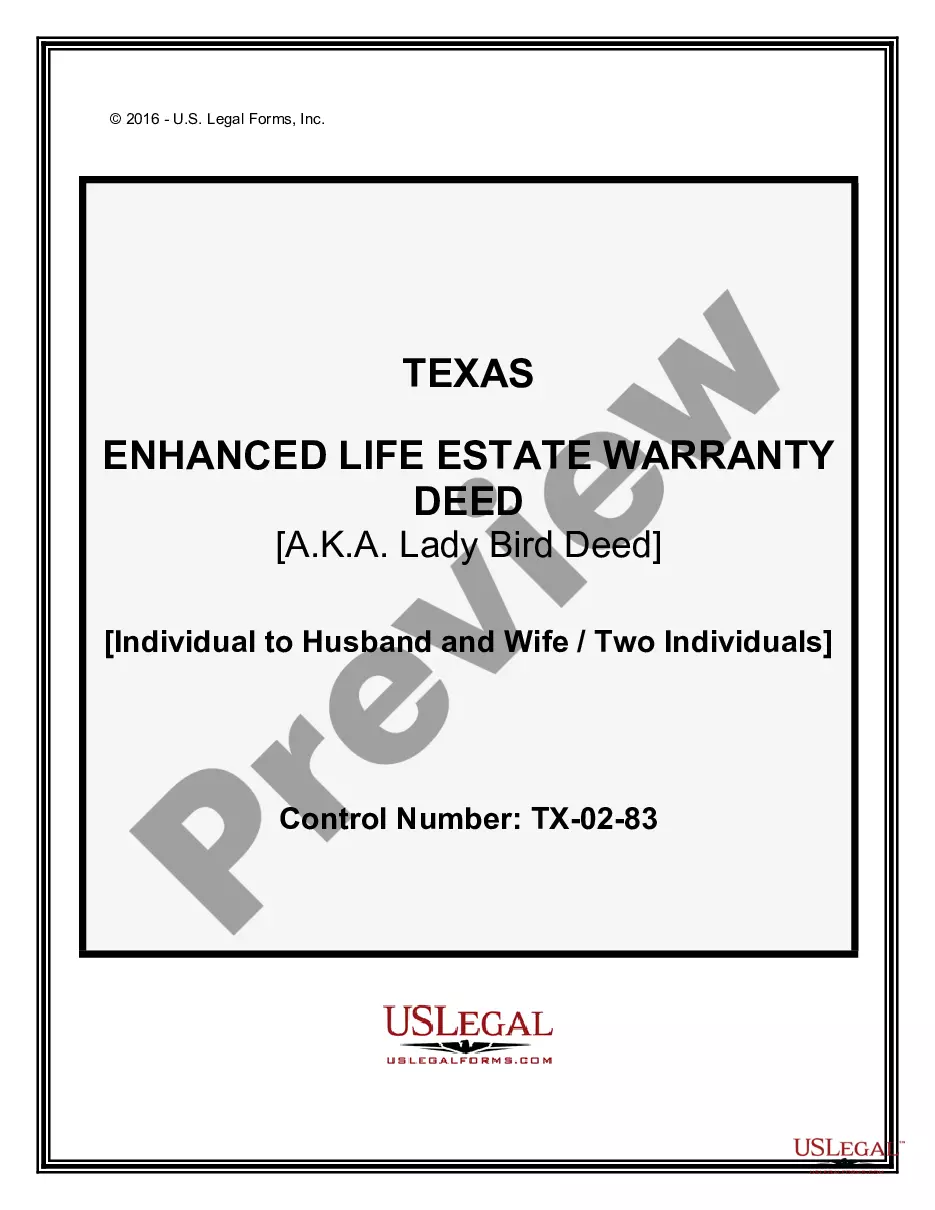
Get your form ready online
Our built-in tools help you complete, sign, share, and store your documents in one place.
Make edits, fill in missing information, and update formatting in US Legal Forms—just like you would in MS Word.
Download a copy, print it, send it by email, or mail it via USPS—whatever works best for your next step.
Sign and collect signatures with our SignNow integration. Send to multiple recipients, set reminders, and more. Go Premium to unlock E-Sign.
If this form requires notarization, complete it online through a secure video call—no need to meet a notary in person or wait for an appointment.
We protect your documents and personal data by following strict security and privacy standards.

Make edits, fill in missing information, and update formatting in US Legal Forms—just like you would in MS Word.

Download a copy, print it, send it by email, or mail it via USPS—whatever works best for your next step.

Sign and collect signatures with our SignNow integration. Send to multiple recipients, set reminders, and more. Go Premium to unlock E-Sign.

If this form requires notarization, complete it online through a secure video call—no need to meet a notary in person or wait for an appointment.

We protect your documents and personal data by following strict security and privacy standards.
Looking for another form?


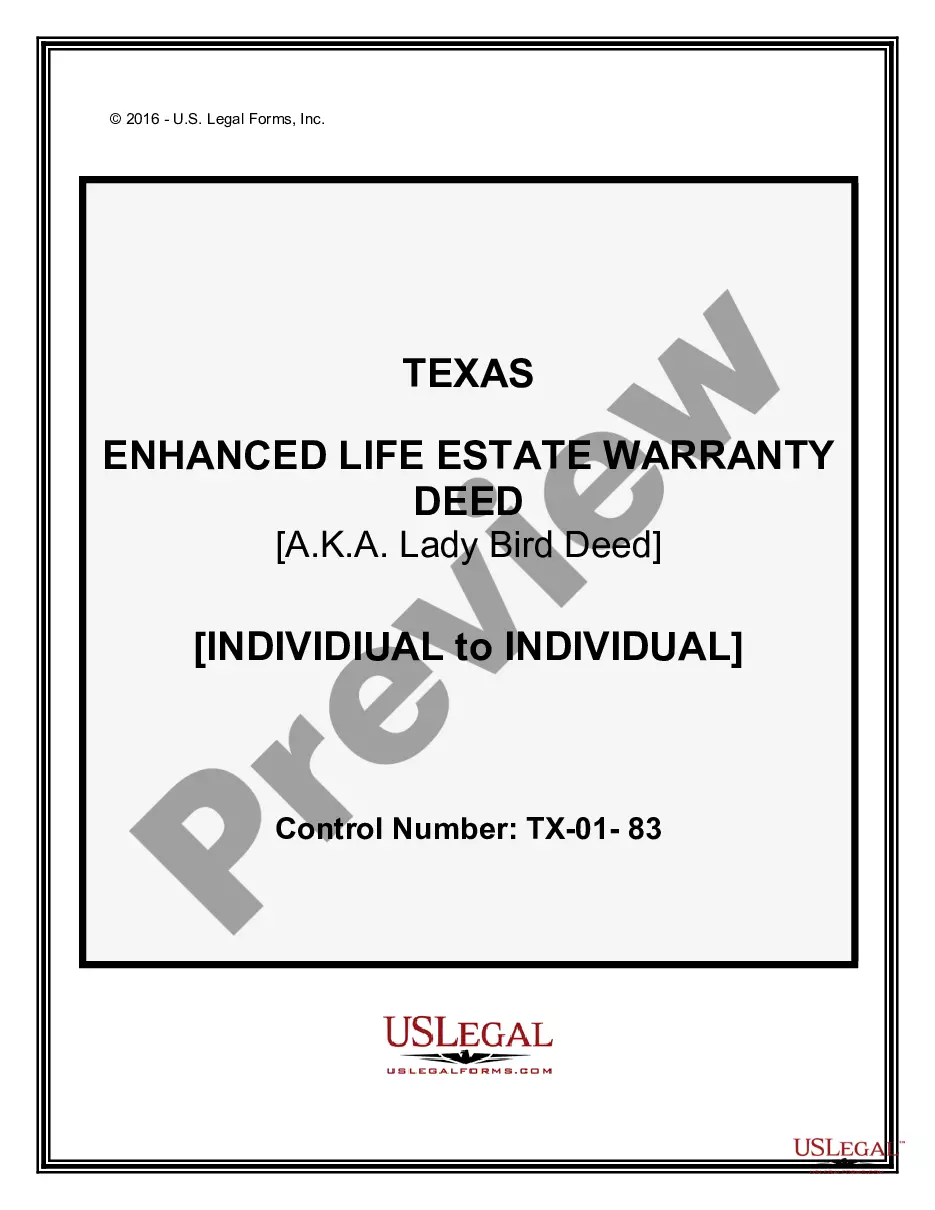
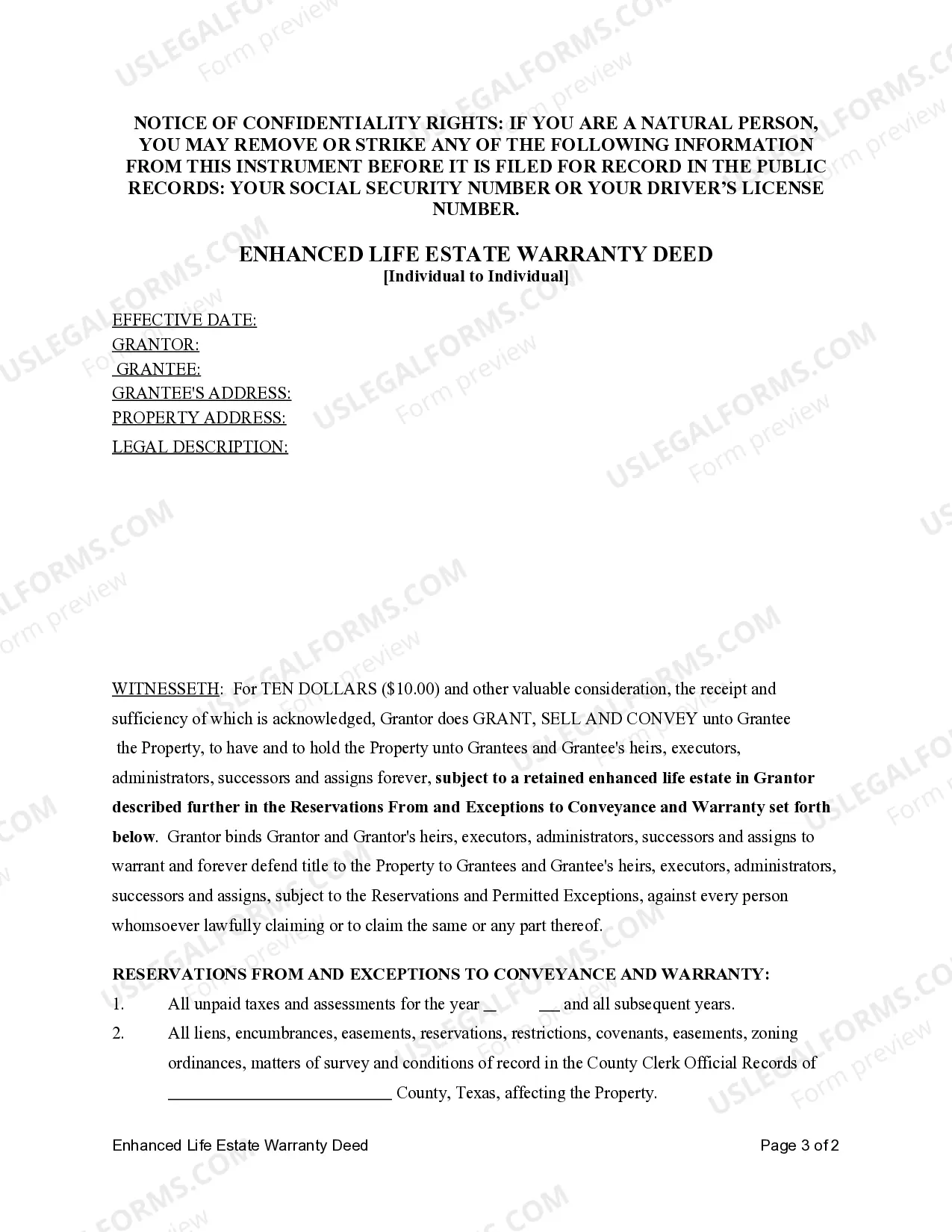
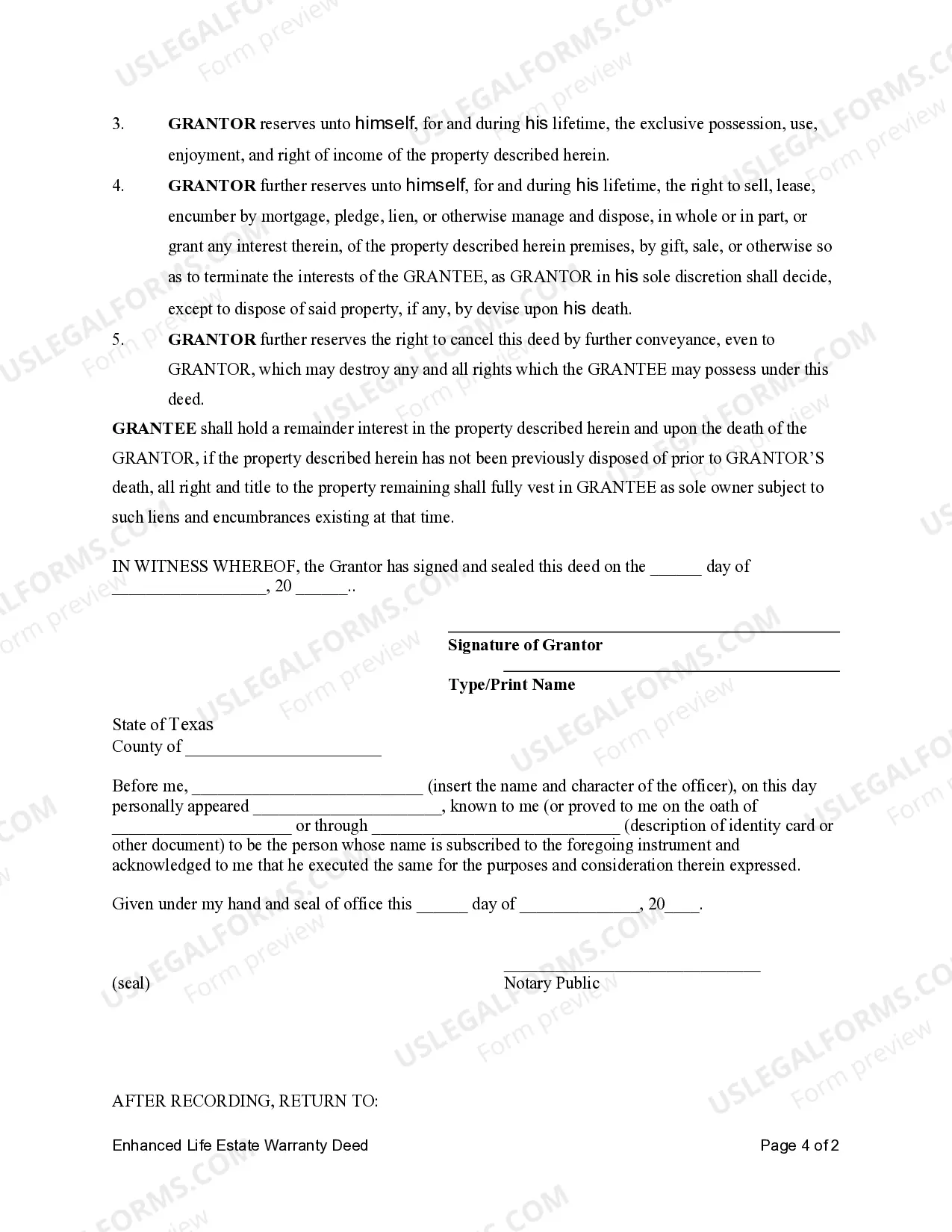
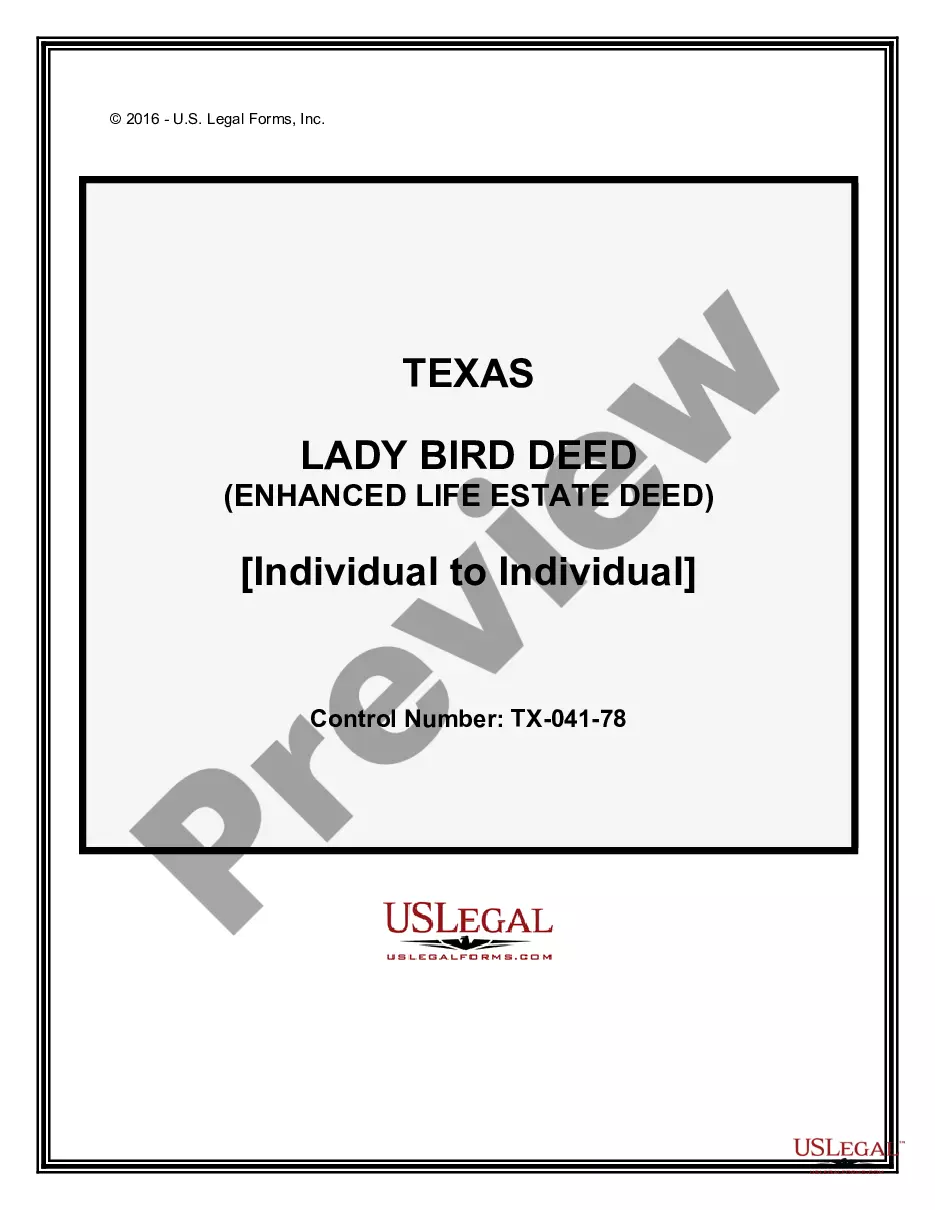
How to fill out Texas Lady Bird Or Enhanced Life Estate Warranty Deed - Individual To Individual?
- Log in to your US Legal Forms account to access your previous documents and verify that your subscription is active. If necessary, renew your plan to continue enjoying the service.
- Review the available forms in Preview mode. Ensure that the selected documents cater specifically to your estate for life needs and comply with jurisdiction requirements before proceeding.
- If you require a different form, utilize the search bar to locate the correct template. Proceed only when you find the appropriate one that fits your criteria.
- Purchase the selected document. Click 'Buy Now' and choose the subscription plan that best suits your needs. You'll need to register for an account for full access.
- Complete your payment by entering your credit card information or selecting your PayPal account to finalize your subscription purchase.
- Once your transaction is successful, download the template to your device. You'll also find it later in the 'My Forms' section of your profile for future access.
By following these steps, you can swiftly navigate the process of obtaining essential estate for life real estate documents through US Legal Forms. The platform not only boasts an extensive library of over 85,000 legal forms but also provides premium assistance to ensure your documents are accurately completed.
Start your journey with US Legal Forms today and leverage the comprehensive resources available to handle your estate for life real estate needs.
Form popularity
FAQ
There are two main types of life estates in real estate: the conventional life estate and the legal life estate. A conventional life estate grants a person the right to use and benefit from a property during their lifetime, while the legal life estate usually arises from state law, often providing specific rights and restrictions associated with familial relationships. Understanding these distinctions is crucial for anyone involved in estate for life real estate transactions. To navigate these complexities, you can rely on resources like US Legal Forms to find the necessary legal documents and guidance.
Yes, life estates are legal in Georgia and can be established through a deed or will. Property owners in Georgia can create life estates to manage their estate planning effectively. This option allows them to retain control over their property during their lifetime while ensuring a smooth transition to heirs or beneficiaries after their death.
An example of a life estate would be a parent granting a life estate to their child for a family home. The child can live in and enjoy the property for as long as they are alive. After the child passes away, ownership of the home will transfer to the parent or another predetermined beneficiary, illustrating how life estates can be used effectively in estate for life real estate planning.
A life estate in real estate is a type of ownership that lasts for the duration of a person's life. Essentially, it grants one individual the right to use the property until they pass away. After their death, ownership of the property automatically transfers to another party, known as the remainder beneficiary, making it a unique option for estate planning.
The owner of a life estate in real estate is known as the life tenant. This individual has the right to use and enjoy the property during their lifetime. After the life tenant's death, the property rights transfer to the designated remainder beneficiary, who has a vested interest in the property.
One disadvantage of a life estate in real estate is that it limits the ability to make major changes to the property. Since the life tenant only holds rights for their lifetime, they cannot sell, mortgage, or otherwise transfer ownership without the consent of the remainder beneficiary. Additionally, life estates may result in a lack of flexibility in estate planning, as the property cannot be passed on to heirs without going through the remainder beneficiary.
Life estates are generally created by a deed or a will. By using clear language in these documents, property owners can specify the terms and conditions of the life estate. If you're exploring options regarding estate for life real estate, consider using a platform like USLegalForms to draft the necessary documents reliably.
The two main types of life estates are conventional life estates and legal life estates. A conventional life estate is created by the property owner, while a legal life estate is established by law, typically in response to a court order or statutory requirements. Understanding these types can guide your strategy in utilizing estate for life real estate.
Generally, the life tenant is responsible for paying property taxes on a life estate. This is because the life tenant benefits from the property during their lifetime. For those considering estate for life real estate, it's crucial to budget for these expenses, as they can impact overall property management.
The terms of a life estate include the rights and responsibilities associated with the property during the lifetime of the life tenant. The life tenant can use, occupy, and even rent out the property, but they cannot sell or transfer ownership. Understanding these terms can help you manage your estate for life real estate effectively.