Enhanced Life Estate For The Elderly
Description
Get your form ready online
Our built-in tools help you complete, sign, share, and store your documents in one place.
Make edits, fill in missing information, and update formatting in US Legal Forms—just like you would in MS Word.
Download a copy, print it, send it by email, or mail it via USPS—whatever works best for your next step.
Sign and collect signatures with our SignNow integration. Send to multiple recipients, set reminders, and more. Go Premium to unlock E-Sign.
If this form requires notarization, complete it online through a secure video call—no need to meet a notary in person or wait for an appointment.
We protect your documents and personal data by following strict security and privacy standards.

Make edits, fill in missing information, and update formatting in US Legal Forms—just like you would in MS Word.

Download a copy, print it, send it by email, or mail it via USPS—whatever works best for your next step.

Sign and collect signatures with our SignNow integration. Send to multiple recipients, set reminders, and more. Go Premium to unlock E-Sign.

If this form requires notarization, complete it online through a secure video call—no need to meet a notary in person or wait for an appointment.

We protect your documents and personal data by following strict security and privacy standards.
Looking for another form?








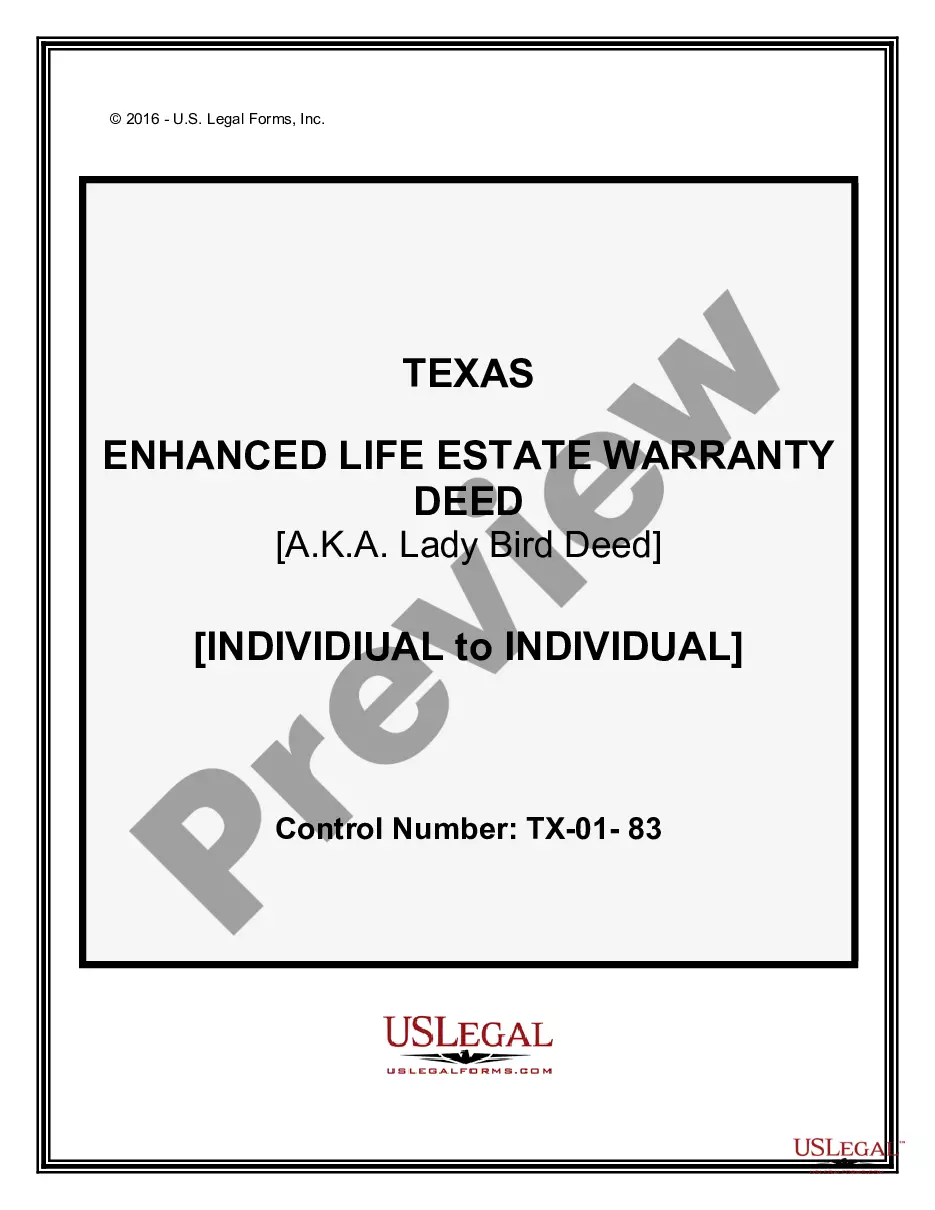
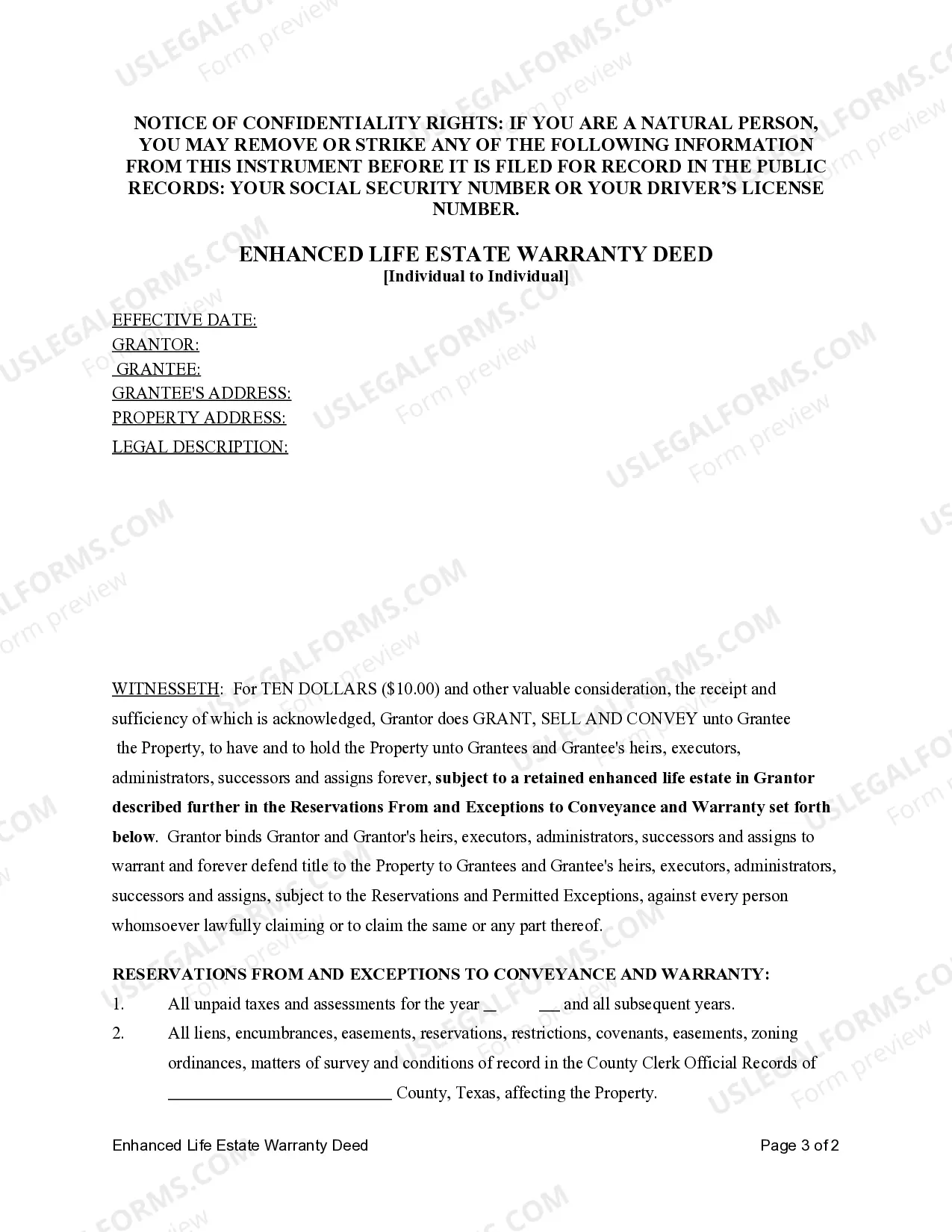
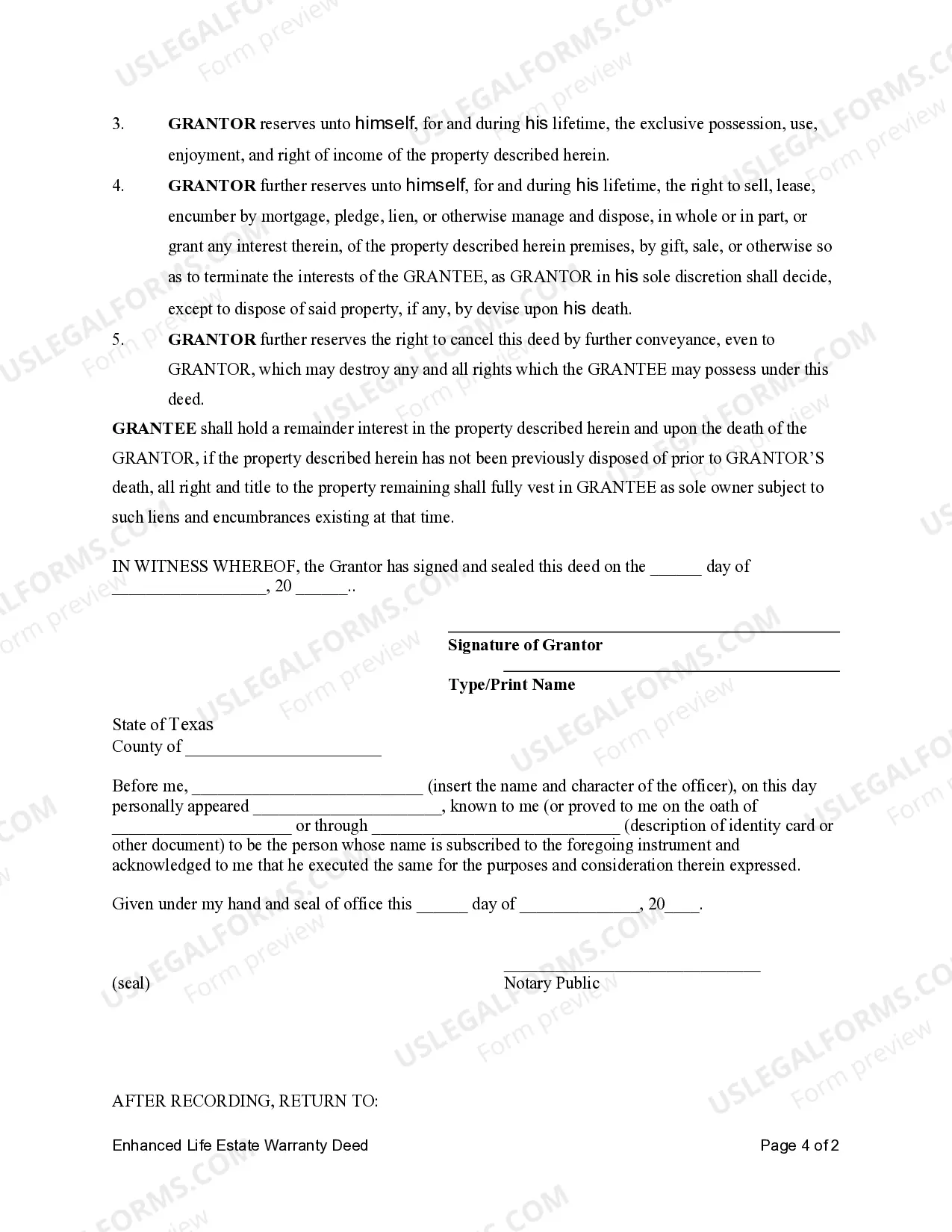
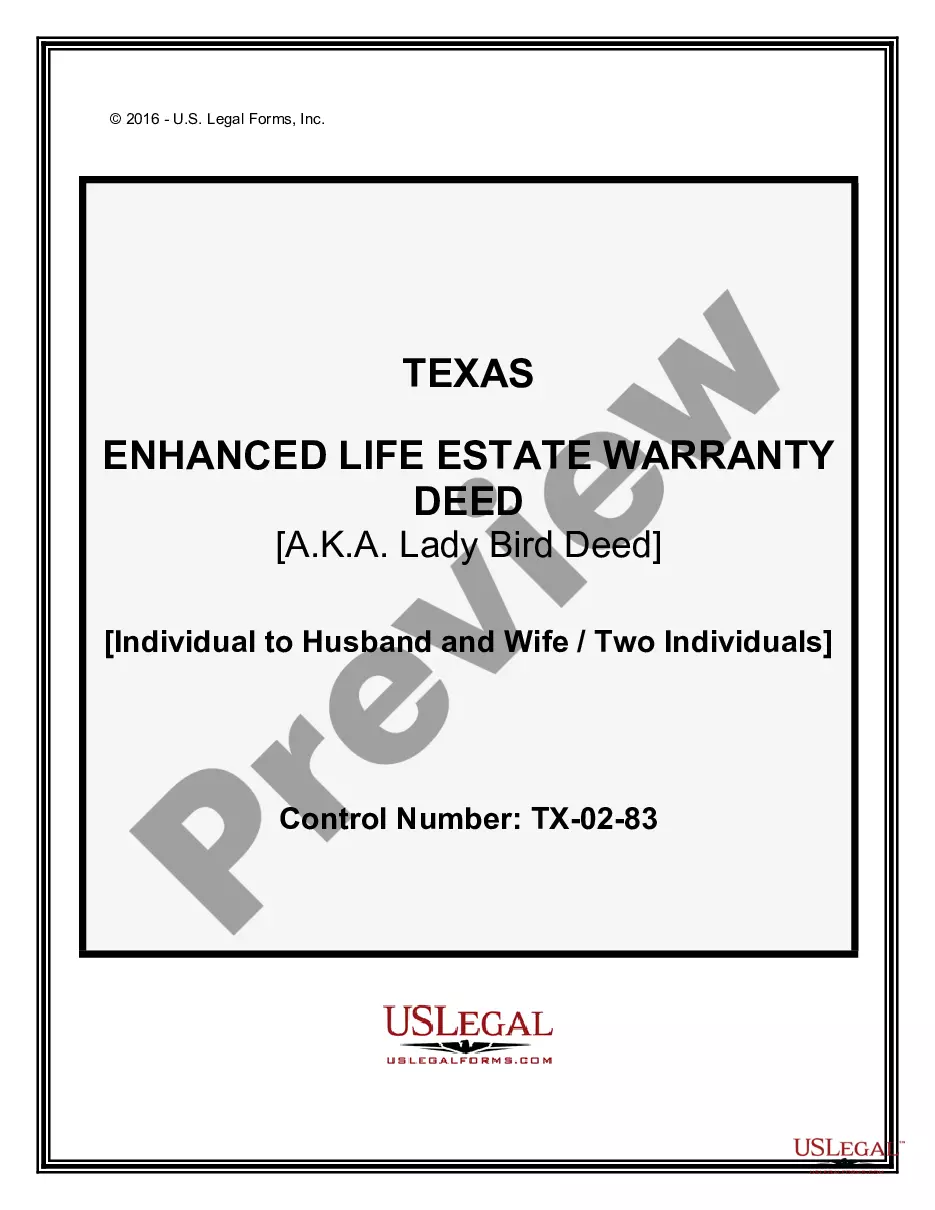
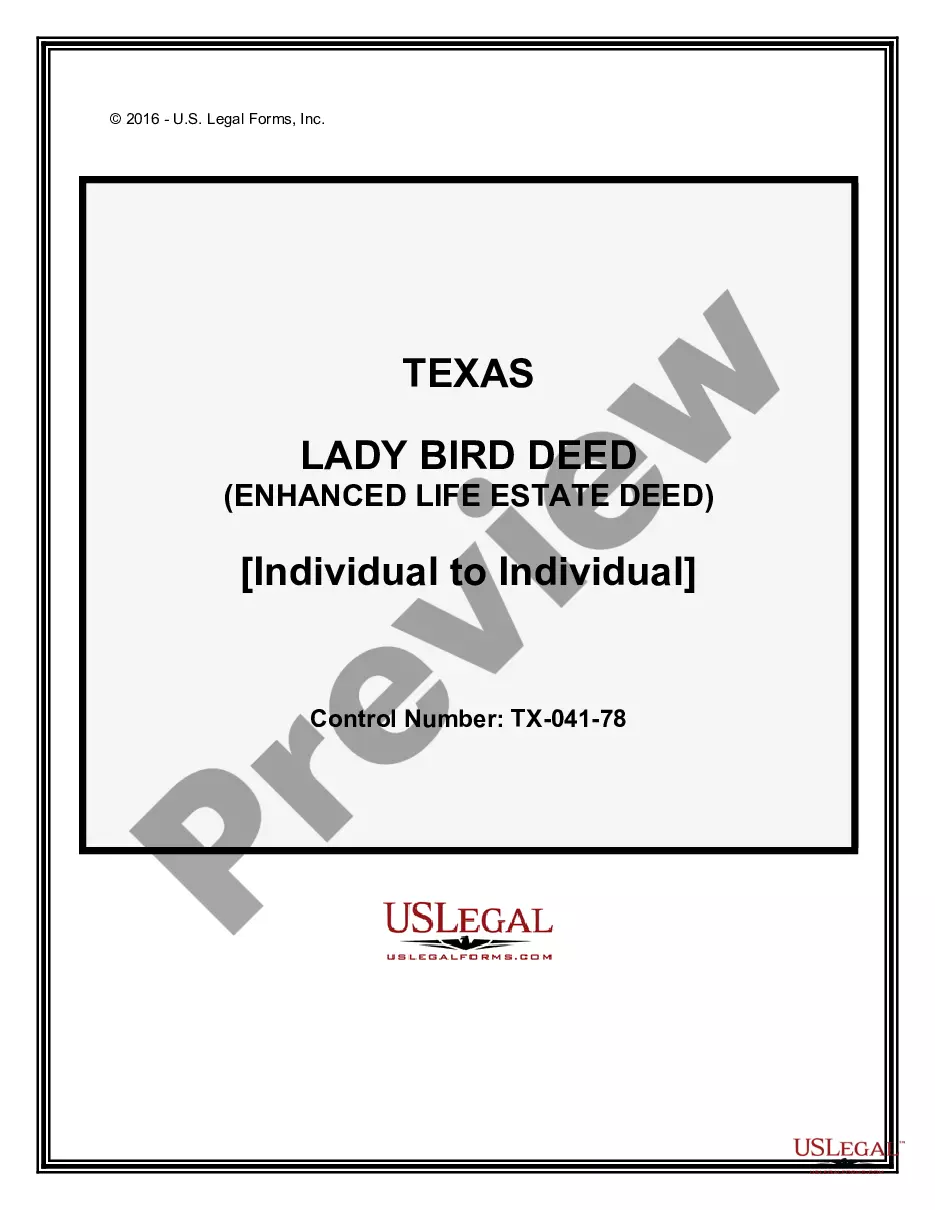
How to fill out Texas Lady Bird Or Enhanced Life Estate Warranty Deed - Individual To Individual?
- If you are a returning user, simply log in to your account and download the required enhanced life estate template. Ensure your subscription is active; renew it if necessary.
- For first-time users, begin by exploring the Preview mode and description of the form. Verify that it matches your requirements and complies with local jurisdiction.
- If you need a different template, utilize the Search tab to find the right document. Confirm that it fits your criteria before proceeding.
- Purchase the document by clicking the Buy Now button and select a subscription plan that suits you. You’ll need to create an account to access the full library.
- Complete your purchase using a credit card or PayPal. This will grant you immediate access to the documents.
- Download the form onto your device for completion and future reference. You can also find it in the My Forms section of your profile.
Using US Legal Forms grants you the advantage of accessing a vast library of legal documents, with over 85,000 fillable and editable forms at your disposal.
Experience the simplicity and efficiency of legal document preparation today. Start your journey with US Legal Forms to secure your enhanced life estate paperwork.
Form popularity
FAQ
While a life estate can provide many benefits, it also has downsides to consider. Once established, the terms cannot be easily changed, which can limit your control over the property. Furthermore, an enhanced life estate for the elderly does not protect your property from estate taxes, and it may affect your eligibility for certain government benefits, so consulting with a legal advisor is wise.
People often choose a life estate to maintain control over their property while providing a clear transfer plan for heirs. An enhanced life estate for the elderly can provide peace of mind by allowing elderly individuals to stay in their homes without worrying about probate. Additionally, it can help protect the property from long-term care expenses, letting seniors focus on enjoying their retirement.
Many states in the U.S. recognize enhanced life estate deeds, but the rules can vary by jurisdiction. It is crucial to check the specific laws in your state regarding the enhanced life estate for the elderly. Some states may have their own regulations and requirements, so using a service like USLegalForms can help ensure compliance and ease the process.
A standard life estate allows you to live in a property for your lifetime, but an enhanced life estate for the elderly offers additional benefits. This type of arrangement allows property to transfer directly to heirs after your death, bypassing probate. Consequently, the enhanced life estate provides both security during your life and streamlined asset transfer after, making it an appealing option for seniors.
Creditors can pursue assets held in a life estate, but the situation can vary. In an enhanced life estate for the elderly, the property typically passes directly to designated heirs without going through probate, which can help shield it from creditors. It is essential to consult with a legal expert to understand how your specific life estate might be affected by outstanding debts.
To create a life estate, it is essential to use specific language within the legal document. You typically include terms like 'to name for their lifetime,' designating the life tenant, and 'then to name' for the remainder interest. This clarity helps avoid confusion regarding ownership after the life tenant passes. With the concept of enhanced life estate for the elderly, individuals can designate their wishes clearly, facilitating a smoother transition for their loved ones.
An example of a life estate clause specifies the rights and duties of a property owner during their lifetime. For instance, it may state that the owner can live in the property while still granting future interest to another party. This setup is particularly beneficial for elderly individuals who want to secure their housing while planning for their estate. By utilizing an enhanced life estate for the elderly, seniors can ensure they retain control of their property while simplifying the transfer process for heirs.
The best deed to avoid probate is generally the enhanced life estate deed for the elderly. By using this deed, property owners can designate their beneficiaries and ensure that the property transfers directly to them upon death, bypassing the probate process. Additionally, platforms like uslegalforms can provide you with the necessary resources and guide you through creating an enhanced life estate deed to secure your legacy effectively.
In Florida, a traditional life estate deed grants a person the right to live in a property until death, with ownership going to designated beneficiaries afterward. In contrast, an enhanced life estate deed offers the same living rights but allows the original owner greater control, including the ability to sell or alter the property without beneficiary consent. This flexibility makes the enhanced life estate a popular choice among the elderly seeking to protect their property.
One of the downsides of a life estate involves the loss of full control over the property. While the current owner retains some rights, they cannot modify, sell, or encumber the property without the agreement of other stakeholders. This setup can be challenging for the elderly, especially if their needs change, and they require flexibility with their living arrangements.