Power Of Attorney For Business
Description

Get your form ready online
Our built-in tools help you complete, sign, share, and store your documents in one place.
Make edits, fill in missing information, and update formatting in US Legal Forms—just like you would in MS Word.
Download a copy, print it, send it by email, or mail it via USPS—whatever works best for your next step.
Sign and collect signatures with our SignNow integration. Send to multiple recipients, set reminders, and more. Go Premium to unlock E-Sign.
If this form requires notarization, complete it online through a secure video call—no need to meet a notary in person or wait for an appointment.
We protect your documents and personal data by following strict security and privacy standards.

Make edits, fill in missing information, and update formatting in US Legal Forms—just like you would in MS Word.

Download a copy, print it, send it by email, or mail it via USPS—whatever works best for your next step.

Sign and collect signatures with our SignNow integration. Send to multiple recipients, set reminders, and more. Go Premium to unlock E-Sign.

If this form requires notarization, complete it online through a secure video call—no need to meet a notary in person or wait for an appointment.

We protect your documents and personal data by following strict security and privacy standards.
Looking for another form?
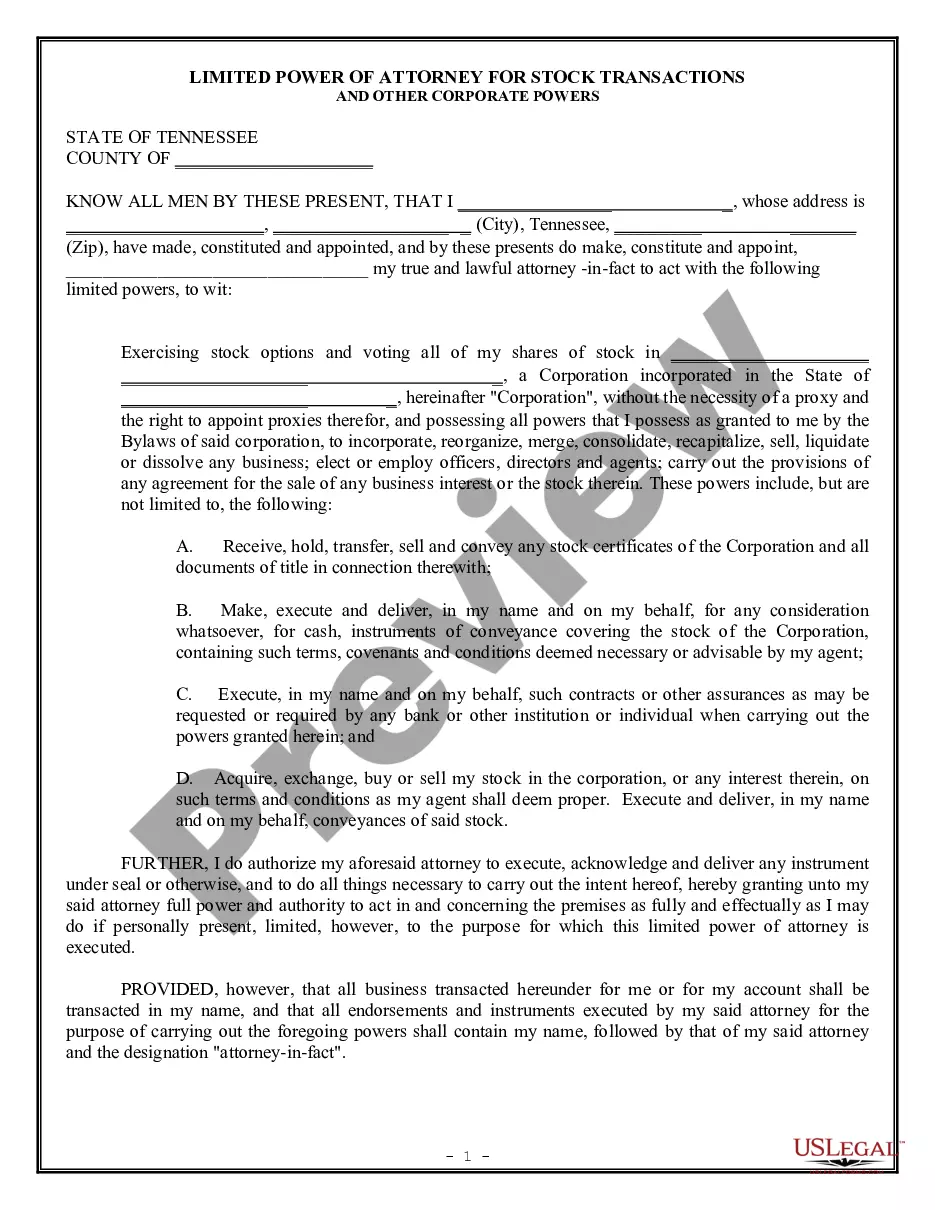
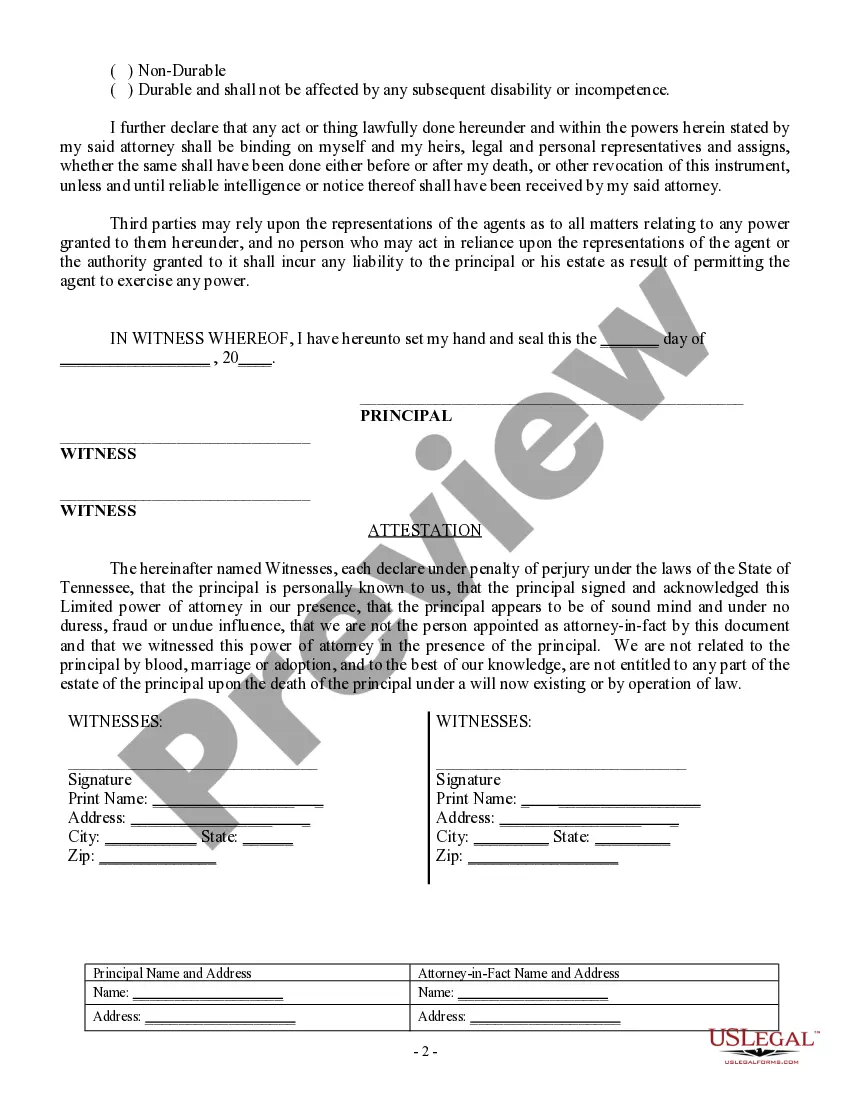
How to fill out Tennessee Limited Power Of Attorney For Stock Transactions And Corporate Powers?
- If you are an existing user, log in to your US Legal Forms account and click the Download button for your desired form template. Ensure that your subscription is active to prevent any interruptions.
- For first-time users, begin by browsing the form library. Use the Preview mode to review form descriptions carefully, making sure it aligns with your needs and local laws.
- In case you don’t find the right document, utilize the Search tab to locate alternative templates that suit your requirements.
- Proceed to purchase the document by clicking the Buy Now button. Choose your preferred subscription plan and create an account for full access.
- Complete your transaction by entering your payment details through credit card or PayPal. Ensure the payment is confirmed to enable downloads.
- Finally, save the completed form on your device. You can access it anytime through the My documents menu in your profile.
US Legal Forms empowers users with a wider selection of forms than competitors, accommodating various unique situations without hefty fees. With over 85,000 editable and fillable documents, users can rely on expert guidance to ensure legal precision.
Finally, take advantage of modern legal solutions with US Legal Forms, ensuring you have all necessary documentation ready at your fingertips. Don’t hesitate—start simplifying your legal processes today!
Form popularity
FAQ
A statutory power of attorney is a legal document that automatically complies with state laws, whereas a durable power of attorney remains valid even if you become incapacitated. Essentially, while all durable POAs are statutory, not all statutory POAs are durable. Understanding this distinction helps you select the right power of attorney for business to meet your needs.
The most recommended type of power of attorney for business is the durable power of attorney. A durable POA remains effective even if you become incapacitated, ensuring continuity in decision-making. It is crucial to choose someone you trust to handle your business affairs, especially in times of uncertainty.
Yes, a power of attorney for business can grant access to bank accounts, but this depends on the specific terms outlined in the document. When creating your POA, you can specify which accounts your agent can access and what actions they may take. This flexibility can help you manage your business finances more efficiently through trusted individuals.
Yes, you can establish a power of attorney for business for an LLC. This document allows you to designate someone to act on behalf of your LLC in various legal and financial matters. When drafting a POA for your LLC, refer to your state’s regulations to ensure compliance with local laws and safeguard your business interests.
To submit your power of attorney for business to the IRS, it is best to use Form 2848. Make sure you complete the form accurately and sign it where required. Once you have filled it out, send it to the appropriate IRS address listed in the form instructions. This allows the IRS to recognize your representative for your business tax matters.
While you might consider a family member for power of attorney, it's essential to evaluate their qualifications and understanding of your business needs. A family member may provide the necessary trust, but they should also possess the skills to make informed decisions as an agent. Ultimately, the goal is to have someone capable of representing your interests effectively, whether family or not.
Having more than one person with power of attorney can provide a system of checks and balances. This approach minimizes risks associated with misuse of authority and ensures that decisions reflect diverse perspectives. In business, involving multiple trusted individuals helps safeguard your interests and maintain transparency in operations.
A key disadvantage of a power of attorney is the potential for abuse of authority. If the appointed agent acts irresponsibly or against your interests, it can lead to significant financial loss or legal issues. This makes it crucial to choose someone trustworthy and to clearly specify the limitations within the power of attorney for business.
Yes, businesses can have a power of attorney that enables them to delegate authority to individuals to act on their behalf. This legal document is vital for efficiently managing various business tasks, especially when the owners are unavailable. A well-structured power of attorney for business can include provisions for financial decisions, contract signings, and legal matters.
The best choice for power of attorney should be someone you trust deeply, who understands your business and financial goals. This person should have the ability to make sound judgments during your absence. Often, business partners, trusted colleagues, or experienced professionals excel in this role, especially when considering a power of attorney for business.