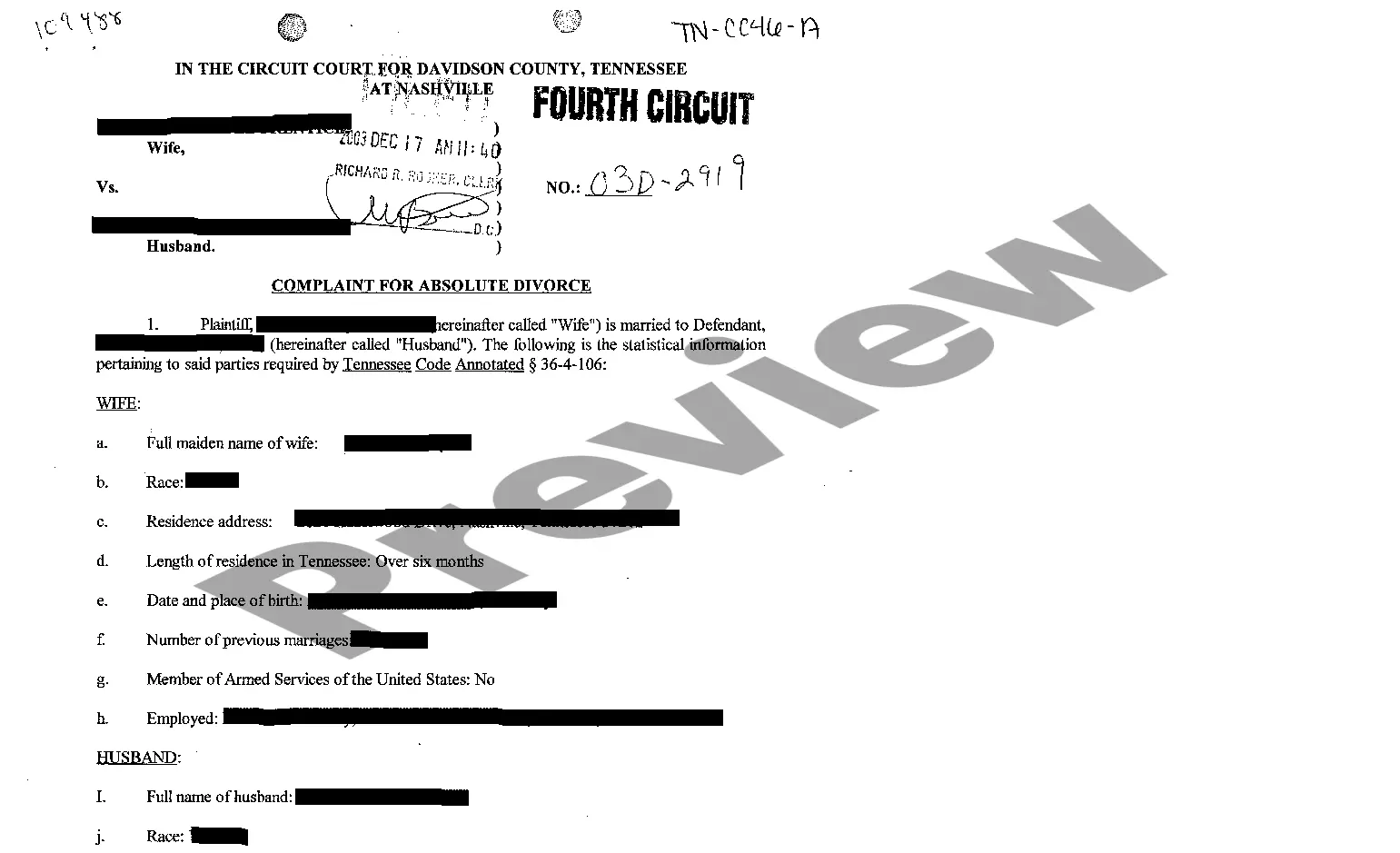
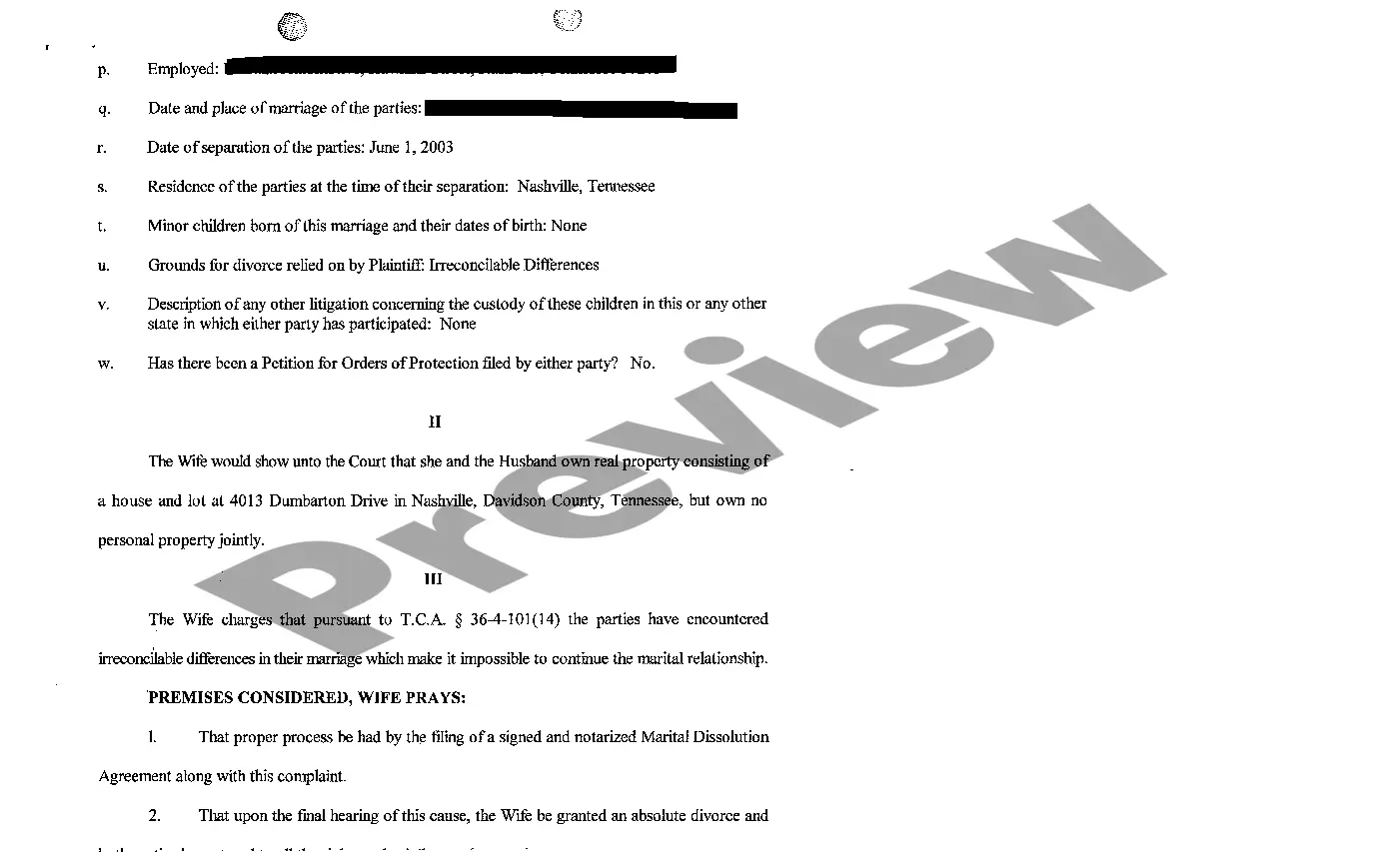
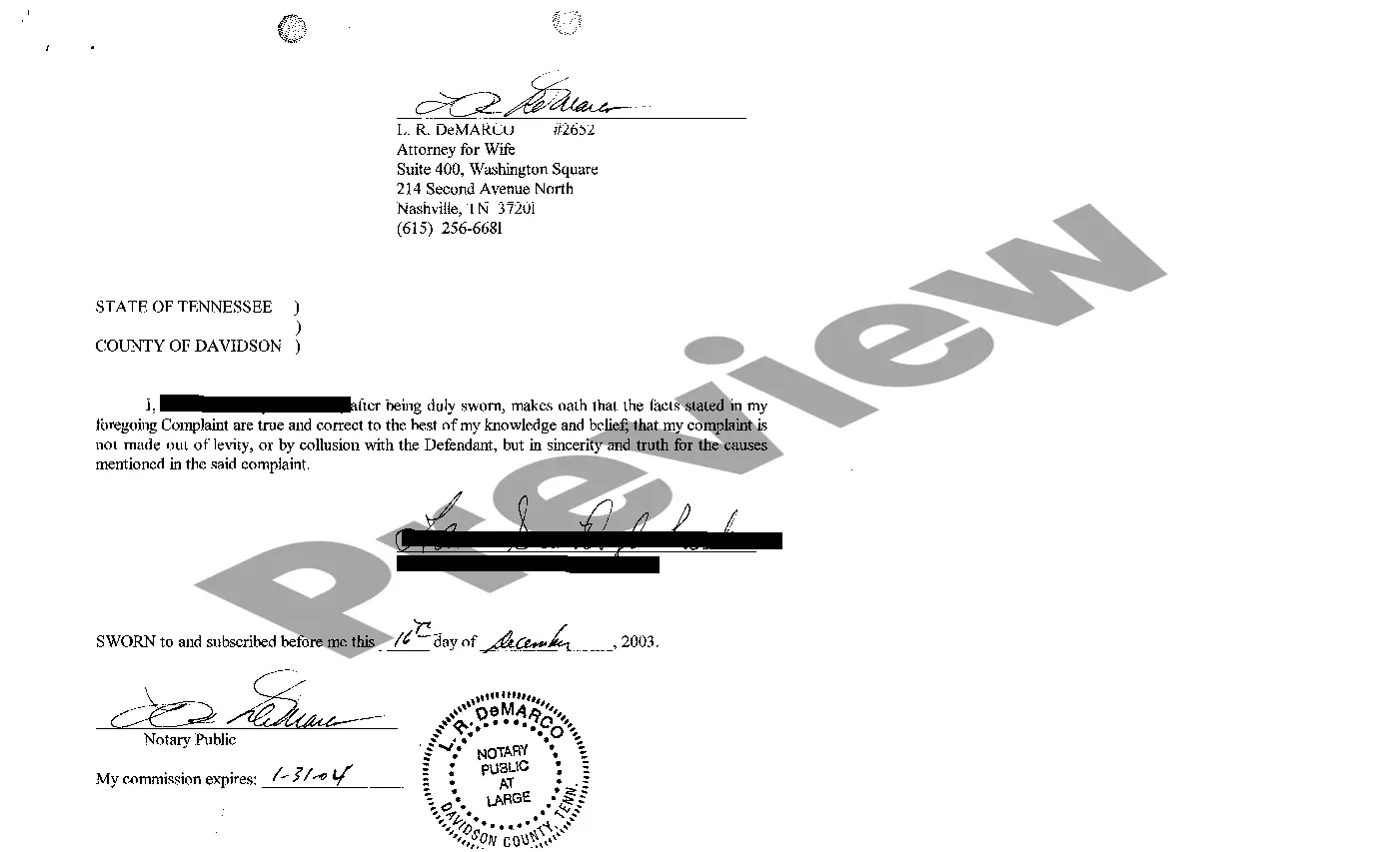
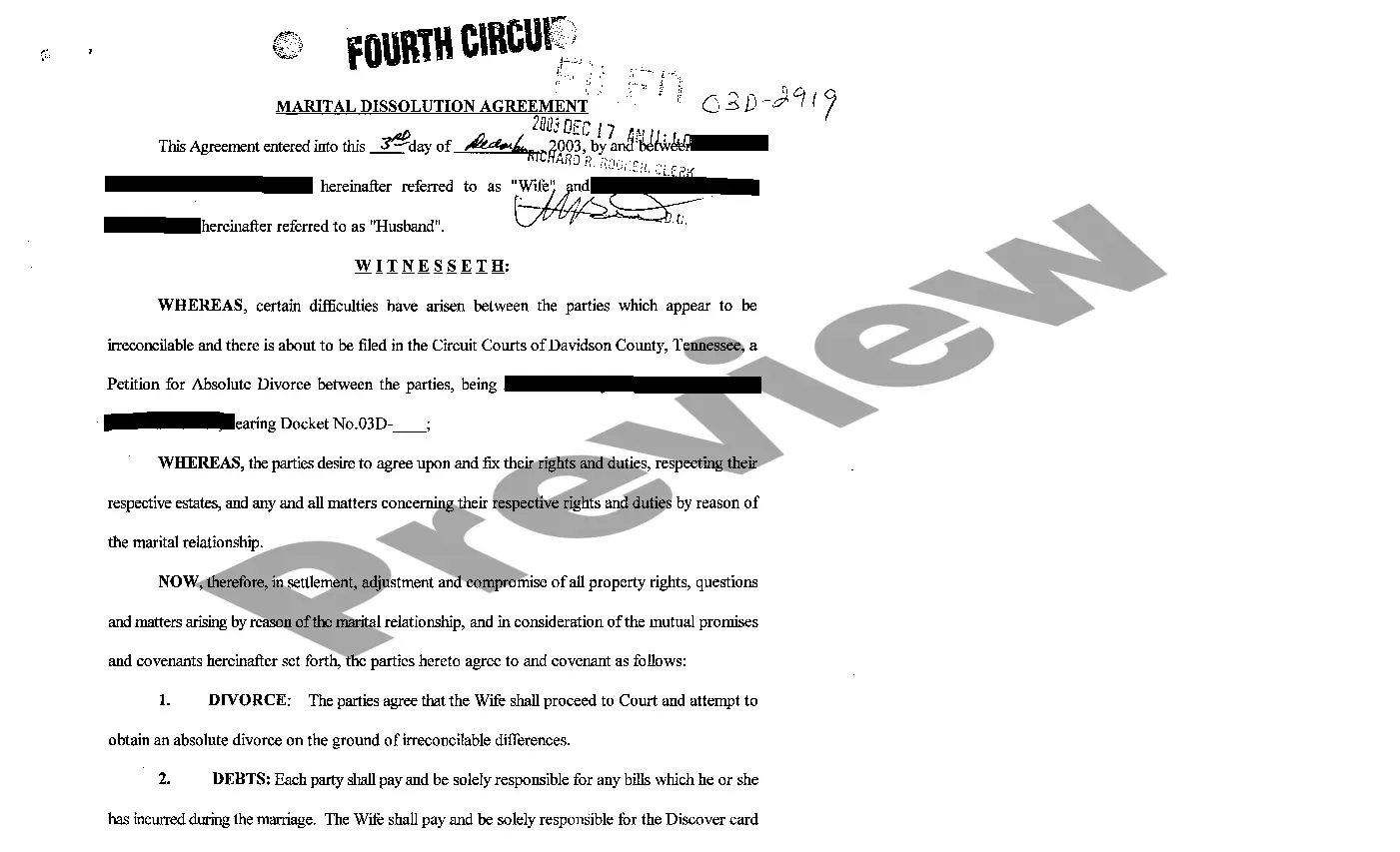
Tennessee Complaint For Divorce With Child
Description




Form popularity
FAQ
Proof of adultery in Tennessee can include direct evidence, such as photographs or eyewitness accounts, or circumstantial evidence that suggests infidelity. Establishing proof is critical if you are citing adultery in your Tennessee complaint for divorce with child. This evidence not only affects custody arrangements but may also influence the division of assets.
Inappropriate marital conduct refers to behaviors that negatively impact the marital relationship. This can include emotional abuse, frequent fighting, or infidelity. When presenting a Tennessee complaint for divorce with child, demonstrating inappropriate marital conduct can affect custody decisions and the division of assets.
In Tennessee, it generally does not matter who files for divorce, as both parties have equal rights concerning asset division and custody issues. However, the spouse who files a Tennessee complaint for divorce with child may have the opportunity to outline their priorities in the initial paperwork. Understanding the implications of filing first can influence your overall strategy.
Marital debt includes any debt incurred during the marriage, regardless of which spouse's name is on the account. This might encompass mortgages, credit cards, and loans. When filing a Tennessee complaint for divorce with child, it is vital to identify and document all marital debts, as they will be addressed during the asset division process.
Official misconduct refers to actions by a public servant that violate their official duties or responsibilities. While this term is not directly linked to a Tennessee complaint for divorce with child, understanding various forms of misconduct can be helpful in different contexts. It's essential to address specific allegations within the appropriate legal framework.
Marital misconduct in Tennessee includes actions such as adultery, abandonment, and cruel treatment. When preparing a Tennessee complaint for divorce with child, allegations of marital misconduct can impact various outcomes, such as asset division and custody arrangements. Understanding these factors can be crucial in your divorce proceedings.
In Tennessee, one spouse can indeed refuse to cooperate in the divorce process, but this does not prevent the other spouse from filing a Tennessee complaint for divorce with child. Tennessee law allows an individual to proceed with divorce even if the other party does not agree. It's essential to understand that a court can grant a divorce based on irreconcilable differences, regardless of resistance.
Tennessee recently updated its child support laws to better reflect the needs of modern families. These changes include adjustments to the calculation formulas and a focus on more equitable support obligations based on income and parenting time. When navigating your Tennessee complaint for divorce with child, understanding these new laws can be crucial in ensuring your support arrangements are fair.
Yes, child support is generally mandatory in Tennessee divorce cases involving children. The state law requires that both parents contribute financially to the upbringing of their children, regardless of the divorce terms. When filing a Tennessee complaint for divorce with child, be prepared for the court to issue a child support order unless both parties reach a mutually accepted agreement.
Avoiding child support obligations in Tennessee can be challenging, as courts prioritize the best interests of the child. While some may attempt to circumvent payments, it is crucial to understand that any agreement must be legally binding. In a Tennessee complaint for divorce with child, full financial disclosure is usually necessary, making it very difficult to evade support responsibilities.