Sc Right To Cure Statute
Description



Get your form ready online
Our built-in tools help you complete, sign, share, and store your documents in one place.
Make edits, fill in missing information, and update formatting in US Legal Forms—just like you would in MS Word.
Download a copy, print it, send it by email, or mail it via USPS—whatever works best for your next step.
Sign and collect signatures with our SignNow integration. Send to multiple recipients, set reminders, and more. Go Premium to unlock E-Sign.
If this form requires notarization, complete it online through a secure video call—no need to meet a notary in person or wait for an appointment.
We protect your documents and personal data by following strict security and privacy standards.

Make edits, fill in missing information, and update formatting in US Legal Forms—just like you would in MS Word.

Download a copy, print it, send it by email, or mail it via USPS—whatever works best for your next step.

Sign and collect signatures with our SignNow integration. Send to multiple recipients, set reminders, and more. Go Premium to unlock E-Sign.

If this form requires notarization, complete it online through a secure video call—no need to meet a notary in person or wait for an appointment.

We protect your documents and personal data by following strict security and privacy standards.
Looking for another form?






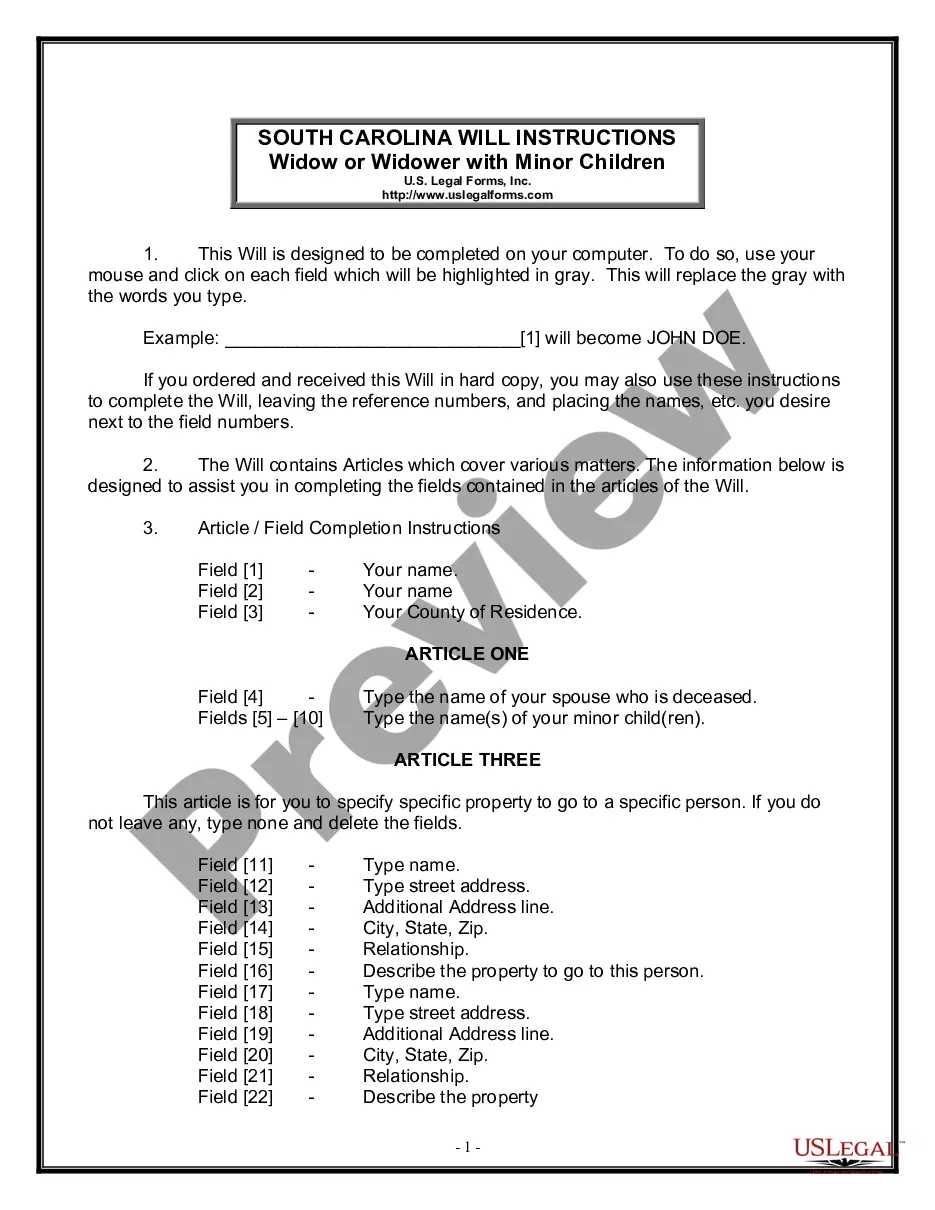
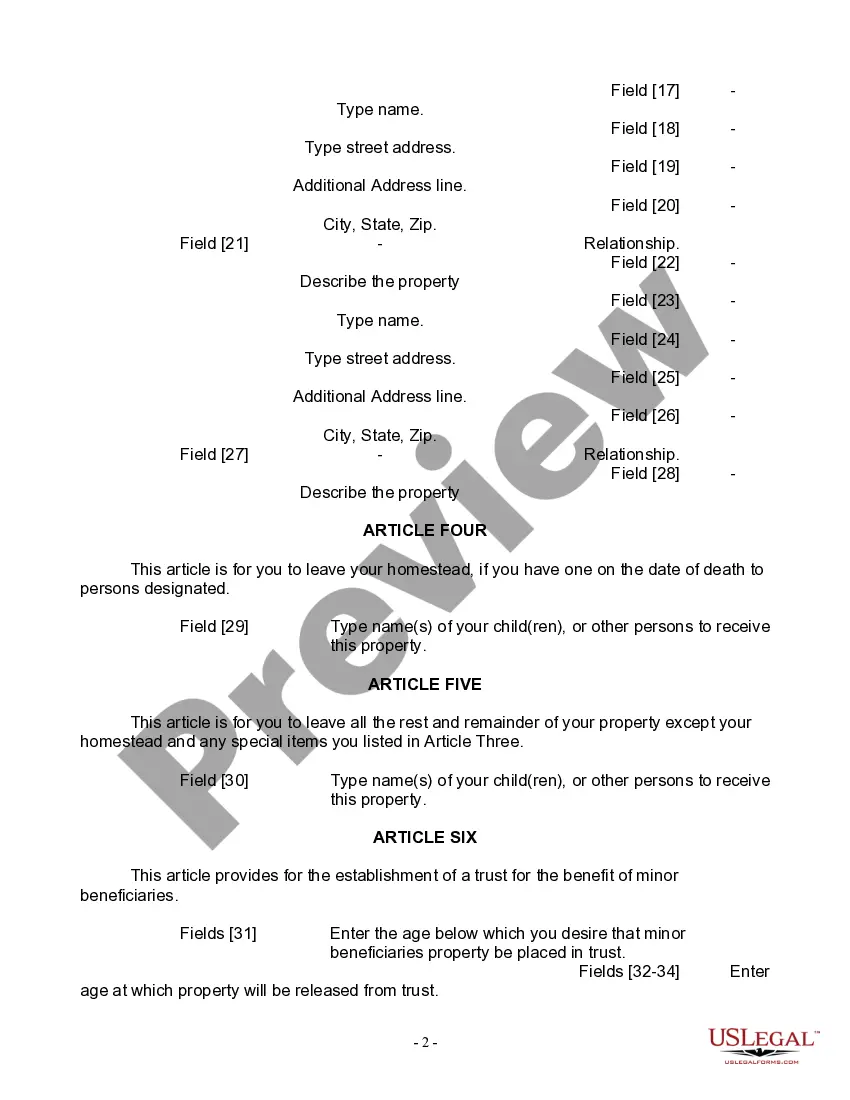
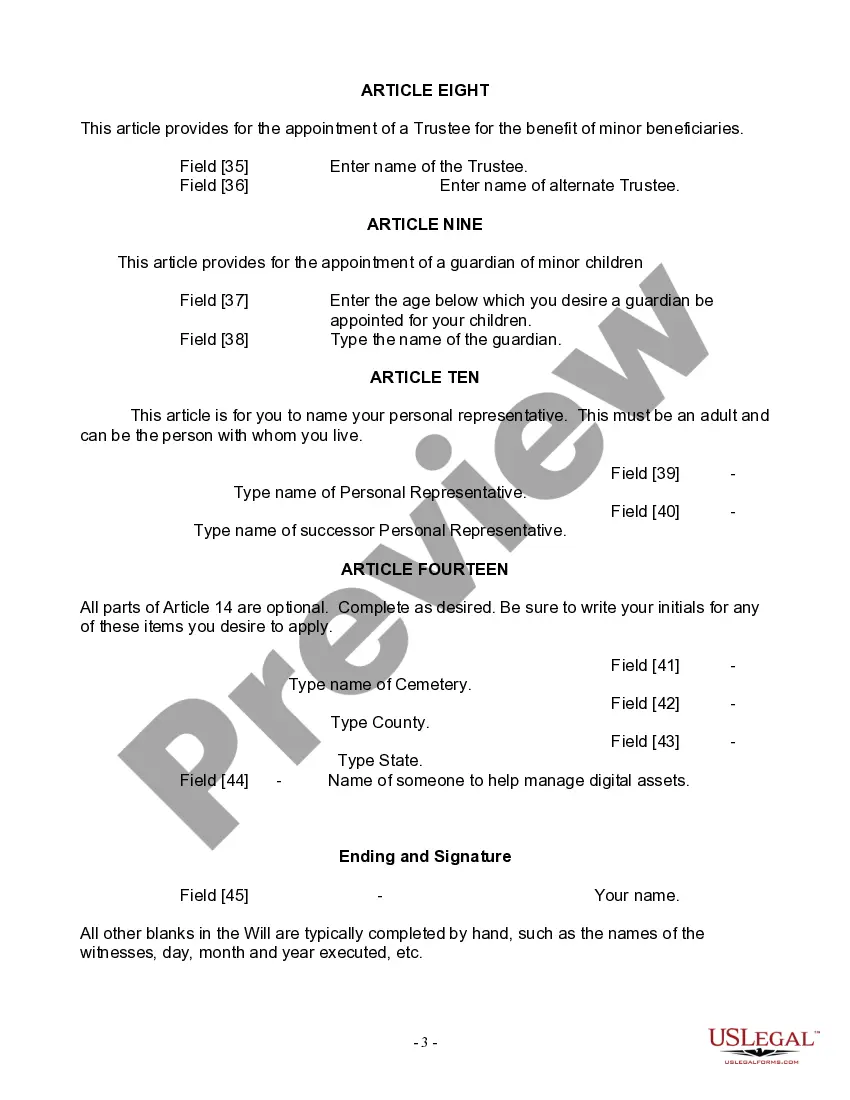
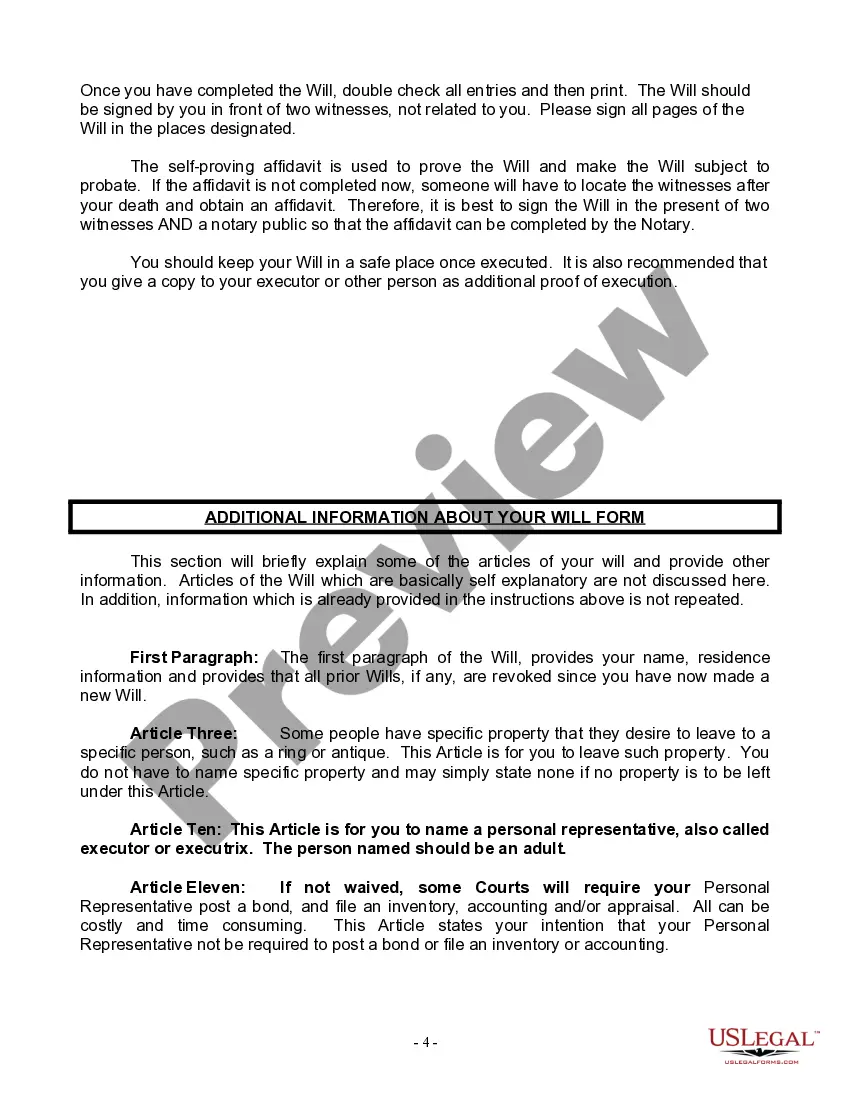
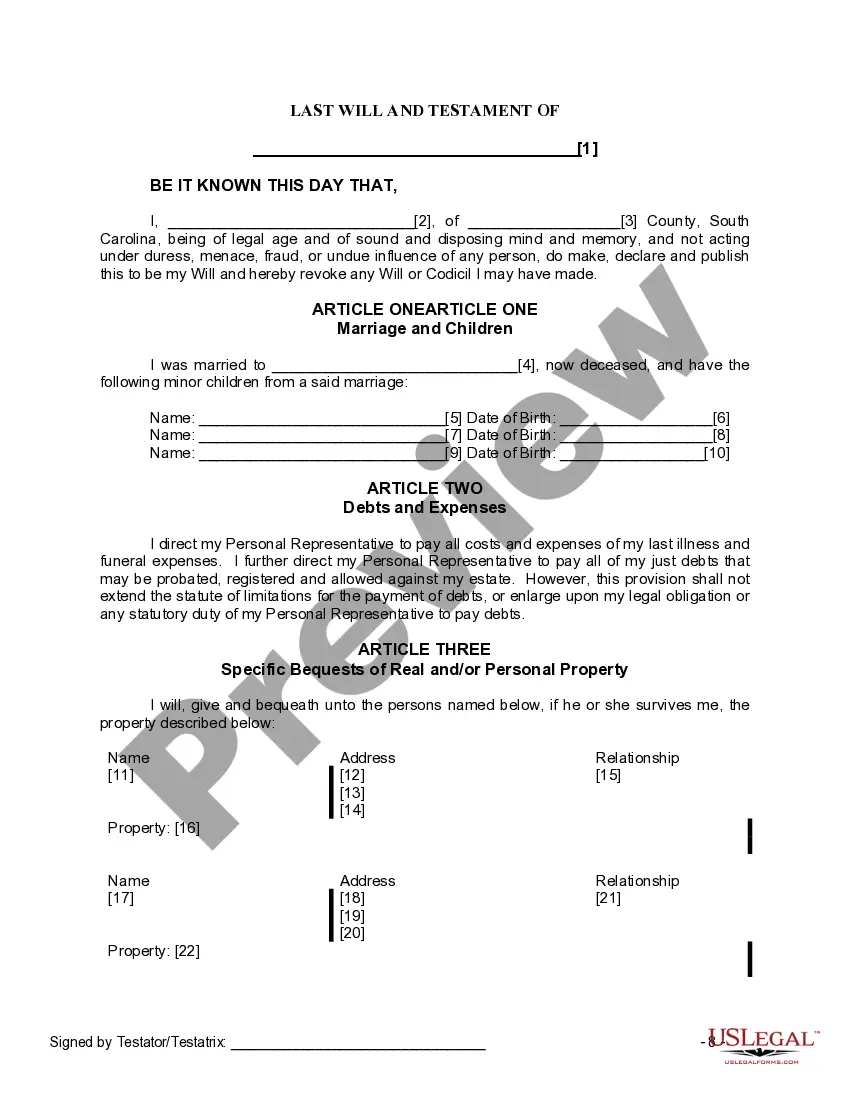
How to fill out South Carolina Last Will And Testament For Widow Or Widower With Minor Children?
Regardless of whether for corporate objectives or personal issues, everyone must confront legal matters at some stage in their existence.
Filling out legal paperwork necessitates meticulous focus, starting from selecting the appropriate form template. For instance, if you select an incorrect version of a Sc Right To Cure Statute, it will be rejected upon submission.
Opt for the document format you prefer and download the Sc Right To Cure Statute. Once saved, you can fill out the form with the assistance of editing software or print it and complete it manually. With an extensive US Legal Forms catalog available, you never have to waste time searching for the correct sample online. Utilize the library’s intuitive navigation to find the right template for any situation.
- Thus, it is essential to obtain a trustworthy source of legal documents like US Legal Forms.
- If you need to acquire a Sc Right To Cure Statute template, follow these straightforward steps.
- Access the sample you require by utilizing the search bar or catalog navigation.
- Review the form’s details to confirm it aligns with your circumstance, state, and county.
- Click on the form’s preview to view it.
- If it is the wrong form, revert to the search feature to find the Sc Right To Cure Statute template you need.
- Obtain the template if it satisfies your requirements.
- If you possess a US Legal Forms account, simply click Log in to access previously stored documents in My documents.
- Should you not have an account yet, you can acquire the form by clicking Buy now.
- Choose the suitable pricing option.
- Complete the profile registration form.
- Select your payment method: use a debit card or PayPal account.
Form popularity
FAQ
Under The South Carolina Notice and Opportunity to Cure Construction Dwelling Defects Act, S.C. Code Ann. §40-59-810-860, homeowners have 90 days to notify the construction company in writing of any defects found on their property that appear to have originated during construction or work.
The Right to Cure Act is a product of the South Carolina Legislature, which decided that some construction lawsuits might be avoided if the homeowner was first required to give the contractor notice of the alleged defect and to give that contractor the right to fix, or ?cure? the problem.
Since enforcement of the California Consumer Privacy Act (CCPA) began in 2020, the privacy law's mandatory 30-day cure period has been the saving grace of many businesses, helping them avoid costly fines.
If the contractor fails to make progress or fails to perform any other provision of the contract, the Agency Contracting Officer (ACO or CO) will issue a ?Cure Notice?. The cure notice must be in writing and specifically state what failure exists and provide 10 days to 'cure' the failure.
The legal right to cure is a principle founded in contract law that allows one party in a contract, who has defaulted under a contract provision, to remedy their default by taking steps to ensure compliance or otherwise, cure the default.