Planning Will Attorney With The Government
Description

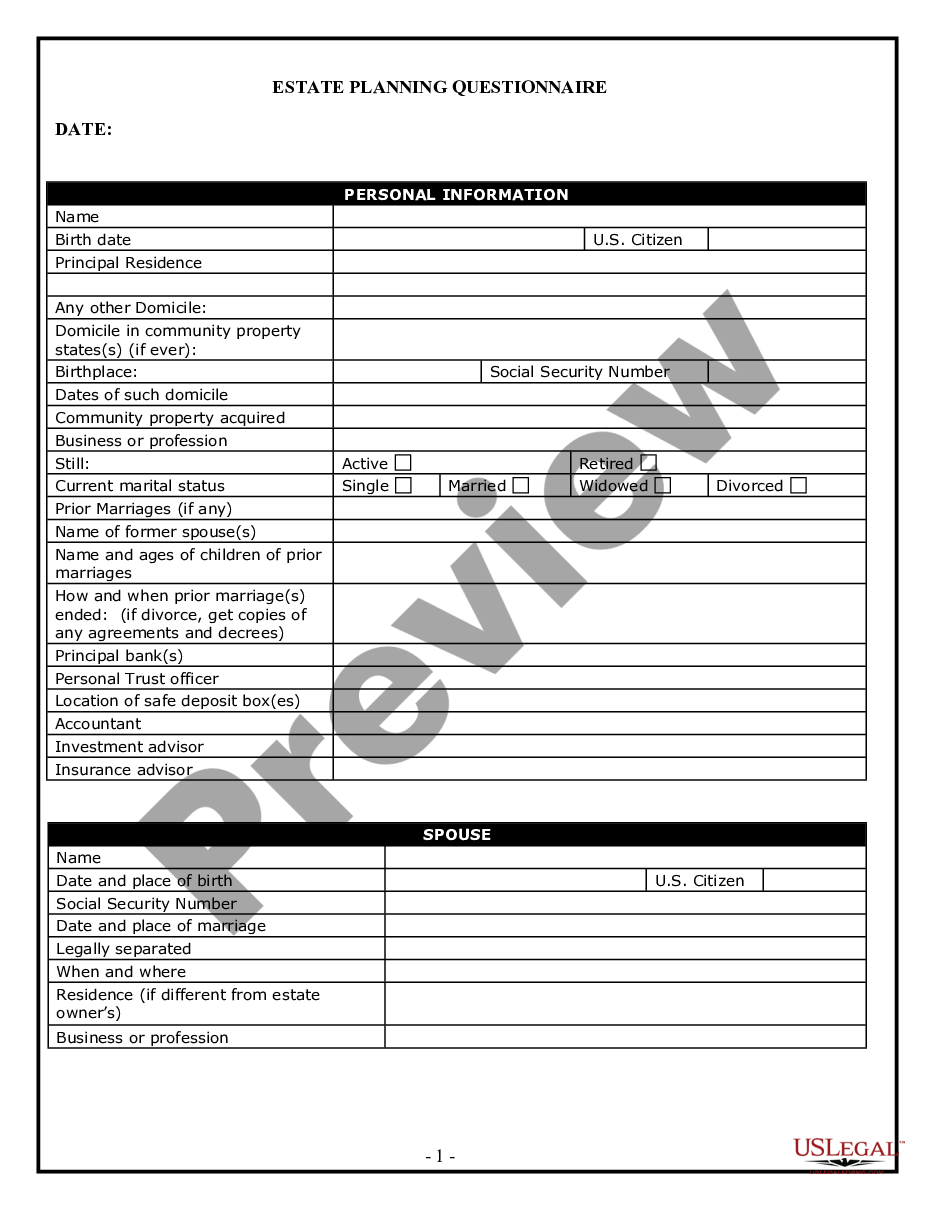
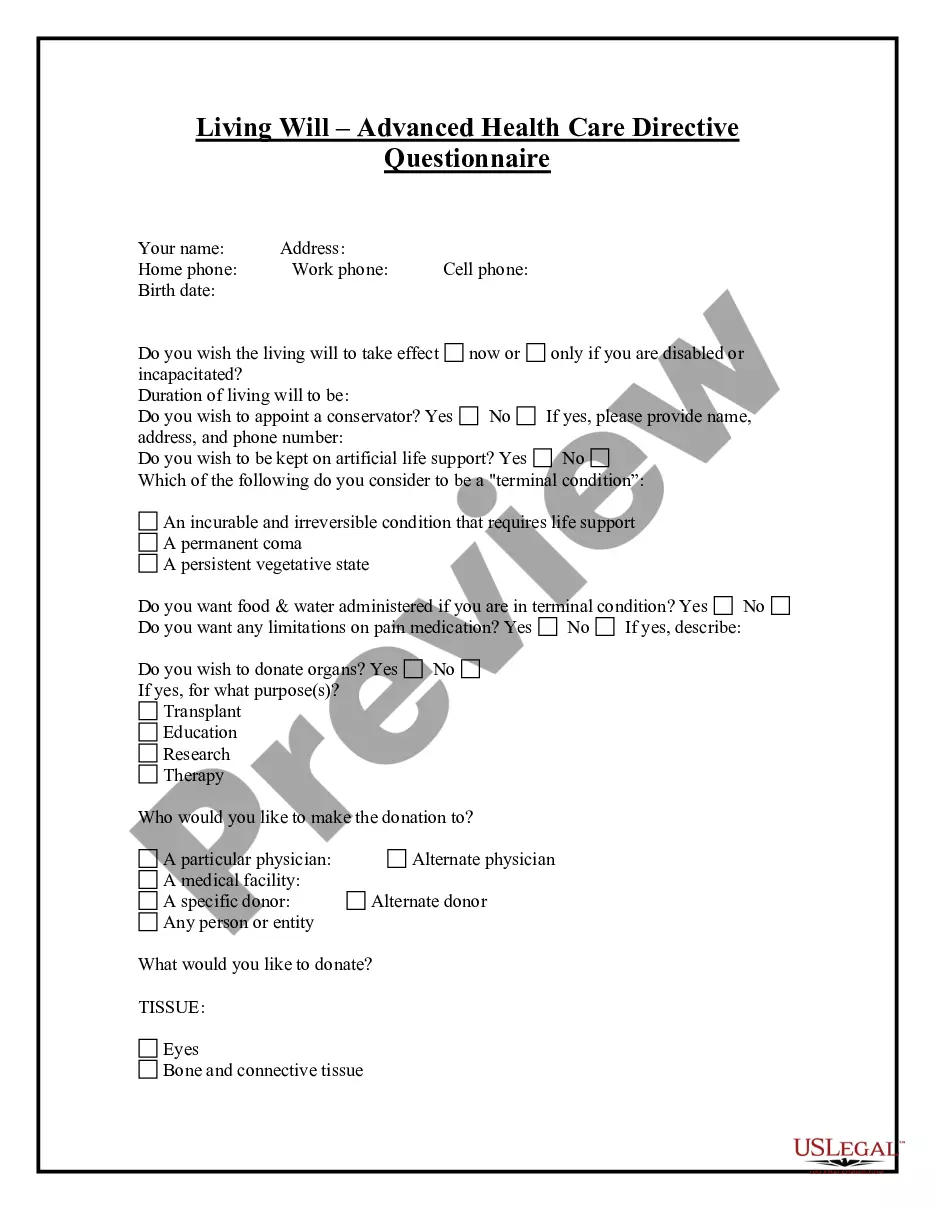
Get your form ready online
Our built-in tools help you complete, sign, share, and store your documents in one place.
Make edits, fill in missing information, and update formatting in US Legal Forms—just like you would in MS Word.
Download a copy, print it, send it by email, or mail it via USPS—whatever works best for your next step.
Sign and collect signatures with our SignNow integration. Send to multiple recipients, set reminders, and more. Go Premium to unlock E-Sign.
If this form requires notarization, complete it online through a secure video call—no need to meet a notary in person or wait for an appointment.
We protect your documents and personal data by following strict security and privacy standards.

Make edits, fill in missing information, and update formatting in US Legal Forms—just like you would in MS Word.

Download a copy, print it, send it by email, or mail it via USPS—whatever works best for your next step.

Sign and collect signatures with our SignNow integration. Send to multiple recipients, set reminders, and more. Go Premium to unlock E-Sign.

If this form requires notarization, complete it online through a secure video call—no need to meet a notary in person or wait for an appointment.

We protect your documents and personal data by following strict security and privacy standards.
Looking for another form?


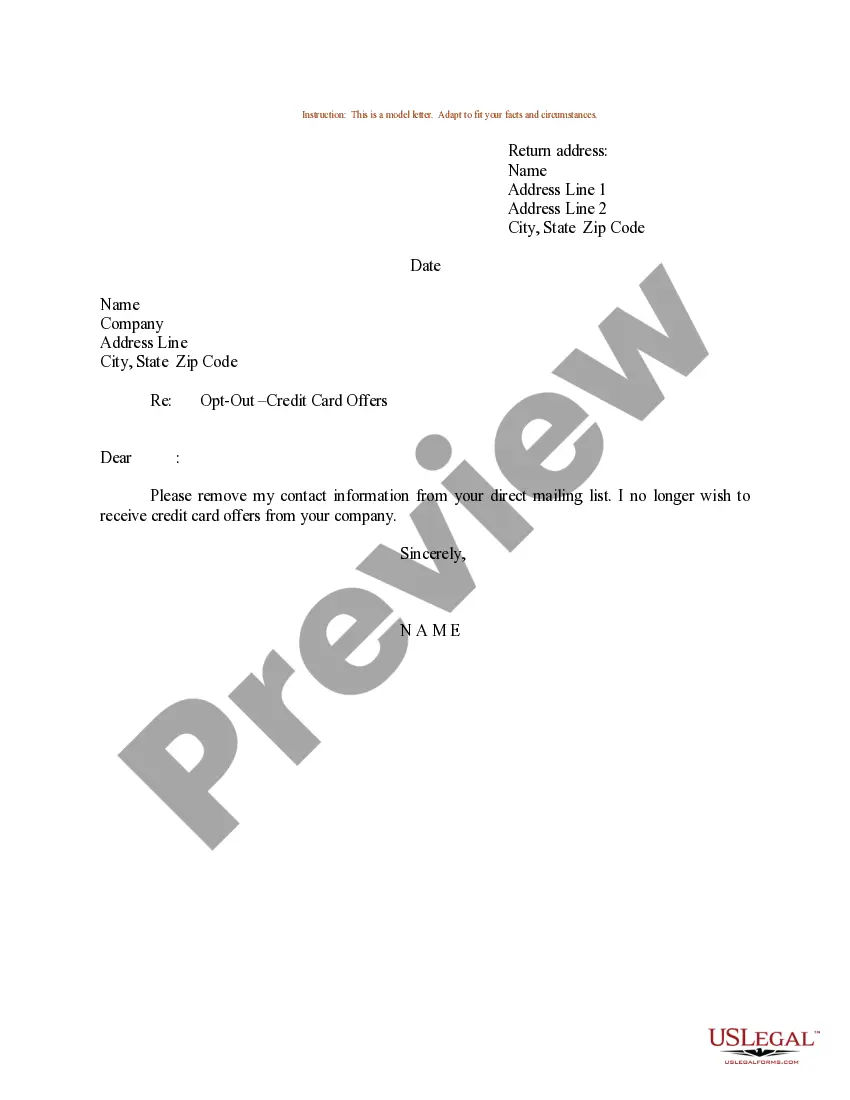


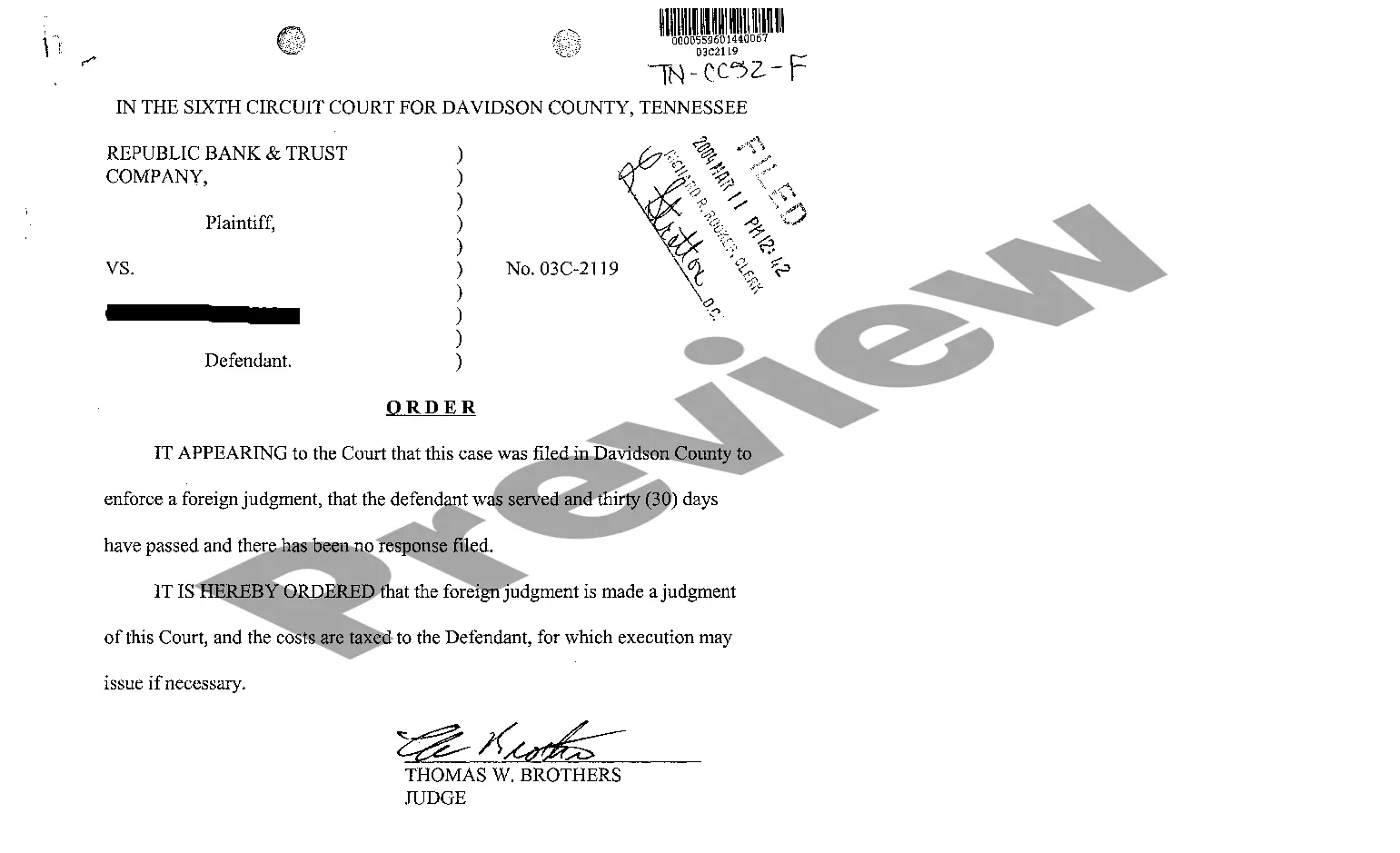



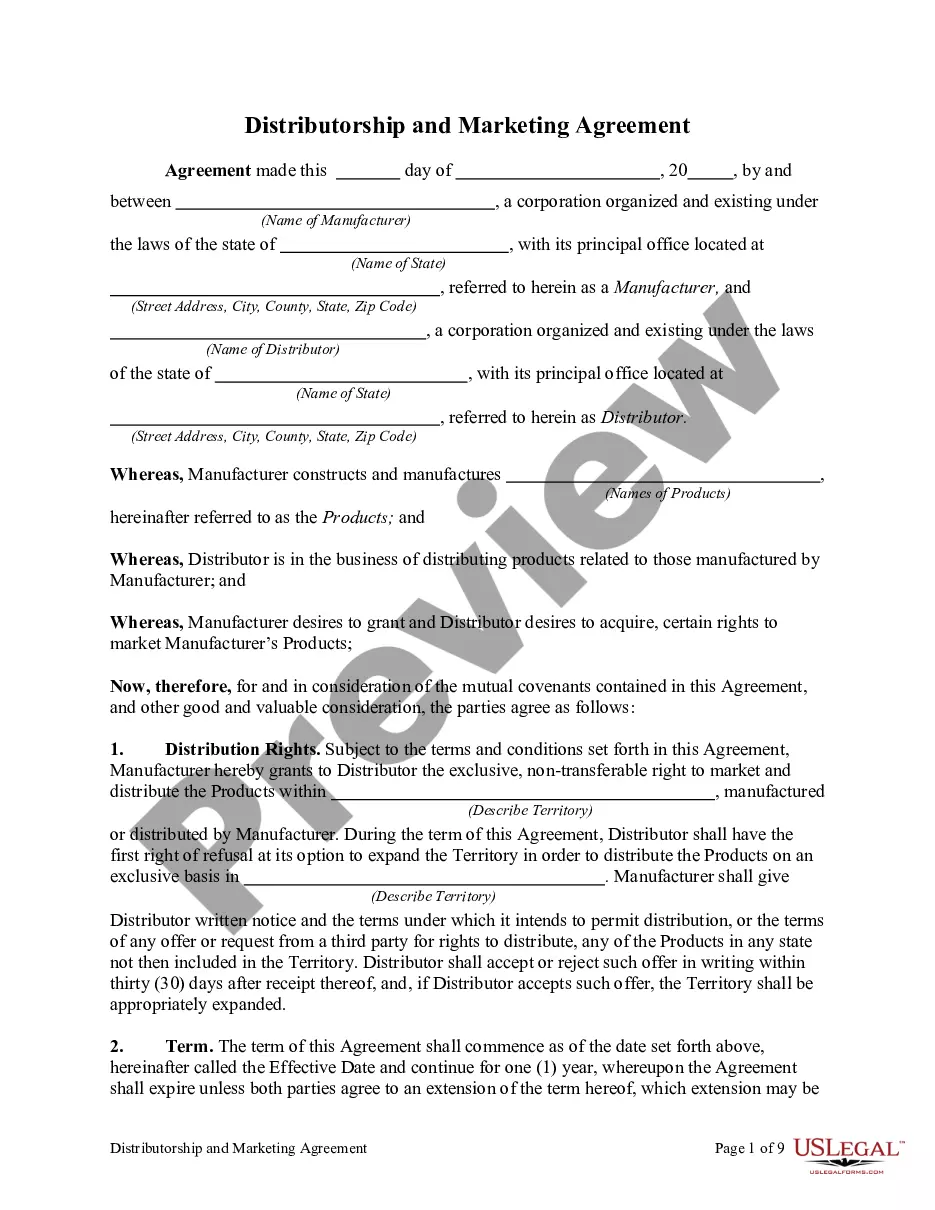
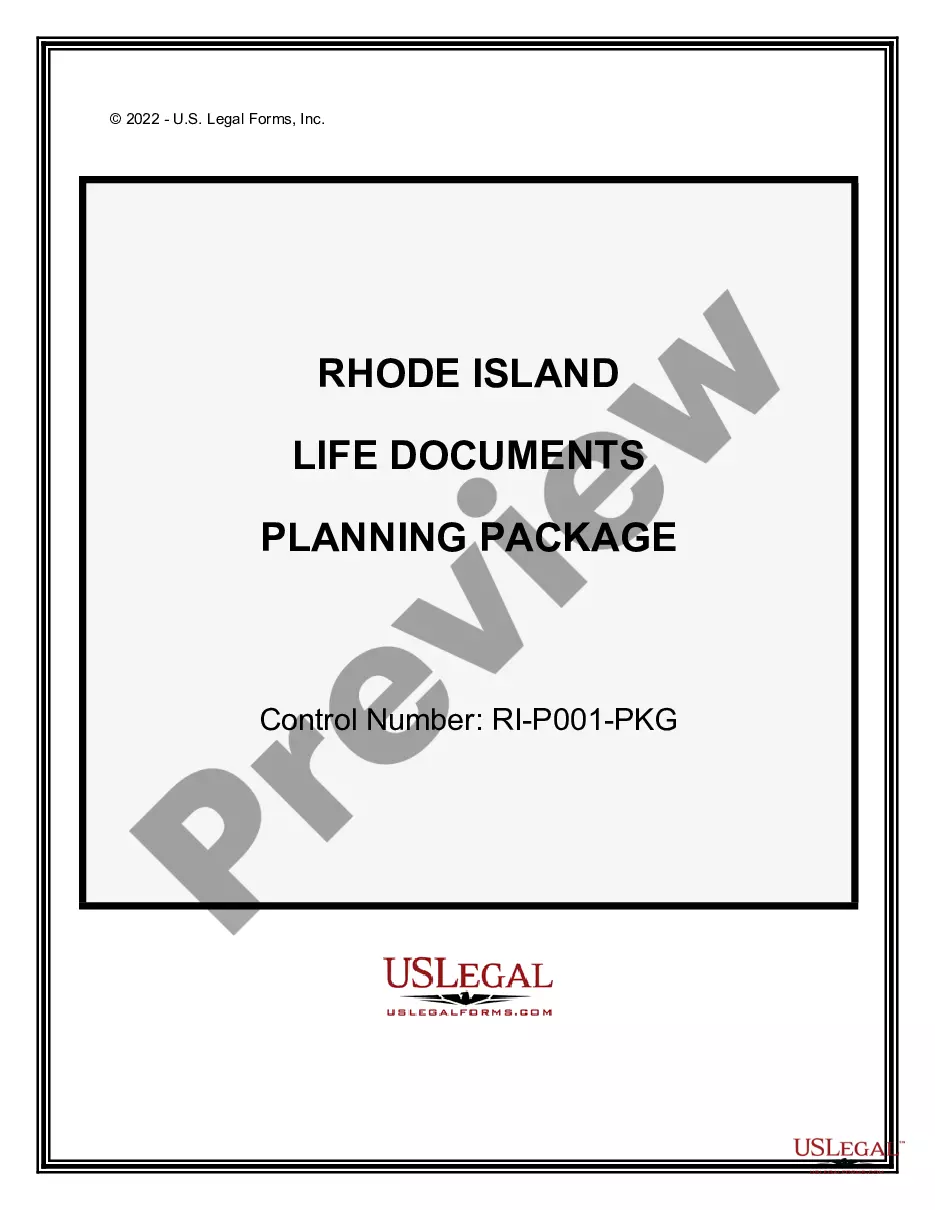
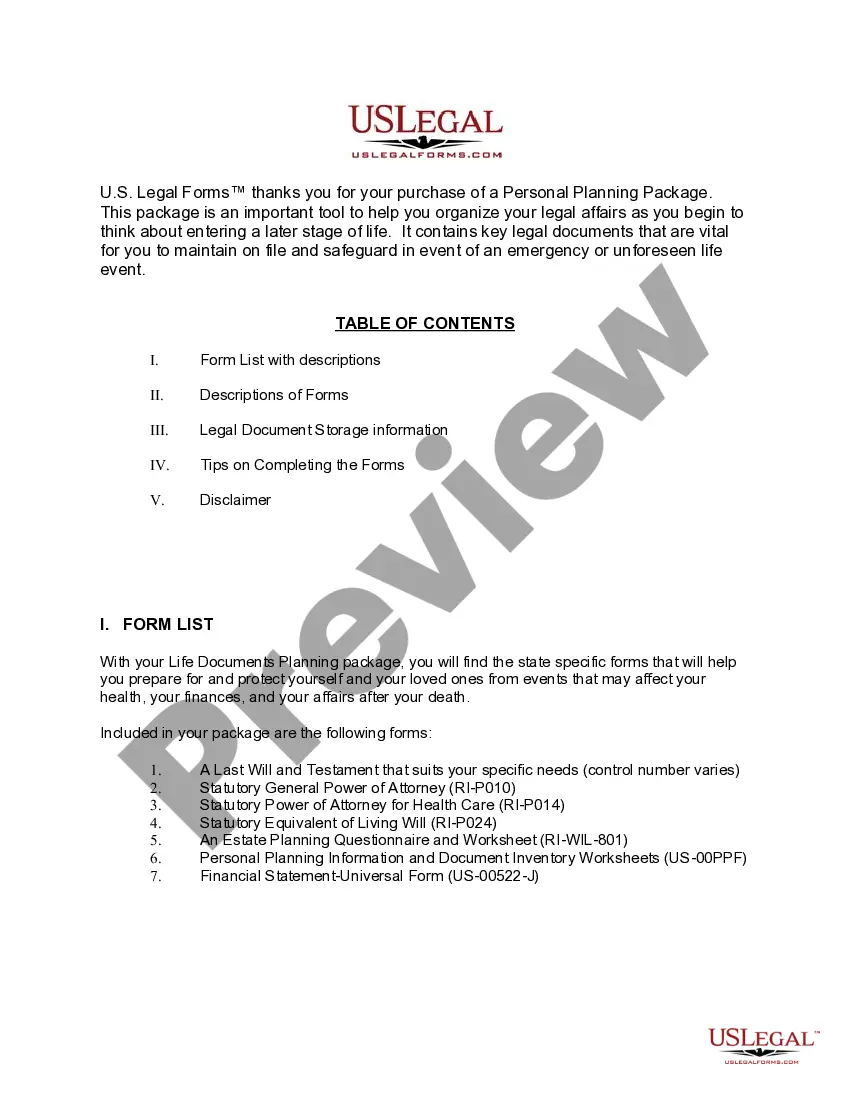
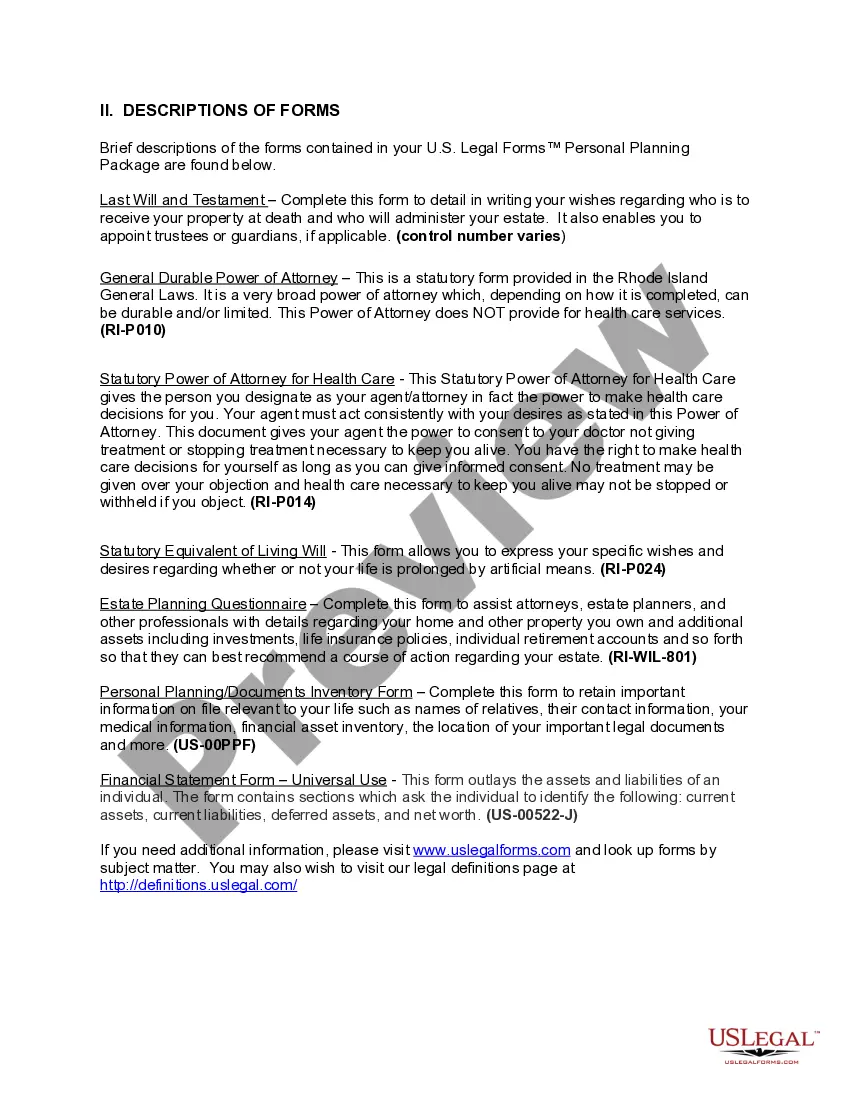
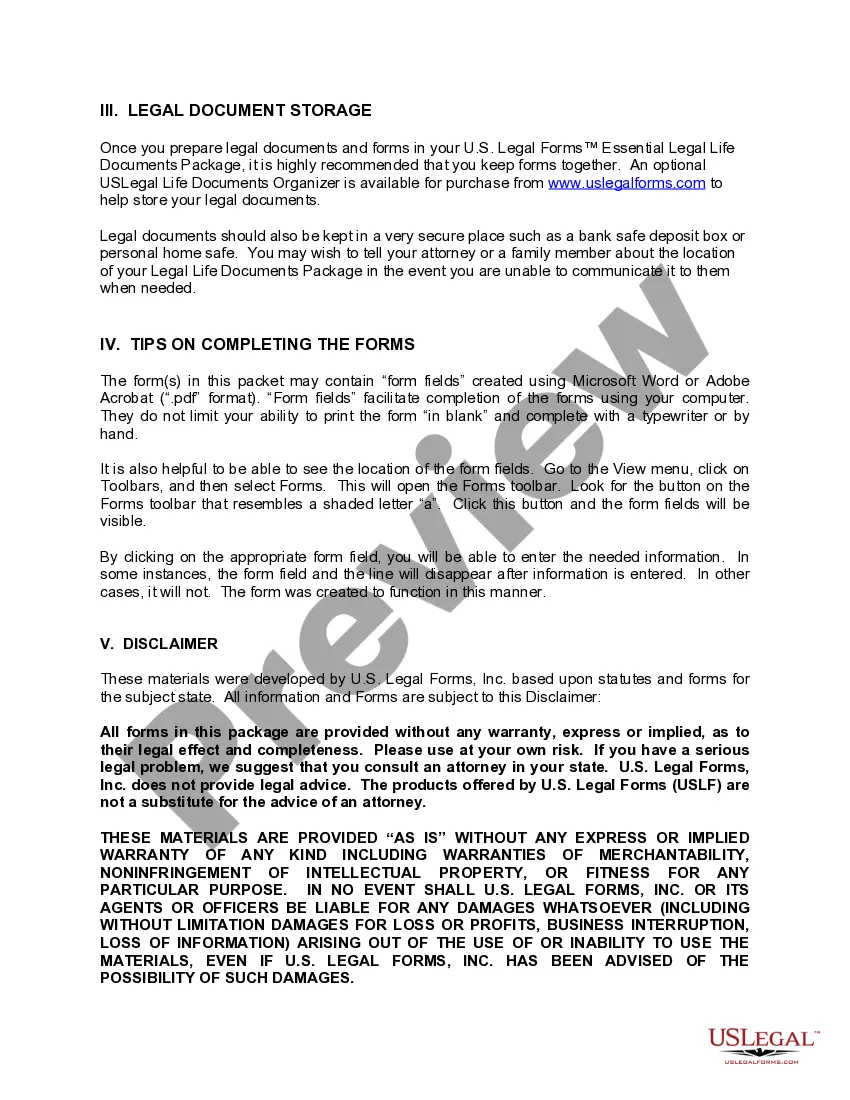
How to fill out Rhode Island Life Documents Planning Package, Including Will, Power Of Attorney And Living Will?
- Log in to your US Legal Forms account. If it’s your first time, click 'Sign Up' to create your account for access.
- Browse through the Preview mode to find the will template that suits your needs and complies with local laws.
- If the desired template is not available, use the Search function to look for alternatives that match your requirements.
- Select the appropriate subscription plan by clicking 'Buy Now' once you’ve chosen your template.
- Complete your purchase by entering your payment details, either through credit card or PayPal.
- Download the completed will form directly onto your device from the 'My Forms' menu for easy access later.
In conclusion, US Legal Forms offers a robust collection of over 85,000 legal templates tailored to your requirements. This makes planning your will with the government straightforward and compliant. Don't wait to secure your future—explore the extensive resources available today.
Start your planning process with US Legal Forms now!
Form popularity
FAQ
The best person to act as a power of attorney is someone you trust entirely, with a deep understanding of your values and preferences. This could be a close family member, a friend, or a trusted advisor who will make decisions in your best interest. Selecting the right individual can greatly enhance your planning efforts, especially when interacting with government entities regarding your estate.
A power of attorney is designed to manage your affairs during your lifetime, whereas a will only takes effect after your death. Thus, the two serve different purposes in estate planning. When considering planning a will and working with government agencies, understanding these distinctions will empower you to make informed decisions.
Filling out a power of attorney letter requires specific information, including the principal's name, the agent's name, and the powers being granted. After listing the details, sign and date the letter in the presence of a notary. If you want a guided approach, uslegalforms offers templates that can simplify this process tremendously, especially when planning with a government entity.
When writing a will that includes a power of attorney, ensure you clearly state your wishes regarding asset distribution after your death. Then, designate your power of attorney within the same document, assigning them authority for financial decisions during your lifetime. This comprehensive approach aids in executing your wishes later, especially when planning with the government, as it clarifies the roles of all parties involved.
To address an envelope to a power of attorney, begin by writing the name of the individual or entity the power of attorney represents. Include their title or the designation of power of attorney, followed by their complete address. Clearly distinguishing between the principal's name and the agent's role helps make communication with the government or other entities more streamlined and effective in your planning process.
An estate planning attorney is often referred to simply as a lawyer specializing in estate law and planning. Their role is to assist clients in preparing crucial legal documents, such as wills and trusts, which are essential in effective asset management and transfer. When dealing with planning wills and any potential government interactions, leveraging the expertise of these attorneys ensures your documents meet all legal requirements.
Filling out a power of attorney form involves several key steps. First, you need to identify the principal, the person granting authority, and the agent, the person given that authority. After that, specify the powers being granted, whether general or limited, and make sure to sign in the presence of a notary to validate the document. Utilizing a reliable resource like uslegalforms can make this process much easier when planning with a government agency.
Signing as power of attorney means that you are acting on behalf of another person regarding their financial or legal matters. For instance, if your friend assigns you as their power of attorney, you can sign checks or make decisions for them when they are unable to do so. This authority is crucial in situations requiring immediate action, especially when planning with a government entity. Understanding the nuances of how to effectively execute this role can simplify your responsibilities.
Yes, a lawyer can certainly work for the government. Many attorneys choose to represent government entities, gaining valuable experience while serving the public. For those interested in estate planning or related legal services, connecting with a planning will attorney with the government can be a great step towards ensuring your wishes are legally recognized.
A lawyer for the government is often known as a government attorney or public sector lawyer. These individuals work within various government departments to address legal issues and ensure compliance with laws. When navigating complex legalities, consider seeking help from a planning will attorney with the government, who can help you plan effectively.