Tenant-in-common
Description

Get your form ready online
Our built-in tools help you complete, sign, share, and store your documents in one place.
Make edits, fill in missing information, and update formatting in US Legal Forms—just like you would in MS Word.
Download a copy, print it, send it by email, or mail it via USPS—whatever works best for your next step.
Sign and collect signatures with our SignNow integration. Send to multiple recipients, set reminders, and more. Go Premium to unlock E-Sign.
If this form requires notarization, complete it online through a secure video call—no need to meet a notary in person or wait for an appointment.
We protect your documents and personal data by following strict security and privacy standards.

Make edits, fill in missing information, and update formatting in US Legal Forms—just like you would in MS Word.

Download a copy, print it, send it by email, or mail it via USPS—whatever works best for your next step.

Sign and collect signatures with our SignNow integration. Send to multiple recipients, set reminders, and more. Go Premium to unlock E-Sign.

If this form requires notarization, complete it online through a secure video call—no need to meet a notary in person or wait for an appointment.

We protect your documents and personal data by following strict security and privacy standards.
Looking for another form?





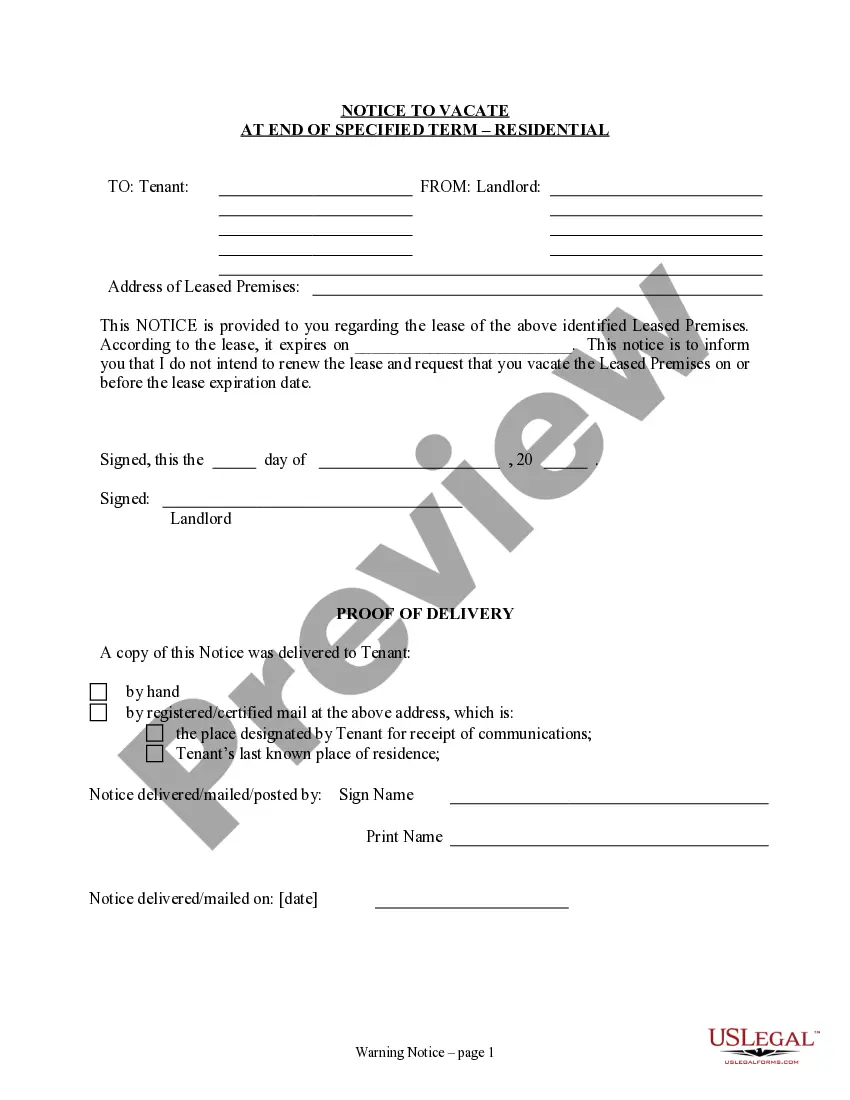
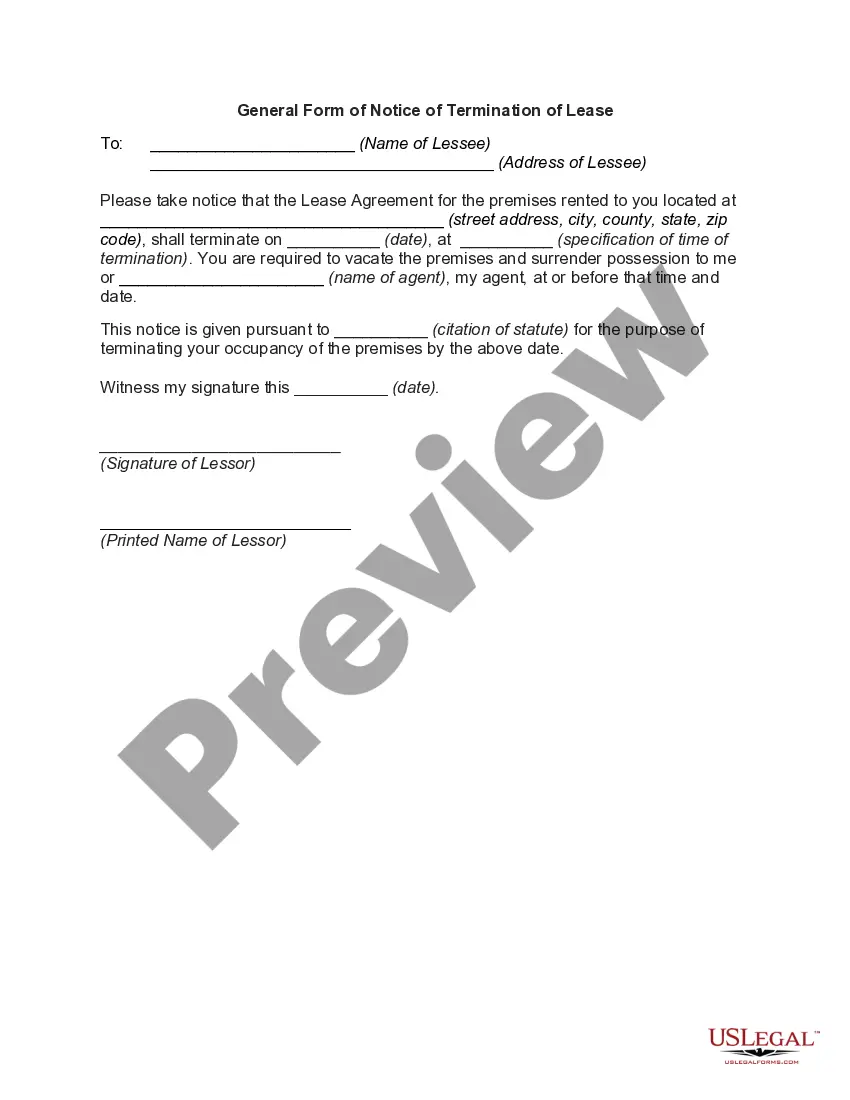
How to fill out Pennsylvania Notice Of Intent Not To Renew At End Of Specified Term From Landlord To Tenant For Residential Property?
- Log in to your account if you’re an existing user, ensuring your subscription is active. If needed, renew your plan to maintain access.
- For first-time users, start by checking the Preview mode to verify the form matches your local requirements.
- If the initial form does not fit your needs, use the Search feature to find other suitable templates.
- Once you've found the appropriate document, click the 'Buy Now' button and select a subscription plan that works for you.
- Complete your purchase with your credit card or PayPal information, enabling full access to the library.
- Finally, download your chosen form and save it on your device to begin filling it out. You can also access it later via the 'My Forms' section in your profile.
Using US Legal Forms not only streamlines your document creation process but also ensures that you have access to premium resources and expert advice for accuracy.
Take control of your tenant-in-common needs today with US Legal Forms and explore our vast library of legal templates with confidence!
Form popularity
FAQ
Calculating tenancy in common involves identifying each owner's financial contribution to the property. You should total the contributions and then determine the percentage each individual investment represents. For example, if one owner puts in $50,000 and another $150,000 for a $200,000 property, the ownership would be 25% for the first and 75% for the second. This calculation is essential for understanding each party’s rights.
To calculate ownership percentage in a tenant-in-common arrangement, you need to determine the total investment each owner made in the property. For example, if one owner invests $70,000 and another invests $30,000 in a $100,000 property, the first owner holds 70% ownership. This percentage is crucial as it may affect decision-making and profit distribution in the property.
A tenant in common is a legal arrangement where two or more individuals own a property together. For instance, if two friends buy a vacation home, they may choose to be tenants in common. In this case, each friend holds a specific percentage of ownership in the property, which can differ based on their contributions. This arrangement allows each owner the freedom to sell their share independently.
To start a tenant-in-common, gather your co-owners and agree on the property and ownership percentages. After that, discuss the terms of your arrangement, focusing on management, financial responsibilities, and future sale options. Documenting this agreement is crucial to prevent misunderstandings later. Utilizing US Legal Forms can provide you with an effective framework for your tenancy in common setup.
Setting up a tenancy in common involves drafting a legal document that clearly outlines each party's ownership interests and rights. You and your co-owners should identify the property and specify the percentage of ownership for each tenant-in-common. It’s advisable to consult with a legal professional to ensure the agreement meets your needs and complies with local laws. Using US Legal Forms can streamline this process with easy-to-use templates.
While tenancy in common offers flexibility, it also comes with some disadvantages. Co-owners might face disputes over property management decisions, and one owner can force a sale of the property, which may not rest well with the others. Additionally, if one owner encounters financial trouble or passes away, it can complicate the ownership arrangement. Being aware of these potential issues can help tenants in common plan effectively.
In California, tenancy in common allows multiple individuals to own a property together without any requirement for equal shares. Each tenant-in-common can manage and sell their share independently, making it a flexible ownership structure. The law requires a written agreement to outline each co-owner's rights and responsibilities, ensuring clarity and minimizing conflicts. For assistance in drafting a comprehensive agreement, consider US Legal Forms.
The IRS treats tenants in common as co-owners of property, which has specific implications for taxation. Each tenant-in-common reports their share of income, expenses, and deductions related to the property on their individual tax returns. This means that if the property generates income, each co-owner is responsible for reporting their portion. Understanding these rules helps ensure compliance and optimizes tax benefits.
The IRS defines common ownership primarily in the context of property shared between individuals where each has an interest. This definition includes tenants in common, who own portions of a property and have the right to benefit from it. Understanding this can impact how you report income and handle taxes related to your investment. Consulting tax professionals or resources like USLegalForms can help clarify your responsibilities.
Yes, Georgia recognizes tenants in common as a valid form of property ownership. In this arrangement, co-owners enjoy the right to use the property while holding distinct shares. This recognition offers flexibility for individuals looking to co-invest in real estate in Georgia. For specific details, consulting legal resources or platforms such as USLegalForms can be beneficial.