Pennsylvania Homes For Rent
Description
Get your form ready online
Our built-in tools help you complete, sign, share, and store your documents in one place.
Make edits, fill in missing information, and update formatting in US Legal Forms—just like you would in MS Word.
Download a copy, print it, send it by email, or mail it via USPS—whatever works best for your next step.
Sign and collect signatures with our SignNow integration. Send to multiple recipients, set reminders, and more. Go Premium to unlock E-Sign.
If this form requires notarization, complete it online through a secure video call—no need to meet a notary in person or wait for an appointment.
We protect your documents and personal data by following strict security and privacy standards.

Make edits, fill in missing information, and update formatting in US Legal Forms—just like you would in MS Word.

Download a copy, print it, send it by email, or mail it via USPS—whatever works best for your next step.

Sign and collect signatures with our SignNow integration. Send to multiple recipients, set reminders, and more. Go Premium to unlock E-Sign.

If this form requires notarization, complete it online through a secure video call—no need to meet a notary in person or wait for an appointment.

We protect your documents and personal data by following strict security and privacy standards.
Looking for another form?
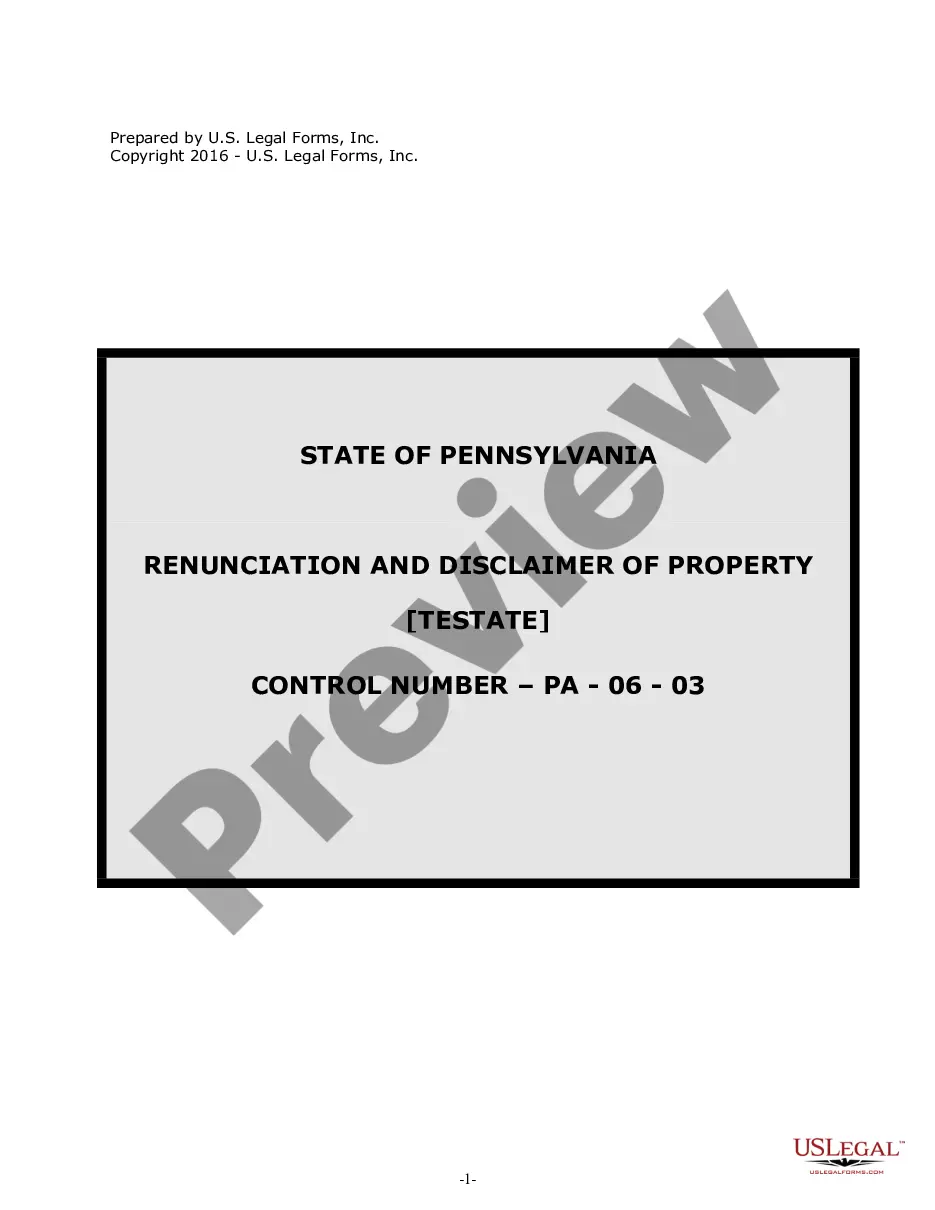
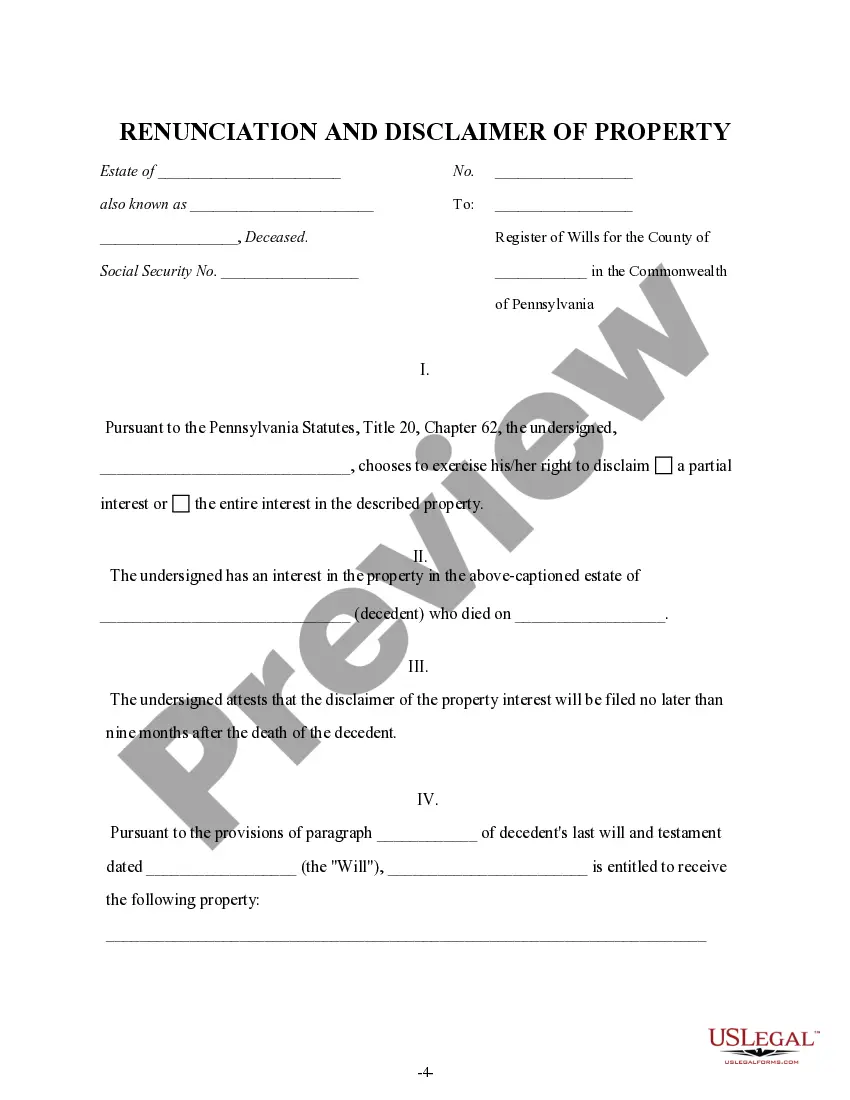
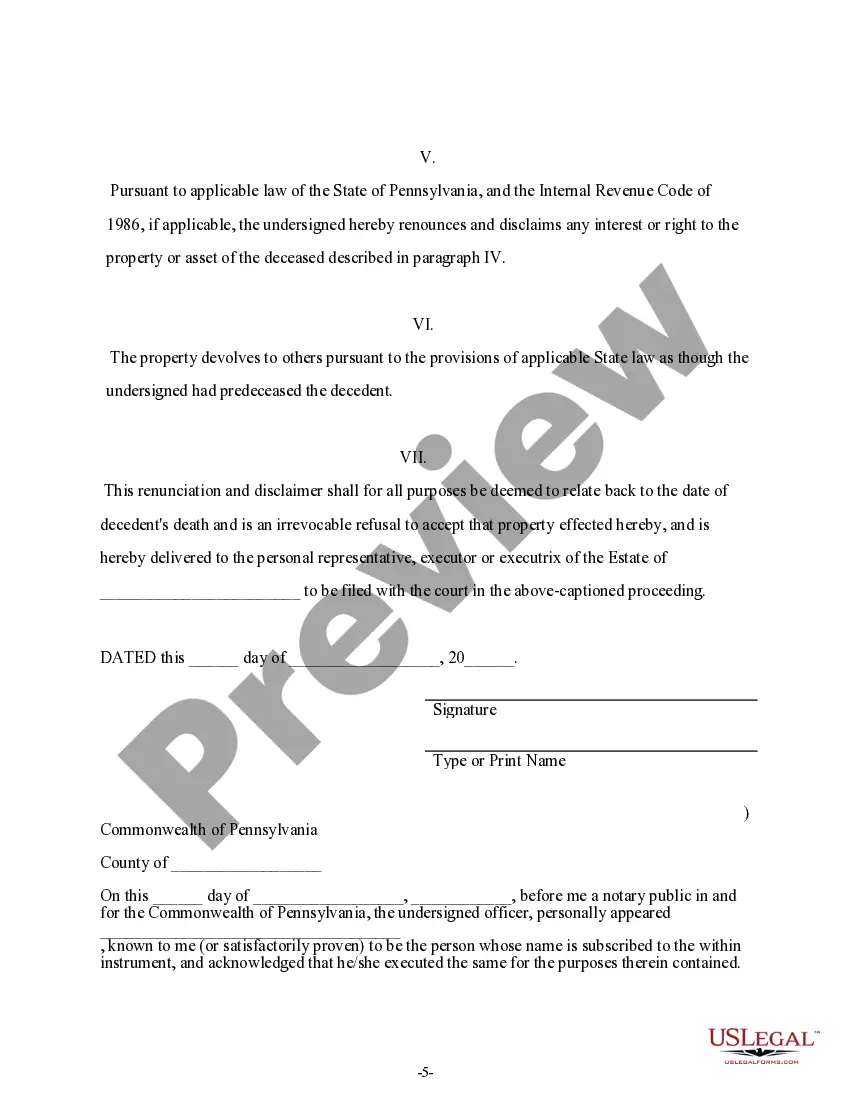
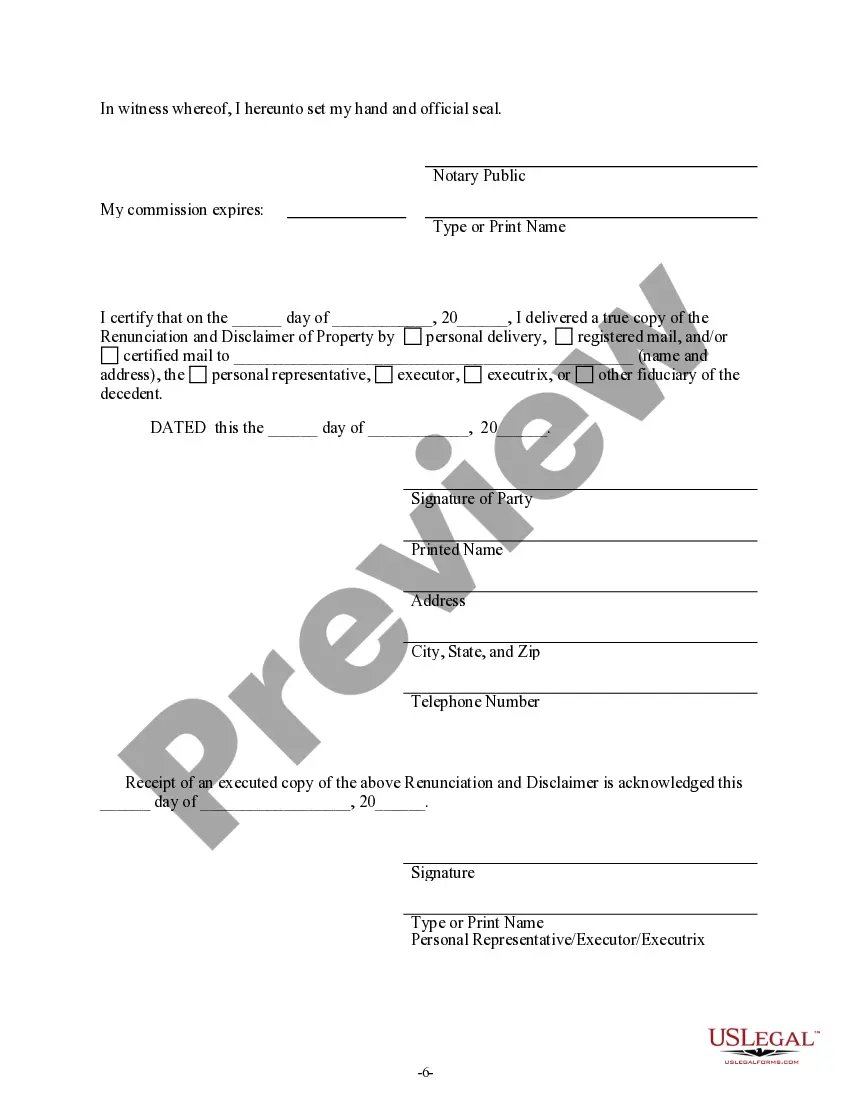
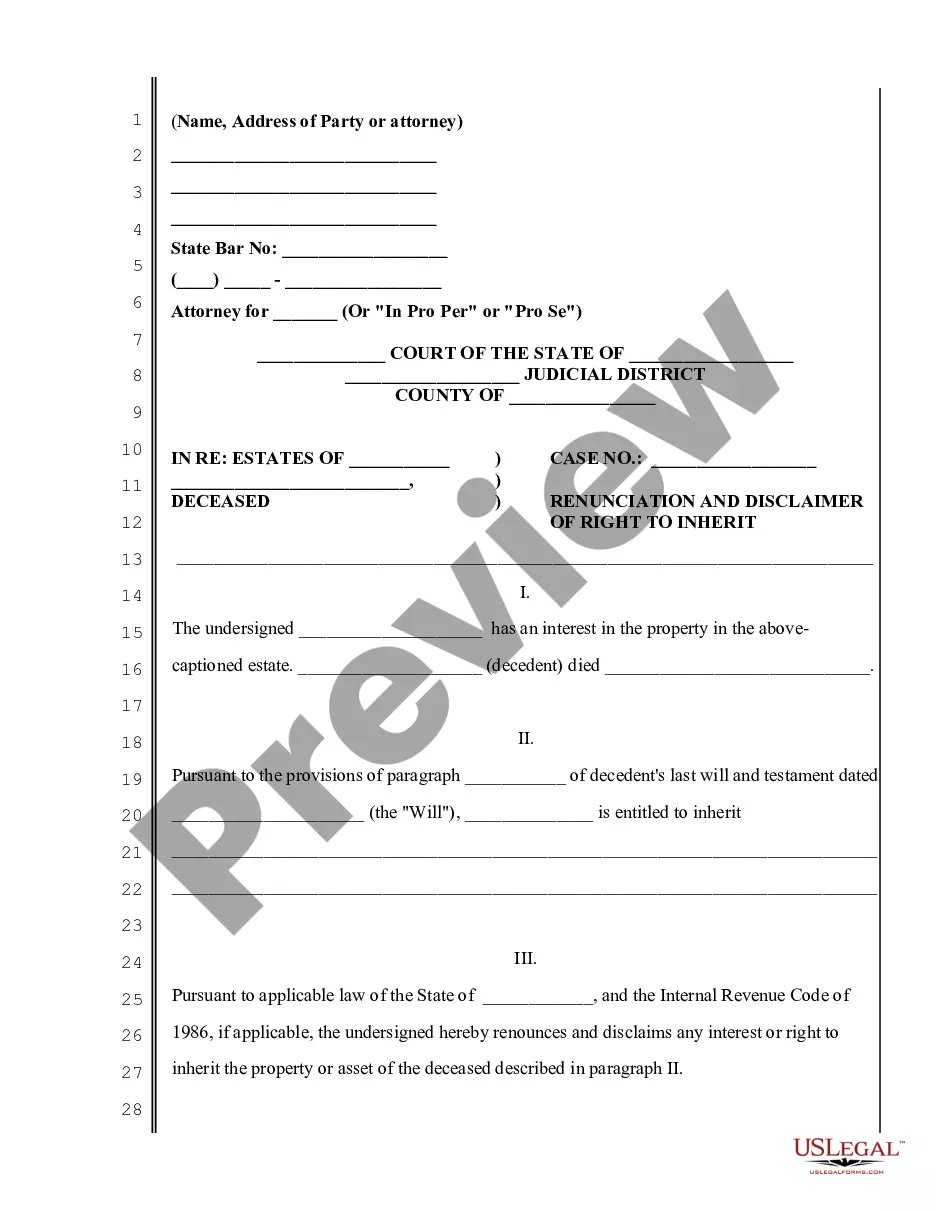
How to fill out Pennsylvania Renunciation And Disclaimer Of Property From Will By Testate?
The Pennsylvania Rental Properties you observe on this site is a reusable formal model crafted by expert attorneys conforming to federal and state regulations.
For over 25 years, US Legal Forms has supplied individuals, organizations, and legal professionals with more than 85,000 authenticated, state-specific documents for any business and personal situation. It serves as the quickest, easiest, and most reliable method to acquire the forms you require, as the service promises the utmost level of data security and anti-malware safeguards.
Register for US Legal Forms to have validated legal templates for all of life's events accessible at your fingertips.
- Search for the document you require and review it.
- Examine the file you searched and view it or check the form description to ensure it meets your needs. If it doesn’t, utilize the search option to locate the suitable one. Click Buy Now when you have identified the template you require.
- Register and Log In.
- Choose the pricing plan that fits you and create an account. Use PayPal or a credit card for a swift transaction. If you already possess an account, Log In and review your subscription to proceed.
- Acquire the editable template.
- Select the format you desire for your Pennsylvania Rental Properties (PDF, Word, RTF) and download the sample to your device.
- Complete and sign the documents.
- Print the template to fill it out by hand. Alternatively, employ an online multipurpose PDF editor to quickly and accurately fill out and sign your form with an electronic signature.
- Download your documents again.
- Retrieve the same document as needed. Access the My documents section in your account to redownload any previously downloaded forms.
Form popularity
FAQ
The 50/30/20 rule is a budgeting guideline that can help potential renters manage their housing costs effectively. It suggests allocating 50% of your income to necessities, 30% to wants, and 20% to savings and debt repayment. For those searching for Pennsylvania homes for rent, applying this rule can help ensure that rental payments fit comfortably within your financial plan.
To rent out your house in Pennsylvania, first, prepare your property for tenants by making necessary repairs and cleaning. Next, create a detailed rental listing that includes attractive photos and key details about the home. Finally, you can advertise your Pennsylvania homes for rent on various online listing platforms or consider using a property management service for assistance.
In Pennsylvania, you generally do not need a specific state license to rent out a house. However, certain local municipalities may have their own licensing requirements for landlords. Before listing your Pennsylvania homes for rent, it’s essential to check local regulations to ensure compliance and avoid any potential fines.
When renting out Pennsylvania homes for rent, you typically need to complete a residential lease agreement. This form outlines the terms of the rental, including rent amount, duration, and responsibilities of both the tenant and landlord. Utilizing platforms like USLegalForms can simplify this process by providing access to easy-to-use templates tailored for Pennsylvania rental agreements.
Filing a rental in Pennsylvania generally involves having the proper lease agreement and ensuring all essential information is clearly documented. You should provide the tenant with a signed copy of the lease and adhere to any local filing requirements. When considering Pennsylvania homes for rent, using platforms like USLegalForms can assist you with necessary documents and streamline the rental process efficiently.
While a state license is not generally necessary to rent your house in Pennsylvania, many local governments have their own rules, which could require a rental license. Researching your local laws is crucial to avoid penalties. When you're looking for Pennsylvania homes for rent, knowing the licensing requirements protects you and your investment. USLegalForms offers valuable resources to understand local legislation.
To apply for a rent rebate in Pennsylvania, you typically need to provide proof of income, a completed application form, and any additional documentation that verifies your eligibility. This may include your Social Security number and proof of residency. If you are looking for Pennsylvania homes for rent, understanding the rebate process can help you manage finances effectively. USLegalForms can provide the necessary forms to make this easier.
In Pennsylvania, a landlord does not always need a license to rent out a property, but specific local laws may require one. It's essential to check your municipality's regulations regarding landlords. This will ensure compliance and the legal renting of Pennsylvania homes for rent. If you're unsure, consider consulting legal resources or platforms like USLegalForms for assistance.
While Pennsylvania is known for its reasonable rental prices, states like West Virginia often boast the lowest rent nationwide. However, you must consider practical reasons for choosing where to live, such as job availability and lifestyle preferences. If you're focused on affordability, see what Pennsylvania homes for rent offer comparable value. Investigating options will ultimately lead to successful renting experiences.
Rental prices in Pennsylvania can be steep due to a variety of factors, including market demand and economic growth. Areas with higher employment opportunities tend to experience a surge in rental costs, especially in urban centers. This economic dynamic means that housing options can be limited, making it imperative to seek the best Pennsylvania homes for rent efficiently. Being informed about local trends will aid you in finding a suitable rental.