Or Name Change For Facebook
Description
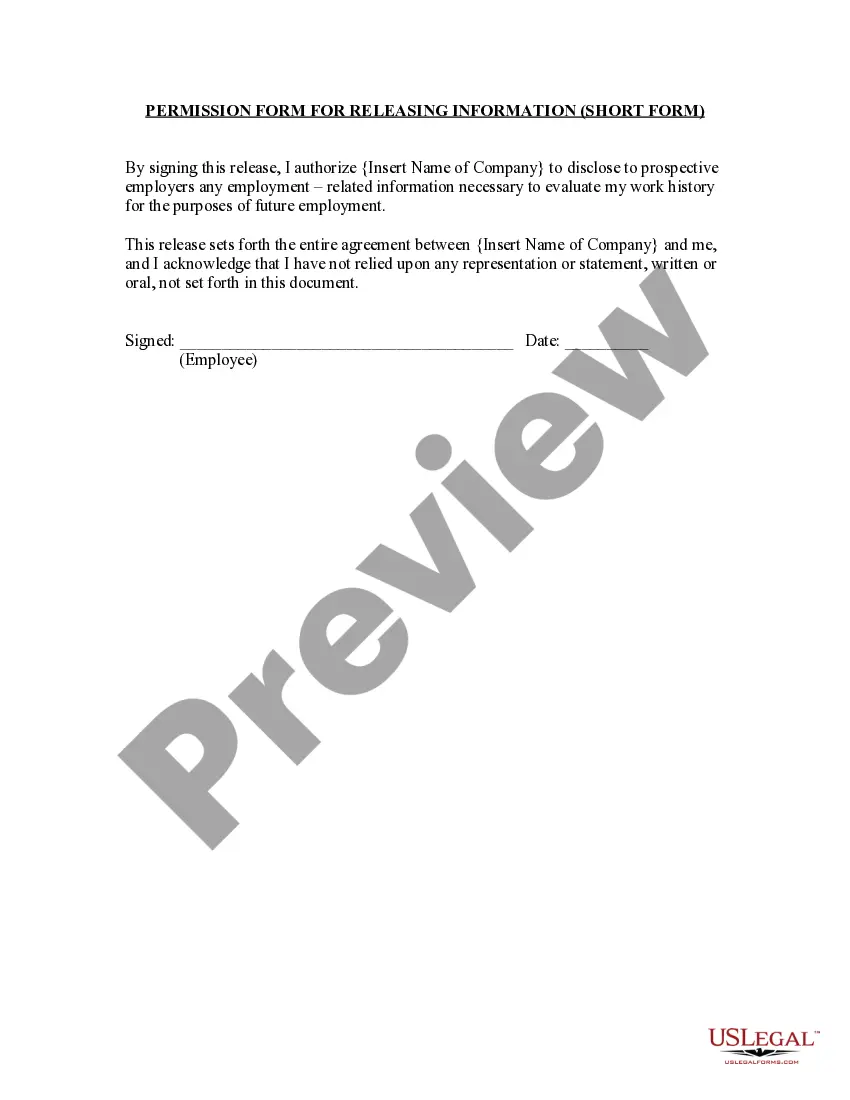

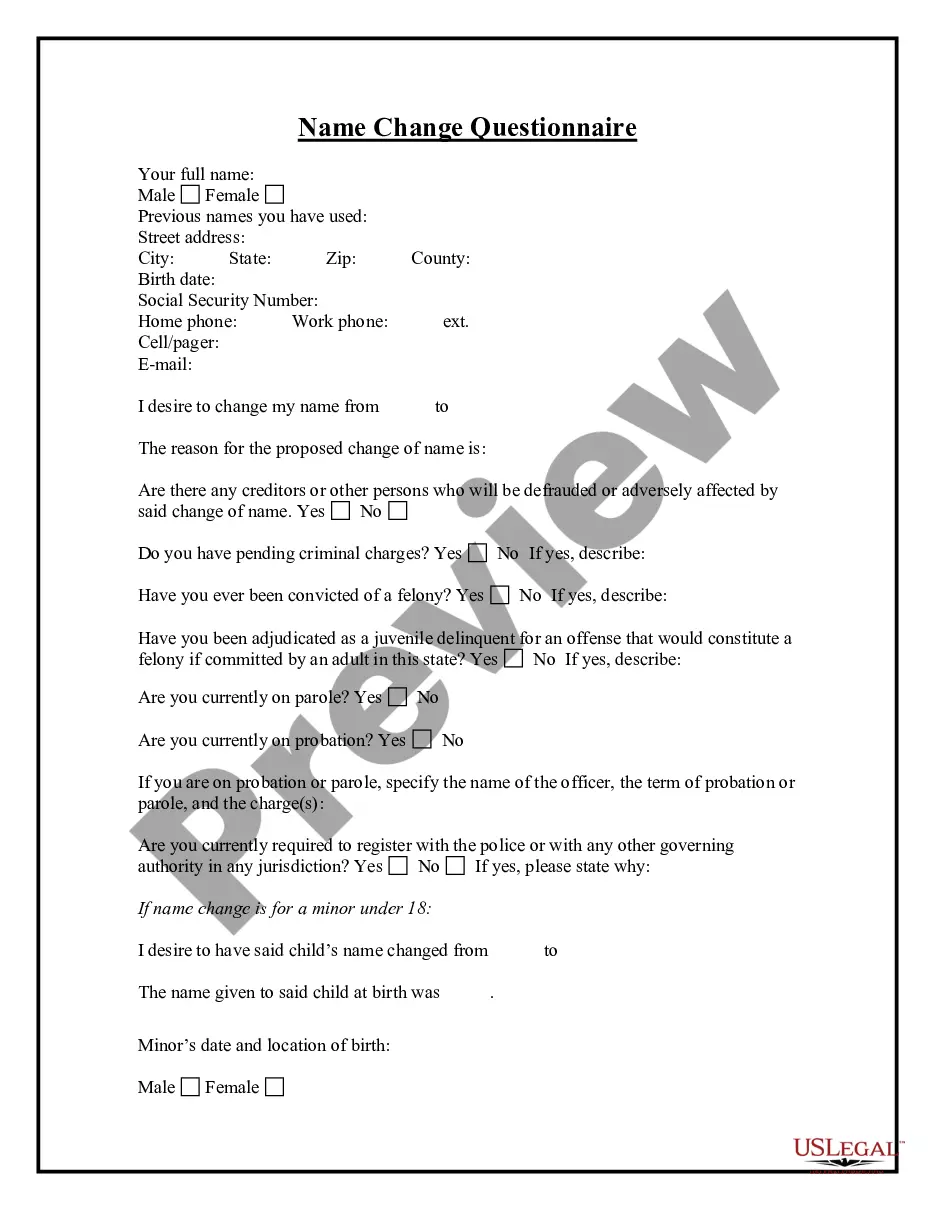
Get your form ready online
Our built-in tools help you complete, sign, share, and store your documents in one place.
Make edits, fill in missing information, and update formatting in US Legal Forms—just like you would in MS Word.
Download a copy, print it, send it by email, or mail it via USPS—whatever works best for your next step.
Sign and collect signatures with our SignNow integration. Send to multiple recipients, set reminders, and more. Go Premium to unlock E-Sign.
If this form requires notarization, complete it online through a secure video call—no need to meet a notary in person or wait for an appointment.
We protect your documents and personal data by following strict security and privacy standards.

Make edits, fill in missing information, and update formatting in US Legal Forms—just like you would in MS Word.

Download a copy, print it, send it by email, or mail it via USPS—whatever works best for your next step.

Sign and collect signatures with our SignNow integration. Send to multiple recipients, set reminders, and more. Go Premium to unlock E-Sign.

If this form requires notarization, complete it online through a secure video call—no need to meet a notary in person or wait for an appointment.

We protect your documents and personal data by following strict security and privacy standards.
Looking for another form?
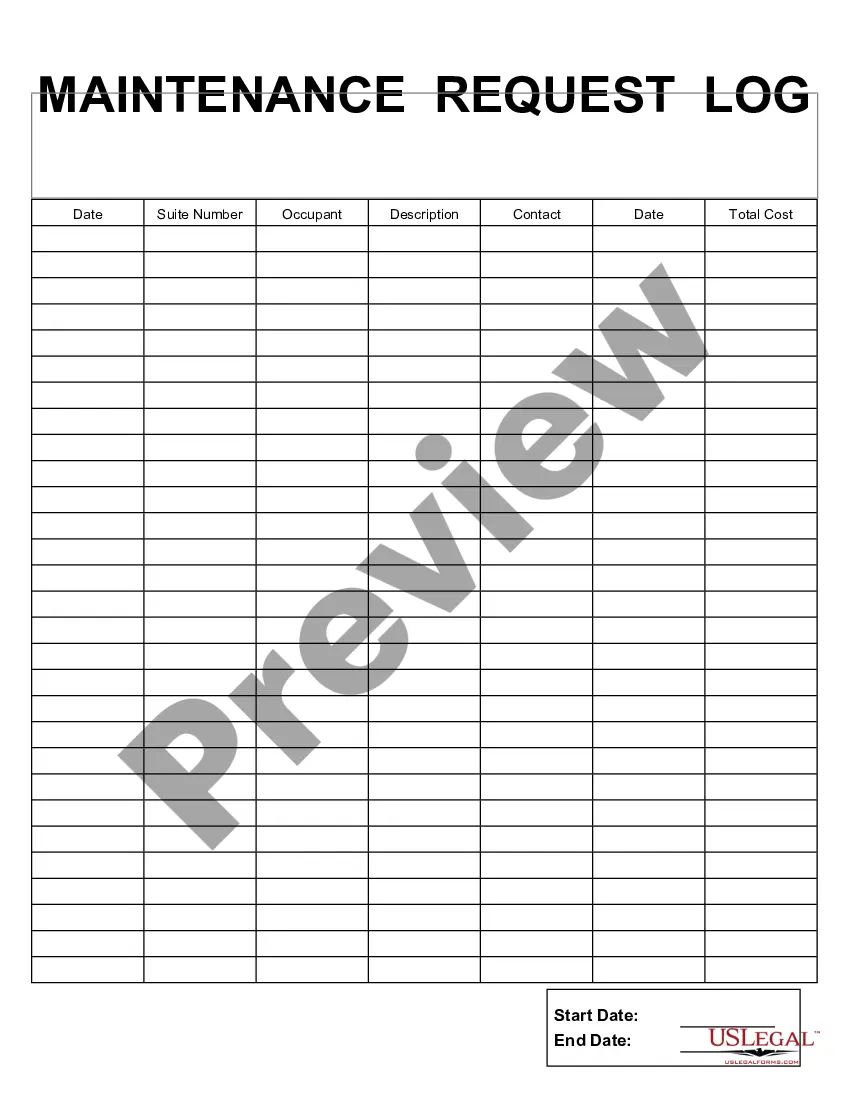


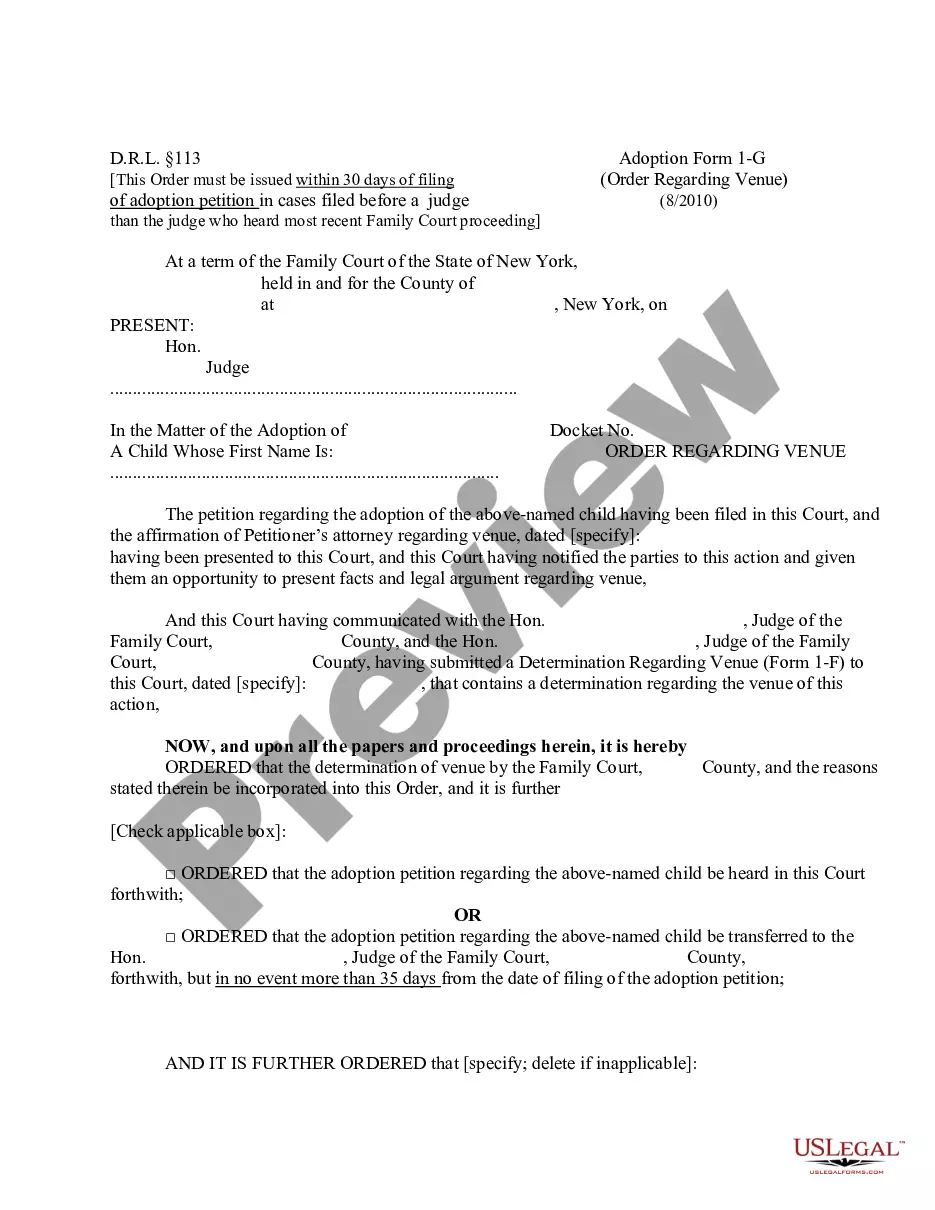




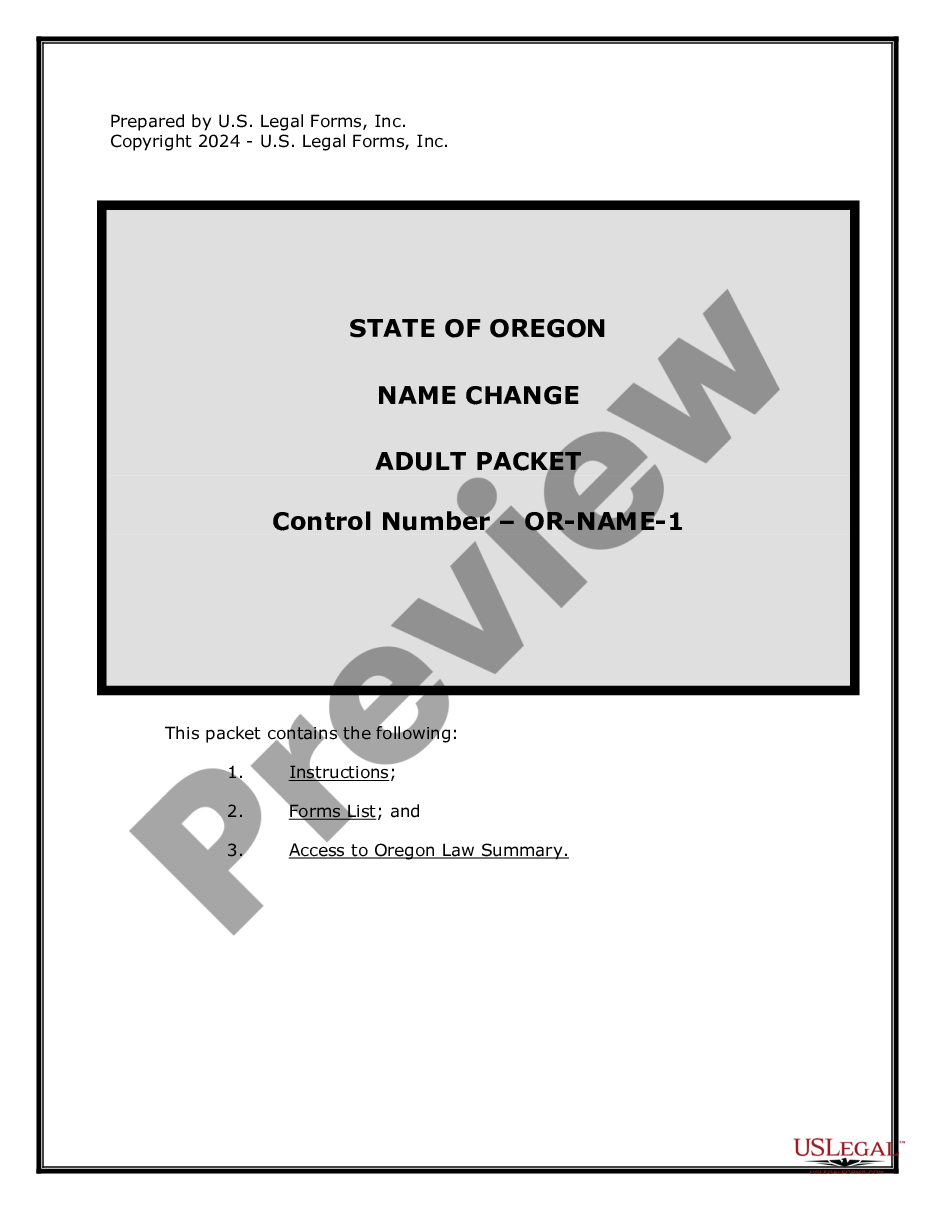
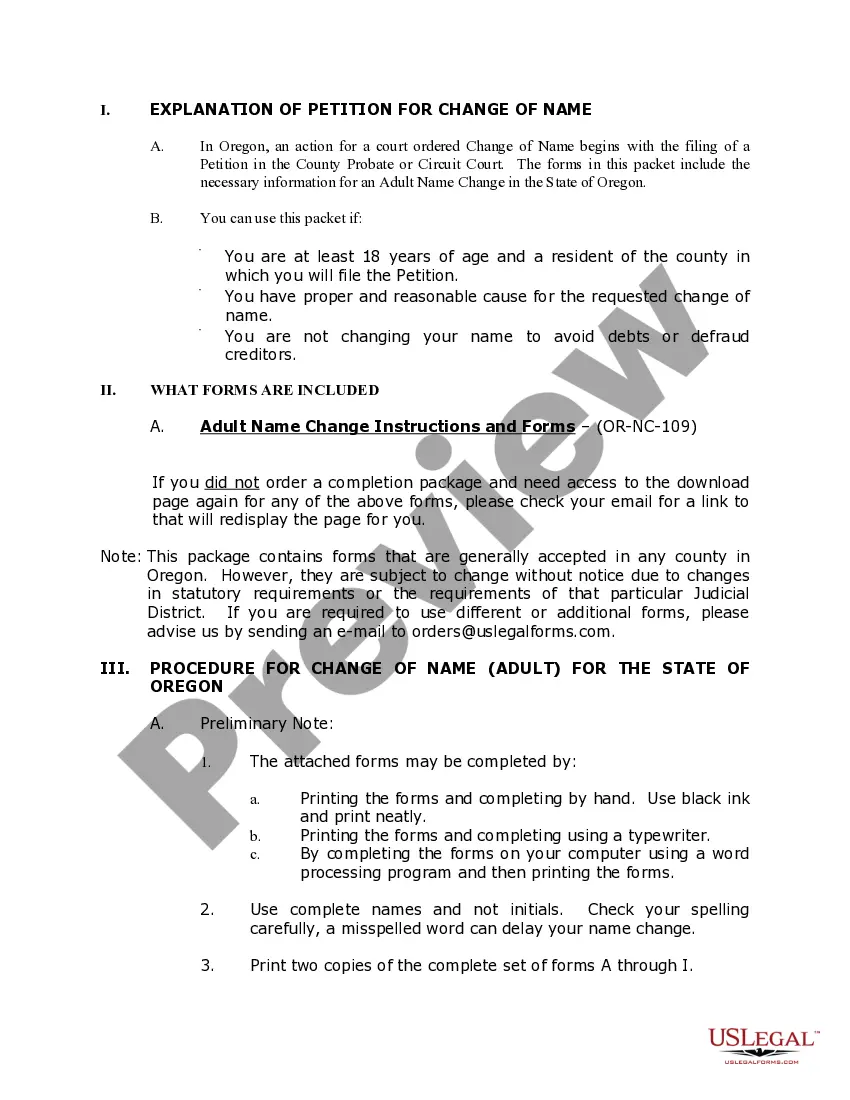
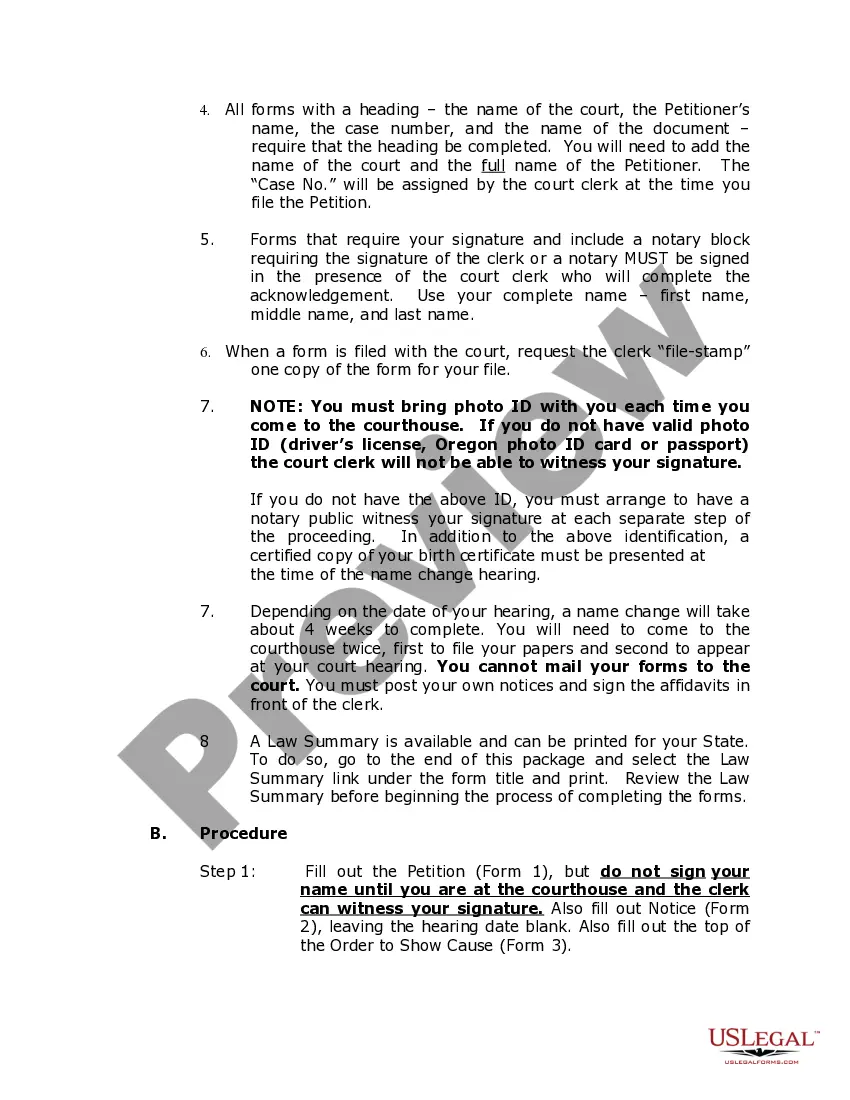
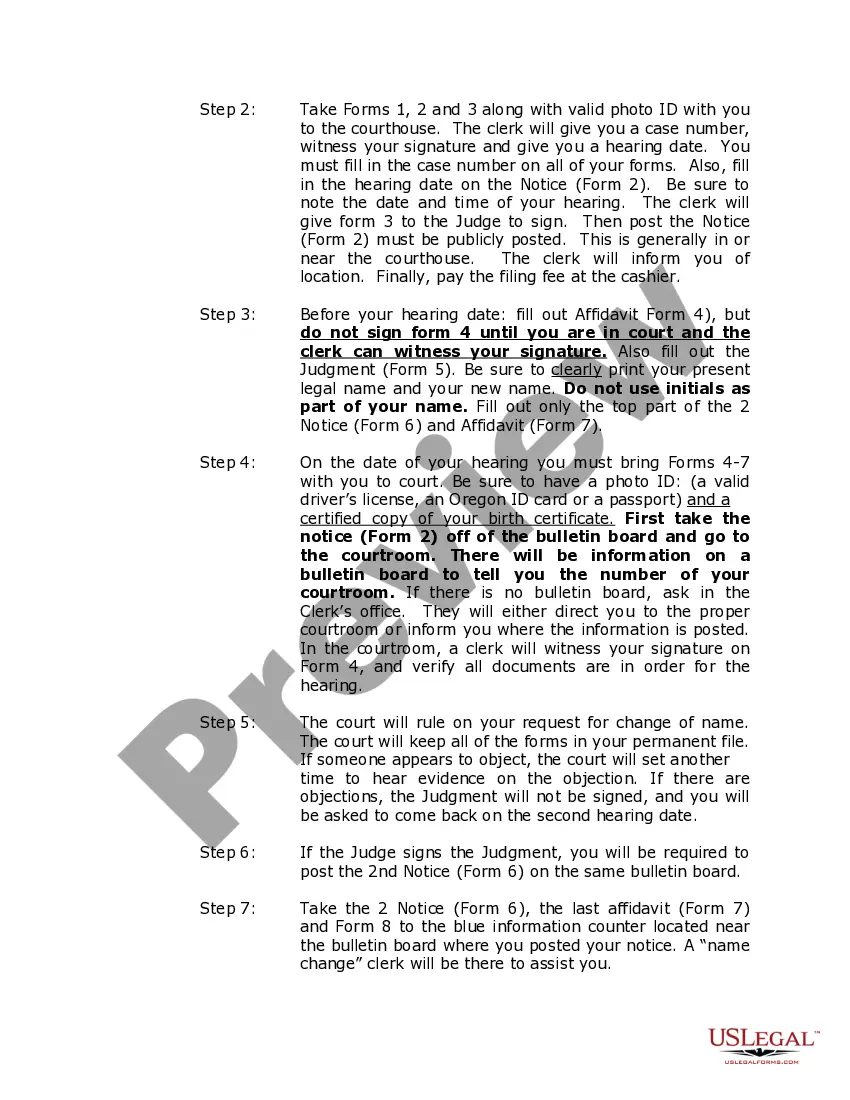
How to fill out Oregon Name Change Instructions And Forms Package For An Adult?
Dealing with legal documentation and processes can be a lengthy addition to your daily routine.
Changing your name on Facebook and similar forms typically necessitate that you search for them and find the most efficient way to complete them.
For this reason, whether you are managing financial, legal, or personal issues, utilizing a thorough and accessible online repository of forms at your disposal will be immensely helpful.
US Legal Forms is the premier online source for legal templates, featuring over 85,000 state-specific forms and various resources to help you complete your documents quickly.
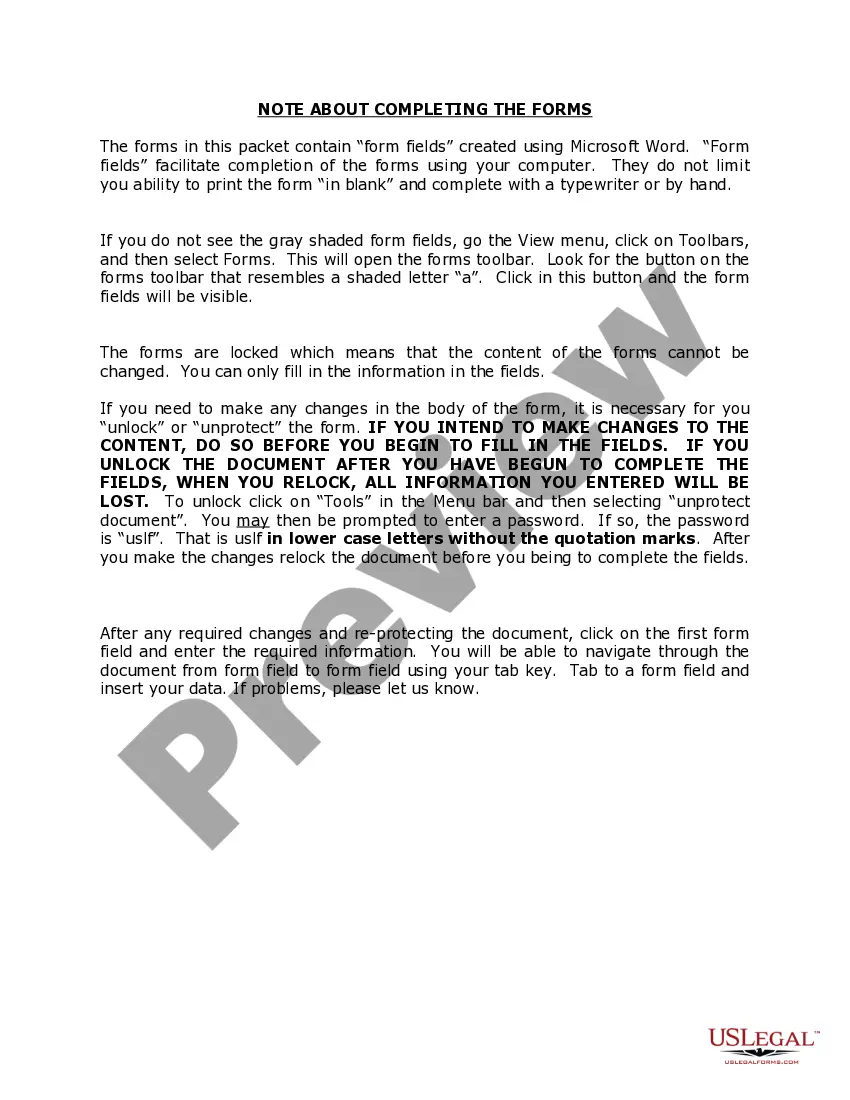
Is it your first time using US Legal Forms? Sign up and create a free account in just a few minutes to access the form library and Or Name Change For Facebook. Then, follow these instructions to complete your form.
- Browse the collection of pertinent documents available to you with a single click.
- US Legal Forms provides you with forms that are specific to your state and county available for download at any time.
- Protect your document management processes with exceptional support that allows you to prepare any form in just a few minutes without additional or concealed fees.
- Simply Log In to your account, locate Or Name Change For Facebook, and download it instantly from the My documents section.
- You can also retrieve forms you've previously downloaded.
Form popularity
FAQ
To request a name change on Facebook, navigate to your account settings and select the 'Name' option. Here, you can enter your desired name and submit your request. Be sure to comply with Facebook’s naming policies to avoid issues. If you feel uncertain about the process, you can use resources from USLegalForms for additional clarity.
A warranty is a voluntary promise that a person or business makes when selling a product or service. Once the consumer buys the product or service, the warranty becomes a legal right.
A manufacturer's warranty is a written assurance to the purchaser of a product, promising to replace or repair it, if necessary, within a specified period. You should find out about the terms of this kind of warranty before you buy, particularly if the item you're buying is of significant cost to you.
Voiding a Warranty While a warranty will let you return a damaged or defective product, certain actions may make the warranty invalid, leaving you to deal with the flawed goods on your own. For example, misuse or lack of maintenance are common reasons why warranties are voided.
Limited Warranty Often, it covers just the parts and not the labor required to fully fix something. A limited warranty also may include the stipulation that the manufacturer and the consumer split the cost of repairs for a given period of time. Typically, both limited and full warranties cost extra as an add-on.
Overview. The Financial and Consumer Services Commission administers the Consumer Product Warranty and Liability Act. The Consumer Product Warranty and Liability Act allows consumers to seek a remedy when a consumer product does not meet reasonable expectations.
The warranties usually cover workmanship or defects, but do not cover improper installation or misuse. You must also consider that most warranties will be void if you try and fix the problem yourself or have someone other than an authorized person try and repair your appliance.
Linguistically, both a warranty and a guarantee are promises to the customer. The difference is their legal standing. Guarantees are more or less verbal promises whereas most warranties are written contractual agreements that are more legally binding to protect both parties.
"Full Warranty" means the coverage meets the federal minimum standards for comprehensive warranties, while "Limited Warranty" means the coverage does not. You must be able to demonstrate that any duties you impose are reasonable.