Quitclaim Deed For Texas Property
Description



Get your form ready online
Our built-in tools help you complete, sign, share, and store your documents in one place.
Make edits, fill in missing information, and update formatting in US Legal Forms—just like you would in MS Word.
Download a copy, print it, send it by email, or mail it via USPS—whatever works best for your next step.
Sign and collect signatures with our SignNow integration. Send to multiple recipients, set reminders, and more. Go Premium to unlock E-Sign.
If this form requires notarization, complete it online through a secure video call—no need to meet a notary in person or wait for an appointment.
We protect your documents and personal data by following strict security and privacy standards.

Make edits, fill in missing information, and update formatting in US Legal Forms—just like you would in MS Word.

Download a copy, print it, send it by email, or mail it via USPS—whatever works best for your next step.

Sign and collect signatures with our SignNow integration. Send to multiple recipients, set reminders, and more. Go Premium to unlock E-Sign.

If this form requires notarization, complete it online through a secure video call—no need to meet a notary in person or wait for an appointment.

We protect your documents and personal data by following strict security and privacy standards.
Looking for another form?


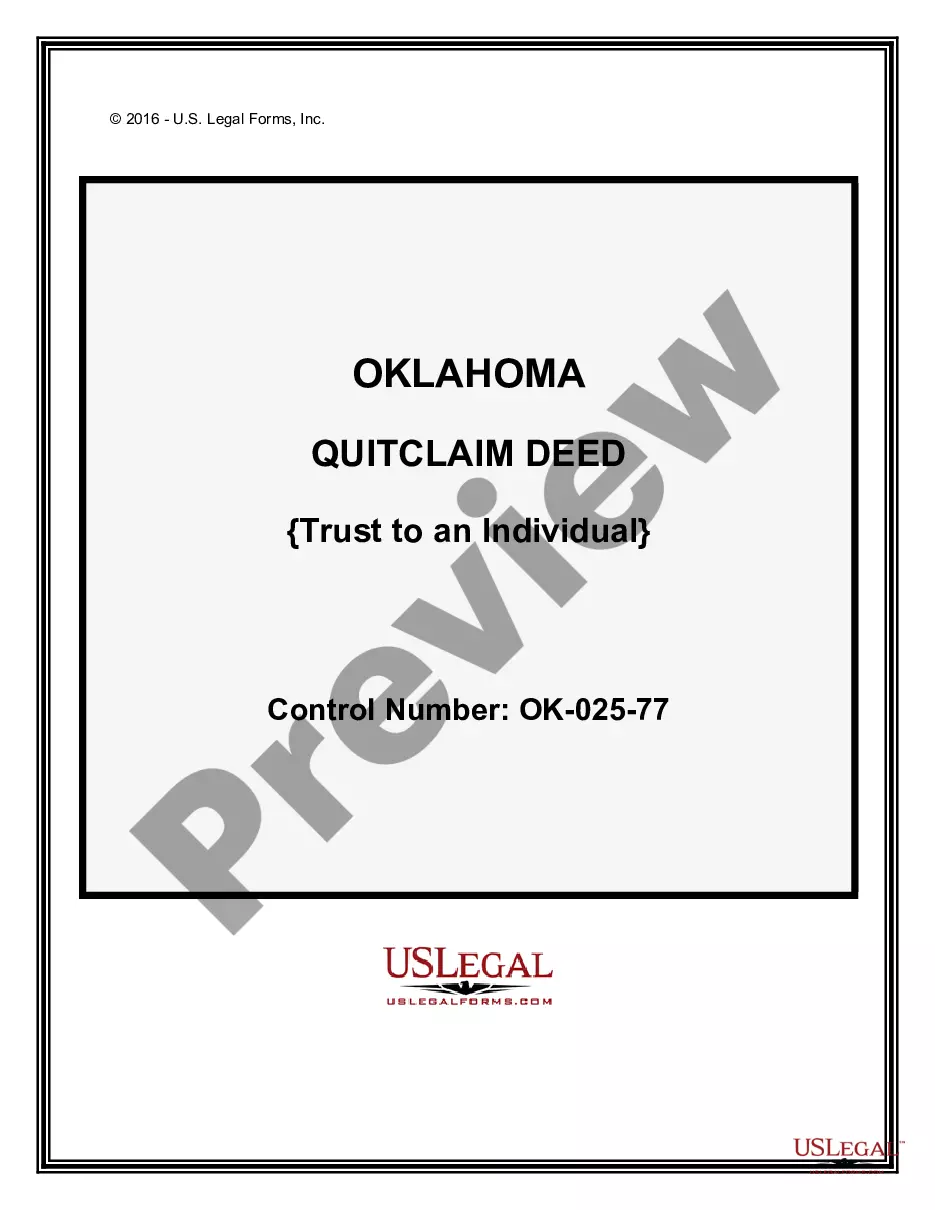
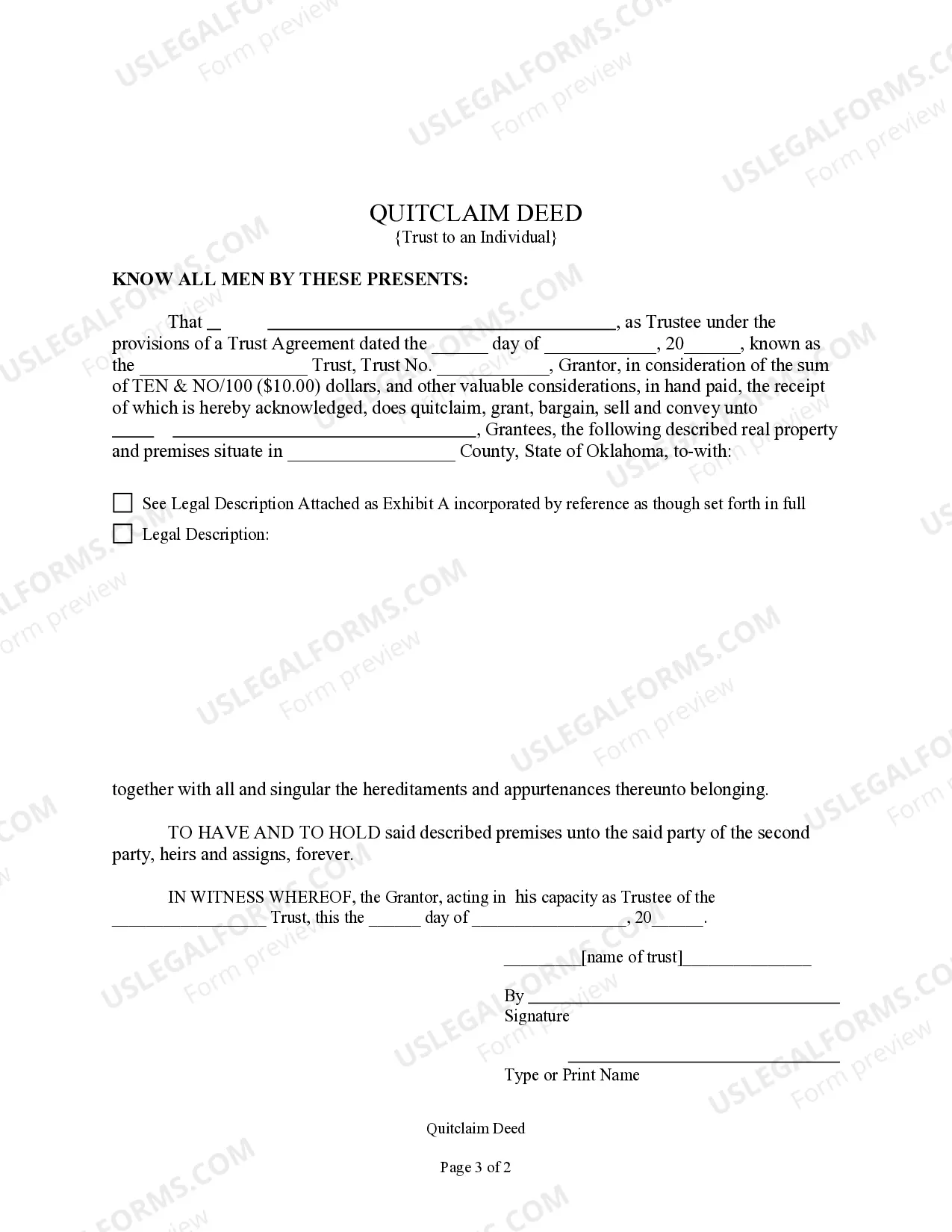
How to fill out Oklahoma Quitclaim Deed - Trust To An Individual?
- Log in to your US Legal Forms account. If you're a new user, create an account to gain access to the required resources.
- Search for the quitclaim deed template suited for Texas. Utilize the preview mode to confirm it meets your requirements and complies with local jurisdiction.
- If necessary, refine your search until you locate the appropriate template. The search functionality can help you easily navigate through the options.
- Select the preferred subscription plan and purchase the quitclaim deed. Ensure to fill in your credit card or PayPal information for a smooth transaction.
- Download your completed form. Save it directly to your device, and you can also find it later in the 'My Forms' section of your profile.
With US Legal Forms, you're not just getting access to documents; you’re ensuring they are precise and legally sound, supported by premium experts who can assist you if needed.
Take the first step towards securing your property today. Start your journey with US Legal Forms for a seamless experience!
Form popularity
FAQ
Yes, you can file a quitclaim deed for Texas property on your own. The process involves completing the deed form, having it notarized, and then filing it with your local county clerk. While it is possible to do this independently, using a platform like US Legal Forms can simplify the process. Their resources ensure that you follow the correct steps and meet all legal requirements.
A quitclaim deed in Texas transfers the interest of the current property owner without confirming any title guarantees. When you fill out this deed, you essentially say that you are transferring your rights to the property as-is. The document must be signed, notarized, and filed with the county clerk's office to be legally effective. This process is straightforward, making it an accessible option for many property transactions.
People often use a quitclaim deed for Texas property to transfer ownership between family members or to clear up title issues. It simplifies the process of transferring property, especially when dealing with informal agreements or family inheritances. Since it lacks the warranties that come with warranty deeds, it is important to use it in scenarios where both parties understand the implications. This deed can be a quick solution to resolve ownership matters.
Yes, you can sell property using a quitclaim deed in Texas. This type of deed allows the seller to transfer their interest in the property without making guarantees about its title. However, it is crucial for buyers to understand that a quitclaim deed for Texas property may not provide the same level of protection as other deeds. Therefore, considering a title search is a smart move.
You can indeed handle a quitclaim deed for Texas property by yourself, but caution is advised. Understanding the legalities involved ensures that you don’t encounter future disputes regarding ownership. Additionally, platforms like US Legal Forms offer resources that can support you with straightforward instructions and tools for completing the deed correctly.
While a quitclaim deed for Texas property offers a quick transfer of ownership, it comes with certain drawbacks. This type of deed does not guarantee clear title, meaning the new owner might inherit any liens or encumbrances on the property. Additionally, it lacks warranties that protect against potential claims from other parties. Therefore, it's essential to weigh these risks before proceeding.
Yes, you can create a quitclaim deed for Texas property on your own. However, it is important to ensure that you follow all legal requirements and correctly complete the form. Mistakes could lead to problems with the deed's validity or future ownership issues. Utilizing platforms like US Legal Forms can provide guidance and templates to simplify the process.
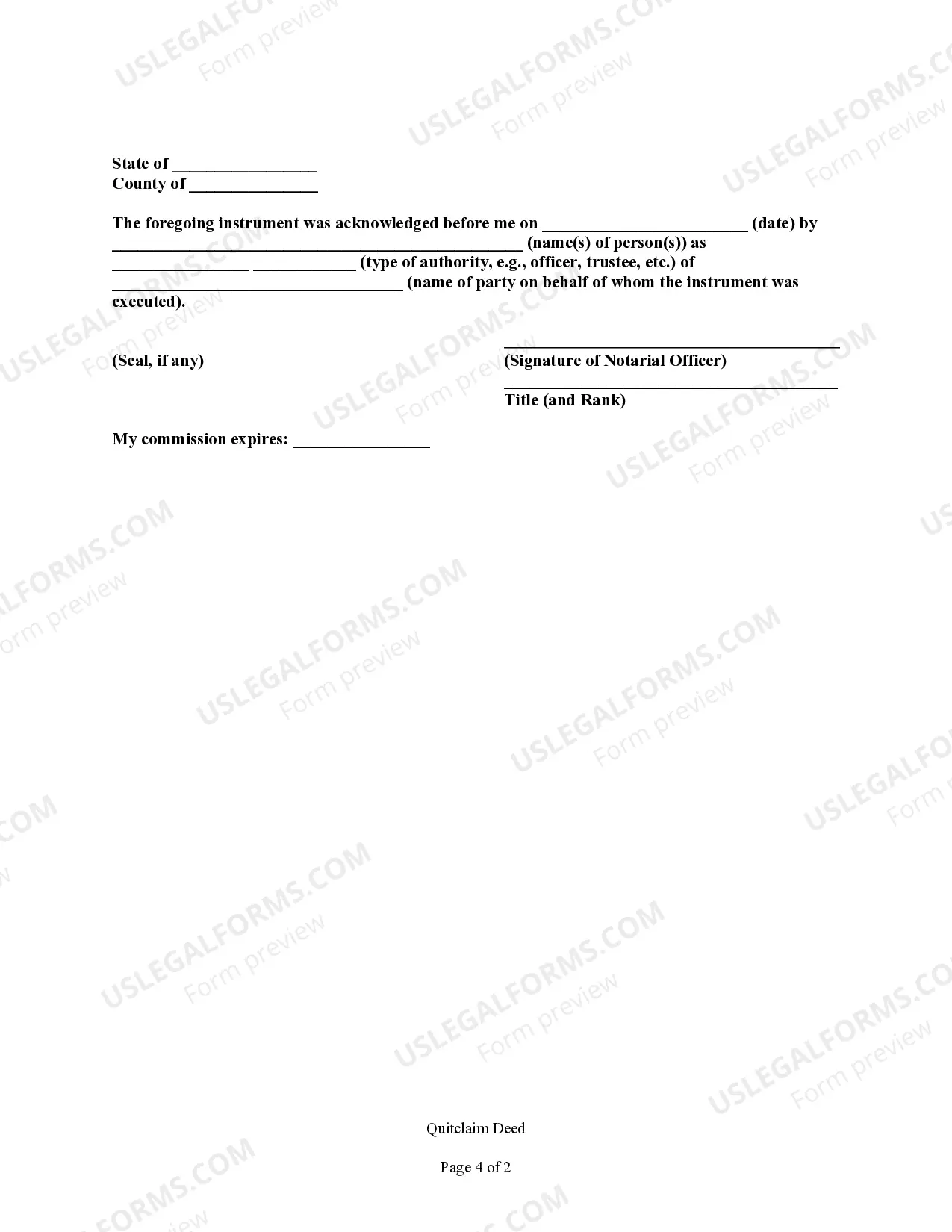
Filing a quitclaim deed for Texas property involves several straightforward steps. First, you need to complete the deed form accurately with the necessary details, including the legal description of the property. Once the form is filled out, you must sign it in the presence of a notary public. After notarization, file the quitclaim deed with your local county clerk’s office to make it official.
To obtain a quitclaim deed for Texas property, start by filling out the appropriate form with accurate details of the property and the parties involved. You can find these forms online, or even better, visit USLegalForms for easy access to customizable templates. After completing the form, you need to have it signed in front of a notary public to ensure its legality. Finally, file the signed deed with the county clerk's office where the property is located to officially record the transaction.