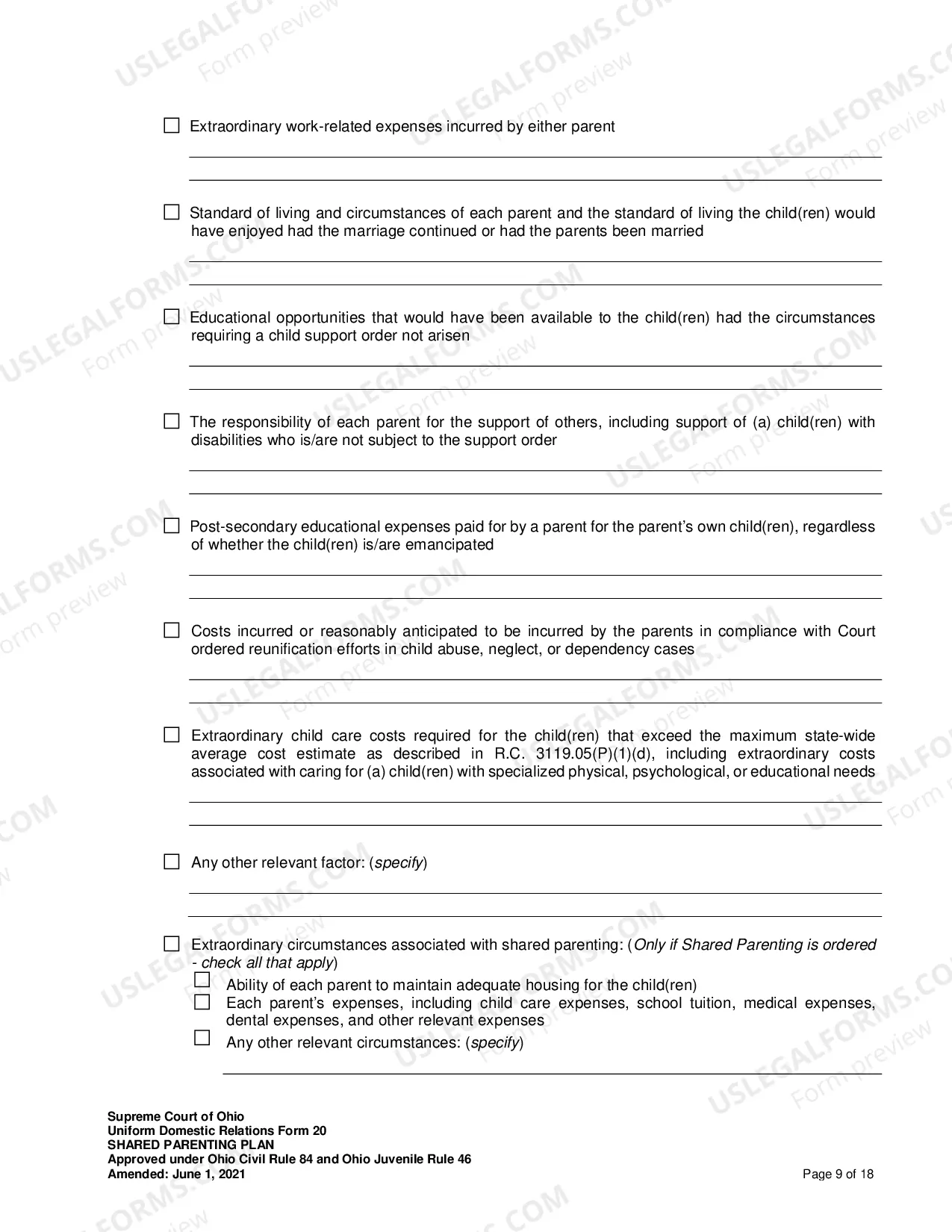
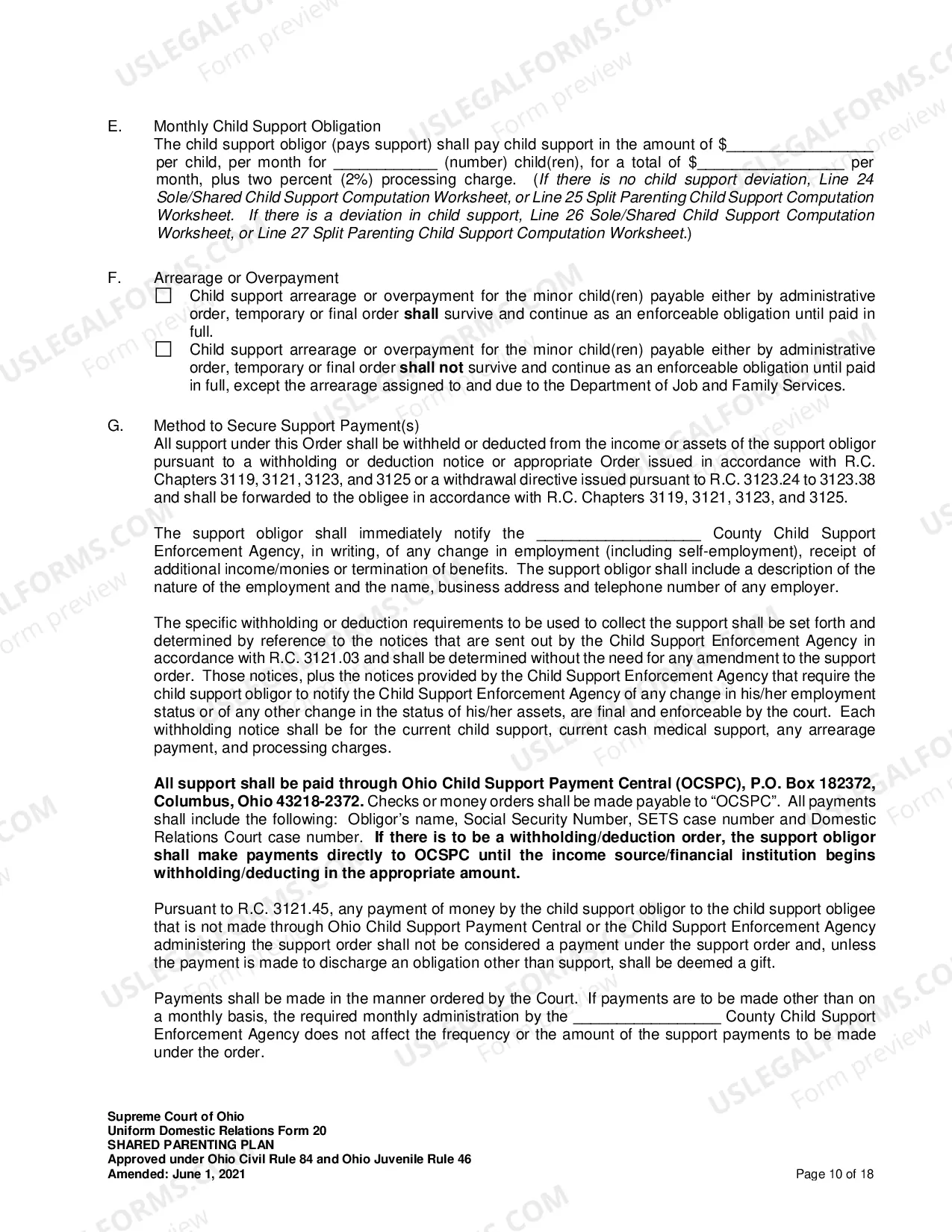
Parenting Plan Template Ohio With Time Limit
Description

Get your form ready online
Our built-in tools help you complete, sign, share, and store your documents in one place.
Make edits, fill in missing information, and update formatting in US Legal Forms—just like you would in MS Word.
Download a copy, print it, send it by email, or mail it via USPS—whatever works best for your next step.
Sign and collect signatures with our SignNow integration. Send to multiple recipients, set reminders, and more. Go Premium to unlock E-Sign.
If this form requires notarization, complete it online through a secure video call—no need to meet a notary in person or wait for an appointment.
We protect your documents and personal data by following strict security and privacy standards.

Make edits, fill in missing information, and update formatting in US Legal Forms—just like you would in MS Word.

Download a copy, print it, send it by email, or mail it via USPS—whatever works best for your next step.

Sign and collect signatures with our SignNow integration. Send to multiple recipients, set reminders, and more. Go Premium to unlock E-Sign.

If this form requires notarization, complete it online through a secure video call—no need to meet a notary in person or wait for an appointment.

We protect your documents and personal data by following strict security and privacy standards.
Looking for another form?



How to fill out Ohio Shared Parenting Plan?
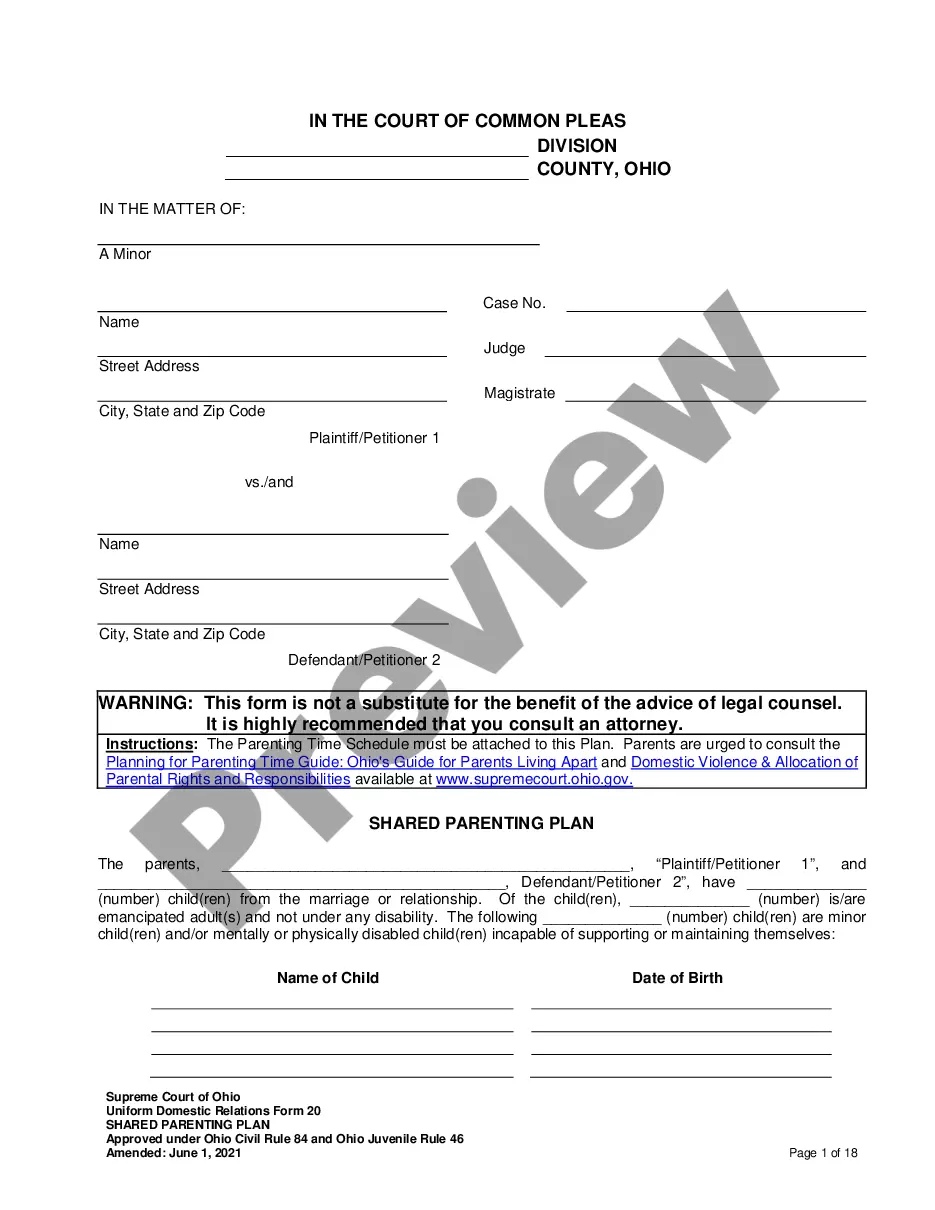
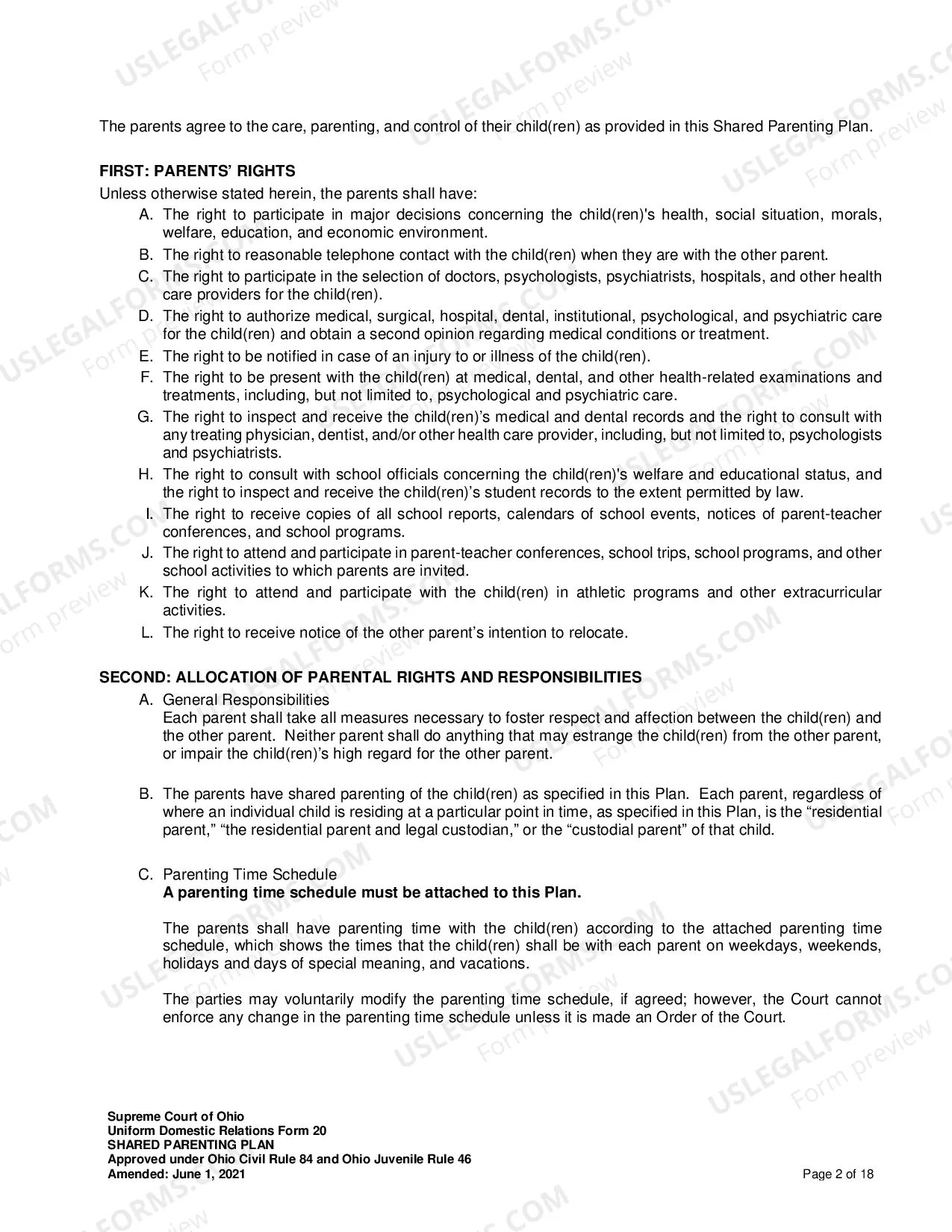
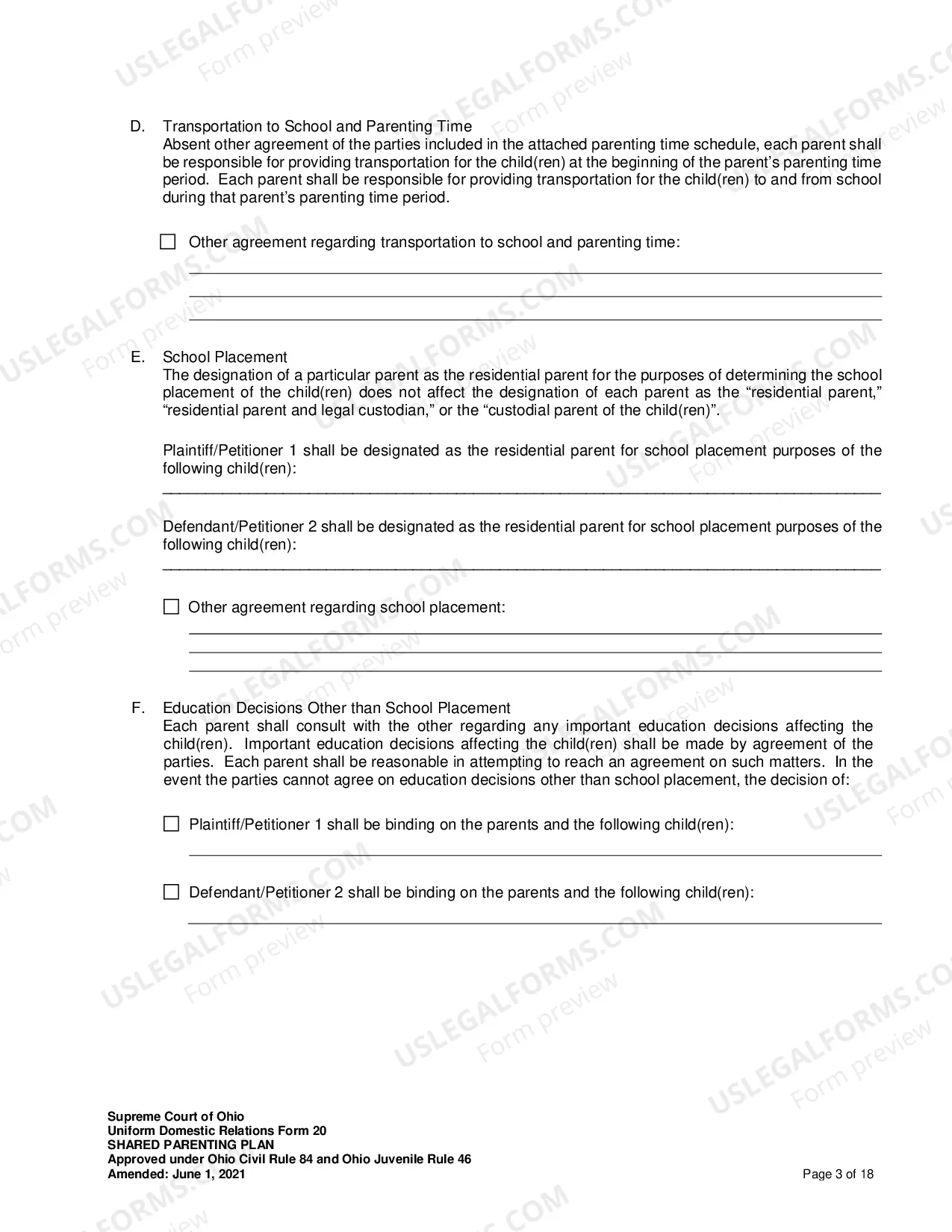
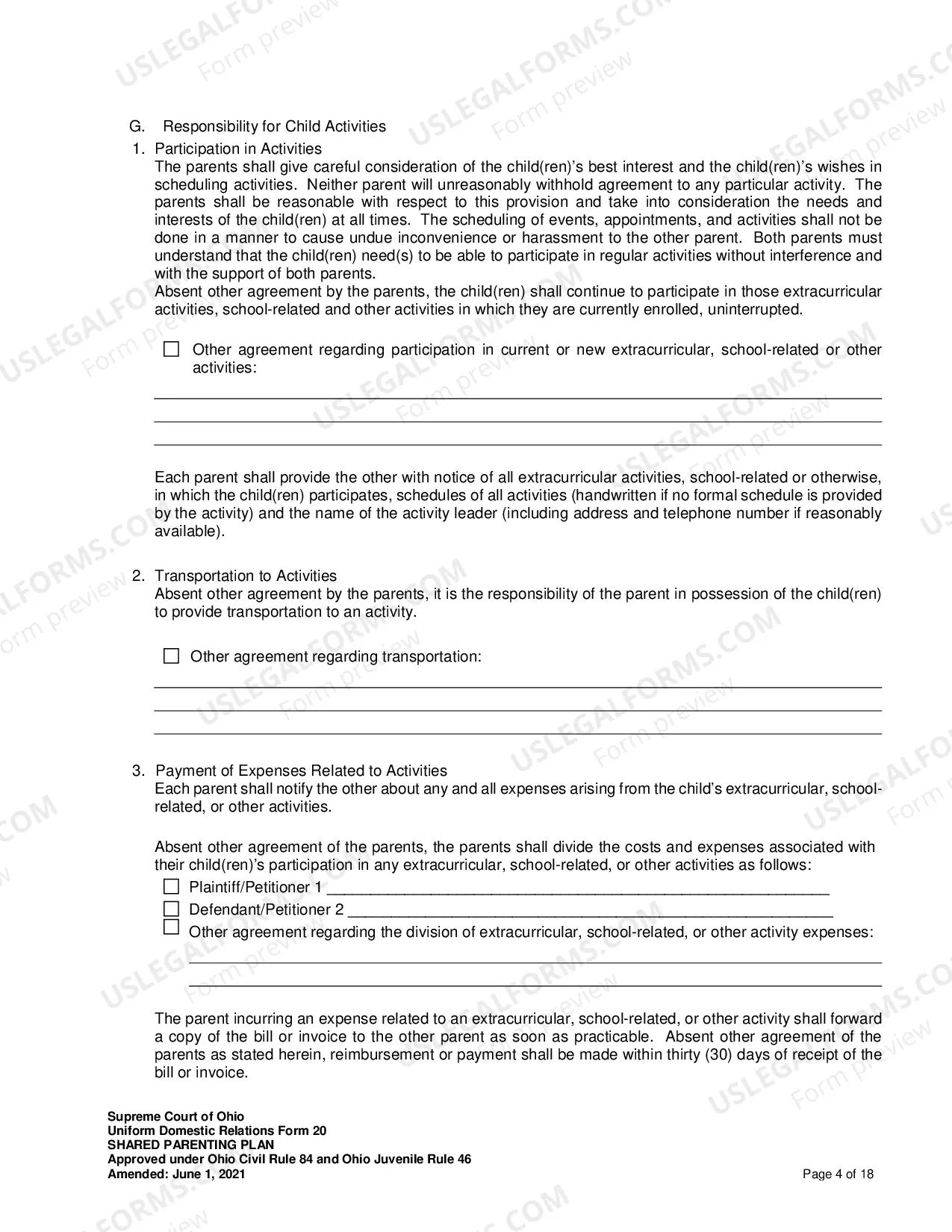
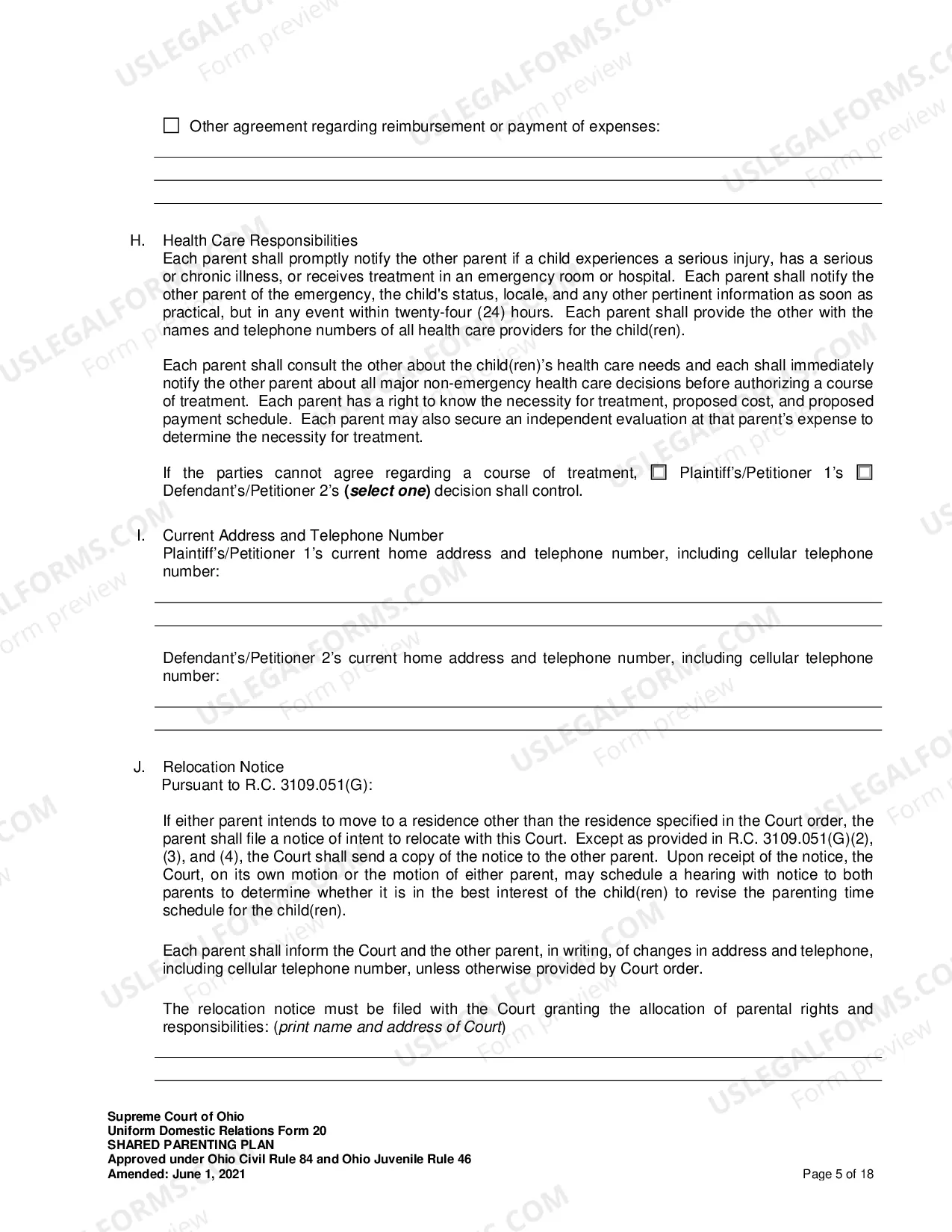
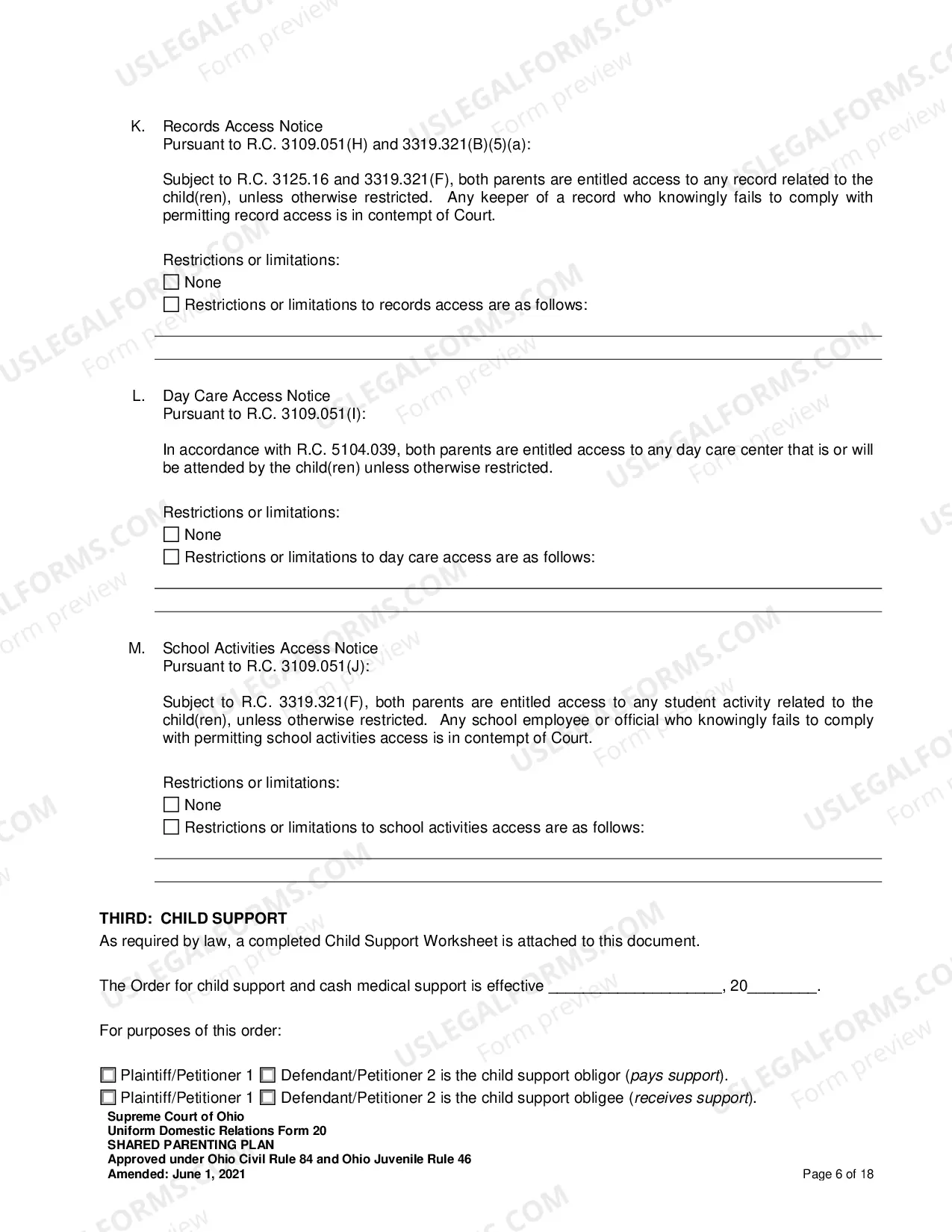
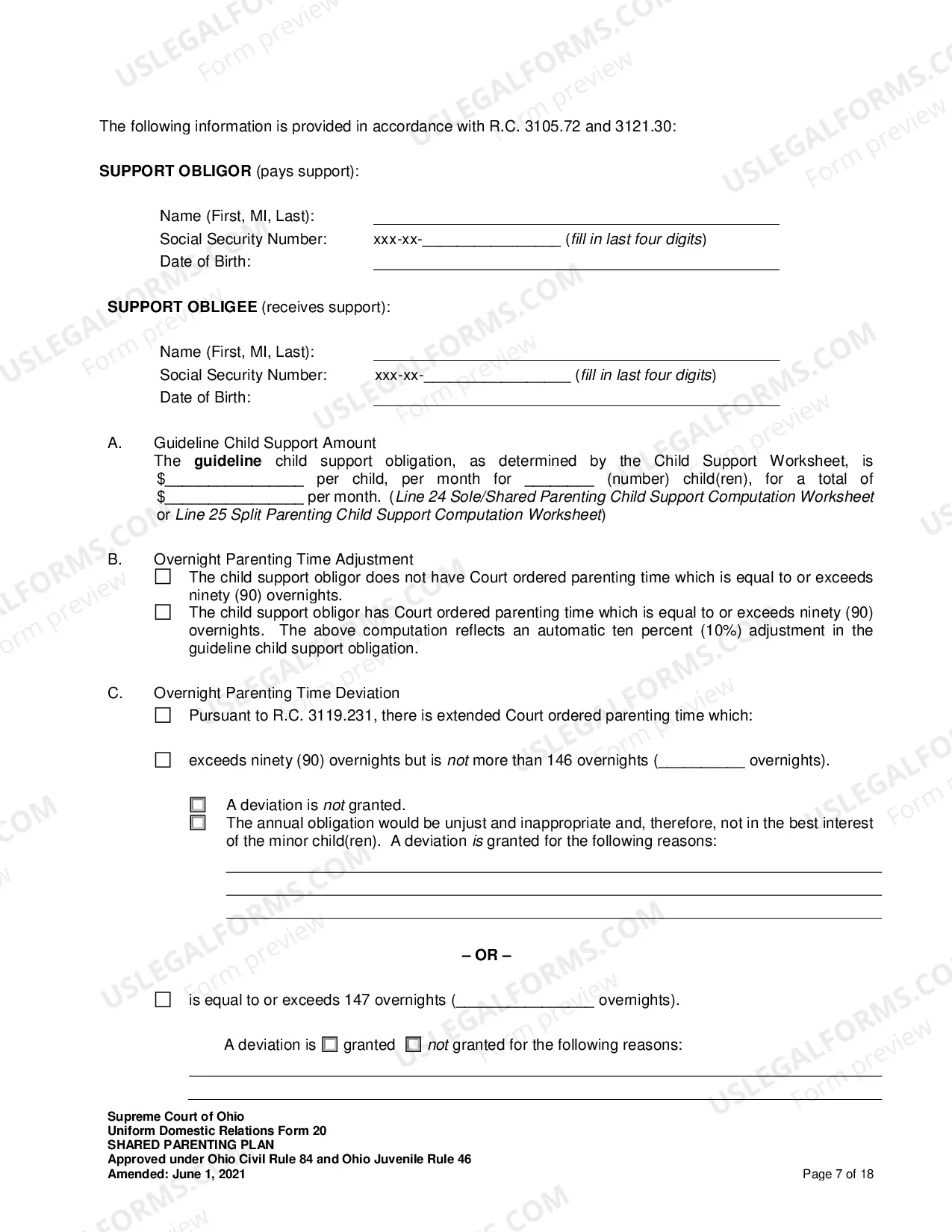
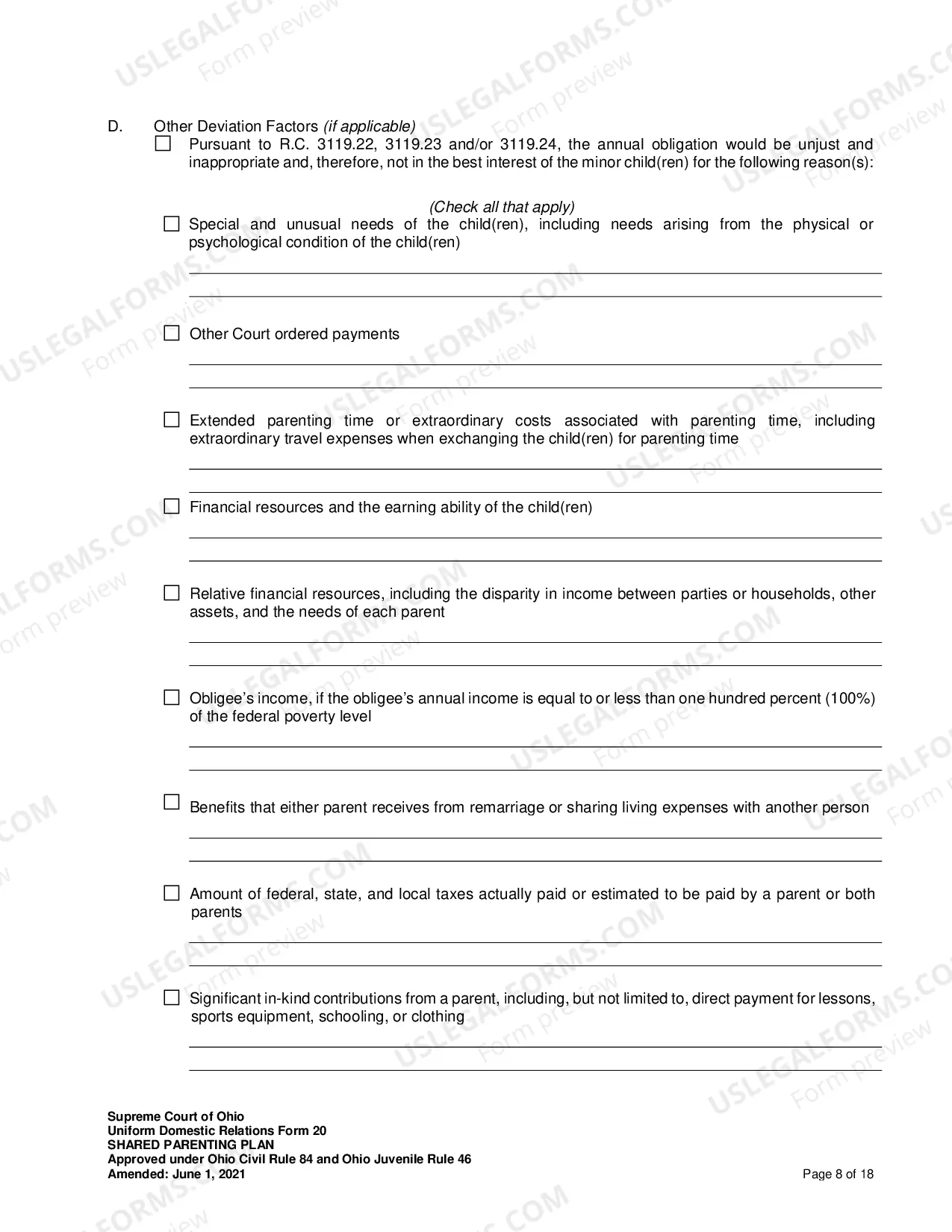
The Parenting Plan Template Ohio With Time Limit you observe on this page is a reusable legal document crafted by expert attorneys in accordance with federal and state laws and regulations.
For over 25 years, US Legal Forms has supplied individuals, businesses, and legal practitioners with more than 85,000 validated, state-specific forms for any corporate and personal scenario. It’s the fastest, simplest, and most dependable method to acquire the documents you require, as the service ensures the utmost level of data security and anti-malware safeguards.
Select the format you desire for your Parenting Plan Template Ohio With Time Limit (PDF, Word, RTF) and store the sample on your device.
- Search for the document you require and review it.
- Browse through the sample you located and preview it or examine the form description to confirm it meets your needs. If it doesn’t, utilize the search bar to find the suitable one. Click Buy Now once you have located the template you want.
- Register and sign in.
- Choose the pricing plan that best fits you and create an account. Use PayPal or a credit card for a quick payment. If you already possess an account, Log In and verify your subscription to proceed.
- Acquire the editable template.
Form popularity
FAQ
In Ohio, parents can live up to a reasonable distance apart and still maintain a 50/50 custody arrangement, although distances may vary depending on the child's needs and the parents' ability to co-parent effectively. Ideally, parents should live within a manageable distance to ensure the child can transition smoothly between homes. A parenting plan template Ohio with time limit can help outline the logistics of such an arrangement.
The healthiest custody schedule for a child typically balances time between both parents while considering the child's age and emotional needs. Schedules that provide consistency and routine, such as alternating weeks or a 50/50 split, often work well. A parenting plan template Ohio with time limit can facilitate the creation of a schedule that promotes the child's well-being.
A long distance parenting schedule often includes extended visits during school breaks and holidays, allowing the child to spend quality time with both parents. For instance, a parent may have the child for two weeks during the summer and alternate major holidays. A parenting plan template Ohio with time limit can help outline these arrangements clearly, reducing misunderstandings.
In an 80/20 custody arrangement, the child spends around 292 nights with one parent and about 73 nights with the other parent annually. This division can significantly impact the child's routine and stability, making it vital to have a solid parenting plan template Ohio with time limit in place. Such a plan can clarify the schedule and ensure both parents understand their responsibilities.
The 80/20 rule for custody refers to a parenting arrangement where one parent has the child 80% of the time, while the other parent has the child for 20%. This arrangement can work well in some situations, but it is crucial to ensure that the child's emotional and physical needs are met. Utilizing a parenting plan template Ohio with time limit can help outline this arrangement effectively.
One of the biggest mistakes in a custody battle is failing to prioritize the child's needs. Parents often focus on winning rather than collaborating for the child's best interests. A well-crafted parenting plan template Ohio with time limit can help parents stay focused on their child's welfare, providing structure and clarity.
The Good Dad Act in Ohio encourages shared parenting and promotes the involvement of fathers in their children's lives. This legislation aims to create a more balanced approach to custody arrangements, fostering stronger relationships between fathers and their children. If you are drafting a parenting plan, consider using a parenting plan template Ohio with time limit to ensure compliance with the Good Dad Act and streamline the process. By utilizing a proper template, you can clearly outline responsibilities and schedules, making it easier for both parents to navigate shared parenting.
To prove parenting time in Ohio, you should keep detailed records of your visitation schedule, including dates and times you spend with your child. Using a parenting plan template Ohio with time limit can help you clearly outline your agreed-upon schedule, making it easier to demonstrate compliance. Additionally, you may want to maintain a journal of activities and interactions during your parenting time. This documentation can serve as valuable evidence in any legal discussions or disputes regarding custody.