Tenant Landlord Building With No Ownership
Description


Get your form ready online
Our built-in tools help you complete, sign, share, and store your documents in one place.
Make edits, fill in missing information, and update formatting in US Legal Forms—just like you would in MS Word.
Download a copy, print it, send it by email, or mail it via USPS—whatever works best for your next step.
Sign and collect signatures with our SignNow integration. Send to multiple recipients, set reminders, and more. Go Premium to unlock E-Sign.
If this form requires notarization, complete it online through a secure video call—no need to meet a notary in person or wait for an appointment.
We protect your documents and personal data by following strict security and privacy standards.

Make edits, fill in missing information, and update formatting in US Legal Forms—just like you would in MS Word.

Download a copy, print it, send it by email, or mail it via USPS—whatever works best for your next step.

Sign and collect signatures with our SignNow integration. Send to multiple recipients, set reminders, and more. Go Premium to unlock E-Sign.

If this form requires notarization, complete it online through a secure video call—no need to meet a notary in person or wait for an appointment.

We protect your documents and personal data by following strict security and privacy standards.
Looking for another form?

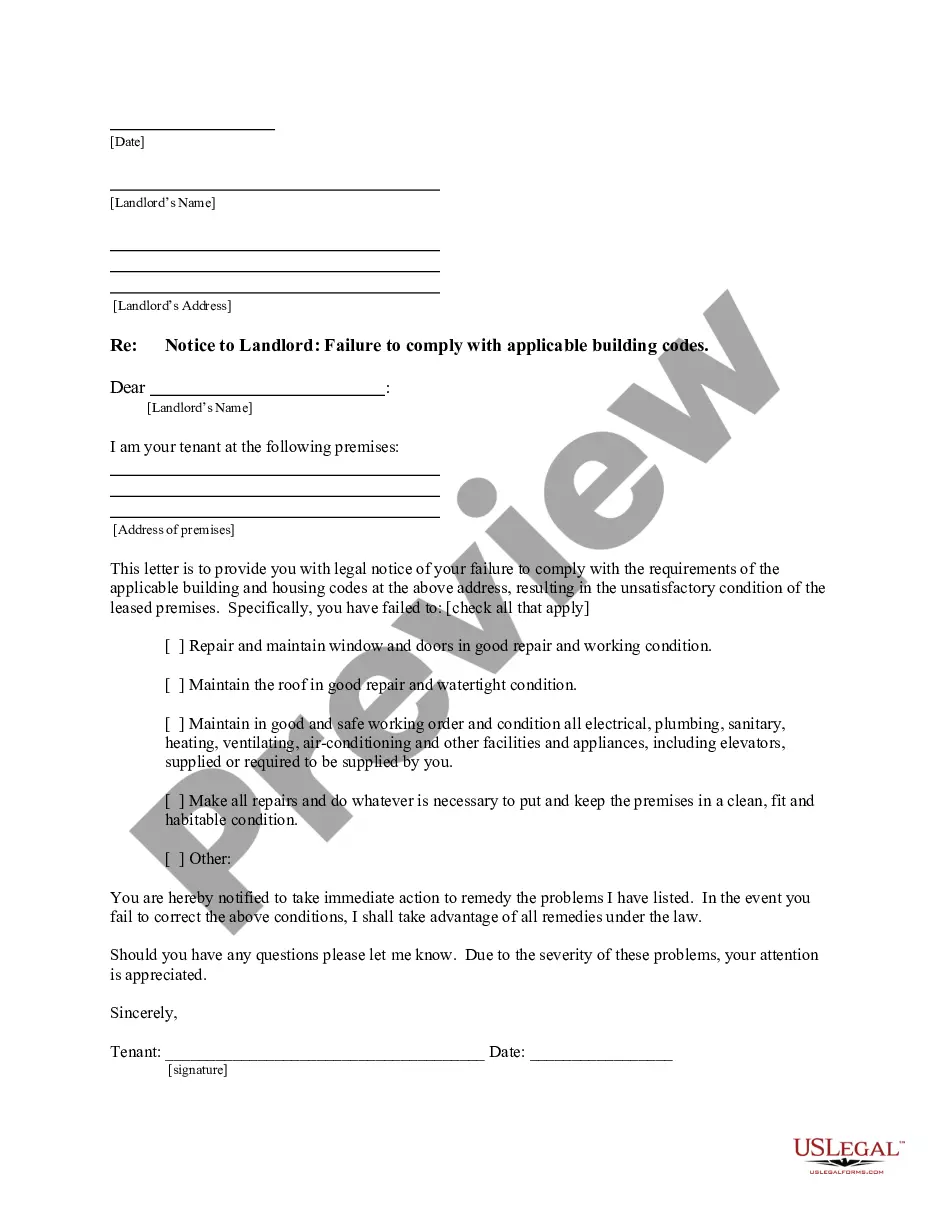
How to fill out New Mexico Letter From Tenant To Landlord For Failure Of Landlord To Comply With Building Codes Affecting Health And Safety Or Resulting In Untenantable Condition - Demand For Remedy?
- Log into your existing US Legal Forms account or create a new one if you are a first-time user.
- Browse through the extensive library and check the preview mode of the form that meets your requirements.
- If you need a different template, utilize the Search feature to find the specific form for your local jurisdiction.
- Select the desired document and hit the Buy Now button. Choose a subscription plan that fits your needs.
- Complete your purchase by entering your payment information with a credit card or PayPal.
- Download the completed form to your device and access it anytime via the My Forms section in your profile.
In conclusion, US Legal Forms is committed to empowering its users with the tools they need to handle legal agreements efficiently. From a robust collection of forms to support from legal experts, it ensures you are equipped to manage your tenant-landlord relationships effectively.
Don’t wait to secure your legal documentation; start your process today with US Legal Forms!
Form popularity
FAQ
Becoming a landlord without owning property involves a few essential steps. You can manage rental properties on behalf of owners or invest in real estate through partnerships or property management companies. By utilizing resources like USLegalForms, you can create the necessary legal documents to establish clear agreements, making your role in tenant landlord buildings with no ownership much smoother.
In Alabama, renters have several rights that protect them in tenant landlord buildings with no ownership. These rights include a safe and habitable living environment, the right to privacy, and protection against unlawful eviction. Understanding these rights helps tenants to better advocate for themselves and ensure they are treated fairly in their rental situations.
In general, renting out a house that someone does not own is possible but requires permission from the property owner. This arrangement often resembles that of a tenant landlord building with no ownership, where the individual might act as a sublessor. Ensure you have a clear agreement and that it complies with local regulations to avoid legal issues.
Yes, someone can serve as a landlord without owning the property. This typically happens in arrangements where property management companies or agents oversee rental properties on behalf of owners. In these tenant landlord buildings with no ownership, the landlord still has responsibilities and rights, which they must fulfill according to local laws.
Not necessarily. In many cases, a landlord does own the property, but there are situations where a landlord can manage a property without being the owner. This scenario often arises in tenant landlord buildings with no ownership, where management companies or individuals act on behalf of the owners. It's essential to understand the specifics of your rental agreement.
Yes, in most cases, it is illegal to rent out a property you do not own without the property owner's explicit permission. Doing so could lead to legal issues for both the supposed landlord and the tenants. If you find yourself in a situation involving tenant landlord building with no ownership, it is crucial to abide by ownership laws and consult professionals if needed.
Proof of ownership for a landlord typically includes legal documents such as a deed, a title, or a lease agreement when applicable. These documents establish the landlord's right to manage the property and enforce rental agreements. In tenant landlord building with no ownership, clarity in ownership documentation can assure all parties involved have a clear understanding of rights and responsibilities.
In Florida, landlords must refrain from retaliating against tenants who exercise their legal rights, such as reporting unsafe living conditions. They cannot ignore the tenant's right to a habitable living environment, nor can they enter the rental property without proper notice except in emergencies. Understanding these limits is crucial for anyone participating in tenant landlord building with no ownership.
Yes, a non-owner can serve as a landlord if they have been granted the authority by the property owner. It is common for property management companies or agents to operate in this capacity. This arrangement can be beneficial in tenant landlord building with no ownership, as it allows property owners to manage their properties effectively without being directly involved.
Recently, Florida has updated some regulations that affect landlords. These changes include more stringent rules on security deposits and the rights of tenants facing eviction. Staying informed about these new rules is essential for anyone involved in tenant landlord building with no ownership, ensuring compliance and fostering positive relationships.