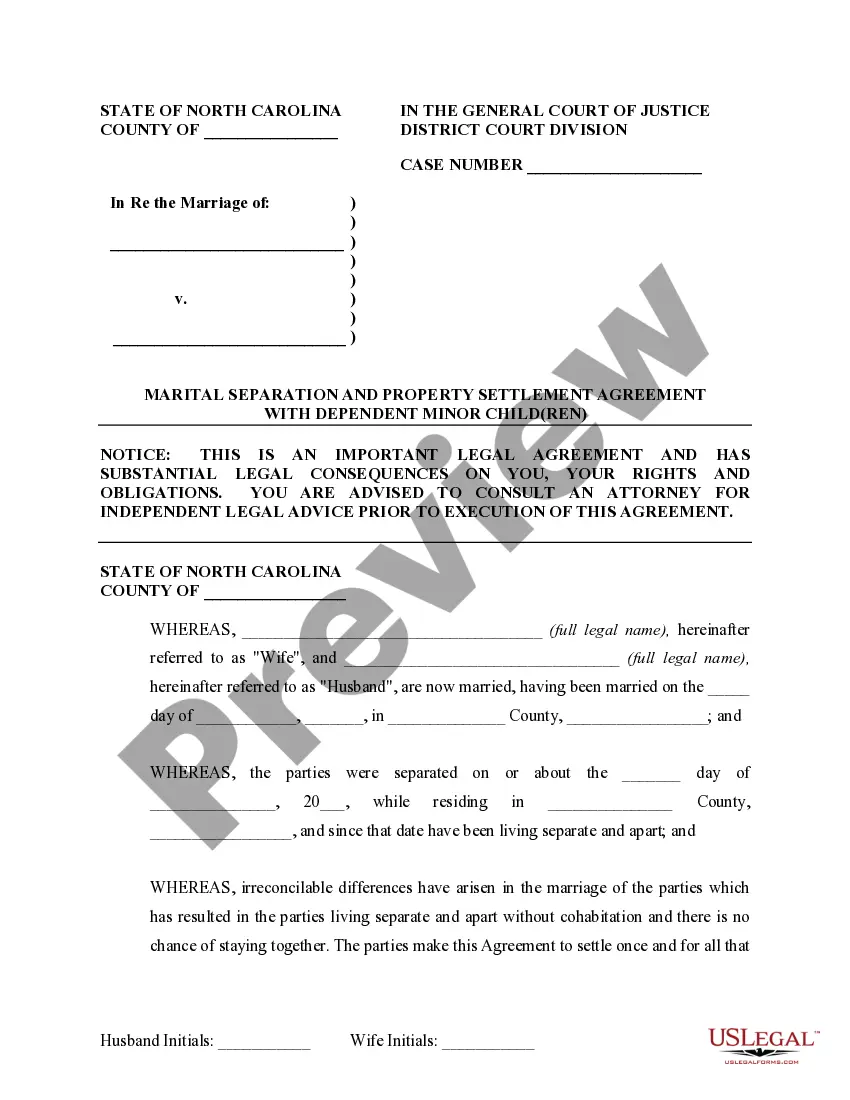
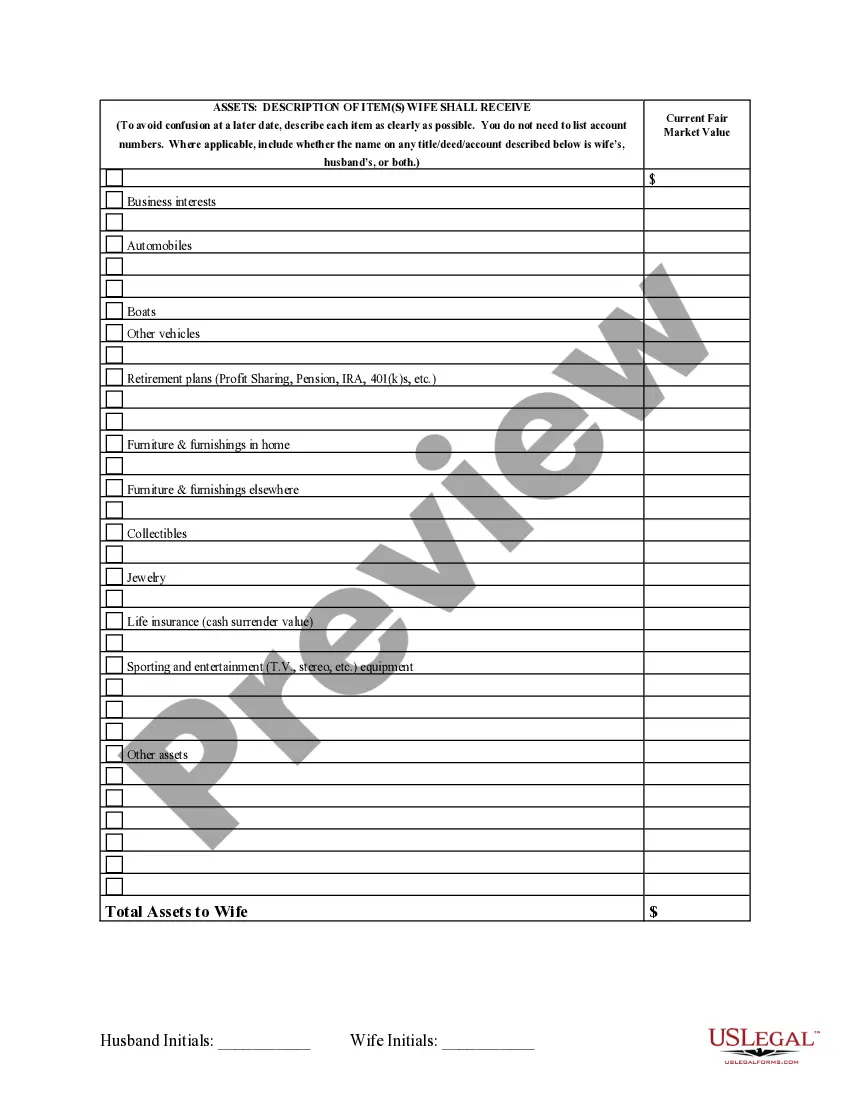
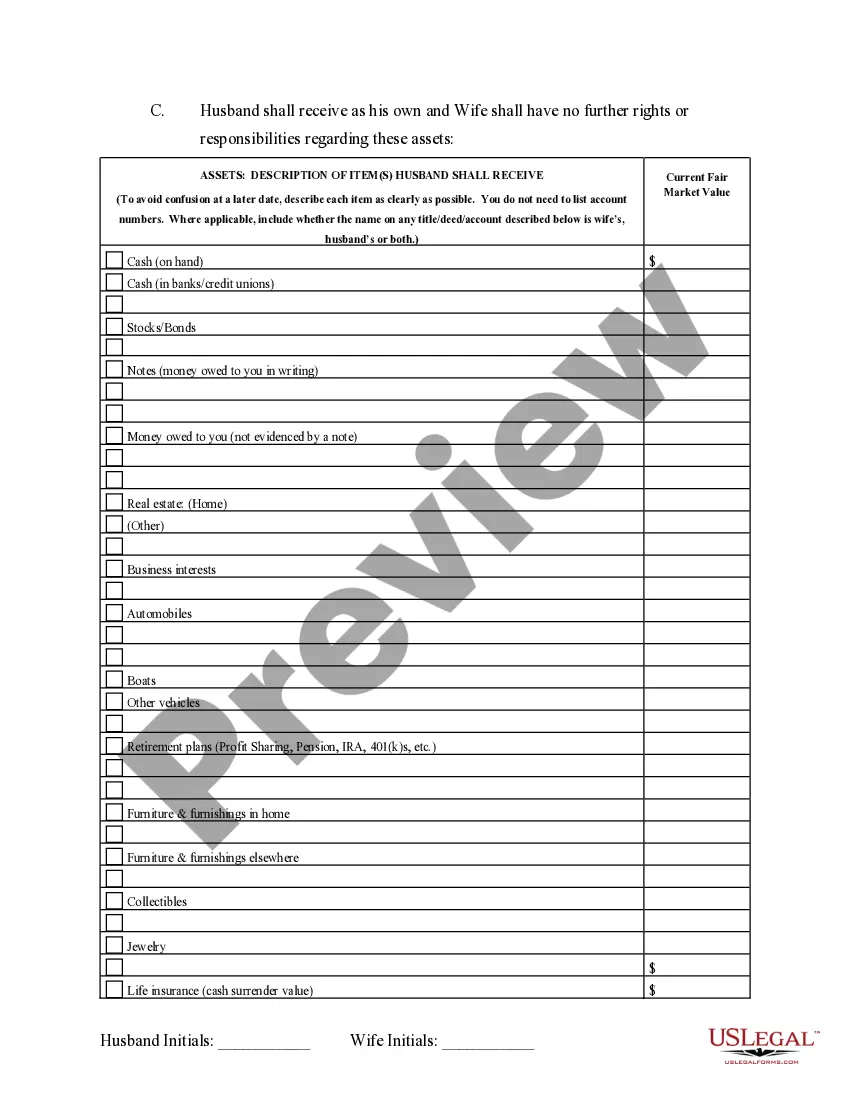
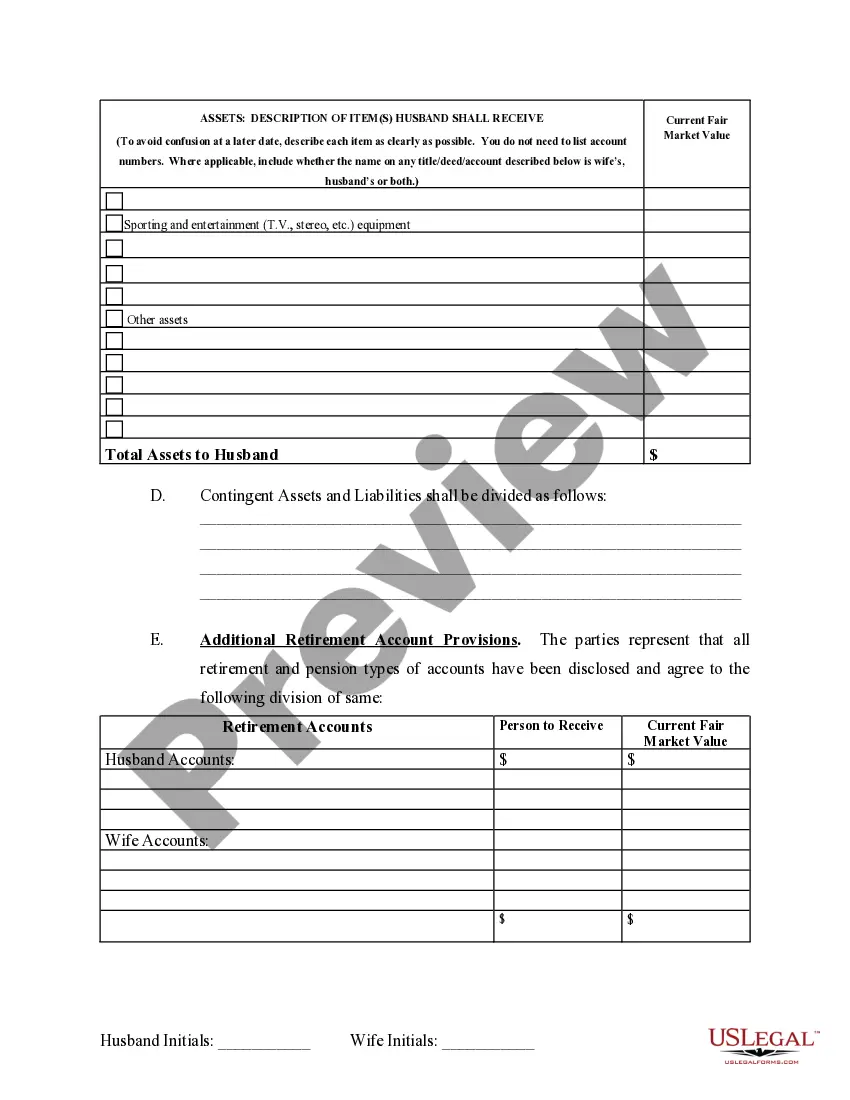
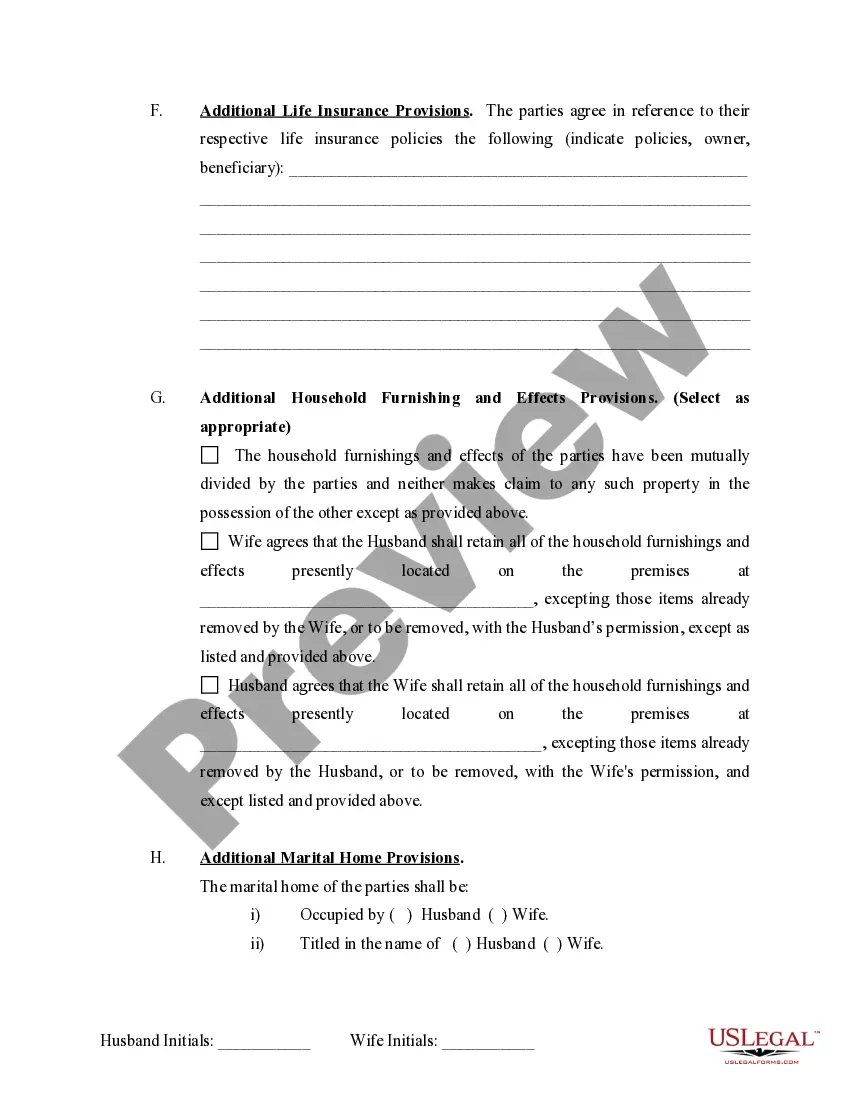
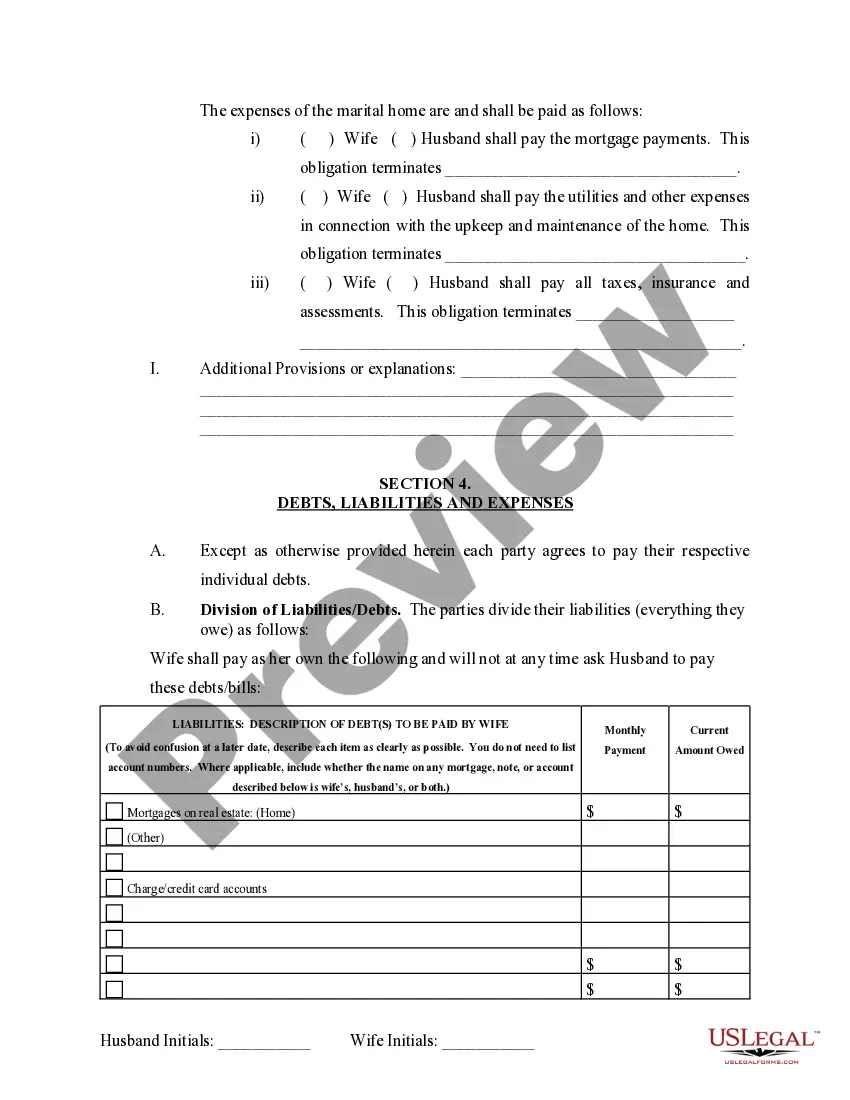
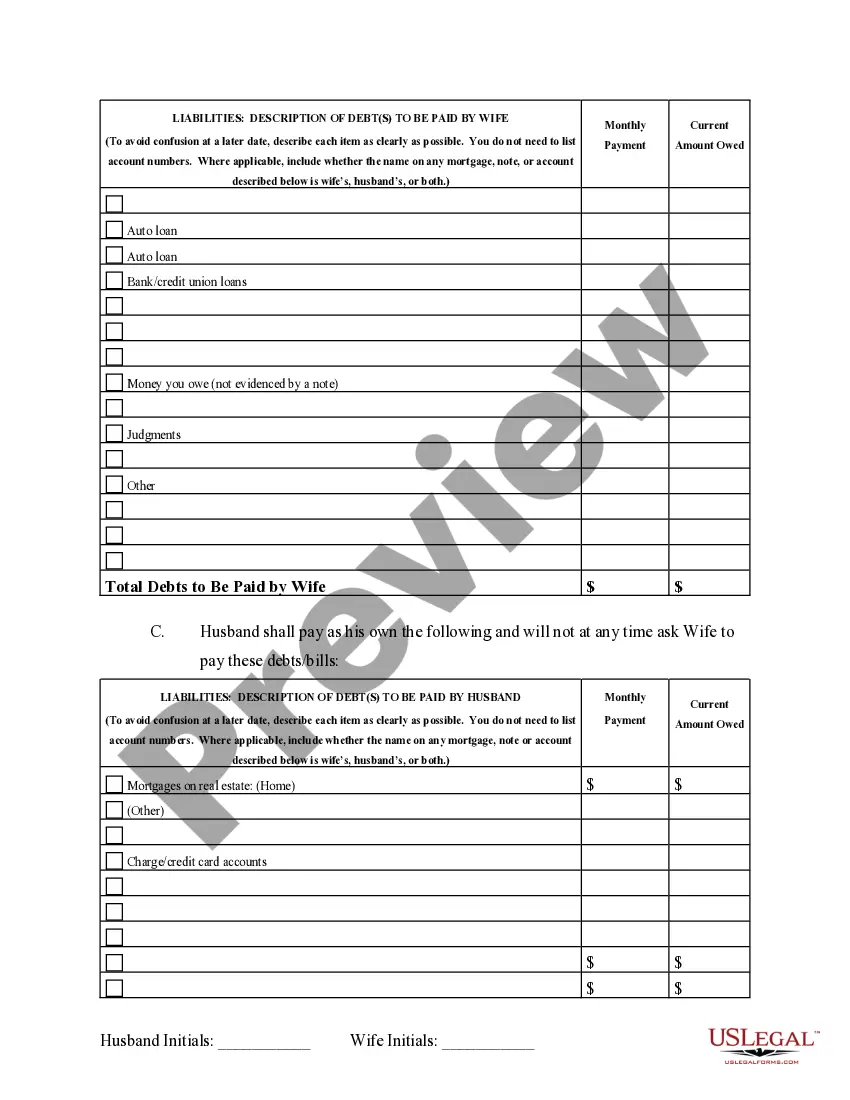
Marital Domestic Separation and Property Settlement Agreement Minor Children Parties May have Joint Property or Debts where Divorce Action Filed
Note: This summary is not intended to be an all inclusive
discussion of the law of separation agreements in North Carolina, but does
include basic and other provisions.
General Summary:
Any married couple is hereby
authorized to execute a separation agreement not inconsistent
with public policy which shall be legal, valid,
and binding in all respects; provided, that the separation
agreement must be in writing and acknowledged by both parties before
a certifying officer, such as a notary public. When the Agreement
is presented to the court for the court's approval, the agreement is treated
not as a contract but rather as a court ordered judgment which may be modified
and enforced through the contempt powers of the court, in the same manner
as any other judgment in a domestic relations case.
Statutes:
North Carolina General Statutes
Chapter 50
Divorce and Alimony
Distribution by court of marital and divisible property upon
divorce:
(a) Upon application of a party, the court shall
determine what is the marital property and divisible property and shall
provide for an equitable distribution of the marital property and divisible
property between the parties in accordance with the provisions of this
section.
(b) For purposes of this section:
(1) "Marital property" means all real and personal
property acquired by either spouse or both spouses during the course of
the marriage and before the date of the separation of the parties, and
presently owned, except property determined to be separate property or
divisible property in accordance with subdivision (2) or (4) of this subsection.
Marital property includes all vested and nonvested pension, retirement,
and other deferred compensation rights, and vested and nonvested military
pensions eligible under the federal Uniformed Services Former Spouses'
Protection Act. It is presumed that all property acquired after the date
of marriage and before the date of separation is marital property except
property which is separate property under subdivision (2) of this subsection.
This presumption may be rebutted by the greater weight of the evidence.
(2) "Separate property" means all real and personal property
acquired by a spouse before marriage or acquired by a spouse by bequest,
devise, descent, or gift during the course of the marriage. However, property
acquired by gift from the other spouse during the course of the
marriage shall be considered separate property only if such an intention
is stated in the conveyance. Property acquired in exchange for separate
property shall remain separate property regardless of whether the title
is in the name of the husband or wife or both and shall not be considered
to be marital property unless a contrary intention is expressly stated
in the conveyance. The increase in value of separate property
and the income derived from separate property shall be considered separate
property. All professional licenses and business licenses which would terminate
on transfer shall be considered separate property.
(3) "Distributive award" means payments that are payable
either in a lump sum or over a period of time in fixed amounts, but shall
not include alimony payments or other similar payments for support and
maintenance which are treated as ordinary income to the recipient under
the Internal Revenue Code.
a. All appreciation and diminution in value of marital property
and divisible property of the parties occurring after the date of separation
and prior to the date of distribution, except that appreciation or diminution
in value which is the result of postseparation actions or activities of
a spouse shall not be treated as divisible property.
b. All property, property rights, or any portion thereof
received after the date of separation but before the date of distribution
that was acquired as a result of the efforts of either spouse during the
marriage and before the date of separation, including, but not limited
to, commissions, bonuses, and contractual rights.
c. Passive income from marital property received after the
date of separation, including, but not limited to, interest
and dividends.
(c) There shall be an equal division by using net value of marital
property and net value of divisible property unless the court determines
that an equal division is not equitable. If the court determines that an
equal division is not equitable, the court shall divide the marital property
and divisible property equitably. Factors the court shall consider under
this subsection are as follows:
(1) The income, property, and liabilities of each
party at the time the division of property is to become effective;
(4) The need of a parent with custody of a child or children
of the marriage to occupy or own the marital residence and to use or own
its household effects;
(5) The expectation of pension, retirement, or other deferred
compensation rights that are not marital property;
(6) Any equitable claim to, interest in, or direct or indirect
contribution made to the acquisition of such marital property by the party
not having title, including joint efforts or expenditures and contributions
and services, or lack thereof, as a spouse, parent, wage earner or homemaker;
(7) Any direct or indirect contribution made by one spouse
to help educate or develop the career potential of the other spouse;
(8) Any direct contribution to an increase in value of separate
property which occurs during the course of the marriage;
(10) The difficulty of evaluating any component asset or
any interest in a business, corporation or profession, and the economic
desirability of retaining such asset or interest, intact and free from
any claim or interference by the other party;
(11a) Acts of either party to maintain, preserve, develop,
or expand; or to waste, neglect, devalue or convert the marital property
or divisible property, or both, during the period after separation of the
parties and before the time of distribution; and
(c1) Notwithstanding any other provision of law, a
second or subsequent spouse acquires no interest in the marital property
and divisible property of his or her spouse from a former marriage until
a final determination of equitable distribution is made in the marital
property and divisible property of the spouse's former marriage.
(d) Before, during or after marriage the parties may by written
agreement, duly executed and acknowledged in accordance with the provisions
of G.S. 52-10 and 52-10.1, or by a written agreement valid in the jurisdiction
where executed, provide for distribution of the marital property or divisible
property, or both, in a manner deemed by the parties to be equitable and
the agreement shall be binding on the parties.
(e) Subject to the presumption of subsection (c) of this
section that an equal division is equitable, it shall be presumed in every
action that an in-kind distribution of marital or divisible property is
equitable. This presumption may be rebutted by the greater weight of the
evidence, or by evidence that the property is a closely held business entity
or is otherwise not susceptible of division in-kind. In any action in which
the presumption is rebutted, the court in lieu of in-kind distribution
shall provide for a distributive award in order to achieve equity between
the parties. The court may provide for a distributive award to facilitate,
effectuate or supplement a distribution of marital or divisible property.
The court may provide that any distributive award payable over a period
of time be secured by a lien on specific property.
(f) The court shall provide for an equitable distribution
without regard to alimony for either party or support of the children of
both parties. After the determination of an equitable distribution, the
court, upon request of either party, shall consider whether an order for
alimony or child support should be modified or vacated pursuant to G.S.
50-16.9 or 50-13.7.
(g) If the court orders the transfer of real or personal
property or an interest therein, the court may also enter an order which
shall transfer title, as provided in G.S. 1A-1, Rule 70 and G.S. 1-228.
(h) If either party claims that any real property is marital
property or divisible property, that party may cause a notice of lis pendens
to be recorded pursuant to Article 11 of Chapter 1 of the General Statutes.
Any person whose conveyance or encumbrance is recorded or whose interest
is obtained by descent, prior to the filing of the lis pendens, shall take
the real property free of any claim resulting from the equitable distribution
proceeding. The court may cancel the notice of lis pendens upon substitution
of a bond with surety in an amount determined by the court to be sufficient
provided the court finds that the claim of the spouse against property
subject to the notice of lis pendens can be satisfied by money damages.
(i) Upon filing an action or motion in the cause requesting
an equitable distribution or alleging that an equitable distribution will
be requested when it is timely to do so, a party may seek injunctive relief
pursuant to G.S. 1A-1, Rule 65 and Chapter 1, Article 37, to prevent the
disappearance, waste or conversion of property alleged to be marital property,
divisible property, or separate property of the party seeking relief. The
court, in lieu of granting an injunction, may require a bond or other assurance
of sufficient amount to protect the interest of the other spouse in the
property. Upon application by the owner of separate property which was
removed from the marital home or possession of its owner by the other spouse,
the court may enter an order for reasonable counsel fees and costs of court
incurred to regain its possession, but such fees shall not exceed the fair
market value of the separate property at the time it was removed.
(i1) Unless good cause is shown that there should not be
an interim distribution, the court may, at any time after an action for
equitable distribution has been filed and prior to the final judgment of
equitable distribution, enter orders declaring what is separate property
and may also enter orders dividing part of the marital property, divisible property or debt, or marital debt
between the parties. The partial distribution may provide for a distributive
award and may also provide for a distribution of marital property, marital
debt, divisible property, or divisible debt. Any such orders entered shall
be taken into consideration at trial and proper credit given.
Hearings held pursuant to this subsection may be held at sessions
arranged by the chief district court judge pursuant to G.S. 7A-146 and,
if held at such sessions, shall not be subject to the reporting requirements
of G.S. 7A-198.
(j) In any order for the distribution of property made pursuant
to this section, the court shall make written findings of fact that support
the determination that the marital property and divisible property has
been equitably divided.
(k) The rights of the parties to an equitable distribution
of marital property and divisible property are a species of common ownership,
the rights of the respective parties vesting at the time of the parties'
separation. § 50-20.
Procedures in actions for equitable distribution of property; sanctions
for purposeful and prejudicial delay:
(a) At any time after a husband and wife begin to
live separate and apart from each other, a claim for equitable distribution
may be filed, either as a separate civil action, or together with any other
action brought pursuant to Chapter 50 of the General Statutes, or as a
motion in the cause as provided by G.S. 50-11(e) or (f). Within 90 days
after service of a claim for equitable distribution, the party who first
asserts the claim shall prepare and serve upon the opposing party an equitable
distribution inventory affidavit listing all property claimed by the party
to be marital property and all property claimed by the party to be separate
property, and the estimated date-of-separation fair market value of each
item of marital and separate property. Within 30 days after service of
the inventory affidavit, the party upon whom service is made shall prepare
and serve an inventory affidavit upon the other party. The inventory affidavits
prepared and served pursuant to this subsection shall be subject to amendment
and shall not be binding at trial as to completeness or value. The court
may extend the time limits in this subsection for good cause shown. The
affidavits are subject to the requirements of G.S. 1A-1, Rule 11, and are
deemed to be in the nature of answers to interrogatories propounded to
the parties. Any party failing to supply the information required by this
subsection in the affidavit is subject to G.S. 1A-1, Rules 26, 33, and
37. During the pendency of the action for equitable distribution, discovery
may proceed, and the court shall enter temporary orders as appropriate
and necessary for the purpose of preventing the disappearance, waste, or
destruction of marital or separate property or to secure the possession
thereof.
Real or personal property located outside of North Carolina is subject
to equitable distribution in accordance with the provisions of G.S. 50-20,
and the court may include in its order appropriate provisions to ensure
compliance with the order of equitable distribution.
(b) For purposes of equitable distribution, marital property
shall be valued as of the date of the separation of the parties, and evidence
of preseparation and postseparation occurrences or values is competent
as corroborative evidence of the value of marital property as of the date
of the separation of the parties. Divisible property and divisible debt
shall be valued as of the date of distribution.
(c) Nothing in G.S. 50-20 or this section shall restrict
or extend the right to trial by jury as provided by the Constitution of
North Carolina.
(d) Within 120 days after the filing of the initial pleading
or motion in the cause for equitable distribution, the party first serving
the pleading or application shall apply to the court to conduct a scheduling
and discovery conference. If that party fails to make application, then
the other party may do so. At the conference the court shall determine
a schedule of discovery as well as consider and rule upon any motions for
appointment of expert witnesses, or other applications, including applications
to determine the date of separation, and shall set a date for the disclosure
of expert witnesses and a date on or before which an initial pretrial conference
shall be held.
At the initial pretrial conference the court shall make inquiry
as to the status of the case and shall enter a date for the completion
of discovery, the completion of a mediated settlement conference, if applicable,
and the filing and service of motions, and shall determine a date on or
after which a final pretrial conference shall be held and a date on or
after which the case shall proceed to trial.
The final pretrial conference shall be conducted pursuant to the
Rules of Civil Procedure and the General Rules of Practice in the applicable
district or superior court, adopted pursuant to G.S. 7A-34. The court shall
rule upon any matters reasonably necessary to effect a fair and prompt
disposition of the case in the interests of justice.
(e) Upon motion of either party or upon the court's own initiative,
the court shall impose an appropriate sanction on a party when the court
finds that:
(1) The party has willfully obstructed or unreasonably
delayed, or has attempted to obstruct or unreasonably delay, discovery
proceedings, including failure to make discovery pursuant to G.S. 1A-1,
Rule 37, or has willfully obstructed or unreasonably delayed or attempted
to obstruct or unreasonably delay any pending equitable distribution proceeding,
and
(2) The willful obstruction or unreasonable delay of the
proceedings is or would be prejudicial to the interests of the opposing
party.
Delay consented to by the parties is not grounds for sanctions. The
sanction may include an order to pay the other party the amount of the
reasonable expenses and damages incurred because of the willful obstruction
or unreasonable delay, including a reasonable attorneys' fee, and including
appointment by the court, at the offending party's expense, of an accountant,
appraiser, or other expert whose services the court finds are necessary
to secure in order for the discovery or other equitable distribution proceeding
to be timely conducted. § 50-21.
Chapter 52
Powers and Liabilities of Married Persons
Separation agreements:
Any married couple is hereby authorized to execute a separation
agreement not inconsistent with public policy which shall be legal, valid,
and binding in all respects; provided, that the separation agreement must
be in writing and acknowledged by both parties before a certifying officer
as defined in G.S. 52-10(b). Such certifying officer must not be a party
to the contract. This section shall not apply to any judgment of the superior
court or other State court of competent jurisdiction, which, by reason
of its being consented to by a husband and wife, or their attorneys, may
be construed to constitute a separation agreement between such husband
and wife. § 52-10.1.
Case Law:
Whenever the parties bring their separation agreements before the
court for the court's approval, the agreement will be treated not as a
contract but rather as a court ordered judgment . . . modifiable, and enforceable
by the contempt powers of the court, in the same manner as any other judgment
in a domestic relations case. Walters v. Walters, 307 N.C.
381, 298 S.E.2d 338 (1983).
No separation agreement between the parents will serve to deprive
the court of its inherent authority to protect the interests and provide
for the welfare of infants. A husband and wife may bind themselves by a
separation agreement or by a consent judgment but they cannot withdraw
children of the marriage from the protective custody of the court. Walters
v. Walters, 307 N.C. 381, 298 S.E.2d 338 (1983).