Business Entity Form For A Business
Description
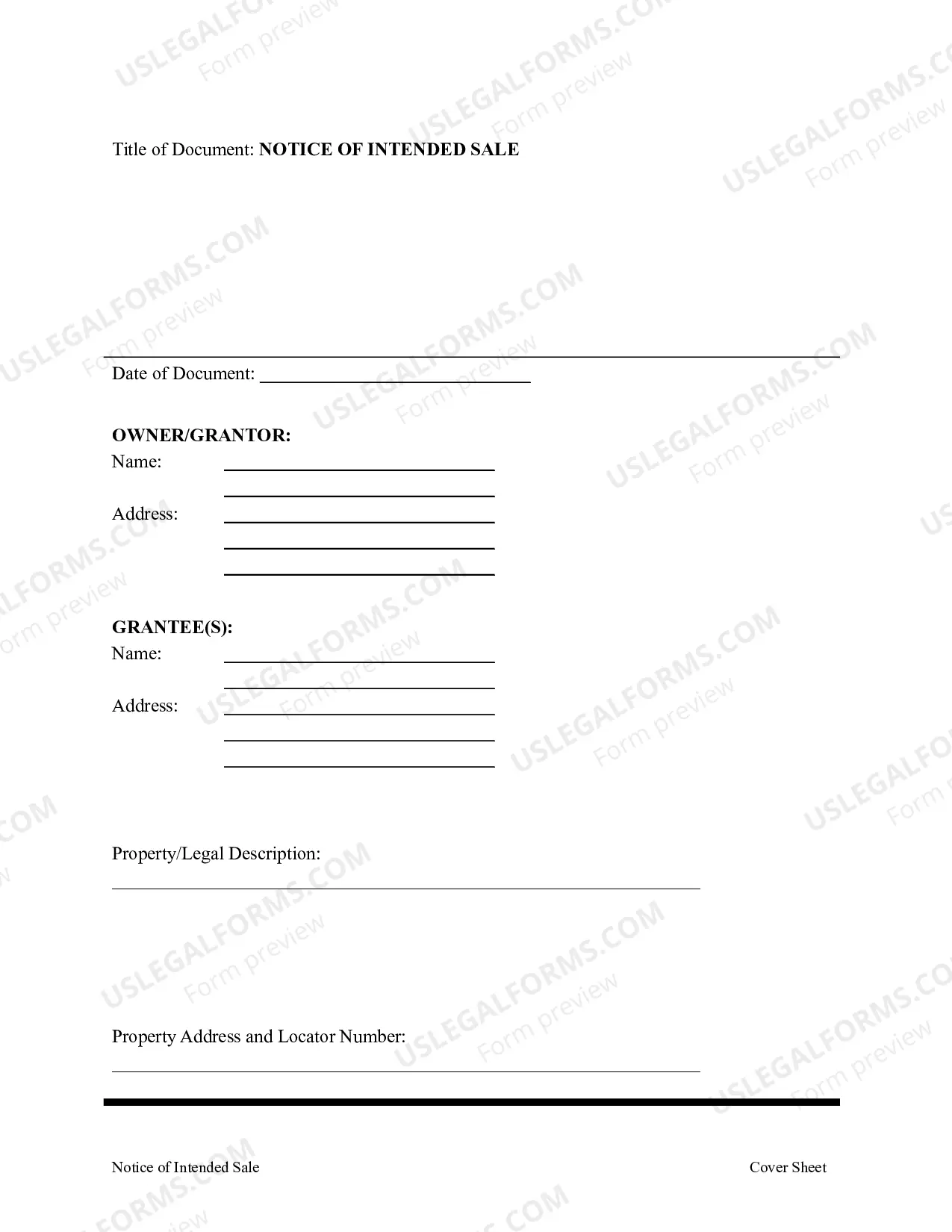
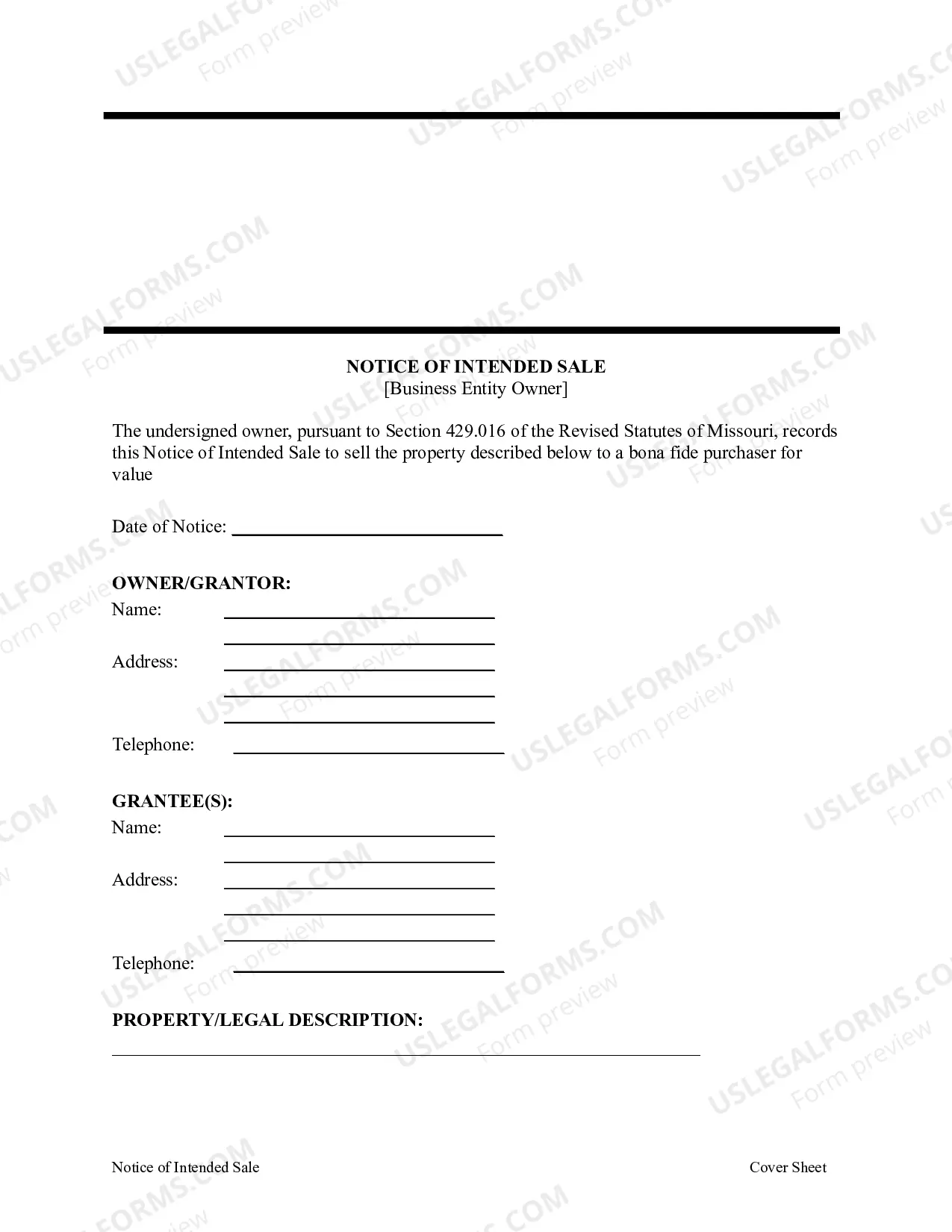
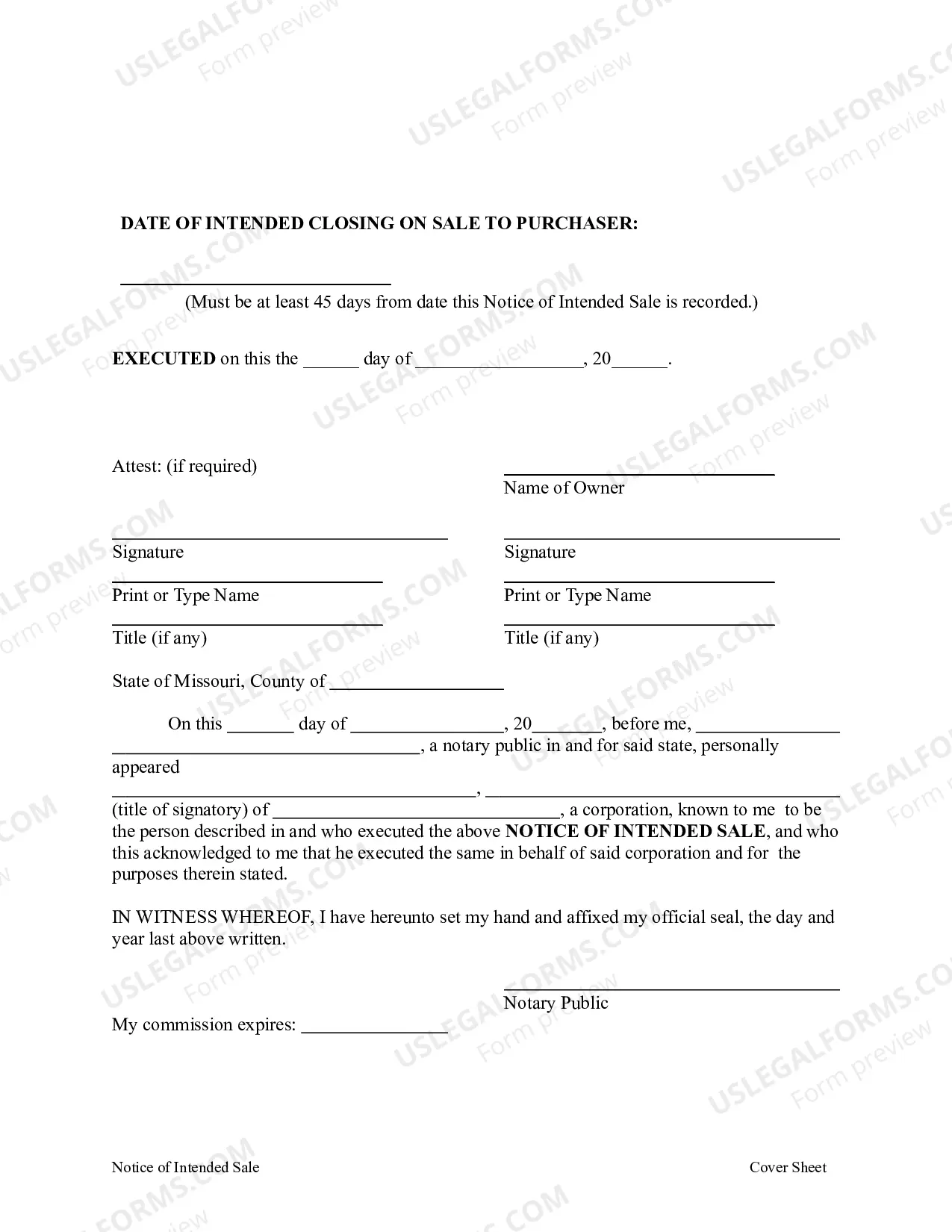
How to fill out Missouri Notice Of Intended Sale - Business Entity Owner - Mo.Rev.Stats. Sec. 429.016?
- Log in to your US Legal Forms account if you’ve previously used the service. Confirm that your subscription is active; renew it if necessary.
- For first-time users, start by checking the form descriptions to ensure the chosen template meets your jurisdiction's criteria.
- If the template doesn’t fit your needs, utilize the search function to find another that does.
- Once you’ve identified the correct document, click 'Buy Now' and select your subscription plan. Create an account for full access to their resources.
- Complete your purchase by entering your payment details via credit card or PayPal.
- Download your selected form and save it on your device. You can find it anytime in the 'My Forms' section of your profile.
With US Legal Forms, users benefit from an extensive library boasting over 85,000 fillable legal documents, ensuring that all legal needs can be met without hassle.
Don't hesitate to take charge of your business formation today! Explore US Legal Forms now to find the perfect business entity form for your needs.
Form popularity
FAQ
An example of a business entity is a partnership, where two or more individuals manage and operate a business together. This entity allows for shared responsibilities and profits, which can foster a collaborative environment. However, partners share personal liability for business debts, making it essential to choose the right business entity form for a business. It's crucial to outline clear agreements to protect all partners involved.
The four primary types of business entities are sole proprietorships, partnerships, corporations, and limited liability companies (LLCs). Each form has distinct legal implications, tax responsibilities, and levels of liability protection. Depending on your business goals, the right business entity form for a business will allow you to maximize benefits while minimizing risks. Assess your needs carefully to select the best structure.
A common example of a business entity is a corporation, which is a legal entity separate from its owners. This structure limits personal liability, providing a shield against debts and lawsuits. Corporations can raise capital by selling shares, making them ideal for investors looking to grow. Choosing the right business entity form for a business can influence your operational success and financial strategy.
Yes, an LLC, or Limited Liability Company, is indeed a recognized business entity. It combines the flexibility of a partnership with the liability protection of a corporation. When you choose this business entity form for a business, you separate your personal assets from your business liabilities, which is crucial for safeguarding your financial interests. This structure can provide significant benefits, especially as your business expands.
Many businesses start as sole proprietorships due to their simplicity and ease of setup. This initial form often allows entrepreneurs to operate their business without much legal complexity. However, as the business grows, owners may transition to a different business entity form for a business, such as an LLC or corporation, to benefit from limited liability and tax advantages. Understanding your options early can set your business up for success.
Businesses can be classified into four primary categories: service, retail, manufacturing, and non-profit. Service businesses provide intangible products, while retail businesses sell goods to consumers. Manufacturing companies produce products from raw materials, and non-profits operate for charitable purposes. Understanding these classifications is crucial for selecting the appropriate business entity form for a business that aligns with your goals.
The four forms of business primarily include sole proprietorship, partnership, corporation, and limited liability company (LLC). Each form has its own characteristics and benefits, which can impact your operations and liability. Choosing the right business entity form for a business is essential to ensure compliance and protection. US Legal Forms provides a comprehensive resource for understanding these options and helps you fill out the necessary documents.
Creating your own entity begins with deciding on the type of business entity you want to form. You will then need to choose a business name and ensure it is available in your state. After that, you can file the necessary paperwork with your state government. Consider using platforms like US Legal Forms, which offer easy access to the required business entity forms for a business.
You can choose from four primary methods to form a business. First, you can form a sole proprietorship, which is the simplest option. Second, you can set up a partnership, allowing two or more people to share ownership. Third, you can create a corporation, offering liability protection and a formal structure. Finally, a limited liability company (LLC) combines features of both corporations and partnerships, making it a popular choice for many entrepreneurs.
A company entity is a legal structure for conducting business, which can include corporations, LLCs, partnerships, and sole proprietorships. Each type of company entity has distinct characteristics, advantages, and limitations. By choosing the right business entity form for a business, you can optimize your operations and comply with legal requirements.