Transfer On Death Deed In Georgia

Description

Get your form ready online
Our built-in tools help you complete, sign, share, and store your documents in one place.
Make edits, fill in missing information, and update formatting in US Legal Forms—just like you would in MS Word.
Download a copy, print it, send it by email, or mail it via USPS—whatever works best for your next step.
Sign and collect signatures with our SignNow integration. Send to multiple recipients, set reminders, and more. Go Premium to unlock E-Sign.
If this form requires notarization, complete it online through a secure video call—no need to meet a notary in person or wait for an appointment.
We protect your documents and personal data by following strict security and privacy standards.

Make edits, fill in missing information, and update formatting in US Legal Forms—just like you would in MS Word.

Download a copy, print it, send it by email, or mail it via USPS—whatever works best for your next step.

Sign and collect signatures with our SignNow integration. Send to multiple recipients, set reminders, and more. Go Premium to unlock E-Sign.

If this form requires notarization, complete it online through a secure video call—no need to meet a notary in person or wait for an appointment.

We protect your documents and personal data by following strict security and privacy standards.
Looking for another form?
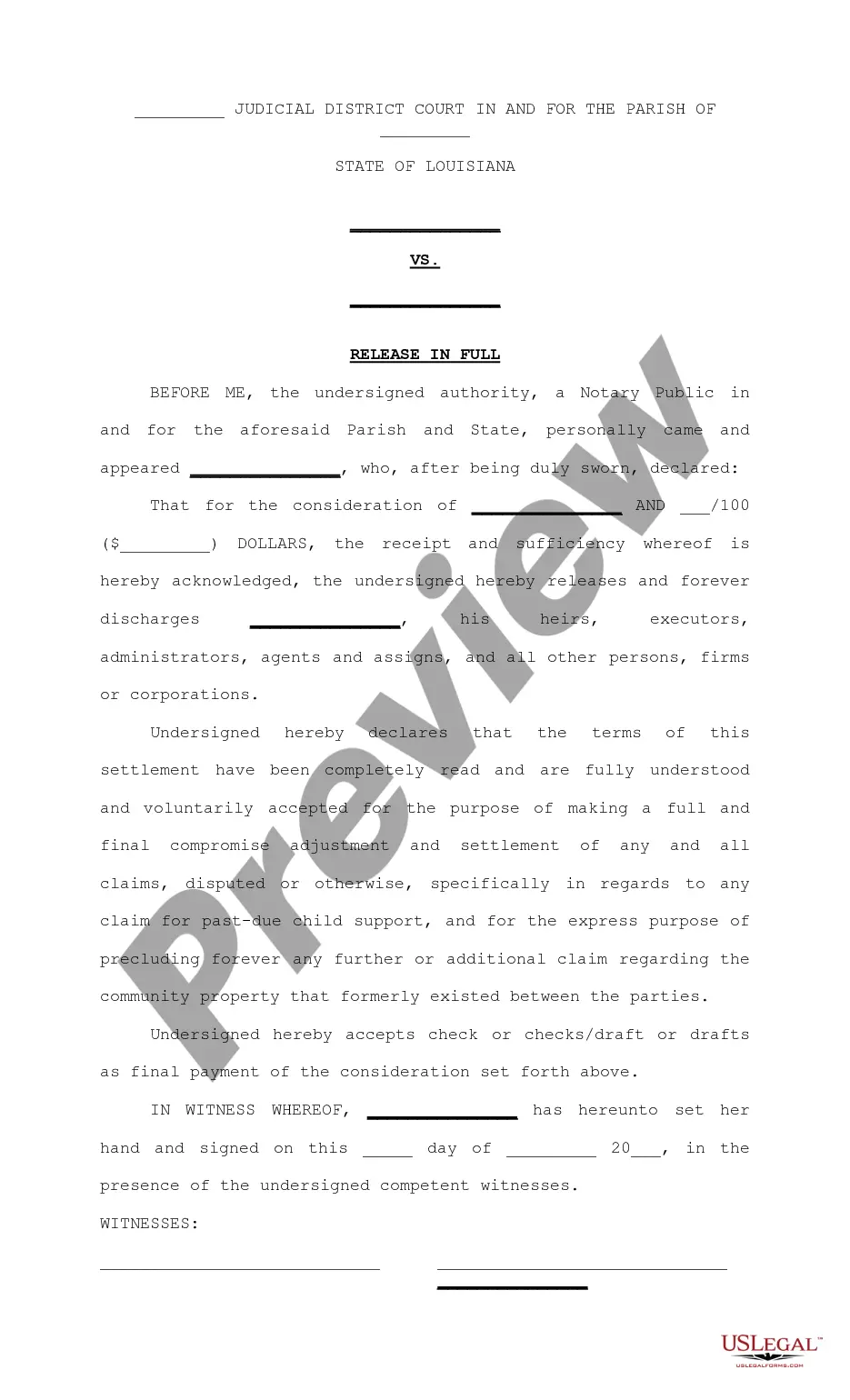


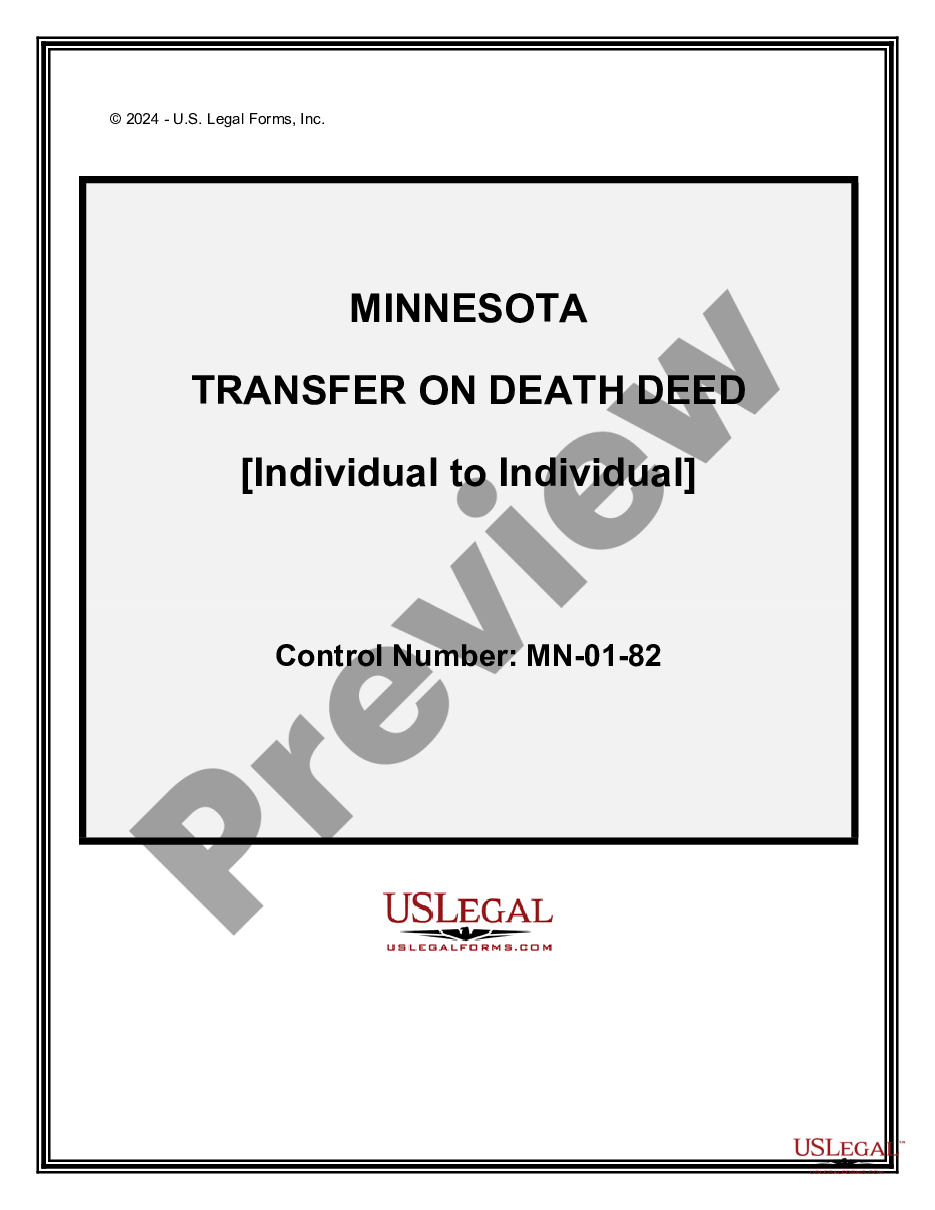
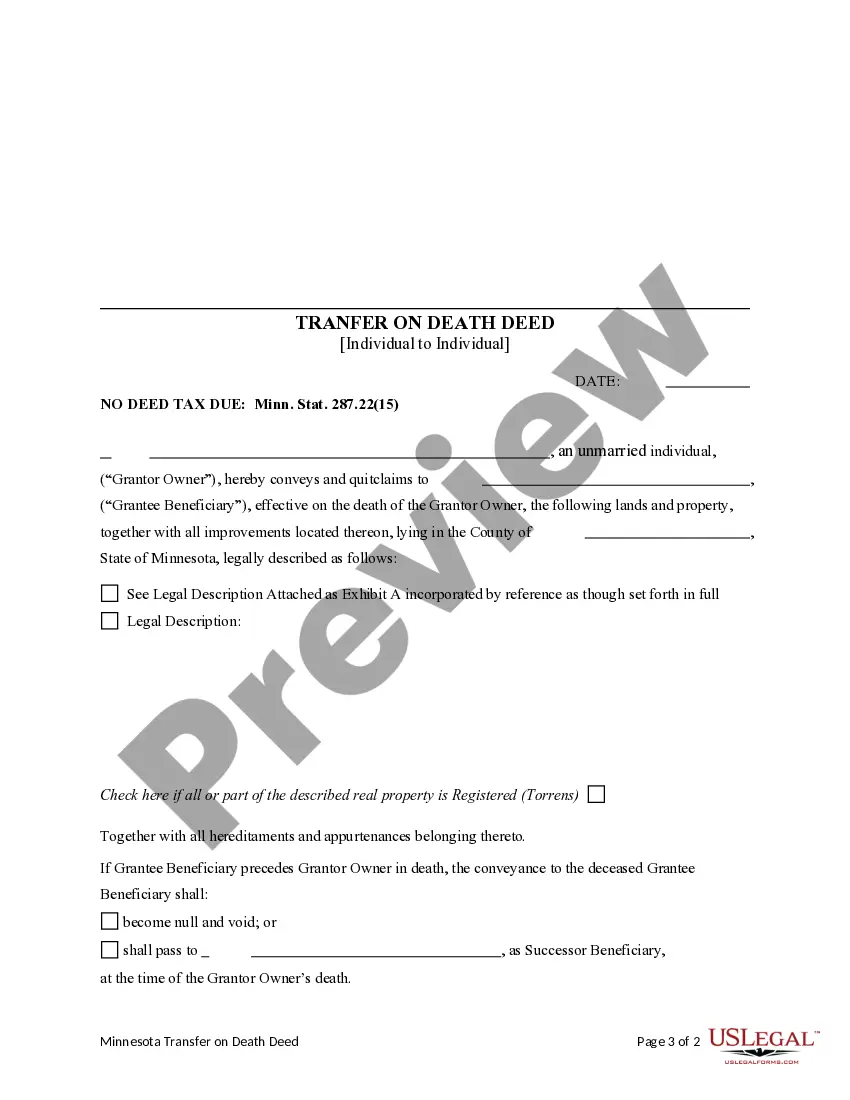
How to fill out Minnesota Transfer On Death Deed - Individual To Individual?
Acquiring legal document examples that comply with federal and state regulations is essential, and the web provides a wide array of selections to choose from.
However, what’s the advantage of spending time looking for the appropriate Transfer On Death Deed In Georgia example online when the US Legal Forms digital archive already possesses such templates consolidated in one location.
US Legal Forms is the largest online legal repository with over 85,000 editable templates created by lawyers for every business and personal scenario. They are user-friendly to navigate, with all documents categorized by state and intended use. Our specialists keep up with legal updates, ensuring that your forms are always up-to-date and compliant when acquiring a Transfer On Death Deed In Georgia from our platform.
All templates you find via US Legal Forms are reusable. To re-download and complete previously acquired forms, access the My documents section in your account. Utilize the most extensive and user-friendly legal documentation service!
- Acquiring a Transfer On Death Deed In Georgia is quick and straightforward for both existing and new customers.
- If you already possess an account with an active subscription, Log In and download the document example you need in your preferred format.
- If you are new to our site, adhere to the following steps.
- Examine the template using the Preview option or through the text description to ensure it fulfills your requirements.
- If necessary, find another example using the search feature at the top of the page.
- Select Buy Now when you’ve discovered the suitable form and pick a subscription package.
- Register an account or sign in and complete the payment with PayPal or a credit card.
- Choose the appropriate format for your Transfer On Death Deed In Georgia and download it.
Form popularity
FAQ
Yes, property can be transferred without probate in Georgia under certain circumstances, such as through a transfer-on-death deed in Georgia. This deed allows homeowners to pass their property directly to beneficiaries upon their death, avoiding the lengthy probate process. Moreover, assets held in a trust can also transition without probate. Utilizing resources like uslegalforms can provide clarity and support in drafting necessary documents.
Yes, you can file a transfer-on-death deed in Georgia. This legal document allows property owners to designate beneficiaries who will receive the property automatically upon their death, without going through probate. To file, complete the appropriate form and submit it to your local county recorder’s office. Consider using uslegalforms to find the correct templates and ensure you follow the necessary legal steps.
When one owner of a jointly owned property dies in Georgia, the property generally transfers to the surviving owner if the ownership is joint tenancy. This transfer occurs automatically, allowing the surviving owner to retain full rights to the property. However, if the joint ownership was not structured this way, a transfer-on-death deed in Georgia might be necessary to clarify ownership. Consulting with experts can help navigate these situations effectively.
In Georgia, to change the deed of a house after someone dies, you typically need to follow the instructions outlined in the deceased individual’s will. If a transfer-on-death deed in Georgia was created, the property will pass directly to the designated beneficiary, bypassing probate. It's important to file the appropriate documents with the county Clerk's Office where the property is located. Additionally, you may consider using uslegalforms for templates and guidance to ensure the process is smooth.
No, you do not have to be an attorney to prepare a transfer on death deed. However, while many individuals manage this process themselves, having professional guidance can help ensure that all legal requirements are met. Using platforms like USLegalForms can simplify the process and offer you peace of mind.
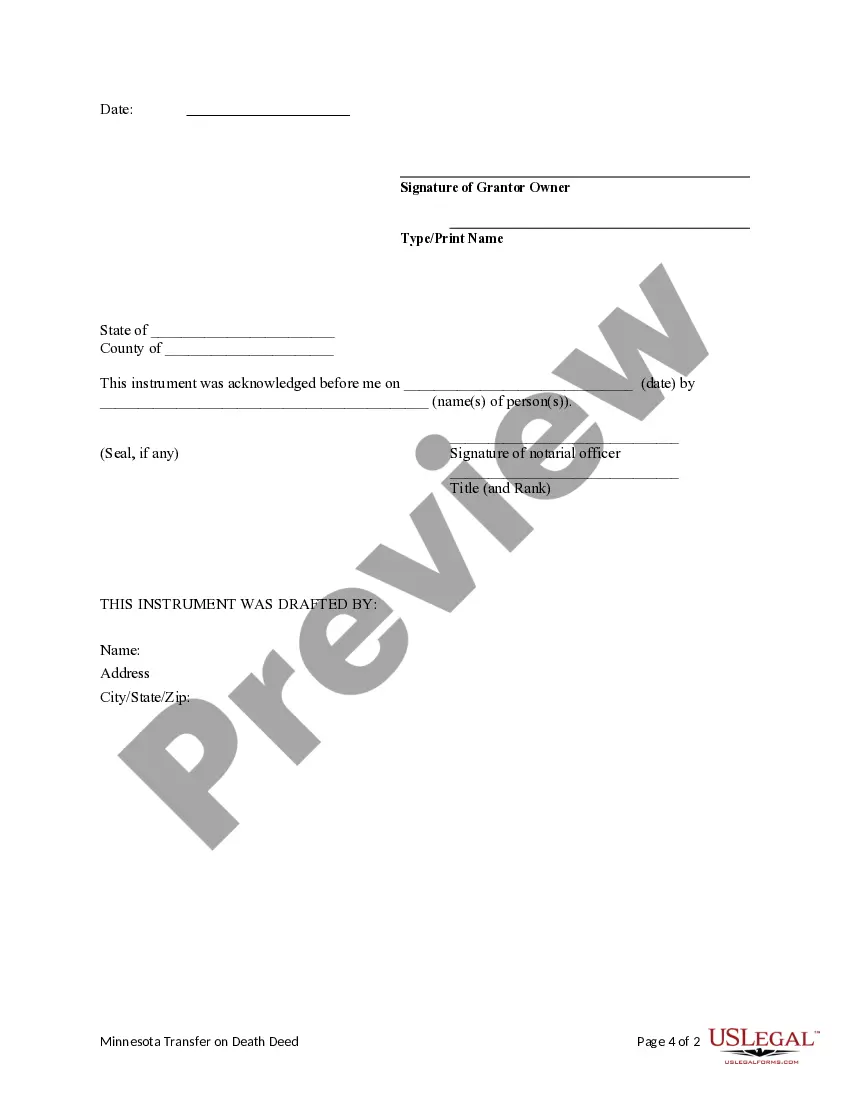
To create a transfer on death deed in Georgia, you need to provide the legal description of the property and the names of the beneficiaries. You will also need to sign the deed in front of a notary public. Additionally, it’s recommended to file the deed with the county recorder to ensure that it is publicly recorded.
One disadvantage of a transfer on death deed is that it may not cover all your estate's assets, leading to complications if other assets require probate. Additionally, if the beneficiary predeceases you, the transfer can become ineffective. Therefore, it’s essential to review and update your deeds regularly, and services like USLegalForms can help with this process.
In Georgia, you can transfer property after death through a transfer on death deed without a strict time limit. However, to avoid potential complications or disputes among heirs, it's wise to complete the transfer as soon as possible. Addressing property transfers sooner rather than later helps streamline the overall estate process.
To change the name on a house deed after someone's death in Georgia, you typically need to complete an affidavit of death and file it with the local county recorder. If there’s a transfer on death deed in place, it simplifies this process greatly because the property automatically transfers to the designated beneficiary. Using a service like USLegalForms can guide you through these steps effectively.
While you don't necessarily need a lawyer to prepare a transfer on death deed, legal assistance can be beneficial. A lawyer can provide you with valuable advice and help you understand the implications of creating such a deed. Their expertise can make the process smoother and avoid costly mistakes.