Sop For Employee Personnel File
Description
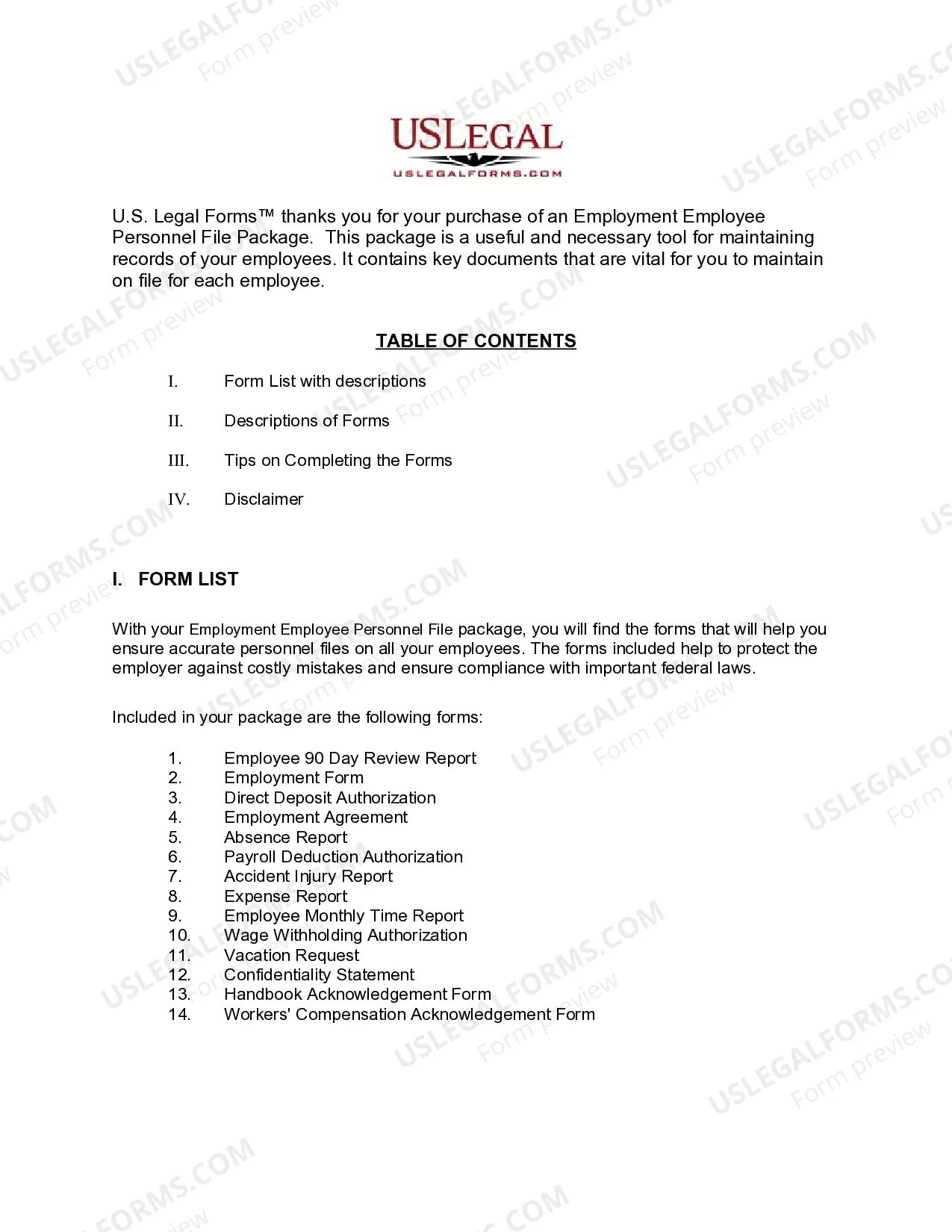
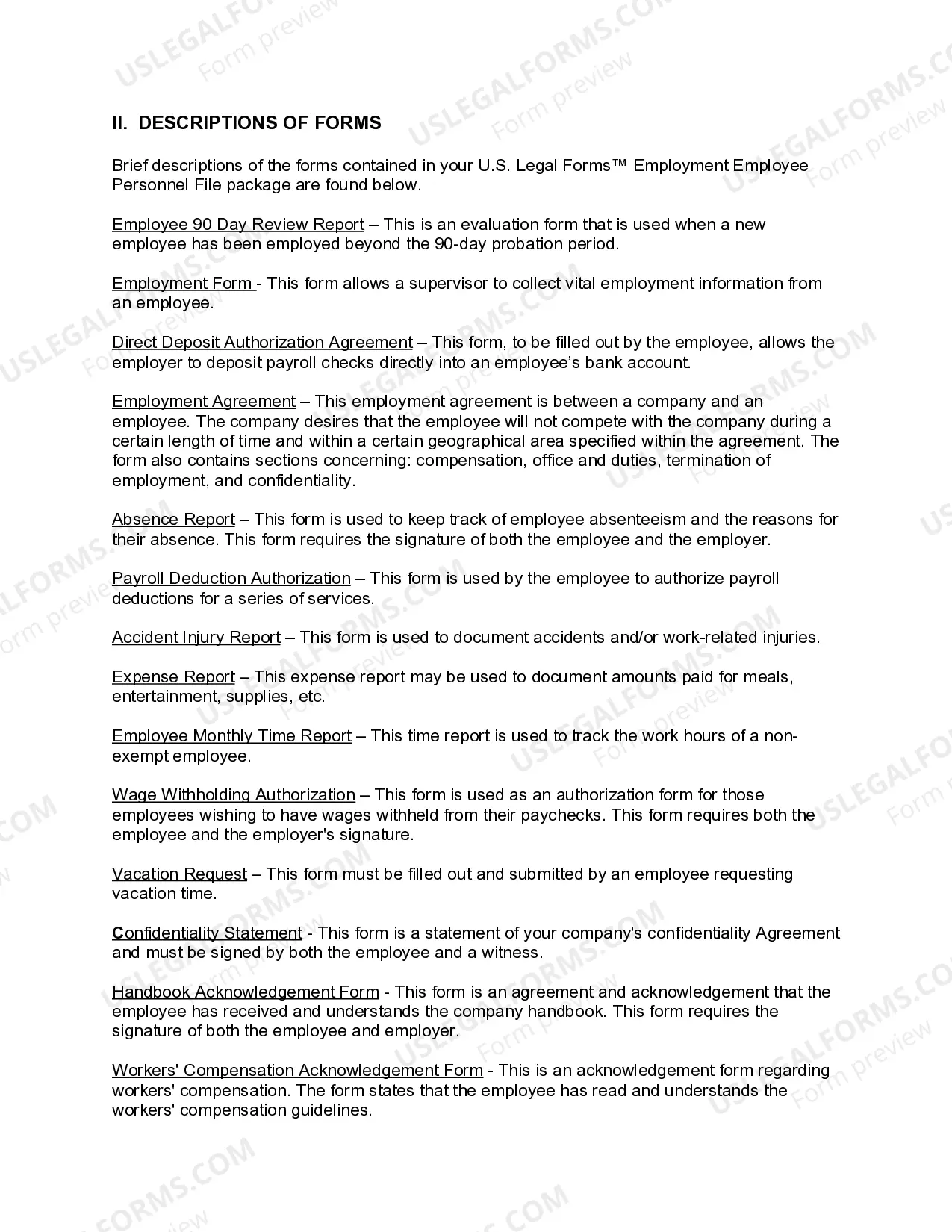
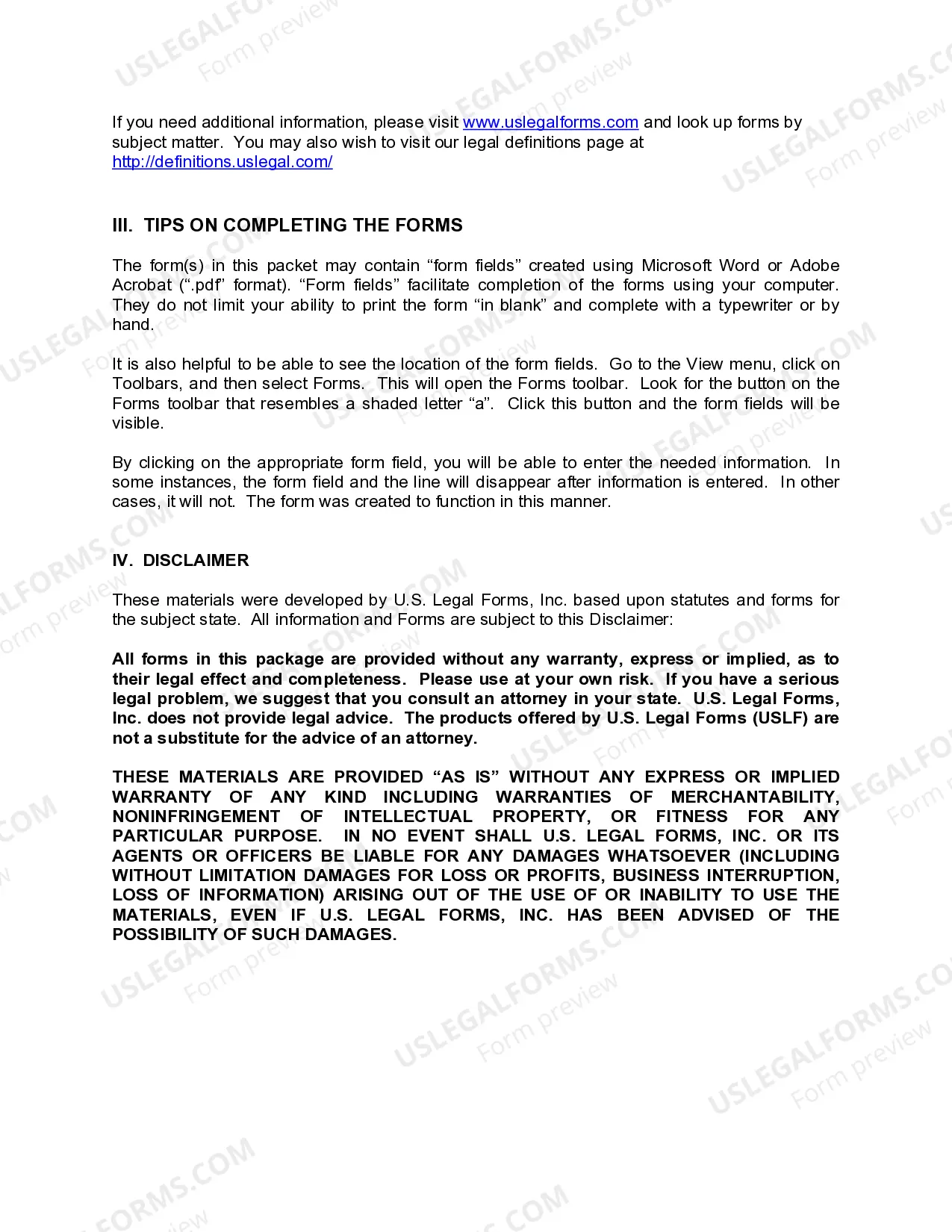
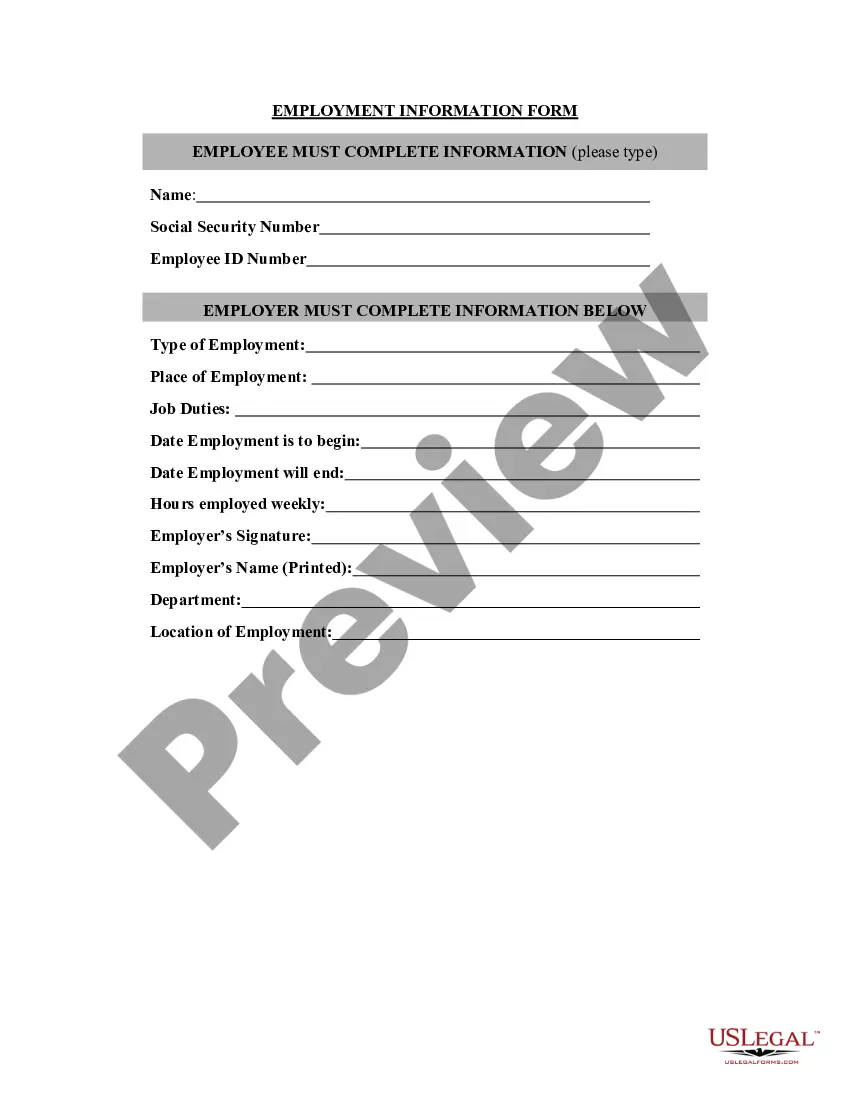
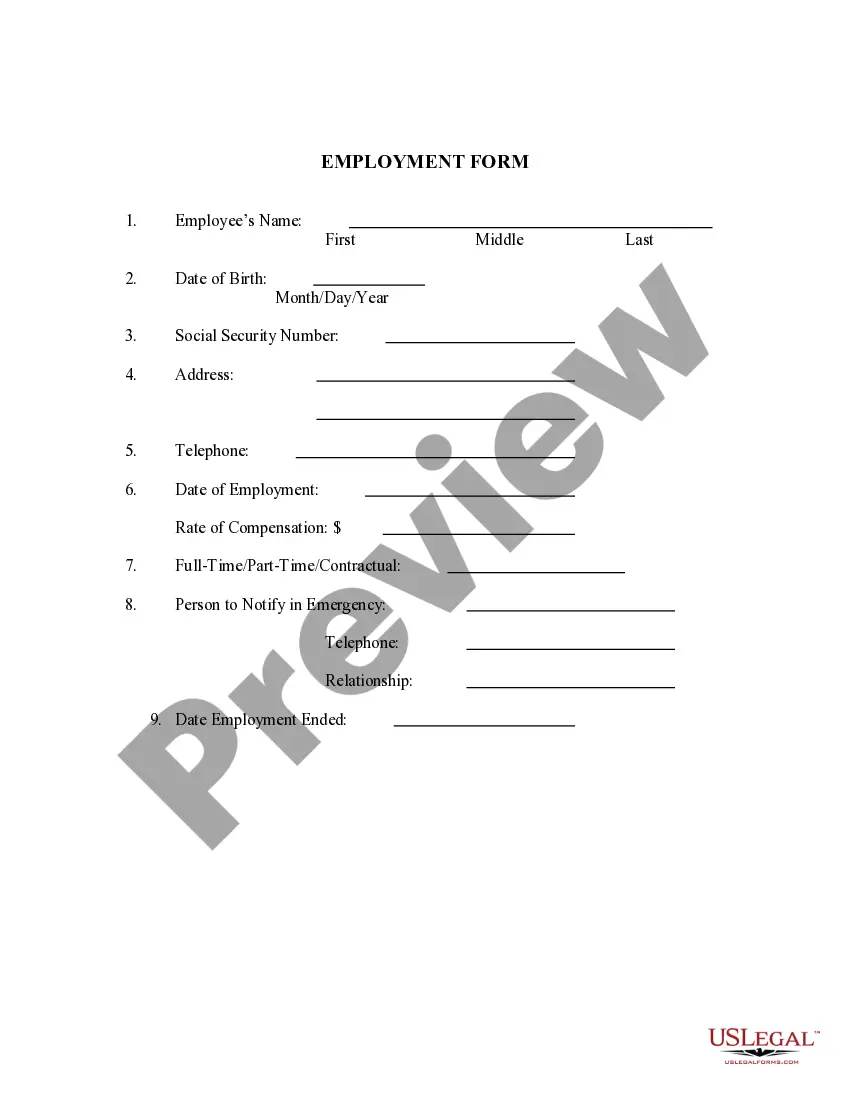


How to fill out Michigan Employment Employee Personnel File Package?
Whether for business purposes or for personal affairs, everyone has to manage legal situations sooner or later in their life. Completing legal paperwork requires careful attention, beginning from picking the proper form sample. For example, when you select a wrong edition of a Sop For Employee Personnel File, it will be turned down when you send it. It is therefore important to have a dependable source of legal papers like US Legal Forms.
If you need to get a Sop For Employee Personnel File sample, stick to these simple steps:
- Find the sample you need by using the search field or catalog navigation.
- Check out the form’s description to ensure it matches your situation, state, and region.
- Click on the form’s preview to view it.
- If it is the incorrect form, get back to the search function to locate the Sop For Employee Personnel File sample you need.
- Download the template when it meets your requirements.
- If you already have a US Legal Forms profile, just click Log in to gain access to previously saved documents in My Forms.
- If you don’t have an account yet, you can download the form by clicking Buy now.
- Select the proper pricing option.
- Complete the profile registration form.
- Choose your transaction method: you can use a credit card or PayPal account.
- Select the document format you want and download the Sop For Employee Personnel File.
- When it is saved, you are able to fill out the form with the help of editing applications or print it and finish it manually.
With a large US Legal Forms catalog at hand, you do not need to spend time searching for the appropriate sample across the web. Utilize the library’s easy navigation to get the correct form for any situation.
Form popularity
FAQ
Before you begin writing, identify who are the employees you'll be helping, what defines their success or productivity, and how your SOPs can best help them reach desired outcomes. Select a format: Common formats for SOPs include organizing processes as hierarchical steps, flowcharts, and step-by-step instructions.
How to write a standard operating procedure (SOP) document Step 1: Identify how things work now. ... Step 2: Determine where to document. ... Step 3: Identify your audience. ... Step 4: Write up the SOP. ... Step 5: Improve your process. ... Step 6: Update your SOP. ... Step 7: Continue to refine and update.
In terms of format a standard operating procedure typically takes on one of the following formats: Step-by-step written list. Hierarchical list. Flowchart.
Process Steps 2.1 Onboarding of New Employees. Upon a signed employment contract and before the start date for a new employment, the HR manager is responsible to perform administrative onboarding for the new employee, including: ... 2.2 Continuous Training. ... 2.3 Employee Development. ... 2.4 Offboarding of Employees.
An SOP For HR It helps HR to carry out procedures for attracting and retaining new talent, managing employee performances, and implementing company-wide policies at scale. An SOP for HR teams helps them in every required function such as employee management, expense management, payroll management, HR management etc.